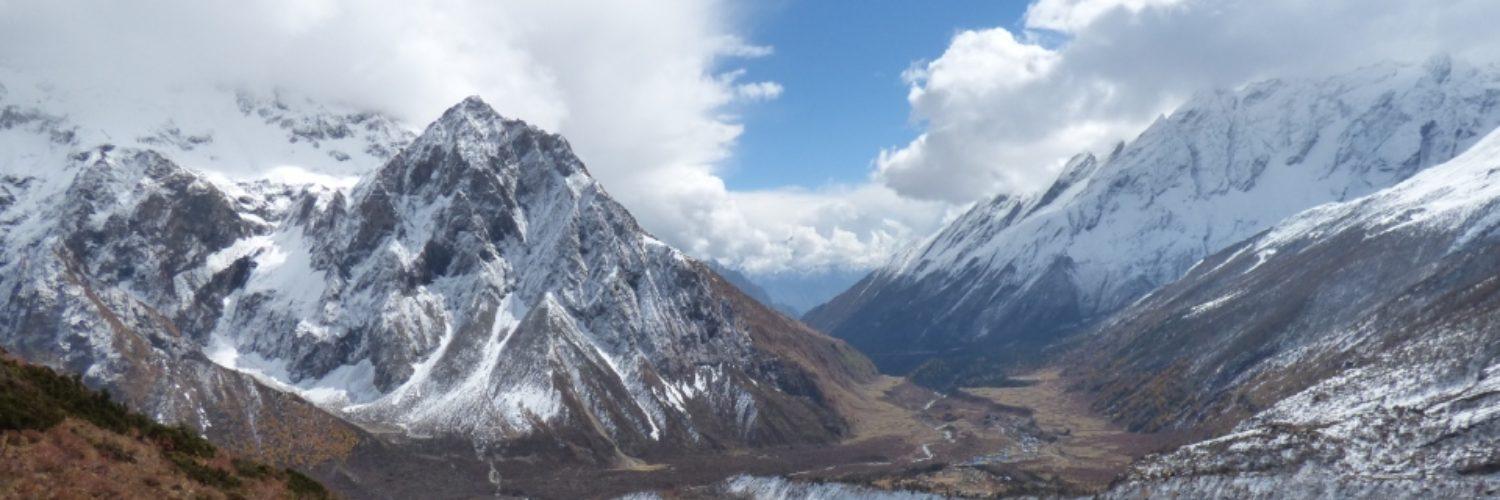
Namaste and Tashi Delek! As someone who has spent years navigating the rugged shadows of Mt. Manaslu, we can tell you one thing: the mountain doesn't just have weather; it has a personality.
One moment you’re trekking through the sub-tropical warmth of the Budhi Gandaki gorge, and the next, you’re bracing against a biting wind that feels like it’s coming straight off the glacier. For any trekker stepping into the Manaslu Conservation Area, understanding the sky is just as important as having a good pair of boots.
The Manaslu Circuit is often called the "The Spirit of the Mountains." But to witness that spirit, you have to play by the mountain's rules. Unlike the more commercialized Everest or Annapurna routes, Manaslu’s weather can be more "raw" due to its unique geography - a deep river valley that suddenly ascends into a high-altitude alpine desert.
At Best Heritage Tour, we believe that a safe trek is an informed one. This guide will teach you how to read the weather on the Manaslu Circuit like a seasoned local guide.
1. Understanding the Manaslu Microclimates
The trek spans from roughly 700m (Soti Khola) to 5,106m (Larkya La Pass). You aren't just walking a trail; you are walking through four distinct climatic zones.
-
Sub-tropical Zone (700m - 2,000m): Warm and humid. Expect lush green terraces and occasional rain showers, even in "dry" seasons.
-
Temperate Zone (2,000m - 3,000m): The air thins and cools. This is the realm of rhododendrons and pines.
-
Sub-Alpine & Alpine Zone (3,000m - 4,500m): Above the tree line. Here, the sun is your best friend, but the wind becomes a constant companion.
-
Nival Zone (Above 4,500m): Permanent snow and ice. This is the "Death Zone" for weather stability.
2. Reading the Signs: Nature’s Barometer
Before you check your phone, look at the horizon. In the Himalayas, the mountains speak long before the apps update.
The Morning Clarity Rule
In the Manaslu region, mornings are your golden window. Typically, the sky remains crystal clear from dawn until about 11:00 AM.
-
The Sign: If you see "clouds with caps" (Lenticular clouds) sitting stationary over the summit of Manaslu or Ganesh Himal, it’s a sign of high-altitude winds.
-
The Action: This usually means the Larkya La Pass will be extremely windy. If you see these clouds while at Samdo, prepare for a cold, buffeting crossing the next day.
The Afternoon "Cloud Build-up"
As the sun heats the valley floors, moisture rises. By 2:00 PM, clouds often roll in from the south.
-
The Sign: Deep, dark cumulus clouds stacking like cotton balls.
-
The Action: This is standard. However, if the clouds turn a bruised purple or grey-green, a localized storm or "mountain shower" is imminent.
Animal Indicators
The local Bhotia and Gurung people have watched the animals for centuries.
-
Yaks and Birds: If you notice crows or Himalayan Griffons flying lower than usual or yaks huddling together near Samagaun, a cold front is likely moving in.
3. Seasonal Weather Breakdown (At-A-Glance)
|
Season |
Best For |
Typical Morning Temp |
Afternoon Condition |
|---|---|---|---|
|
Spring (March-May) |
Rhododendrons & Clear Mornings |
5℃ to 10℃ |
Hazy but stable |
|
Autumn (Sept-Nov) |
Sharp Views & Festival Vibes |
0℃ to -5℃ |
Crystal clear, windy |
|
Winter (Dec-Feb) |
Solitude & Snow Photography |
-10℃ to -20℃ |
Bitingly cold, high pass risk |
|
Monsoon (June-Aug) |
Greenery & Waterfalls |
15℃ to 20℃ |
Heavy rain, leeches, landslides |
4. The Larkya La Pass Challenge
The Larkya La (5,106m) is the pinnacle of the trek. Because it sits at the intersection of two major valleys, it creates its own weather.
-
The Wind Tunnel Effect: Winds often pick up significantly after 10:00 AM. This is why guides insist on starting the pass crossing between 3:00 AM and 5:00 AM.
-
Reading the Pass: If the pass is obscured by a "wall of white" (mist) while you are still at Dharmasala, do not attempt it alone. This "white-out" makes trail markers invisible.
5. Practical Weather Gear for Manaslu
Since you’ll be experiencing "four seasons in one day," your packing list must be a tactical response to the weather patterns we've discussed.
-
The Hard Shell: A high-quality GORE-TEX jacket. In the lower valleys, it protects against rain; at the pass, it stops the wind-chill from stealing your body heat.
-
The Sun Factor: At 4,000m+, the UV index is brutal. Even if it feels cold, the sun can burn you in minutes. High-SPF sunscreen and Category 4 sunglasses are non-negotiable.
-
The "Dry Bag" Strategy: Even in the dry season, afternoon mist can make your gear damp. Use dry bags inside your rucksack to ensure your "sleeping clothes" are bone-dry when you reach the teahouse.
6. Digital vs. Traditional: Using Tech Safely
While "reading the sky" is vital, modern technology is a great backup. However, remember that Wi-Fi is sporadic and satellite signals can be blocked by the deep canyons of the Budhi Gandaki.
-
Top App Recommendation: Windy.com is the favorite of many mountain guides in Nepal. Use the "Meteogram" feature to see rain, wind, and cloud altitude.
-
Check with Locals: The most accurate weather station is the lodge owner in Samagaun. They are in constant radio/phone contact with other villages. If the "Didi" at the teahouse says "don't go," you don't go.
7. The Golden Rules for a Safe Manaslu Trek
-
Always cross the pass early. The weather is more stable at dawn.
-
Never trek alone. In case of a sudden snowstorm or "white-out," a guide or partner is your lifeline.
-
Hydration is weather-proofing. Dehydration mimics the symptoms of AMS (Altitude Sickness) and makes you more susceptible to hypothermia.
-
Listen to the wind. If the wind direction shifts suddenly from North to South, it often indicates a change in pressure and incoming precipitation.
Conclusion
The Manaslu Circuit is a journey of a lifetime, a place where Tibetan culture meets Himalayan grandeur. By learning to read the weather, you aren't just protecting yourself - you are connecting more deeply with the environment.
The mountain is always there, but the "viewing window" is a gift. Whether it's the crisp autumn air or the blooming spring trails, being prepared for the weather ensures your focus remains on the beauty, not the biting cold.
Ready to Experience the Magic of Manaslu?
At Best Heritage Tour, we don’t just book treks; we curate safe, culturally immersive adventures led by experts who know every cloud and contour of the Manaslu region. Let us handle the logistics and weather monitoring so you can focus on the journey.
Contact Best Heritage Tour Today:
Phone / WhatsApp / Viber: +977-9851149197 / +977-9810043046
Email: info@bestheritagetour.com / bestheritagetour@gmail.com
Website: www.bestheritagetour.com
Office: Thamel Marg, Kathmandu, Nepal
Author: Best Heritage Tour
Date: 23rd February, 2026