
Walking through the ancient, brick-paved alleys of the Kathmandu Valley, you are immediately enveloped by an sensory tapestry unlike anywhere else on Earth. The scent of burning juniper incense drifts from hidden courtyards, the rhythmic clanging of temple bells echoes in the distance, and the vibrant colors of prayer flags flutter against a backdrop of whitewashed stupas.
For many trekkers returning from the high passes of the Annapurna Circuit or Everest Base Camp, and for cultural travelers who have spent days exploring the medieval squares of Patan and Bhaktapur, there comes a collective desire: How do I take a piece of this spiritual magic home with me?
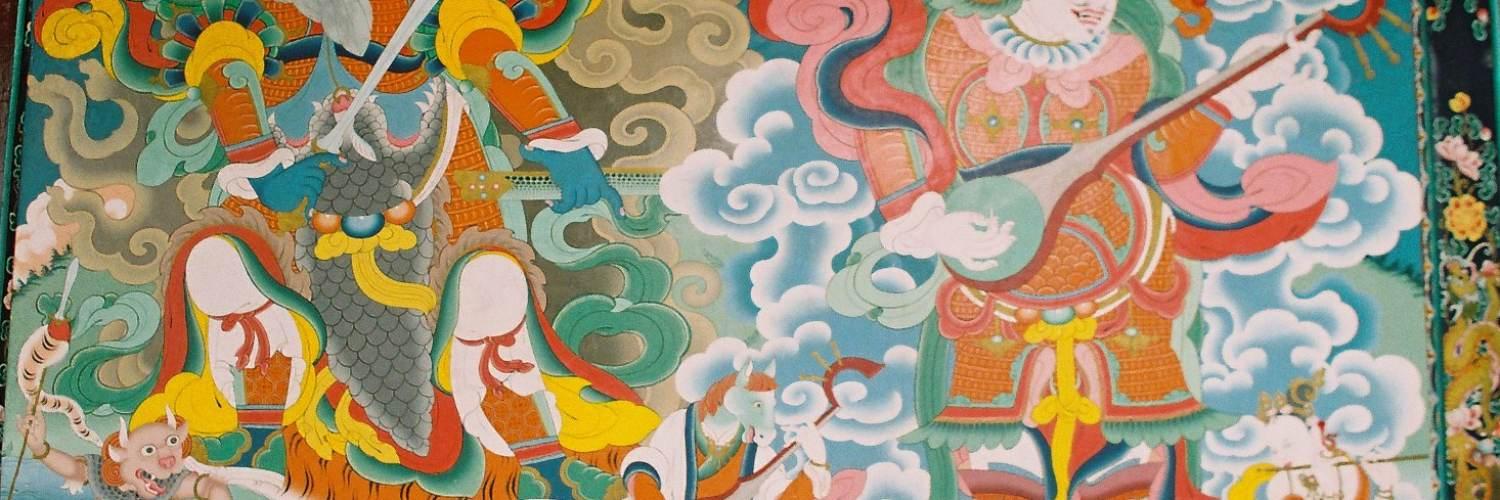
While singing bowls, pashmina shawls, and wooden masks fill the bustling markets, there is one ultimate treasure that captures the literal soul of Himalayan Buddhism - the Thangka painting.
At Best Heritage Tour, we believe that travel is all about connecting deeply with the living heritage of a destination. In this comprehensive guide, we will take you behind the canvas of this sacred art form. We will explore its profound spiritual meanings, reveal how to bypass tourist traps to buy directly from traditional artists, explain how you can learn the craft yourself, and provide practical logistics on how to safely ship these delicate masterpieces back to your home country.
What is a Thangka Painting? Understanding the Sacred Art
Before purchasing or commissioning a piece of art, it is vital to understand that a traditional Thangka painting (alternatively spelled Tangka or Thanka) is not mere decoration. In Tibetan Buddhism and the Newar Vajrayana tradition of Nepal, a Thangka is a visual instrument for meditation, a sacred roadmap to enlightenment, and a two-dimensional manifestation of a spiritual deity.
The word Thangka translates roughly to "that which can be unrolled" or "written record" in Tibetan. Historically, these scroll paintings were created by highly trained lamas and artists to serve as portable educational and devotional tools for nomadic monks traveling between monasteries across the trans-Himalayan plateau.
The Anatomy of a Sacred Masterpiece
Every genuine Thangka is bound by strict, mathematical iconographic rules found in ancient Buddhist scriptures. The proportions of every Buddha, deity, and geometric line must be absolutely flawless; an incorrect proportion is believed to disrupt the spiritual energy of the painting.
-
The Medium: Authentic Thangkas are painted on a tightly stretched cotton canvas treated with a mixture of yak-hide glue and white clay, which is then rubbed smooth with a smooth stone or glass until it achieves a porcelain-like surface.
-
The Pigments: Traditionally, the stunning, luminous colors of a high-quality Thangka come entirely from natural sources. This includes ground semi-precious minerals like Lapis Lazuli for deep blues, Malachite for vivid greens, Cinnabar for rich reds, and pure, 24-karat gold leaf for the intricate details, halos, and divine execution. It is this natural mineral base that allows a genuine Thangka to retain its brilliant radiance for hundreds of years without fading.
Popular Subjects and Symbolism
When browsing for your Thangka, you will encounter several recurring themes, each carrying its own distinct energetic resonance and blessing for your home:
|
Thangka Subject |
Symbolic Meaning & Intention |
Best Suited For |
|---|---|---|
|
The Wheel of Life (Bhavachakra) |
A complex visual representation of the cycle of Samsara, karma, and the nature of existence. |
Studying philosophy and mindfulness. |
|
The Mandala (e.g., Kalachakra) |
Sacred geometric diagrams representing the universe, cosmic order, and a palace of the deities. |
Meditation spaces, promoting harmony, balance, and focus in a living room. |
|
Medicine Buddha (Bhaisajyaguru) |
The deity of healing, typically depicted with a deep blue body holding a myrobalan plant. |
Wishing good health, emotional healing, and recovery to loved ones. |
|
Green Tara & White Tara |
Deities representing swift compassion, protection from fear, longevity, and maternal grace. |
A deeply personal gift for protection, peace, and resilience. |
|
Shakyamuni Buddha |
The historical Buddha depicted in the earth-witness mudra (touching the ground). |
Creating an atmosphere of pure tranquility, wisdom, and inner peace. |
Where to Buy Thangka Painting in Kathmandu: Skip the Fancy Thamel Shops
If you take a stroll down the neon-lit corridors of Thamel - Kathmandu’s primary tourist hub - you will find dozens of glitzy souvenir shops with Thangkas hanging in the windows under bright spotlights. Aggressive shopkeepers will promise you "museum-quality" pieces at heavily discounted rates.
As a responsible, locally owned travel company, Best Heritage Tour always advises our guests to exercise extreme caution here. Unfortunately, many of the mass-produced pieces found in standard commercial shops are either:
-
Chemical Poster Prints: Mass-produced factory prints on canvas that have been lightly touched up with cheap chemical paint or gold-colored marker to fool unsuspecting tourists.
-
Exploitative Appreticeship Ware: Paintings made by underpaid, overworked students in factory-like settings where the master artist merely signs the back to command a high price.
Buy Directly From the Artist: The True Cultural Hubs
If you want to ensure your investment is ethically sourced, 100% authentic, and that your money goes directly into the pockets of the master artists and local families who preserve this centuries-old tradition, you need to leave the commercialized strips of Thamel.
The absolute best places to buy authentic Thangka paintings directly from the artists are located in the historic cultural epicenters of the Kathmandu Valley: Patan (Lalitpur) and Bhaktapur, as well as the sacred Tibetan settlements surrounding the Boudhanath Stupa.
1. Patan (Lalitpur): The Home of Newar Master Artisans
Patan is internationally renowned for producing some of the finest metalworkers and painters in the Himalayan region. Here, families have practiced the Paubha art form (the traditional Newar precursor to Tibetan Thangkas) for generations.
-
Where to look: Explore the small, quiet courtyards (bahals) surrounding the Patan Durbar Square or the Golden Temple (Hiranya Varna Mahavihar). You will often find humble, second-story workshops where master painters sit quietly by a window, using a single-hair brush to apply 24k gold leaf to a canvas.
2. Boudhanath: The Heart of Tibetan Artistry
The area surrounding the colossal Boudhanath Stupa is the spiritual center for Nepal's Tibetan diaspora. This is the prime location to find authentic Tibetan-style Thangkas.
-
Where to look: Skip the ground-floor retail outlets facing the main stupa circumambulation path. Instead, look for signs pointing upstairs to traditional Thangka Painting Schools. Establishments managed by respected Lamas or multi-generational families allow you to walk right into the studio, meet the masters, see the apprentices at work, and buy pieces directly from their current collections.
Immerse Yourself: Join a Thangka Painting Class in Kathmandu
For travelers who want more than just a souvenir - those who want a true, meditative connection to Himalayan culture - we highly recommend sitting down and learning the art form yourself. Participating in a Thangka painting class is one of the most enriching and mindful activities you can experience during your stay in Kathmandu.
Several reputable, artist-run schools in both Boudhanath and Bhaktapur offer short-term courses designed specifically for international travelers, trekkers taking a post-hike rest, and art enthusiasts.
What to Expect in a Travelers' Thangka Workshop:
-
Single-Day Crash Courses (3 to 6 Hours): Ideal for travelers with a tight itinerary. You won't paint a massive, complex mandala, but you will learn the fundamental grid systems, the history of the art form, how to grind mineral pigments, and you will paint a small, beautiful sacred symbol (like a Lotus flower or an Endless Knot) to take home.
-
Multi-Day Intensive Courses (3 to 7 Days): If you have a few days to spare after a long trek, a multi-day workshop allows you to dive deep. Under the patient guidance of a master teacher, you will learn the ancient geometric formulas used to sketch the face of the Buddha, practice the delicate blending techniques for clouds and landscapes, and learn how to apply real gold detailing.
The process of painting a Thangka is inherently therapeutic. It requires absolute concentration, slow breathing, and a calm mind. Many of our guests at Best Heritage Tour have noted that spending a few days in a quiet Kathmandu studio painting side-by-side with local artists was just as profound and transformative as their trek through the high Himalayas.
Logistics Guide: How to Safely Ship Your Thangka Painting Back Home
Once you have found or painted your perfect Thangka, the next major hurdle arises: How do you get this fragile, valuable piece of sacred art back to your home country safely?
Because Thangkas are painted on canvas using natural mineral pigments and delicate gold leaf, they cannot simply be folded up or thrown carelessly into a trekking backpack. The canvas will crease, causing the mineral paint to flake off and permanently ruining the artwork.
Here is the exact, step-by-step logistical blueprint our team uses to help our clients transport their Thangkas securely.
Option 1: Bringing it with You on the Plane (Hand Baggage)
This is the safest, most cost-effective method for small to medium-sized Thangkas.
-
The PVC Tube Method: Do not leave your Thangka attached to a heavy wooden frame. The artist or shop will easily remove the canvas from its temporary stretching frame. They will lay a sheet of clean, acid-free tissue paper over the painted surface to protect the gold leaf.
-
Rolling: The Thangka must be rolled gently with the painted surface facing outward. Rolling it inward can cause the thick mineral paint to compress and crack.
-
Sealing: The rolled canvas is placed inside a heavy-duty, waterproof PVC plastic tube or a thick, reinforced cardboard mailing tube with secure end caps.
-
Carry-On Travel: These tubes are compact, lightweight, and easily fit into the overhead compartments or underneath the seat in front of you on international flights. Never check this tube into your airline’s cargo hold; luggage compartments are subjected to extreme temperature drops and rough handling that can damage the piece.
Option 2: International Air Freight & Courier Services (For Large or Framed Pieces)
If you have purchased a monumental masterpiece, or a collection of pieces, or if you simply do not want to carry a tube during the rest of your international travels, you will need to utilize a reputable international courier service operating out of Kathmandu.
-
Customs & Antiquity Regulations: Nepal has exceptionally strict laws regarding the export of historical heritage. Any piece of art that looks old may be flagged by customs officials at Tribhuvan International Airport (TIA) out of concern that it is a genuine historical artifact.
-
The Department of Archaeology Certificate: To legally export a high-value Thangka, you may require an official stamp or certificate from the Department of Archaeology of Nepal, certifying that the painting is a contemporary piece of art and not a national antiquity.
Conclusion
A Thangka painting is so much more than a beautiful keepsake from an exotic vacation. It is a visual manifestation of your journey through Nepal - a permanent reminder of the towering peaks, the serene monasteries, the resilient spirit of the local people, and the inner peace you discovered along the trail. By bypasssing the commercial tourist shops of Thamel, purchasing directly from the brilliant artists of Patan and Boudhanath, or taking the time to sit in a painting class, you directly support the living heritage of the Kathmandu Valley.
We want your journey through our beautiful homeland to be flawless, immersive, and unforgettable from the moment you step off the plane to the moment your prized souvenirs arrive safely at your front door.
Start Planning Your Nepalese Cultural Adventure Today
Phone / WhatsApp / Viber: +977-9851149197 / +977-9810043046
Email: info@bestheritagetour.com / bestheritagetour@gmail.com
Website: www.bestheritagetour.com
Office: Thamel Marg, Kathmandu, Nepal
Author: Best Heritage Tour
Date: 19th May, 2026