At Best Heritage Tour, we often get asked one question: "Is the Everest Base Camp (EBC) trek actually possible for someone like me?" We see the mix of excitement and "what-if" anxiety in their eyes. You’ve seen the photos - the glowing tents at the foot of the Khumbu Icefall, the towering peak of Ama Dablam, and the rugged, sun-baked faces of the Sherpas. It looks epic, but it also looks intimidating.
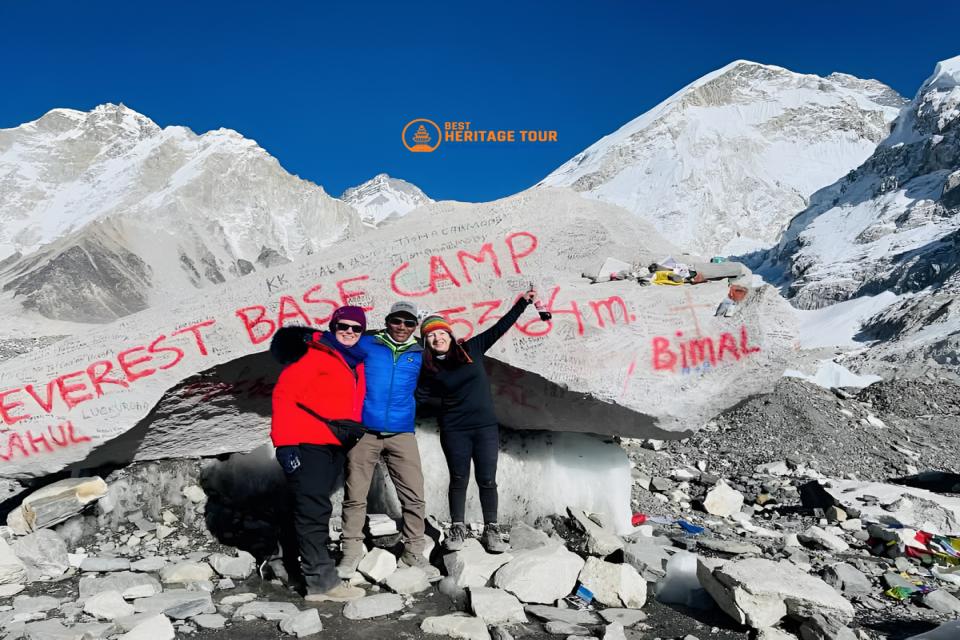
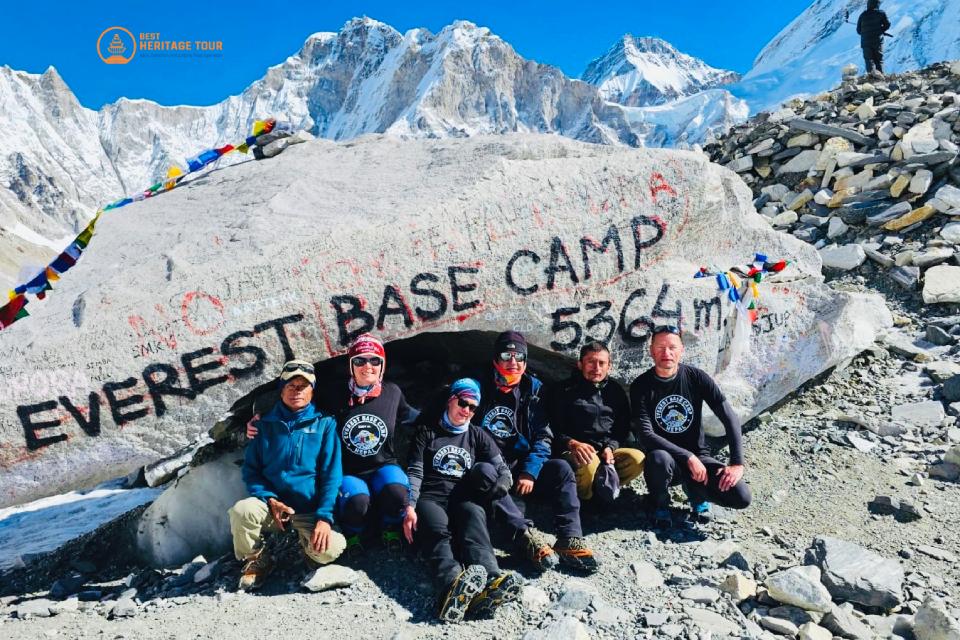
As a professional travel company, we are here to strip away the myths. We aren’t going to talk in marketing fluff. We are going to talk about the real grit, the actual thinness of the air, and the specific fitness you need to stand at 5,364 meters (17,598 feet) without feeling like you’re at death’s door. Let’s break down the Everest Base Camp trek difficulty for 2026.
The Big Question: How Hard is the Everest Base Camp Trek?
In the world of trekking, we grade EBC as "Moderate to Strenuous." Wait - don't let that "strenuous" label scare you off. It doesn't mean you need to be an Olympic athlete or a technical mountain climber. There is no vertical rock climbing, no ice axes required, and no rappelling down crevasses.
The trek is essentially a very long, very high-altitude walk. The Statistics You Need to Know:
-
Total Distance: Approximately 130 km (80 miles) round trip from Lukla.
-
Daily Walking Time: 5 to 7 hours of active moving.
-
Maximum Elevation: 5,364m (Base Camp) or 5,545m (Kala Patthar viewpoint).
-
Total Ascent: You will gain over 2,500 meters (8,200 feet) from your starting point in Lukla.
The "difficulty" isn't found in a single steep hill; it’s the cumulative effect of walking on rocky terrain for 12 days straight while your oxygen supply slowly gets cut in half.
The Three Real Challenges (It's Not Just Your Legs!)
When trekkers struggle, it’s usually because they underestimated one of these three "Mountain Monsters."
A. The Altitude: The Invisible Weight
This is the single biggest factor. In Kathmandu, you’re at roughly 1,400m. When you land in Lukla, you’re already at 2,860m. By the time you reach Base Camp, the air contains roughly 50% less oxygen than at sea level.
-
The Reality: Even tying your shoelaces can make you huff and puff.
-
The Guide's Advice: We follow the "Pole Pole" (Slowly, Slowly) philosophy. Speed is your enemy at altitude.
B. The Terrain: "Nepali Flat"
In Nepal, we have a joke: "A little bit up, a little bit down - that’s Nepali flat."
The EBC trail is a masterpiece of rugged engineering, but it is not a paved sidewalk. You will encounter:
-
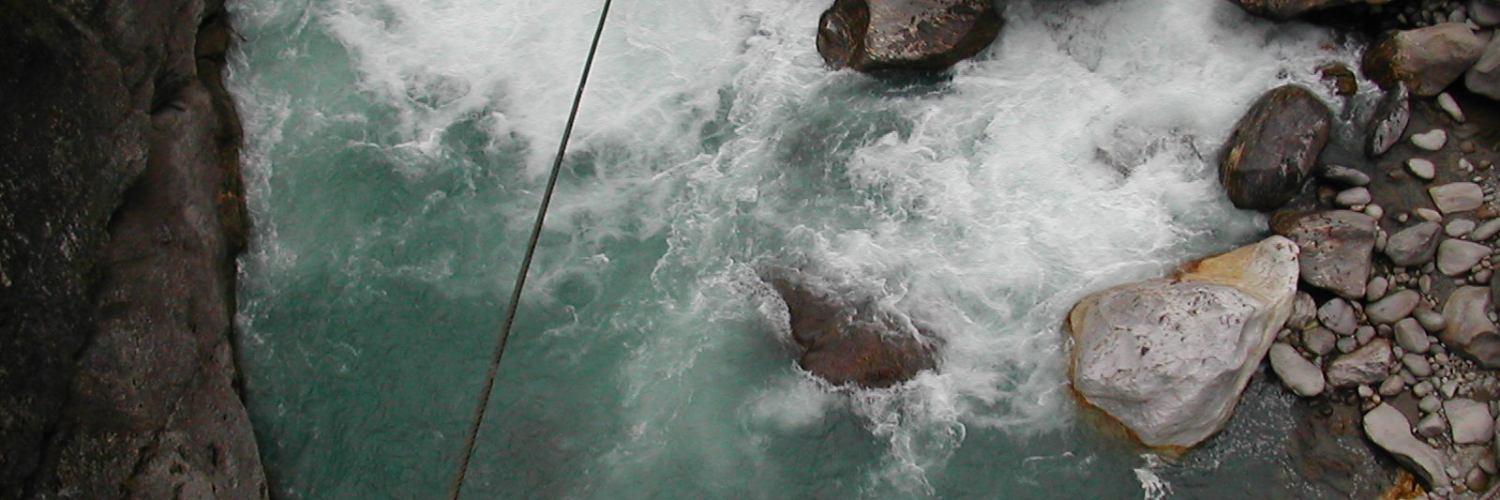
Suspension Bridges: Swaying high above the Dudh Koshi River (don't worry, they are incredibly strong!).
-
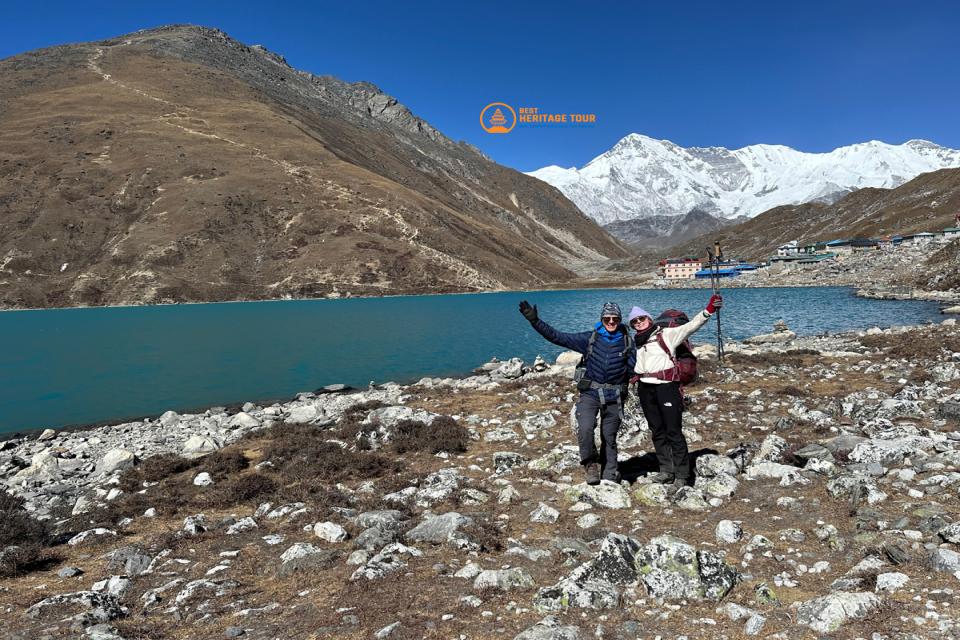
Glacier Moraine: Loose rocks and slippery silt as you approach Gorak Shep.
-
Stone Stairs: Thousands of them, particularly on the "Namche Hill."
C. The Logistics & Environment
Living in teahouses means letting go of luxury.
-
Cold: Temperatures inside your room at Gorak Shep can drop well below freezing.
-
Food: You’ll be fueled by Dal Bhat (lentil soup and rice). It’s the ultimate trekking fuel, but your stomach might need a few days to adjust to the "mountain diet."
Real Trekker Experience: What a Day Actually Feels Like
Let’s get into the "Day in the Life" of an EBC trekker. This is where the mental difficulty comes in.
6:00 AM: You wake up in a chilly teahouse room. Your breath frosts in the air. You pack your duffel bag for the porters, grab a hot ginger-lemon-honey tea, and eat a bowl of porridge.
8:00 AM: You start walking. The first hour is usually "the grind." Your muscles are stiff, but the view of a snow-capped peak glowing in the sun keeps you moving.
12:00 PM: Lunch at a trailside village. You rest for an hour, watching yaks carry supplies upward. The bells on their necks are the soundtrack of the Khumbu.
3:00 PM: You reach your destination for the night. You’re tired, maybe a little dusty, but the sense of accomplishment is massive.
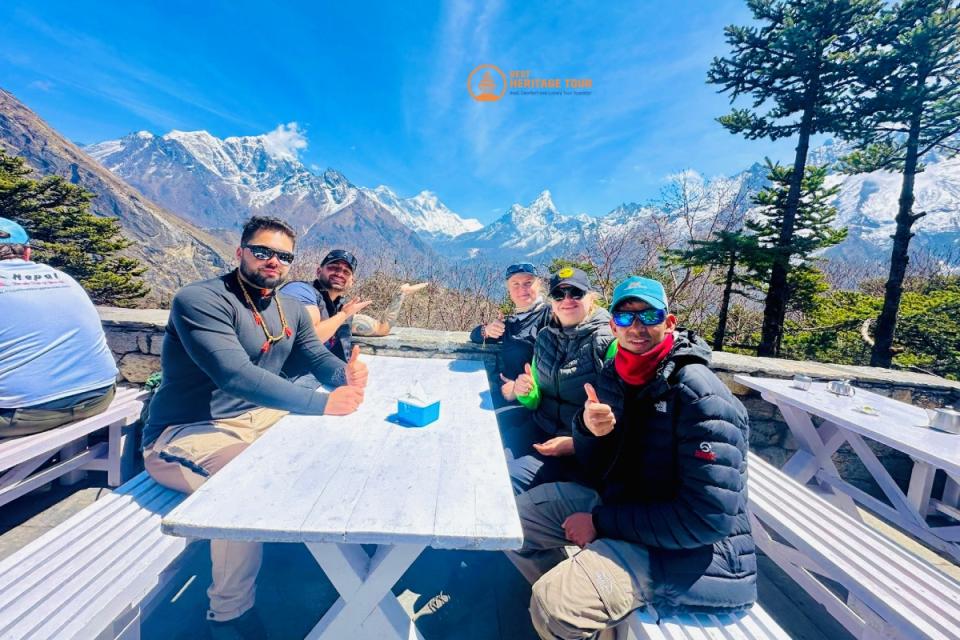
7:00 PM: Dinner in the common room, heated by a yak-dung stove. You chat with people from all over the world. This is the "magic" of the Everest region.
Your 2026 Fitness Guide: How to Prepare
You don’t need to be "Ironman fit," but you do need functional endurance. If you start training 3-5 months before your flight to Kathmandu, you will enjoy the views much more than if you're staring at your boots gasping for air.
The Training Pillars:
|
Training Type |
Why It Matters |
Suggested Exercise |
|---|---|---|
|
Cardiovascular |
Boosts heart/lung efficiency for low oxygen. |
Running, cycling, or swimming (3-4 times a week). |
|
Leg Strength |
You’ll be doing thousands of "step-ups." |
Squats, lunges, and step-ups with a weighted pack. |
|
Core Stability |
Helps you balance on uneven rocky trails. |
Planks, Russian twists, and back extensions. |
|
Hiking Specific |
Breaks in your boots and builds "trail legs." |
Long weekend hikes (4-6 hours) on hilly terrain. |
The Secret Weapon: The Stairmaster. If you live in a flat city, the Stairmaster at the gym is your best friend. Set it to a slow, steady pace and wear your trekking boots. It mimics the "upward grind" perfectly.
Preventing Altitude Sickness: The Guide's Checklist
At Best Heritage Tour, our priority isn't just getting you to the rock that says "Everest Base Camp" - it’s getting you back down safely. Altitude Sickness (AMS) is serious, but preventable.
-
Hydrate Like a Pro: Drink 3 to 4 liters of water a day. The mountain air is incredibly dry; you lose moisture just by breathing.
-
Acclimatization Days: Never skip the rest days in Namche Bazaar (3,440m) and Dingboche (4,410m). We use these days for "Climb High, Sleep Low" hikes.
-
The "Slow" Mantra: If you see a porter or a local zooming past you, let them go. Your heart rate should stay in a "conversational" zone.
-
Listen to Your Body: A mild headache is common. A splitting headache, nausea, or loss of coordination means you must stop or descend. There is no shame in safety.
Essential Gear for 2026 (Packing for Success)
Don't overpack, but don't skimp on quality. Here are the "Non-Negotiables":
-
Proper Boots: Mid-weight, waterproof, and fully broken in. Blisters are the #1 reason people quit.
-
Down Jacket: Rated for at least -15°C. The nights are brutal.
-
Sleeping Bag: Even if the teahouse provides blankets, a 4-season bag is your cocoon of safety.
-
Trekking Poles: These aren't "old people sticks." They reduce the impact on your knees by 25% on the descents.
-
Headlamp: Essential for the 4:00 AM hike up to Kala Patthar.
Is It Worth the Struggle?
I’ve seen people cry when they finally see the yellow tents of Base Camp. I’ve seen 70-year-olds and 12-year-olds finish this trek.
The difficulty is real, but it is manageable. Every sore muscle is forgotten the moment you see the sunset hit the summit of Mount Everest from the top of Kala Patthar. It’s not just a trek; it’s a pilgrimage to the highest point on our planet.
Conclusion: Let’s Make Your Everest Dream a Reality
The Everest Base Camp trek is a challenge, yes. But with the right itinerary, a seasoned guide who knows every rock on the trail, and a team that treats you like family, it becomes an achievable adventure of a lifetime.
At Best Heritage Tour, we don’t just book a trip; we curate an experience. We specialize in small-group treks that prioritize your health, your pace, and your connection to the incredible Sherpa culture. Whether you are a solo traveler looking for a safe group or a family wanting a private adventure, we have the local expertise to guide you every step of the way.
Ready to stand at the base of the world's highest peak?
Contact Best Heritage Tour Today!
Phone / WhatsApp / Viber: +977-9851149197 / +977-9810043046
Email: info@bestheritagetour.com / bestheritagetour@gmail.com
Website: www.bestheritagetour.com
Office: Thamel Marg, Kathmandu, Nepal
Author: Best Heritage Tour
Date: 24th February, 2026