For many trekkers, the journey to Everest Base Camp is about disconnecting from daily life and reconnecting with nature. But in today’s world, staying in touch with family, sharing experiences online, or managing work remotely has become part of travel reality. One of the most common questions we hear at Best Heritage Tour is simple but important:
“Will I have WiFi during the Everest Base Camp trek?” and
“How good is the Teahouse WiFi during the Everest Base Camp trek?”
The short answer is yes and decent - but the real answer is much more nuanced.
In this detailed guide, we explain how teahouse WiFi works, where you can expect internet access, how reliable it is, what it costs, and smart tips to stay connected in the Himalayas. Whether you want to post daily updates, check emails, or just send a quick “I’m safe” message home, this guide will help you plan realistically.
Understanding Internet Access in the Everest Region
The Everest region lies inside Sagarmatha National Park, a remote high-altitude environment where infrastructure is limited. Internet connectivity here is not comparable to city standards. Everything - from food supplies to communication equipment - must be transported by porters, yaks, or small aircraft landing at Lukla.
Because of this, internet access is:
-
Limited in bandwidth
-
Weather dependent
-
More expensive than typical WiFi
-
Slower at higher altitudes
However, despite these challenges, most teahouses along the trail offer some form of internet access.
What Is Teahouse WiFi?
Teahouses are mountain lodges run by local families that provide accommodation, meals, and basic services for trekkers. Over the years, many teahouses have added WiFi connectivity to meet travelers’ needs.
Teahouse WiFi usually works through one of two systems:
1. Satellite Internet
At higher altitudes where traditional networks are unavailable, internet is delivered via satellite. This allows connectivity even in remote locations, but speeds are often slow and weather can disrupt service.
2. Everest Link Network
Everest Link is the primary internet provider in the Khumbu region. It operates through wireless towers placed strategically across villages. Trekkers purchase prepaid WiFi cards and connect to available hotspots.
This network works best in popular settlements and becomes less stable as altitude increases.
WiFi Availability Along the Everest Base Camp Route
Let’s walk through the trekking route step-by-step and understand where you can expect WiFi and how reliable it typically is.
1. Lukla - Gateway to Everest
Internet availability: Good
Most lodges in Lukla offer reliable WiFi. Since this is the main entry point, connectivity is relatively stable compared to higher villages. Speeds are good enough for messaging apps, emails, and basic browsing.
If you need to send updates or upload photos, Lukla is one of the best places to do it.
2. Phakding - Comfortable Early Connectivity
Internet availability: Good to Moderate
Phakding sits at a lower altitude, and many teahouses offer WiFi through Everest Link. Speeds are reasonable, especially in the evening when networks are active. Video calls may work occasionally but are not guaranteed.
3. Namche Bazaar - Best Internet on the Trek
Internet availability: Very Good
If there is one place where connectivity feels almost normal, it is Namche Bazaar. As the commercial hub of the Khumbu region, Namche offers the strongest and most stable WiFi on the trail.
Here you can expect:
-
Faster speeds compared to other villages
-
Multiple WiFi providers
-
Cafes with dedicated internet access
-
Reliable messaging and browsing
Many trekkers take advantage of acclimatization days in Namche to communicate with family or upload travel photos.
4. Tengboche - Limited but Available
Internet availability: Moderate
Connectivity begins to decline after Namche. WiFi is still available in most teahouses, but speeds slow down significantly. Sending messages is usually fine, but loading images or videos can take time.
5. Dingboche - Slower but Functional
Internet availability: Moderate to Slow
At higher altitude, bandwidth becomes limited. WiFi works mainly for:
-
Text messages
-
Basic emails
-
Weather updates
Expect interruptions and slow loading times, especially during peak trekking seasons.
6. Lobuche - Minimal Connectivity
Internet availability: Slow
WiFi exists but is noticeably weaker. Connections may drop frequently, and internet use is best limited to essential communication only.
7. Gorak Shep - Basic and Unreliable
Internet availability: Very Limited
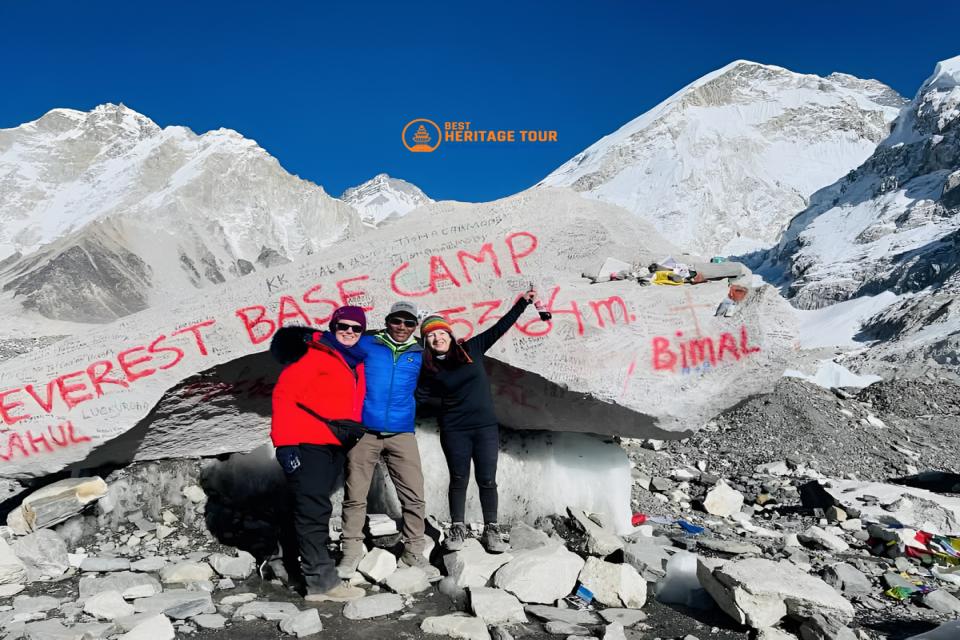
Gorak Shep is the last settlement before Everest Base Camp and lies in an extreme high-altitude environment. Some teahouses offer WiFi, but service is inconsistent.
You may be able to:
-
Send brief messages
-
Check essential updates
Streaming, video calls, and heavy browsing are generally not possible.
How Fast Is the Internet in EBC Trail?
Speed depends heavily on altitude, weather, and network congestion. Here is a realistic expectation:
|
Location Level |
Expected Speed |
|---|---|
|
Lower villages |
1-3 Mbps |
|
Mid altitude |
0.5-1 Mbps |
|
High altitude |
Very slow |
In simple terms, internet is functional but not fast. Think of it as a communication tool rather than a convenience service.
Cost of Teahouse WiFi
Unlike city hotels where WiFi is free, internet access in the Everest region usually requires payment. Prices vary by altitude.
Typical cost range:
-
Lower villages: $3-$5 per use
-
Mid altitude: $5-$8
-
Higher altitude: $8-$12
Everest Link prepaid cards are also available. Trekkers can buy data packages that work across multiple villages where the network is supported.
While it may seem expensive, remember that maintaining connectivity in such remote terrain involves significant logistical challenges.
Mobile Data vs WiFi: Which Is Better for EBC Trek?
Many trekkers ask whether mobile data is a better alternative. In the Everest region, both Nepal Telecom and Ncell provide limited coverage.
However:
-
Mobile data works well in Lukla and Namche
-
Signal weakens significantly at higher altitudes
-
Coverage can disappear entirely in remote stretches
For most trekkers, a combination of mobile data and teahouse WiFi provides the best connectivity.
Can You Work Remotely During the EBC Trek?
Technically yes - realistically challenging.
If your work involves:
-
Sending emails
-
Light communication
-
Occasional updates
Then it is manageable.
If your work requires:
-
Video conferencing
-
Large file uploads
-
Stable high-speed internet
Then the Everest region is not suitable.
This trek is better experienced as a digital pause rather than a remote office.
The Real Experience: Digital Detox in the Himalayas
One unexpected benefit of limited WiFi is the opportunity to disconnect from daily stress. The Everest trail offers something rare - uninterrupted time in nature.
Trekkers often tell us:
-
They slept better
-
They felt more present
-
They connected more deeply with fellow travelers
-
They experienced a true mental reset
In many ways, limited internet becomes part of the journey’s charm.
Conclusion
So, how is the teahouse WiFi during the Everest Base Camp trek?
It exists, it works, and it helps you stay in touch - but it is limited, slow, and inconsistent as altitude increases. Connectivity is best in lower villages and becomes minimal near base camp.
The Everest journey is not about perfect internet - it is about extraordinary landscapes, resilient mountain culture, and a once-in-a-lifetime adventure.
If you approach the trek with realistic expectations, you will find that occasional connectivity is enough - and sometimes, disconnection is exactly what makes the experience unforgettable.
Plan Your Everest Adventure with Best Heritage Tour
If you are considering the Everest Base Camp trek and want expert guidance, personalized itineraries, and reliable local support, we are here to help.
WhatsApp/Phone: +977-9851149197 / +977-9810043046
Email: info@bestheritagetour.com / bestheritagetour@gmail.com
Website: www.bestheritagetour.com
Office Location: Thamel Marg, Kathmandu, Nepal
Author: Best Heritage Tour
Date: 18th February, 2026