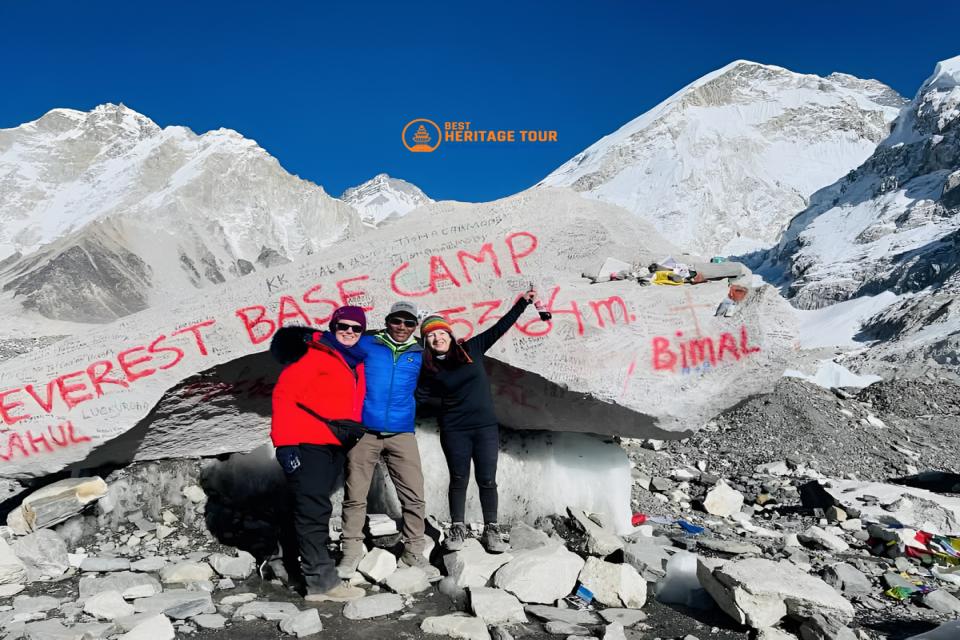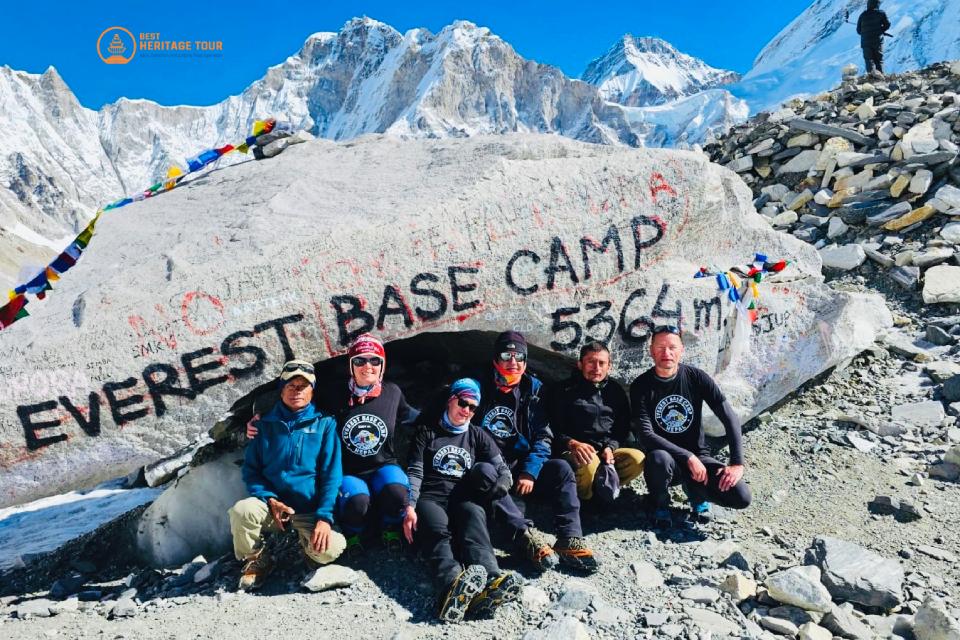
For many adventurers, reaching Everest Base Camp is the "gold medal" of trekking. However, for those of us at Best Heritage Tour, we often share a professional secret with our guests: if you want the soul of the Everest experience, you don’t find it at the Base Camp - you find it on the summit of Kala Patthar.
While Base Camp puts you at the foot of the world’s highest mountain, the geography of the Khumbu Glacier actually obscures the summit of Everest from that vantage point. To truly see the "Goddess Mother of the World" (Sagarmatha) in her full, unobstructed glory, you must turn your gaze toward the "Black Rock."
In this comprehensive guide, we explain everything you need to know about the hike from Gorakshep to Kala Patthar. From oxygen levels to the "Sunrise vs. Sunset" debate, this is the definitive resource for every trekker aiming for the sky.
The Geography of the Ascent: Gorakshep to Kala Patthar
The hike begins in Gorakshep (5,164m), the highest permanent settlement and the final jumping-off point for both Everest Base Camp and Kala Patthar. This small cluster of teahouses sits on the edge of a frozen lakebed, surrounded by a landscape that feels more lunar than terrestrial.
Kala Patthar, which translates to "Black Rock" in Nepali, stands at an altitude of 5,545 meters (18,192 ft). While technically classified as a "trekking peak" or a landmark, its height exceeds that of many famous mountains in Europe and North America.
The Numbers at a Glance:
-
Starting Elevation: 5,164 meters (16,942 ft)
-
Summit Elevation: 5,545 meters (18,192 ft)
-
Total Elevation Gain: 381 meters (1,250 ft)
-
One-Way Distance: Approximately 1.5 to 2 kilometers
-
Average Duration: 2 to 3 hours (Ascent); 1 hour (Descent)
The Technical Reality: Is it a "Hike" or a "Climb"?
We often get asked if special equipment is needed for Kala Patthar. From a technical standpoint, this is a non-technical trek. You do not need ropes, ice axes, or crampons. However, do not let the lack of technicality fool you into thinking it is "easy."
The trail is a relentless upward slog through a series of switchbacks on a mix of scree, boulders, and packed earth. At 5,500 meters, you are operating with roughly 50% of the oxygen available at sea level. This means every ten steps feel like a marathon. The final 50 meters involve navigating a jumble of large, dark rocks (the namesake of the peak) where you may need to use your hands for balance.
The Great Debate: Sunrise vs. Sunset
At Best Heritage Tour, our guides are split on this, and the "best" time often depends on your priorities: Photography or Comfort?
The Sunrise Expedition (The Classic Choice)
Most trekkers leave Gorakshep between 3:30 AM and 4:30 AM.
-
The Pros: There is an undeniable spiritual energy in watching the first light hit the summit of Everest. The air is usually at its clearest in the early morning, offering the best chance for sharp, long-distance visibility.
-
The Cons: It is brutally cold. Temperatures often drop to -15°C or -20°C. Hiking in the dark with a headlamp on steep terrain requires intense focus while you are already struggling for breath.
The Sunset Expedition (The Photographer’s Choice)
Leaving Gorakshep around 2:30 PM or 3:00 PM.
-
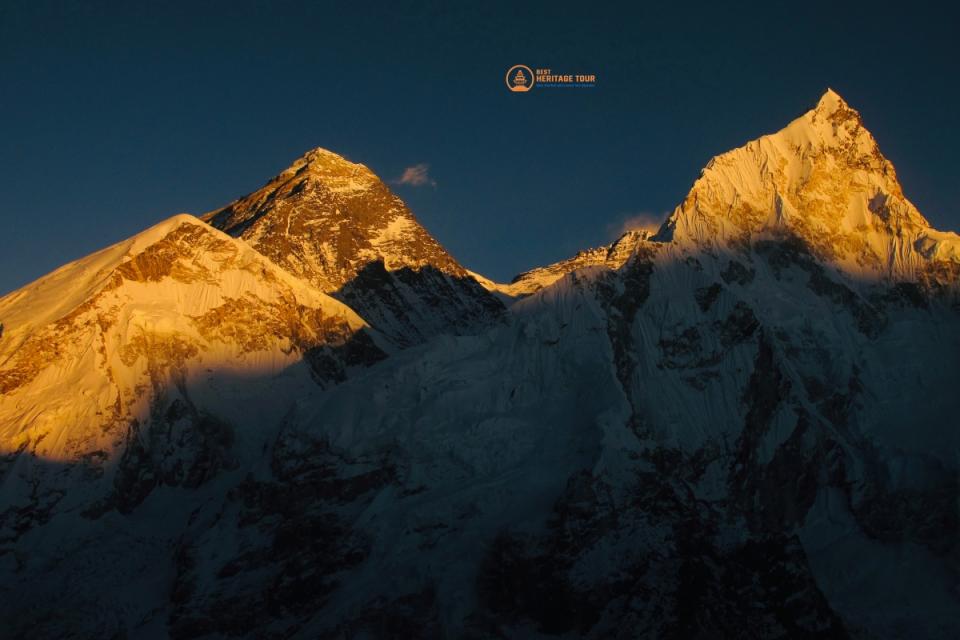
The Pros: This is the "Golden Hour." Because Everest sits to the East of Kala Patthar, the setting sun hits the face of the mountain directly, turning the white snow into a burning orange and deep gold. It is significantly warmer than the morning, and the crowds are much thinner.
-
The Cons: Clouds often roll in during the afternoon in the Himalayas. There is a risk that after the hard work of the climb, the view might be obscured by mist. Additionally, you must descend in the twilight.
Critical Preparation: Managing the Altitude
Safety is our primary pillar at Best Heritage Tour. The transition from Lobuche to Gorakshep, followed by the immediate ascent of Kala Patthar, is one of the most common points for trekkers to experience symptoms of Acute Mountain Sickness (AMS).
Our Expert Tips for a Successful Summit:
-
Hydration is Non-Negotiable: You should be consuming 3-4 liters of water daily. The dry, thin air dehydrates your blood, making it thicker and harder for oxygen to circulate.
-
The "Slow-Motion" Rule: Watch the local guides. They don't sprint; they move with a rhythmic, slow "Tenzing Norgay" shuffle. If you find yourself gasping for air, you are moving too fast.
-
The Gear List:
-
Headlamp: Essential for sunrise starts (with spare batteries).
-
Layering: A high-quality down jacket is mandatory. You will be warm while moving but will freeze the moment you stop at the summit to take photos.
-
Trekking Poles: These are vital for the descent, as the scree can be slippery and hard on the knees.
-
Gloves and Liners: Your extremities are the first to feel the cold. Use a thin liner so you can operate your camera without exposing bare skin.
-
What You Will See from Kala Patthar Summit: The 360-Degree Panorama
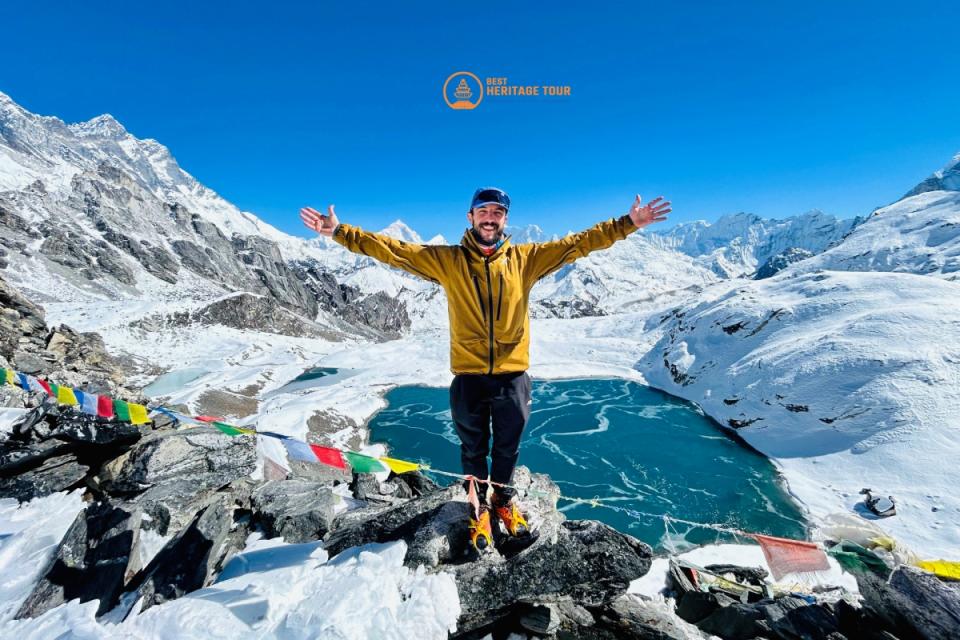
Once you reach the summit - marked by a cluster of colorful prayer flags and a weather station - the world opens up.
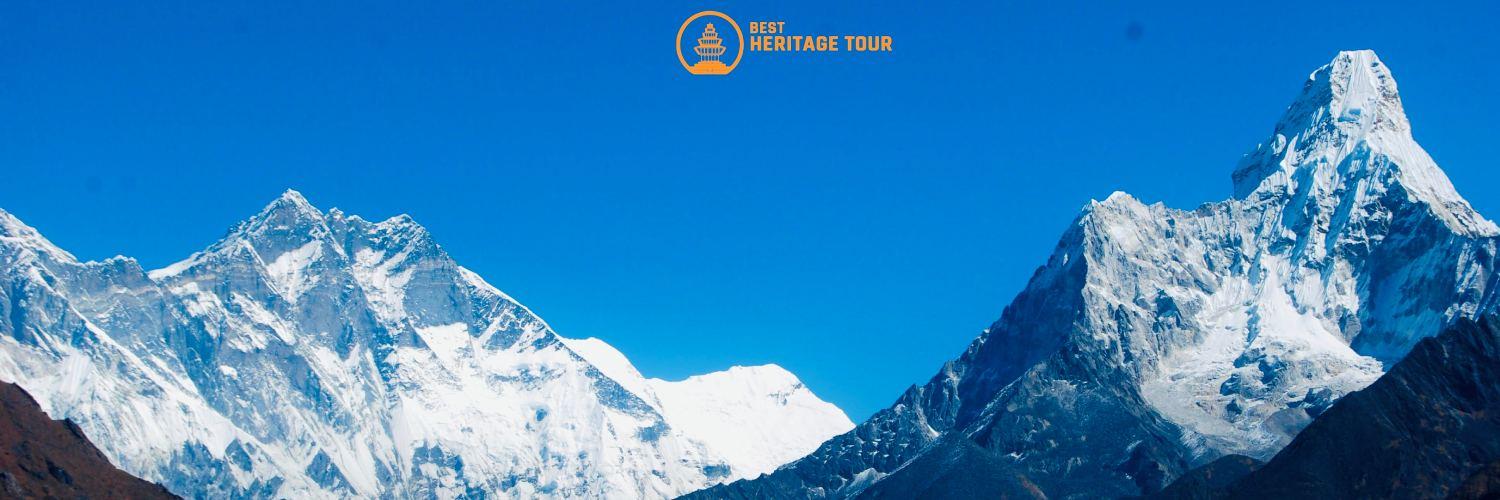
Directly in front of you is the South Col, the saddle between Everest and Lhotse. You can see the Khumbu Icefall snaking down like a giant frozen river. To your left, the elegant pyramid of Pumori (7,161m) dominates the skyline, looking so close you could almost touch it. To your right, the massive walls of Nuptse (7,861m) and Lhotse (8,516m) create a jagged horizon of rock and ice.
But the star is Everest (8,848.86m). From Kala Patthar, you see the iconic black pyramid of the summit, often with a "plume" of snow blowing off the top into the jet stream.
Conclusion
The hike to Kala Patthar is the "Exclamation Point" of the Everest Base Camp trek. It is the highest point most people will ever reach on foot without being professional mountaineers. While the thin air and the steep trails will test your resolve, the reward - a face-to-face encounter with the world's highest peak - is a memory that no camera can fully capture and no words can fully describe.
At Best Heritage Tour, we are committed to making this dream a reality for you with the safety, expertise, and cultural depth that only a local leader can provide.
Ready to stand before the King of the Himalayas?
Phone / WhatsApp / Viber: +977-9851149197 / +977-9810043046
Email: info@bestheritagetour.com / bestheritagetour@gmail.com
Website: www.bestheritagetour.com
Office: Thamel Marg, Kathmandu, Nepal
Author: Best Heritage Tour
Date: 3rd April, 2026