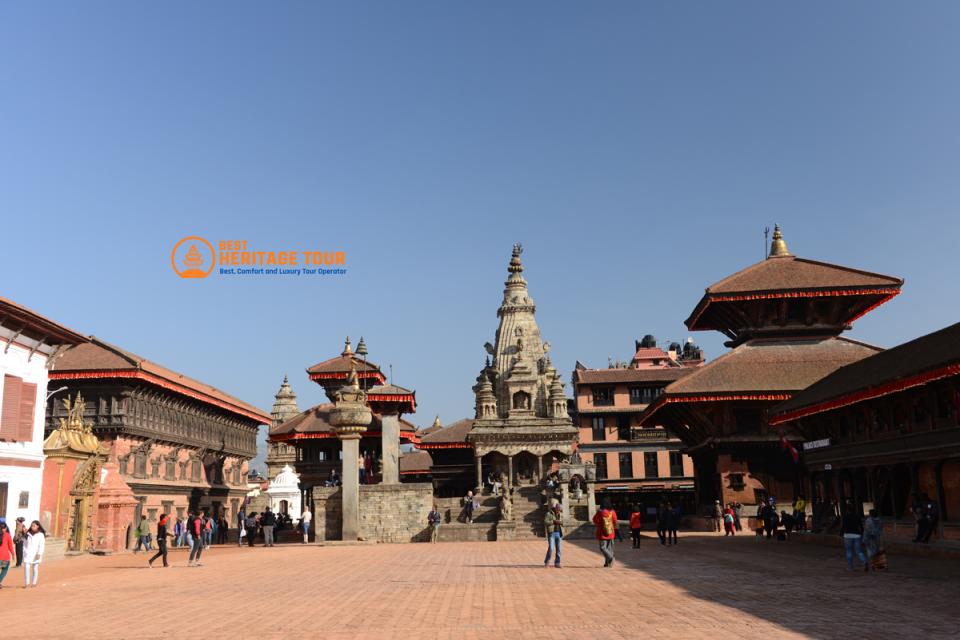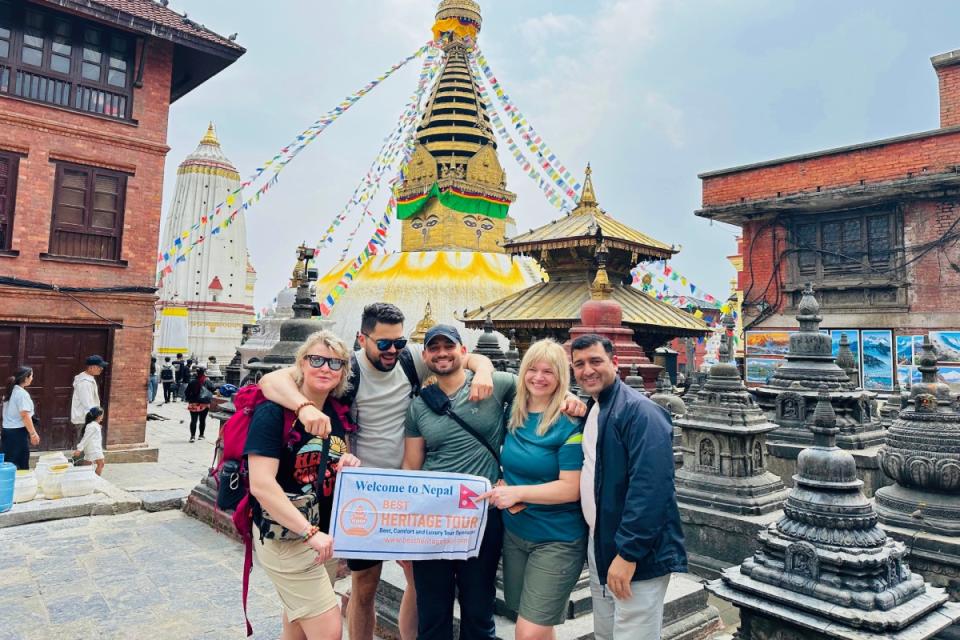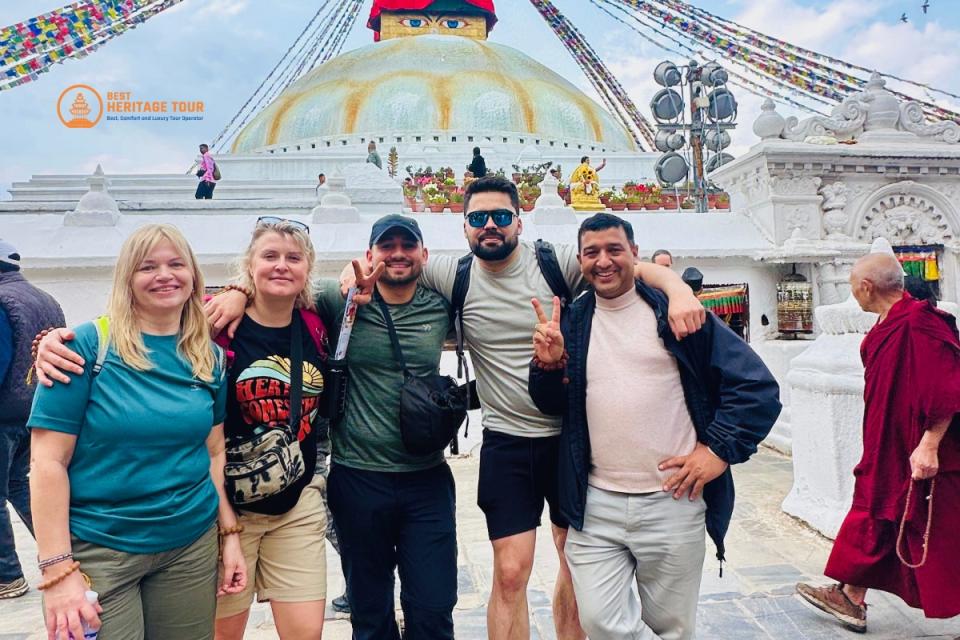
Perched on a forested hillock in the northwest of the Kathmandu Valley, the golden spire of Swayambhunath Stupa stands as a timeless symbol of peace, spirituality, and architectural brilliance. As one of the oldest and most revered UNESCO World Heritage Sites in Nepal, this sacred sanctuary commands an extraordinary presence over the capital city.
Whether you are a rugged trekker resting your legs after an intense Himalayan expedition, a family seeking deep cultural immersion, or a student group researching ancient Newari craftsmanship, Swayambhunath delivers an unforgettable experience.
As a professional travel company dedicated to showcasing the authentic soul of the Himalayas, we at Best Heritage Tour have crafted this definitive, comprehensive guide. Here is all about the Monkey Temple - from its mythical origins to practical navigation tips - ensuring your visit is meaningful, respectful, and seamless.
What is the Monkey Temple? An Overview of Swayambhunath
For generations of global travelers, the site is affectionately known as the Monkey Temple. However, its true spiritual name is Swayambhunath Mahachaitya (commonly spelled Swoyambhunath).
So, what is the Monkey Temple? At its core, it is an ancient Buddhist stupa complex that serves as a profound pilgrimage site for both Buddhists and Hindus. Unlike many religious monuments that cater strictly to one faith, Swayambhunath is a beautiful testament to religious syncretism - the blending of different beliefs. Here, Buddhist monks chant their morning prayers while Hindu devotees offer flowers to shrines within the exact same courtyard.
The complex is easily recognized by its massive white whitewashed dome, which represents the entire earth. Atop the dome sits a gilded, four-sided square tower painted with the enigmatic, all-seeing eyes of the Buddha. These eyes look out in all four cardinal directions, symbolizing infinite wisdom and compassion.
Between the eyes is a curious symbol resembling a curly nose; this is the Nepali number Ek (one), representing unity and the singular path to enlightenment. Above the eyes rises a 13-tiered golden spire, which denotes the thirteen stages of spiritual purification an individual must pass through to achieve Nirvana.
Why is Swayambhunath Called the Monkey Temple?
First-time visitors often wonder: Why is Swayambhunath called the Monkey Temple? The answer lies in a fascinating blend of local zoology and sacred mythology.
The hillock upon which the stupa rests is covered by a dense, protected forest. For centuries, this forest has been home to hundreds of rhesus macaque monkeys. These primates roam completely free across the complex, sliding down the golden railings of the staircases, drinking from the holy pools, and playfully interacting with tourists.
According to sacred Buddhist mythology, the origin of these monkeys is deeply spiritual. The story goes that Manjushri, the Bodhisattva of Wisdom, traveled from China to the Kathmandu Valley, which was a massive, deep lake at the time. Manjushri used his great sword to slash a gorge at Chobhar, draining the water to make the valley habitable for humans.
During his time on the hill where Swayambhunath now stands, he kept his hair long and uncut. As the legend tells, the head lice from his long hair fell out and miraculously transformed into the very monkeys that inhabit the hill today. Because these monkeys are viewed as direct descendants of the Bodhisattva's own hair, they are considered holy. Local monks and devotees treat them with immense respect, allowing them to guard the temple grounds unhindered.
Where is the Monkey Temple Located?
When planning your Kathmandu itinerary, knowing exactly where the Monkey Temple is located helps maximize your day.
Swayambhunath sits on an isolated hill approximately 3 kilometers (less than 2 miles) west of Kathmandu’s central tourist hub, Thamel. Because of its elevated position - elevated roughly 100 meters above the valley floor - it offers unparalleled, 360-degree panoramic views of the sprawling city below. On a crisp, clear day, the snow-capped peaks of the Langtang Himalayan range peer dramatically over the northern valley rim, offering an incredible backdrop for families and photographers.
How to Reach the Monkey Temple: Transportation & Logistics
Navigating Kathmandu’s vibrant traffic can be daunting for international travelers. Knowing how to reach the Monkey Temple efficiently depends heavily on your budget, group size, and preferred comfort level.
1. By Private Vehicle or Taxi (Recommended for Families & Groups)
Taking a taxi or booking a private tour vehicle through an agency like ours is the most comfortable and straightforward method. From Thamel or central Kathmandu, a taxi ride takes roughly 15 to 20 minutes depending on the time of day.
Navigation Tip: If traveling with young children or elderly family members, ask your driver to take you to the West Entrance. This backside entrance features a parking lot located significantly higher up the hill, bypassing the exhausting, steep climb of the main staircase.
2. Walking (Best for Trekkers & Active Travelers)
If you enjoy walking and want to absorb the local street life, you can easily walk from Thamel to Swayambhunath. The trek takes approximately 45 to 60 minutes. You will head west toward the Bishnumati River, cross the footbridge, and follow the local signs pointing toward the Swayambhu hill. It serves as an excellent warm-up walk if you are preparing for a trekking expedition in the Annapurna or Everest regions.
3. By Local Bus (Best for Budget Solo Travelers & Students)
For an authentic local experience, budget-conscious travelers can catch a public bus or a microbus from the Ratna Park Bus Station or Gongabu Ring Road. Look for buses heading toward "Swayambhu" or "Kalanki" and ask the conductor to drop you off at the Swayambhu Bhagwan Pau (the base of the hill). The bus fare is incredibly cheap, costing less than half a dollar.
The Two Paths to the Top: Choosing Your Ascent
Once you arrive at the base of the sacred hill, you must choose between two distinct entry routes, each offering a fundamentally different experience.
Swayambhunath Stupa
Eastern Entrance Western Entrance
- 365 Stone Steps - Gentle Incline
- Steep & Challenging - Minimal Stairs
- Historic Pilgrim Path - Parking Lot Access
- Massive Buddha Statues - Ideal for Families/Seniors
The Eastern Entrance (The Pilgrim's Staircase)
This is the historic, dramatic route. It features 365 steep stone steps - one for every day of the year - climbing directly up through the forest to the main stupa platform. At the very base, you are greeted by three massive, brightly painted Buddha statues and a beautifully carved footprint of the Buddha.
As you climb, the sound of traditional Tibetan singing bowls and Newari incense fills the air. Watch your step, as the monkeys love to lounge on the stone handrails! This path is highly recommended if you are physically fit and want to experience the true sense of accomplishment shared by traditional pilgrims.
The Western Entrance (The Accessible Drive-Up)
If you are traveling as a multi-generational family group with grandparents or small toddlers, the Eastern staircase might be too strenuous. The Western Entrance allows vehicles to drive up a winding road to a higher parking area. From there, it is a very short, gentle, flat walk with minimal steps leading right into the main compound.
Essential Visitor Information: Timings, Fees, and Dress Codes
To ensure a smooth, worry-free visit to Swayambhunath, keep these up-to-date entry details and cultural expectations in mind:
|
Category |
Details & Costs |
|---|---|
|
Opening Hours |
Daily from Sunrise to Sunset (Monasteries close earlier) |
|
Foreign National Entry Fee |
NPR 200 per person (approx. USD 1.50) |
|
SAARC National Entry Fee |
NPR 50 per person |
|
Nepali Citizens / Children < 10 |
Free Admission |
|
Best Time to Visit |
6:00 AM - 8:30 AM (for rituals) or 4:30 PM - Sunset (for views) |
|
Recommended Duration |
1.5 to 2.5 Hours |
Appropriate Cultural Dress Code
Swayambhunath is an active, deeply sacred living religious site, not a theme park. Visitors must dress respectfully. Both men and women should ensure their shoulders and knees are fully covered. Avoid wearing revealing tank tops, short shorts, or highly offensive graphic tees. You will need to remove your shoes before entering any of the indoor monasteries or specific inner shrine rooms around the stupa platform.
Major Monuments and Highlights Within the Monkey Temple Complex
The Swayambhunath complex is far more than just a single central stupa. The hill is a dense treasure trove of historical shrines, temples, and monastic buildings dating back over 1,500 years. As you explore the stone courtyard, make sure you don't miss these critical highlights:
1. The Great Vajra (Thunderbolt)
At the top of the eastern stairs, before you even step onto the main platform, you will encounter an enormous, brass-plated Vajra sitting proudly on a stone pedestal. The Vajra is a quintessential tantric symbol representing a thunderbolt or diamond. It signifies the indestructible, irresistible power of spiritual truth slicing through human ignorance.
2. Harati Devi Temple (The Child Protector)
Located just a few paces northwest of the grand stupa is a small, two-tiered pagoda temple dedicated to Harati, the Hindu goddess of smallpox and the protector of children.
The mythology of Harati is beautiful: she was originally an ogress who kidnapped and devoured the children of Kathmandu. The Buddha hid Harati's youngest, favorite child to teach her the agonizing pain she was causing human parents. Realizing her errors, she repented, converted to Buddhism, and vowed to become the ultimate protector of all infants. Today, you will see a constant stream of local mothers bringing their children here to seek her blessings for health and longevity.
3. Shantipur (The Temple of Peace)
Shantipur is a plain, box-like concrete building shrouded in deep, mystical secrecy. It is believed that inside the subterranean, pitch-black inner chambers of this temple sits Shanti Sri, an ancient 5th-century sage who entered a state of permanent, living meditation (Samadhi) to preserve his life across millennia.
Local lore dictates that whenever the Kathmandu Valley faces a devastating, catastrophic drought, the reigning King of Nepal must enter the secret vaults of Shantipur alone to retrieve a sacred, blood-written scroll from the sage to summon rain.
4. Pratappur and Anantapur Shrines
Framing the main stupa are two stark-white, bullet-shaped stone temples built in the traditional Shikhara architectural style. These were erected in the 17th century by the famous Malla King, Pratap Malla, to honor his twin queens. They represent a flawless blend of Hindu architectural lines protecting a deeply Buddhist monument.
5. Shree Karma Raj Mahavihar
This is an active, beautiful Tibetan Buddhist monastery sitting right on the main platform. Visitors are often welcome to step quietly inside to view the giant, golden Buddha statue and witness the young novice monks practicing their rhythmic, deep-toned chanting accompanied by ceremonial drums and long horns.
Conclusion
Swayambhunath is far more than a simple point of interest on a standard tourist checklist. It is a living, breathing cultural sanctuary where ancient myths seamlessly intersect with daily modern life. From the playful antics of its holy monkeys to the deep, resonant vibrations of the morning prayer chants, a visit to the Monkey Temple offers a profound window into the resilient spiritual soul of Nepal.
Navigating the hidden historical nuances, dodging the aggressive monkey troops, and bypassing transit friction is infinitely easier with an expert by your side. We at Best Heritage Tour specialize in crafting deeply immersive, highly personalized city excursions and trekking itineraries across the Kathmandu Valley and beyond. Let our veteran local guides handle the logistics while you focus entirely on the magic of the experience.
Contact Best Heritage Tour to Book Your Adventure Today!
Phone / WhatsApp / Viber: +977-9851149197 / +977-9810043046
Email: info@bestheritagetour.com / bestheritagetour@gmail.com
Website: www.bestheritagetour.com
Office: Thamel Marg, Kathmandu, Nepal
Author: Best Heritage Tour
Date: 21st May, 2026