Deep within the rugged embrace of the Solukhumbu district lies a sanctuary that time - and the average tourist - seems to have forgotten. While thousands of trekkers flock to the bustling trails of the Everest Base Camp annually, a select few turn their gaze toward the east, crossing high mountain passes to enter the pristine, wild, and awe-inspiring Hinku Valley.
As a trusted travel company - Best Heritage Tour, we often tell our guests that if the Khumbu Valley is the "Thamel" of the mountains (vibrant and busy), then the Hinku Valley is the "Old Patan" - quiet, spiritual, and steeped in raw, natural beauty.
In this long-form guide, we will dive into everything you need to know about Hinku Valley Nepal, its legendary trails, and why it remains the ultimate frontier for those seeking the true Himalayan soul.
Where is Hinku Valley? Locating the Untamed Wilderness
For many first-time travelers, the first question is always: Where is Hinku Valley?
Geographically, the Hinku Valley is situated in the Solukhumbu region of eastern Nepal. It runs parallel to the Khumbu Valley but is separated by a towering ridge of peaks. To its east lies the equally remote Hongu Valley, and it is largely protected within the borders of the Makalu Barun National Park.
Unlike the main Everest trail, which follows the Dudh Koshi River north, the Hinku Valley is tucked away behind the Zatrwa La Pass (4,610m). This geographical barrier acts as a natural gatekeeper, ensuring that the valley remains less commercialized and more ecologically intact than its famous neighbors.
Why Visit the Hinku Valley? The Appeal of the "Other" Everest Region
If you are looking for five-star bakeries and high-speed Wi-Fi at every stop, the Hinku Valley might not be for you. However, if you crave the following, it is your paradise:
-
Mera Peak (6,476m): The Hinku Valley is the primary gateway to Mera Peak, the highest "trekking peak" in Nepal.
-
Solitude: You can walk for hours through ancient rhododendron and pine forests without seeing another trekking group.
-
Biodiversity: This is one of the few places in Nepal where you might still spot the elusive Red Panda or the Himalayan Thar in their natural, undisturbed habitat.
-
Raw Landscape: From the turquoise waters of the Hinku River to the massive glacier moraines near Khare, the scenery is dramatic and ever-changing.
Navigating the Hinku Valley Trails: The Typical Route
The Hinku Valley trails are known for being steeper and more rugged than the standard EBC trek. Most journeys begin with the world-famous "scary" flight into Lukla, but from there, the path diverges into the wild.
Phase 1: The Gatekeeper (Lukla to Kothe)
The most common way into the valley is via the Zatrwa La Pass. On Day 1 or 2 of your trek, you’ll climb from Lukla (2,840m) up toward Chutanga and then tackle the pass.
-
Pro Tip from Best Heritage Tour: Crossing a 4,600m pass so early in the trek is a significant challenge for acclimatization. We often recommend a slower "south route" through Paiya and Panggom for those who want to ease their bodies into the altitude.
Phase 2: Deep Into the Valley (Kothe to Thaknak)
Once you descend from the pass into the valley floor, you arrive at Kothe (3,600m). This village feels like a frontier town. The trail follows the Hinku Drangka River, winding through moss-covered forests that feel like something out of a fantasy novel. As you move toward Thaknak (4,350m), the trees begin to disappear, replaced by alpine meadows and the looming South Face of Mera Peak.
Phase 3: The High Alpine Zone (Thaknak to Khare)
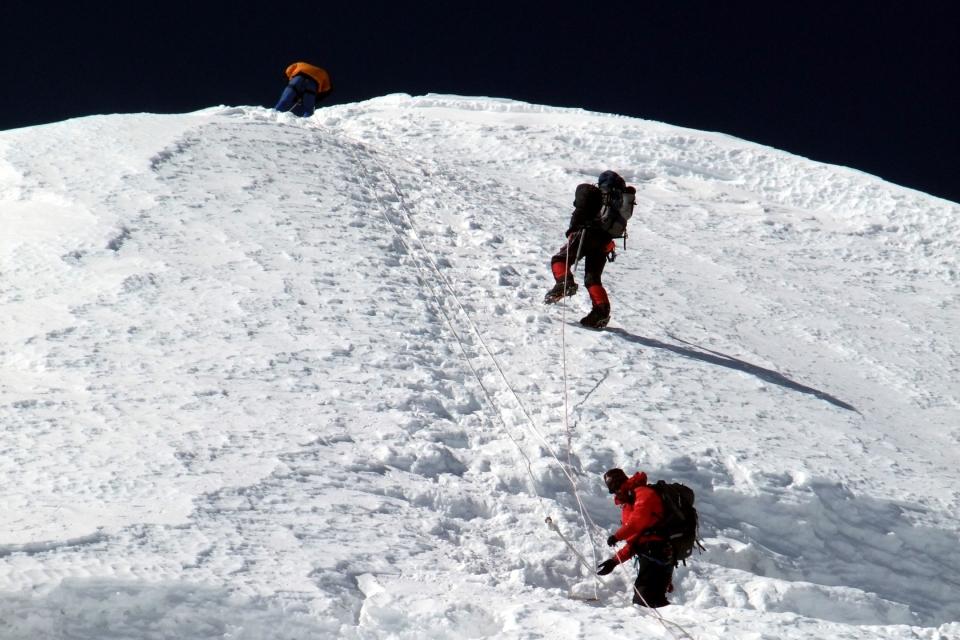
Khare (5,045m) is the final settlement and the "Base Camp" for most trekkers. The landscape here is purely glacial. You are surrounded by the giants: Kyashar, Kusm Kanguru, and Mera. Khare serves as the staging ground for anyone attempting to cross the Mera La or summit the peak itself.
A Glimpse into the Geography: The Hinku Valley Landscape
The Hinku Valley Nepal is a classic example of a "U-shaped" glacial valley. Thousands of years of glacial movement have carved out steep walls and a wide, boulder-strewn floor.
The Flora and Fauna
The lower reaches of the valley (around 3,000m to 3,800m) are blanketed in dense forests of Himalayan Pine, Fir, and Rhododendron. In the spring (March-May), the entire valley turns shades of pink and red as the rhododendrons bloom.
Regarding wildlife, the Makalu Barun National Park is a biodiversity hotspot. While sightings are rare, the valley is home to:
-
Snow Leopards (in the high rocky reaches)
-
Red Pandas (in the bamboo thickets)
-
Himalayan Black Bears
-
Over 400 species of birds, including the colorful Impeyan Pheasant (Danphe), Nepal’s national bird.
Planning Your Visit: Logistics and Timing
Best Time to Visit
Like most of Nepal, the Hinku Valley has two primary trekking seasons:
-
Spring (March to May): Ideal for those who love flowers and slightly warmer daytime temperatures. The snow on the high passes is melting, making the Zatrwa La more accessible.
-
Autumn (September to November): This is the "Goldilocks" season. The air is crystal clear after the monsoon rains, offering the best views of Everest, Lhotse, and Makalu.
Permits Required
To trek here, you generally need two main permits:
-
Makalu Barun National Park Entry Permit: The valley lies within this protected area.
-
Khumbu Pasang Lhamu Rural Municipality Permit: Since you start in Lukla, this local tax is required.
-
NMA Climbing Permit: Only if you intend to summit Mera Peak.
Hinku Valley vs. Khumbu Valley: Which Should You Choose?
I often get asked this by clients at Best Heritage Tour. Here is a quick comparison table to help you decide:
|
Feature |
Khumbu Valley (EBC Route) |
Hinku Valley (Mera Route) |
|---|---|---|
|
Crowds |
High (Especially in Oct/Nov) |
Very Low (Peaceful) |
|
Accommodation |
Luxury lodges & Cafes |
Traditional, basic teahouses |
|
Trail Difficulty |
Moderate (Well-trodden) |
Strenuous (Steep & Rugged) |
|
Peak View |
Everest is the star |
5 of the world's 8,000m peaks |
|
Culture |
Modern Sherpa/Commercial |
Traditional Sherpa & Rai |
Essential Gear for the Hinku Trails
Because the Hinku Valley trails are more remote, your packing list needs to be precise. There aren't many "gear shops" once you leave Lukla.
-
Footwear: Broken-in waterproof trekking boots are non-negotiable.
-
Clothing: Layering is key. Temperatures can drop to -15°C at night in Khare, even during peak season.
-
Navigation: While the trails are generally clear, a local guide is highly recommended due to the potential for sudden mists and the lack of frequent villages.
-
Health: Carry a full medical kit with Diamox (for altitude) and water purification tablets.
The Spiritual Side: Hinku’s Hidden Caves
One of the most fascinating features of the valley is the Hinku Cave. Before the modern teahouse era, these natural rock overhangs were used by porters and pilgrims for shelter. Even today, you can find small stone altars where locals leave offerings to the mountain deities.
There is a palpable sense of "Dharma" in the Hinku. Unlike the larger monasteries in Tengboche, the spirituality here is found in the silence, the prayer flags fluttering on lonely ridges, and the ancient mani stones carved with "Om Mani Padme Hum."
Expert Tips for a Successful Hinku Valley Trek
-
Train Your Knees: The descent from Zatrwa La into Kothe is a "knee-cracker." Spend some time on the stairmaster or hiking downhill before you arrive.
-
Cash is King: There are no ATMs in the Hinku Valley. Carry enough Nepali Rupees from Kathmandu to cover your snacks, hot showers, and tips.
-
Respect the National Park: We practice "Leave No Trace." Whatever you pack in, please pack out. The ecosystem here is fragile.
-
Hire Locally: By hiring a guide or porter, you are directly supporting the families of the Solukhumbu who call this valley home.
Conclusion
The Hinku Valley is not just a place on a map; it is a feeling. It is the sound of the Hinku River rushing through a silent forest. It is the sight of the first sunlight hitting the summit of Mera Peak. It is the taste of a warm bowl of Sherpa Stew after a long day on the trail.
Whether you are an aspiring mountaineer aiming for your first 6,000m peak or a trekker looking to escape the "human traffic jams" of the Everest highway, the Hinku Valley offers an authenticity that is becoming rare in the modern world.
Explore the Hinku Valley with Best Heritage Tour
Ready to trade the crowds for the clouds? At Best Heritage Tour, we specialize in curated, high-safety, and culturally immersive treks through the Hinku Valley Nepal. Our guides are local experts who know every twist and turn of the Hinku Valley trails.
Phone / WhatsApp / Viber: +977-9851149197 / +977-9810043046
Email: info@bestheritagetour.com / bestheritagetour@gmail.com
Website: www.bestheritagetour.com
Office: Thamel Marg, Kathmandu, Nepal
Author: Best Heritage Tour
Date: 11th May, 2026