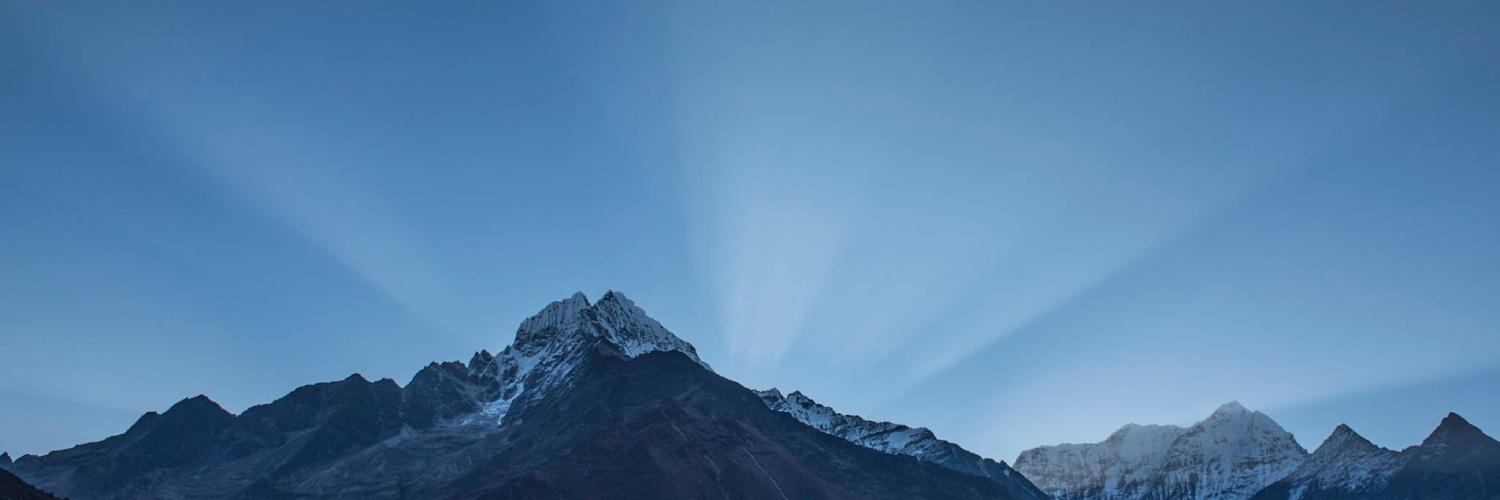
The Khumbu region is a land of superlatives. It is home to the world’s highest peak, the oldest monasteries, and a trail that is widely considered the "ultimate" Himalayan challenge: The Everest Three Pass Trek.
At Best Heritage Tour, we often receive inquiries from eager adventurers asking, "How difficult is the Everest Three Pass Trek?" It is a question that requires more than a simple "hard" or "easy" answer. This trek is a massive undertaking that combines high-altitude endurance, technical terrain, and mental fortitude. It is a journey that takes you far beyond the standard Base Camp trails, into the quiet, high-alpine wilderness where the air is thin and the views are unparalleled.
If you are planning to test your limits against Kongma La, Cho La, and Renjo La, this guide is your definitive resource for understanding the true difficulty level of the Three Pass Trek.
Defining the Challenge: What is the Everest Three Pass Trek?
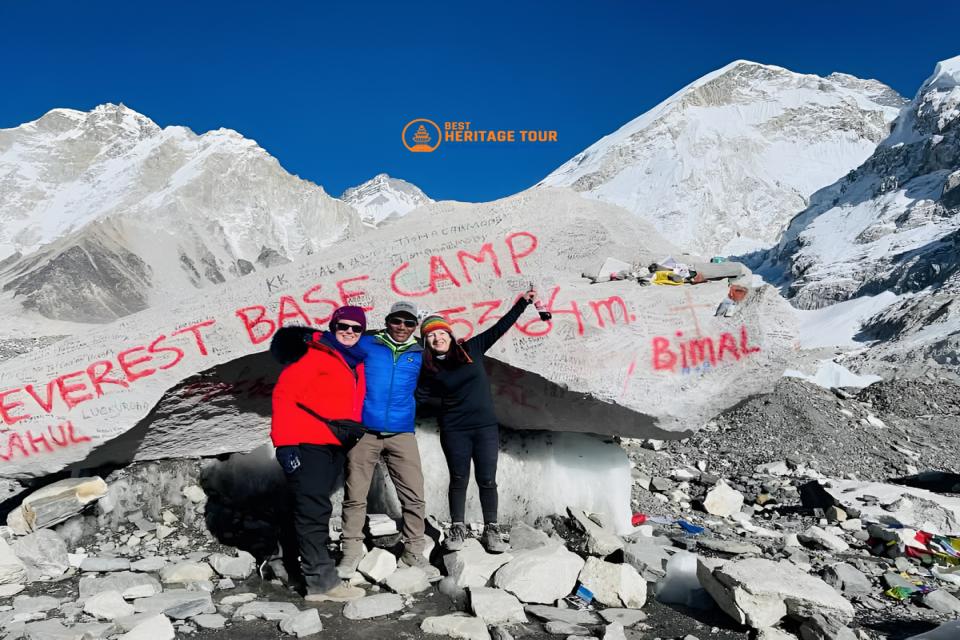
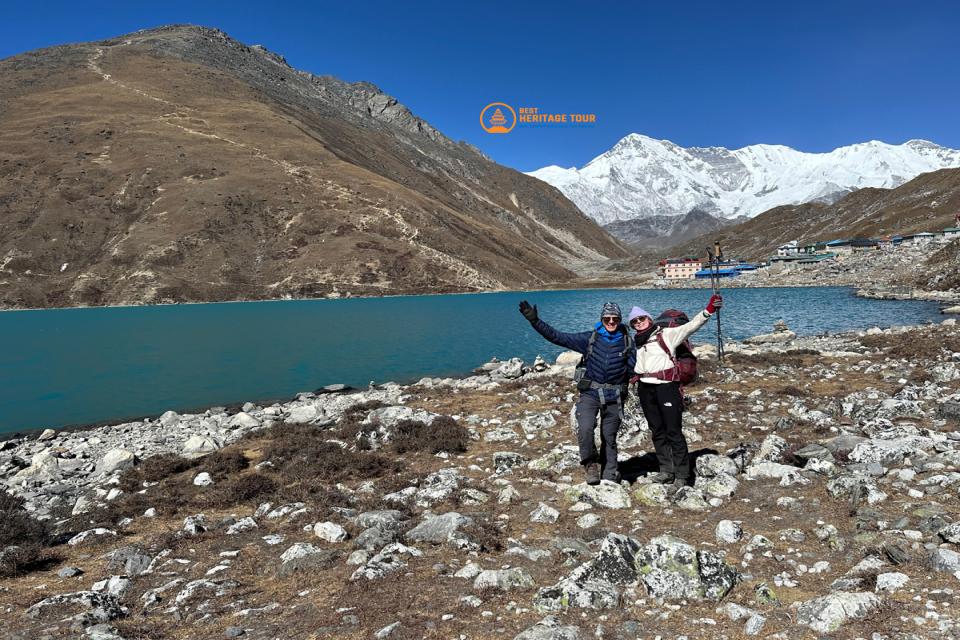
Before we dive into the grit of the difficulty, let’s define the route. Unlike the classic Everest Base Camp (EBC) trek, which follows a linear path up and back, the Three Pass Trek is a grand loop. It encompasses the entire Everest region, including the pristine Gokyo Lakes, the iconic Base Camp, and three formidable mountain passes that all sit above 5,300 meters (17,388 feet).
The Three Pillars of Difficulty:
-
Kongma La Pass (5,535m / 18,159ft): Often cited as the toughest due to its steep ascent and the crossing of the Khumbu Glacier.
-
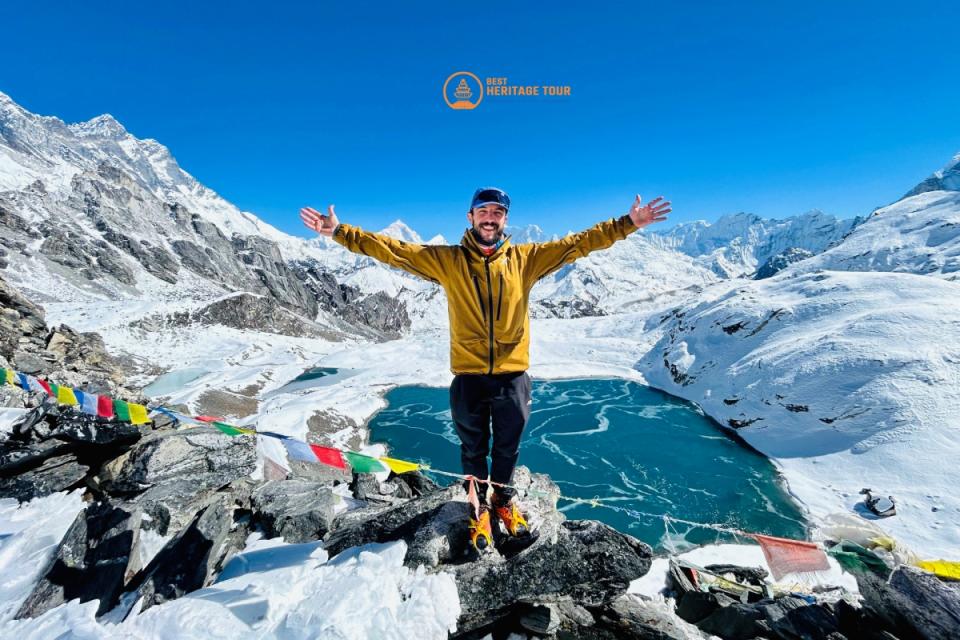
Cho La Pass (5,420m / 17,782ft): Famous for its icy slopes and the technicality of traversing a literal glacier.
-
Renjo La Pass (5,360m / 17,585ft): While physically taxing, it offers perhaps the greatest panoramic reward of the entire journey.
The True Difficulty Level of Three Pass Trek: A Professional Breakdown
At Best Heritage Tour, we grade our treks to help travelers prepare. We categorize the Everest Three Pass Trek as Strenuous and Challenging. This is not a trek for the casual hiker or the absolute beginner.
1. The Altitude Factor
Altitude is the primary "silent" difficulty. On this route, you will spend more than two consecutive weeks above 3,500 meters (11,482ft).
-
The Problem: The oxygen levels at the top of the passes are roughly 50% of what you find at sea level.
-
The Impact: Every step feels like three. Your heart rate increases, your breath becomes shallow, and the risk of Acute Mountain Sickness (AMS) is a constant companion.
2. Terrain and Technicality
The "EBC highway" is a well-maintained trail. The Three Pass route, however, is a different beast entirely. You will encounter:
-
Glacier Crossings: Navigating the moving ice and shifting rocks of the Khumbu Glacier (between Kongma La and Lobuche) requires keen focus and a guide’s expert eye.
-
Scree Slopes: Steep sections of loose rock where balance is tested.
-
Icy Sections: Especially on the descent from Cho La, where micro-spikes or crampons are often non-negotiable.
3. Duration and Endurance
The Everest Three Pass Trek difficulty level is also a product of time. Most itineraries span 18 to 22 days.
-
The Grind: You are hiking for 6 to 8 hours daily for nearly three weeks.
-
Cumulative Fatigue: It’s not just one hard day; it’s the recovery (or lack thereof) over twenty days of high-altitude living.
Comparative Analysis: Which is more difficult, Gokyo Lake Trek or Three Pass Trek?
This is one of the most common questions we hear. Travelers often debate between the two because they both offer views of the turquoise Gokyo Lakes.
|
Feature |
Gokyo Lake Trek |
Everest Three Pass Trek |
|---|---|---|
|
Difficulty Grade |
Moderate to Strenuous |
Very Strenuous / Challenging |
|
Max Elevation |
5,357m (Gokyo Ri) |
5,550m (Kala Patthar / Passes) |
|
Duration |
12–15 Days |
18–21 Days |
|
Technical Terrain |
Standard trails, some moraine |
Glaciers, steep icy passes, scree |
|
Crowds |
Moderate |
Very Low (Remote) |
The Verdict: The Three Pass Trek is significantly more difficult than the Gokyo Lake Trek. While the Gokyo route focuses on the valley and one major peak, the Three Pass Trek forces you to climb over the mountains separating the valleys. If you have limited time or are worried about your fitness, the Gokyo Lake Trek is a fantastic alternative that still captures the "magic" of the Everest region.
What Makes the Everest Three Pass Trek Difficult? (Internal Factors)
Beyond the map and the mountains, there are logistical and physiological factors that contribute to the Everest Three Pass Trek difficulty.
Weather Volatility
In the Khumbu, the weather can change in minutes. On a pass day, a sudden snowstorm or high winds can turn a "difficult" trek into a "survival" situation. This is why Best Heritage Tour guides are trained in weather pattern recognition - knowing when to push for the summit and when to wait it out is vital.
The "Cold" Factor
The higher you go, the colder it gets. Sleeping in teahouses where temperatures drop well below freezing can be mentally draining. Lack of quality sleep due to the cold and altitude can diminish your physical performance the following day.
Mental Resilience
Perhaps the most overlooked difficulty is the mental game. There will be moments - usually halfway up a steep 400-meter scree slope at 5,000 meters - where your brain tells you to stop. Overcoming that mental barrier is what separates those who complete the circuit from those who turn back.
How to Prepare for the Climb: Expert Advice from Best Heritage Tour
Knowing the difficulty is only half the battle; preparing for it is the other. As an experienced trekking company, we recommend a minimum of 3 to 4 months of preparation before arriving in Kathmandu.
Physical Conditioning
-
Cardio is King: Running, cycling, or swimming for 45-60 minutes, 4 times a week.
-
Strength Training: Focus on your legs (squats, lunges) and your core. A strong core helps with balance on uneven glacial terrain.
-
Hike with Weight: If possible, go on weekend hikes with a 10kg backpack to simulate the weight of your daypack.
Acclimatization Strategy
We never rush the Three Pass Trek. Our itineraries include strategic "Rest Days" in Namche Bazaar and Dingboche. These aren't just days off; they are "Climb High, Sleep Low" days where we take you to higher viewpoints before returning to a lower elevation to sleep. This is the only way to safely tackle the true difficulty level of the three pass trek.
The Reward: Why Do We Trek the Three Passes?
If it’s so difficult, why do thousands of people attempt it every year?
Because the Everest Three Pass Trek is the most honest way to see the Himalayas.
-
You get the cultural richness of Thame and Namche.
-
You see the four tallest peaks on earth: Everest, Lhotse, Makalu, and Cho Oyu.
-
You experience the solitude that the crowded main EBC trail lacks.
Crossing a pass like Renjo La and looking down at the Gokyo Lakes while Everest looms in the background is a moment of pure, hard-earned clarity. It is the gold standard of trekking.
Conclusion
The Everest Three Pass Trek is a masterpiece of Himalayan adventure, but it demands respect. It is difficult because it is grand; it is challenging because it is transformative. Whether you are wondering how difficult is the Everest Three Pass Trek because you are a seasoned pro or a motivated newcomer, the answer remains the same: it is as much about your preparation as it is about the mountain.
At Best Heritage Tour, we don't just guide you; we partner with you. Our experienced Sherpa guides, meticulously planned itineraries, and deep-rooted knowledge of the Khumbu ensure that while the trek is difficult, it is also safe, enjoyable, and ultimately successful.
Ready to Conquer the High Passes?
If you feel the call of the high Himalayas and are ready to face the true difficulty level of the Three Pass Trek, we are here to lead the way.
Phone / WhatsApp / Viber: +977-9851149197 / +977-9810043046
Email: info@bestheritagetour.com / bestheritagetour@gmail.com
Website: www.bestheritagetour.com
Office: Thamel Marg, Kathmandu, Nepal
Author: Best Heritage Tour
Date: 10th April, 2026