For many, the sight of the jagged, snow-capped Himalayas is the end goal of a lifetime. But for a certain breed of adventurer, looking at the mountains from a distance isn't enough. You want to feel the crunch of crampons on glacial ice, the rhythm of your own breath at 6,000 meters, and the life-changing moment of standing on a summit.
At Best Heritage Tour, we have guided hundreds of first-time climbers through their first Himalayan "vertical" experience. We know that the transition from trekking to peak climbing can feel intimidating. This guide is designed to demystify the process, break down the technicalities, and show you why Nepal is the world’s greatest classroom for aspiring mountaineers.
What Exactly is "Peak Climbing" in Nepal?
In the international climbing community, the term "trekking peak" is often used for mountains in Nepal ranging from 5,500m to 6,500m.
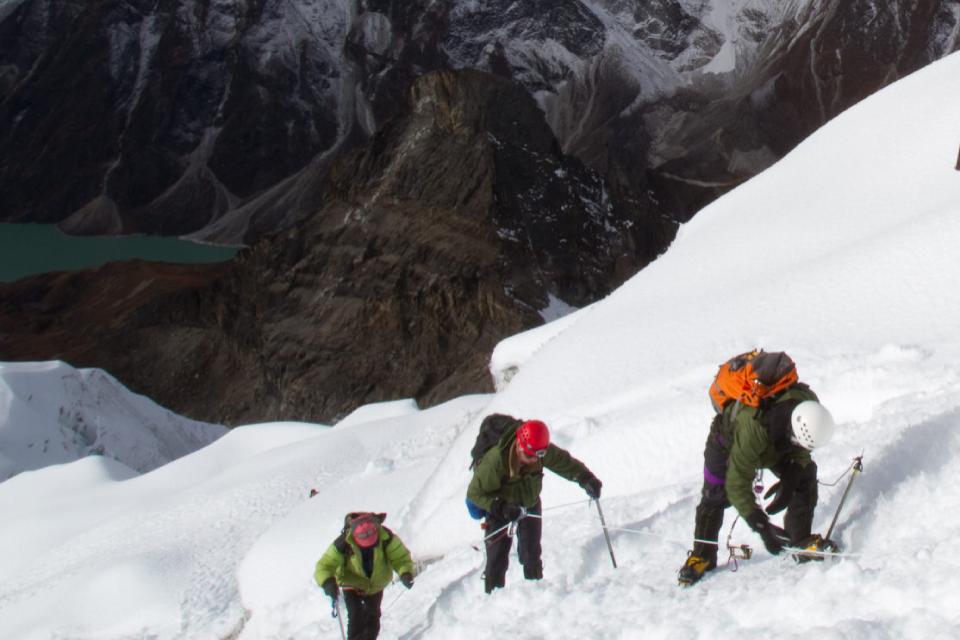
Don’t let the word "trekking" fool you. While these peaks are significantly less technical than 8,000-meter giants like Everest or Kanchenjunga, they are true mountaineering expeditions. They require:
-
Use of specialized gear (crampons, ice axes, harnesses).
-
High-altitude acclimatization.
-
Physical and mental endurance.
-
Basic rope skills (which our guides teach you at Base Camp).
For a beginner, these peaks are the perfect "stepping stone." They offer the thrill of a summit without the extreme technicality of vertical rock walls or high-risk ice falls.
Top 4 Beginner Peaks: Where Should You Start?
Choosing the right peak is the most critical decision for a first-timer. At Best Heritage Tour, we recommend three iconic mountains that balance challenge with achievable success.
1. Island Peak (Imja Tse) - 6,189m
Located in the heart of the Everest region, Island Peak is arguably the most popular beginner peak in the world.
-
The Experience: You follow the classic Everest Base Camp trail, providing world-class acclimatization.
-
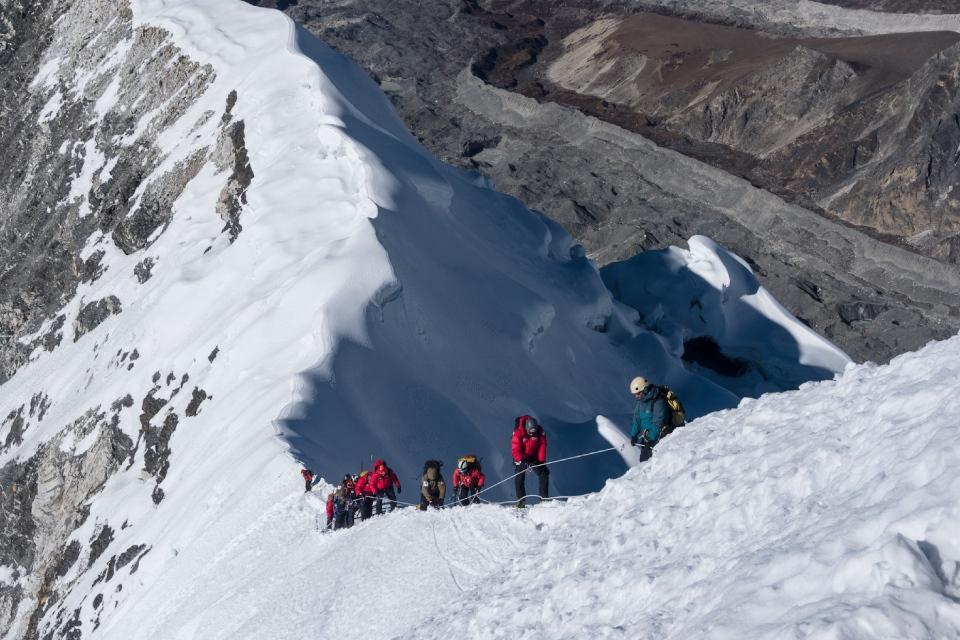
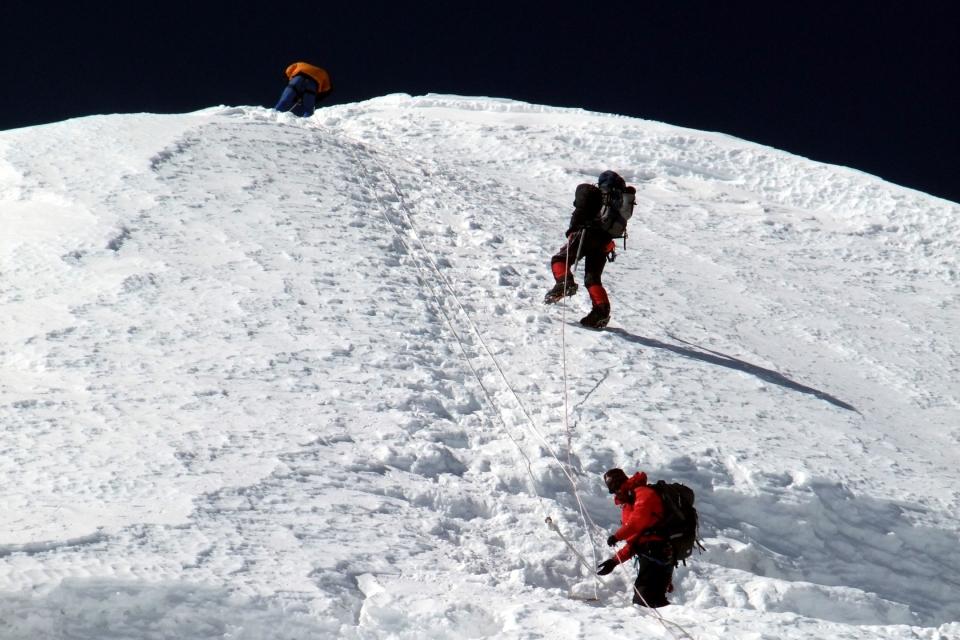
The Challenge: The "crux" is a steep 100-meter snow headwall that requires using a Jumar (ascender) on a fixed rope.
-
The Reward: A narrow summit ridge with a direct view of the massive Lhotse face.
2. Mera Peak - 6,476m
If you want to go high but prefer less technical climbing, Mera Peak is your mountain. It is the highest trekking peak in Nepal.
-
The Experience: A remote trek through the Hinku Valley, far from the crowded EBC trails.
-
The Challenge: It is a "physical" climb rather than a "technical" one. The main obstacle is the altitude and the long summit day.
-
The Reward: On a clear day, you can see five of the world's fourteen 8,000m peaks: Everest, Lhotse, Makalu, Cho Oyu, and Kangchenjunga.
-
The Experience: A remote trek through the Hinku Valley, far from the crowded EBC trails.
-
The Crux: The altitude. While the slopes are gentle, the sheer elevation makes every step a battle of willpower.
-
Best For: Those with high physical endurance who prefer "snow walking" over "technical climbing."
3. Lobuche East - 6,119m
The Technical Alternative Lobuche East is often used by Everest expedition teams as a "warm-up" peak. It offers a more "alpine" feel than Island Peak.
-
The Experience: It shares the EBC trail but branches off near the village of Lobuche.
-
The Crux: A technical rock scramble to reach the "crampon point" and a narrow, exposed summit ridge.
-
Best For: Beginners who want to learn actual mountaineering skills and crave the best views of the Everest Horseshoe.
4. Yala Peak - 5,500m
For those short on time or who want a "soft" introduction to mountaineering, Yala Peak in the Langtang region is perfect.
-
The Experience: A beautiful trek through the "Valley of Glaciers."
-
The Challenge: It is non-technical. You mostly walk on snow and rock without needing intensive rope work.
-
The Reward: Stunning views of Shishapangma (the only 8,000m peak entirely in Tibet).
Essential Gear: Your Mountaineering Toolkit
When you climb with Best Heritage Tour, we provide the heavy group gear (ropes, tents, snow bars). However, you need to be familiar with the personal technical equipment.
The "Big Five" of Climbing Gear:
-
Mountaineering Boots: Unlike hiking boots, these are stiff, insulated, and have "welts" to attach crampons. For peaks like Island or Mera, "Double Boots" (with a removable liner) are essential to prevent frostbite.
-
Crampons: Steel spikes that strap to your boots to provide traction on ice and hard-packed snow.
-
Ice Axe: Used for balance and, more importantly, for "self-arrest" (stopping yourself if you slip).
-
Climbing Harness: A webbed belt you wear around your waist and legs to clip into safety ropes.
-
Jumar (Ascender) & Descender: Mechanical devices used to slide up a fixed rope (ascending) or safely rappel down (descending).
Pro Tip: Don’t rush to buy all of this. Most technical gear can be rented in Kathmandu or Namche Bazaar for a fraction of the retail price. Our team will help you inspect every piece for safety.
Training and Physical Preparation
You don’t need to be an Olympic athlete, but Himalayan climbing is a game of endurance. The air at 6,000m has roughly 50% less oxygen than at sea level.
The Training Strategy:
-
Cardio, Cardio, Cardio: Focus on "Zone 2" training. Long, slow runs, swimming, or cycling. You need a heart that can pump efficiently for 10-12 hours on summit day.
-
Leg Strength: Hiking with a weighted pack (10-15kg) is the best specific preparation. Focus on step-ups and lunges.
-
Mental Grit: Mountaineering is often uncomfortable. It’s cold, you’re tired, and the air is thin. Training your mind to stay positive when you're exhausted is just as important as your leg muscles.
The "Secret Sauce": Acclimatization
At Best Heritage Tour, we have a saying: "The mountain doesn't care how fit you are; it cares how well you breathe."
The biggest reason for failed summits isn't lack of strength - it's Acute Mountain Sickness (AMS). Our itineraries are designed with built-in "Rest & Acclimatization" days. We follow the "Climb High, Sleep Low" principle, where we hike to a higher altitude during the day and return to a lower altitude to sleep. This "teaches" your body to produce more red blood cells.
Understanding Permits and Logistics (2026 Update)
Nepal’s mountain regulations have evolved. As of 2026, the following rules apply to all peak climbers:
-
Compulsory Guides: You cannot climb a trekking peak solo. You must be accompanied by a licensed climbing guide and registered through a government-authorized agency like Best Heritage Tour.
-
NMA Permits: Permits are issued by the Nepal Mountaineering Association (NMA). Fees vary by season, with Autumn and Spring being the most expensive due to stable weather.
-
Digital Tracking: Permits are now digitally linked to your passport, making the checkpoint process at National Parks much faster.
When is the Best Time to Climb?
The Himalayas have two primary climbing windows:
-
Spring (March to May): The most popular season. The weather is getting warmer, the rhododendrons are blooming at lower altitudes, and the snow is generally stable.
-
Autumn (September to November): Post-monsoon. The air is incredibly crisp and clear, providing the best photography conditions and sharp views of the peaks.
Note: Winter (Dec-Feb) is possible for peaks like Yala, but the extreme cold and high winds make it very difficult for beginners.
Why Choose Best Heritage Tour for Your First Peak?
Climbing a mountain is a partnership between the climber and the guide. We don't just "show you the way"; we manage the risk so you can enjoy the reward.
-
Expert Climbing Sherpas: Our guides have summited Everest, Manaslu, and Ama Dablam multiple times. They are trained in high-altitude medicine and technical rescue.
-
Safety First: We carry satellite phones, oximeters to monitor your oxygen levels daily, and comprehensive medical kits.
-
Heritage & Culture: We believe the journey is as important as the summit. We introduce you to the local Sherpa culture, monasteries, and traditions that make the Himalayas sacred.
Conclusion
Peak climbing in Nepal is more than just a sport; it is a profound journey of self-discovery. It pushes you to your limits and rewards you with a perspective on the world that very few people ever experience. If you can trek for 6 hours a day, you have the potential to stand on a Himalayan summit. All you need is the right preparation, a bit of courage, and a professional team to back you up.
Ready to Take the First Step?
Whether you have questions about gear, want a customized training plan, or are ready to book your Island Peak or Mera Peak expedition, Best Heritage Tour is here to guide you from the streets of Kathmandu to the top of the world.
Phone / WhatsApp / Viber: +977-9851149197 / +977-9810043046
Email: info@bestheritagetour.com / bestheritagetour@gmail.com
Website: www.bestheritagetour.com
Office: Thamel Marg, Kathmandu, Nepal
Author: Best Heritage Tour
Date: 8th April, 2026