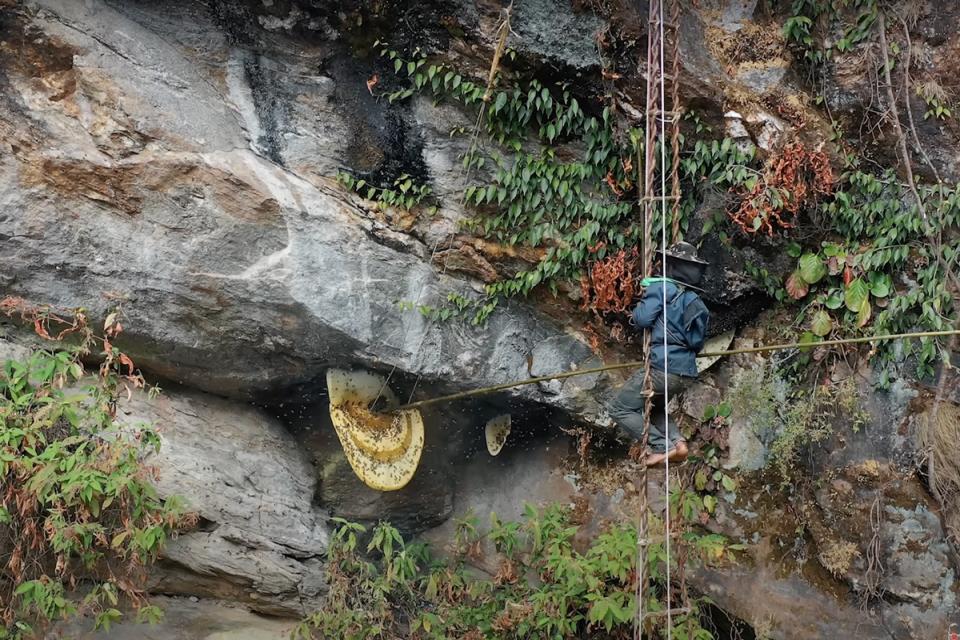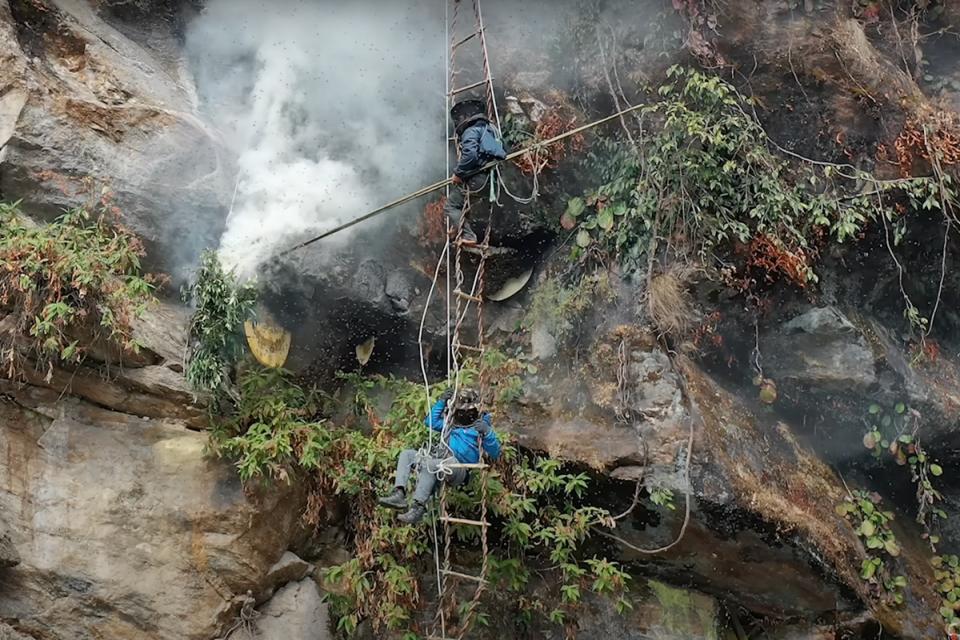
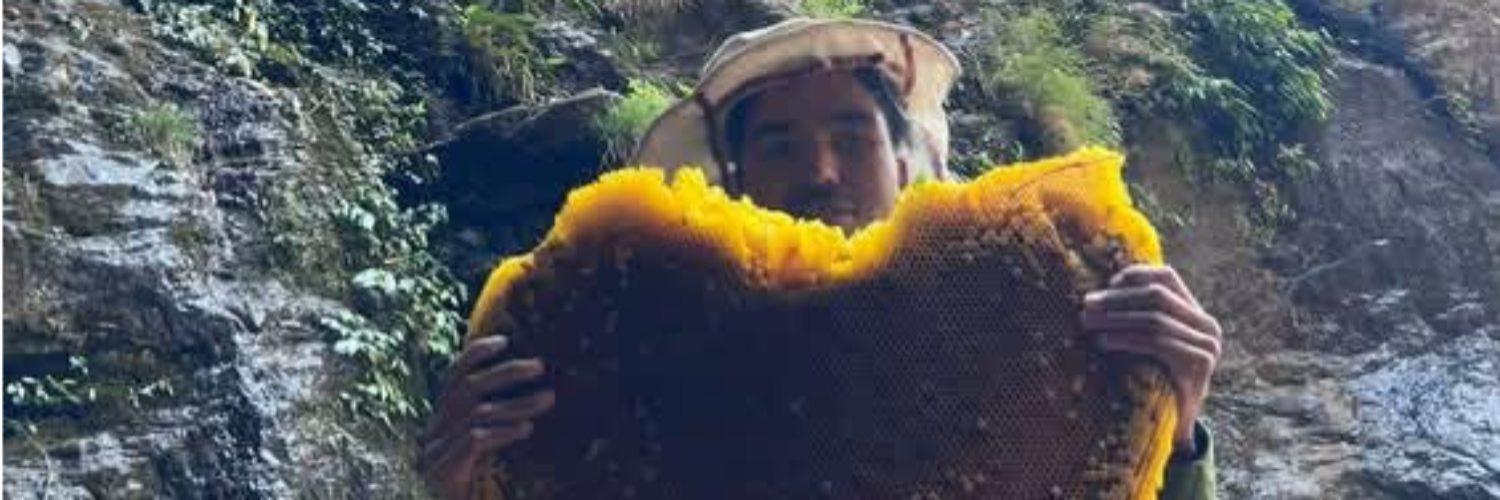
For centuries, tucked away in the rugged folds of the Lamjung and Myagdi districts, a death-defying ritual has unfolded twice a year. Known as "Mad Honey Hunting," this is not just a search for sweetness; it is a spiritual negotiation between man, the "Cliff Gods," and the world’s largest honeybees (Apis laboriosa).
As we look toward the Mad Honey Hunting season in May 2027, Best Heritage Tour is proud to present this comprehensive guide. Whether you are a documentary filmmaker, a professional photographer, or a traveler seeking a story that hasn't been "over-touristed," this is your roadmap to the cliffs of Nepal.
What is Mad Honey? (The Science Behind the "Madness")
Before we discuss the hunt, we must define the prize. Mad Honey, known locally as Bhir Maha (Cliff Honey) or Del, is a potent, reddish-amber nectar.
The "madness" comes from grayanotoxins found in the nectar of specific rhododendron species (Rhododendron luteum and Rhododendron ponticum) that bloom in the high-altitude forests of Nepal during the spring. When the giant Himalayan bees feast on these flowers, the resulting honey becomes hallucinogenic and medicinal.
In small doses, it is used by local Gurung and Magar communities as an aphrodisiac, a treatment for hypertension, and a remedy for joint pain. In larger doses? It leads to a state of euphoria, dizziness, and intense hallucinations - an experience that has captivated the global imagination.
Why Mad Honey Hunting in 2027 is a "Bucket List" Event
As we move into 2027, the traditional art of honey hunting faces a crossroads. Modernization and climate change are impacting bee migratory patterns, making every harvest a rare and precious event. For videographers and vloggers, 2027 represents a critical window to document a "vanishing tradition."
The Significance of Mad Honey Hunting in May 2027
While there are two harvests (Spring and Autumn), the May 2027 harvest is the one you want. This is the "Red Honey" season. Only the spring harvest, following the blooming of the rhododendrons, contains the high concentrations of grayanotoxins that give the honey its legendary status.
Where to Witness Mad Honey Hunting in Nepal?
At Best Heritage Tour, we don't just take you to "tourist spots." we take you to the ancestral lands where the tradition remains authentic.
1. The Lamjung District (Bhujung and Ghalegaun)
Lamjung is the undisputed heartland of the Gurung honey hunters. The villages of Bhujung and Ghalegaun offer the perfect blend of high-altitude cliffs and rich cultural heritage. These locations are ideal for photographers who want to capture the "honey-colored" light hitting the Annapurna range in the background.
2. Myagdi District
For those seeking a more rugged, off-the-beaten-path experience, the cliffs of Myagdi provide a dramatic backdrop. The terrain here is steeper, the honey is often "stronger," and the crowds are virtually non-existent.
3. Kaski (Sikles and Tangting)
Located near Pokhara, these villages offer easier access for vloggers on a tighter schedule while still maintaining the integrity of the ritual.
The Ritual: More Than a Harvest
For a professional videographer, the "story" isn't just the man on the ladder; it's the preparation. A typical Wild Honey Hunting tour in Nepal with our team involves witnessing:
-
The Shamanic Pooja: Before a single foot touches a ladder, the hunters perform a sacrifice (often a goat or chicken) and offer prayers to the spirits of the cliffs.
-
The Smoke Ritual: Fires are lit at the base of the cliff using green leaves. The thick smoke disorients the bees, allowing the hunter to approach.
-
The "Tango" and "Prang": The tools of the trade. The Prang is a hand-woven bamboo rope ladder, often 200-300 feet long. The Tango is the long bamboo pole used to slice the hive.
A Guide for Photographers and Videographers (2027 Edition)
Capturing a honey hunt is one of the most challenging assignments a visual artist can undertake. Here is what you need to know:
1. Gear and Protection
-
Bees are Aggressive: These aren't your garden bees. The Apis laboriosa are huge and protective. Even if you are standing 50 meters away, you must wear a bee suit. We provide professional-grade protective gear for our clients.
-
Lens Selection: Bring a 70-200mm or a 100-400mm lens. You will rarely be close enough for a wide-angle shot of the hunter, and zooming into the hunter’s face as thousands of bees swarm around him is where the "money shot" lies.
-
Drones in 2027: Drones provide incredible scale, but they can agitate the bees. At Best Heritage Tour, we can help to handle the necessary filming permits and drone clearances with the Civil Aviation Authority of Nepal (CAAN) to ensure your shoot is legal and safe.
2. Lighting and Timing
The hunts usually begin in the early morning when the air is cool and the bees are less active. This "Blue Hour" light transitioning into the "Golden Hour" provides a soft, ethereal glow on the cliff faces.
Safety and Ethics: Travel Responsibly
At Best Heritage Tour, we emphasize "Ethical Honey Hunting." This means:
-
Sustainability: We work with communities that leave a portion of the hive intact, ensuring the bees return the following year.
-
Respect: We are guests in these villages. We ensure our travelers follow local customs - asking for permission before filming rituals and respecting the "sacred" areas of the cliffs.
-
Physical Fitness: To witness the hunt, you must be prepared to trek 4-6 hours on steep, uneven terrain.
How to Plan Your Mad Honey Hunting Expedition for May 2027
Because these hunts are dictated by the lunar calendar and the bees' behavior, dates are never 100% fixed until a few weeks prior.
Our Recommended Itinerary (7-10 Days):
-
Days 1: Arrival in Kathmandu, gear check, and cultural briefing at our Thamel office.
-
Day 2: Scenic drive to Besisahar and onward to the base village (Bhujung or similar).
-
Day 3: Cultural immersion and witnessing the pre-hunt rituals.
-
Day 4: The Hunt. Two full days dedicated to filming and witnessing the harvest from multiple angles.
-
Day 5: Processing the honey and the "Tasting Ceremony."
-
Day 6: Return to Kathmandu for a well-deserved rest.
Frequently Asked Questions (FAQ)
Is it safe to eat Mad Honey?
Yes, but in very small quantities. One tablespoon is usually enough to feel the effects. Our guides will be there to monitor your "tasting" to ensure you don't overindulge, which can lead to nausea or a drop in blood pressure.
What is the cost of a Mad Honey Hunting Tour in 2027?
Costs vary based on group size and the level of production support (porters for camera gear, private translators, etc.). Generally, a bespoke 8-day expedition ranges from $1,500 to $2,500 USD per person.
Conclusion
The Mad Honey Hunting in 2027 is more than just a tour; it is a pilgrimage into the heart of human bravery. Standing at the base of a 300-foot cliff, hearing the low hum of a million bees, and watching a hunter suspended by nothing but bamboo and faith - it changes you.
As a Thamel-based agency, Best Heritage Tour is uniquely positioned to provide the logistics, the safety, and the local connections required for this once-in-a-lifetime event.
Ready to document the extraordinary? Contact us to pre-book your 2027 expedition.
Phone / WhatsApp / Viber: +977-9851149197 / +977-9810043046
Email: info@bestheritagetour.com / bestheritagetour@gmail.com
Website: www.bestheritagetour.com
Office: Thamel Marg, Kathmandu, Nepal
Author: Best Heritage Tour
Date: 8th May, 2026