As we move into the 2026 trekking season, the Khumbu region has seen a digital revolution that matches its majestic landscapes. At Best Heritage Tour, we know that while you come to the Himalayas to experience the raw power of nature, the modern trekker also values the ability to share a sunset over Everest or video-call home from the world’s highest bakery.
The question of "What is the Wi-Fi like in EBC Trek?" has evolved significantly. Gone are the days when Lukla was your last digital outpost; today, high-speed satellite links and expanding 4G networks mean you can stay connected even at the edge of the Khumbu Glacier. However, trekking at 5,000 meters brings unique challenges - from solar-powered routers to "digital blackouts" caused by Himalayan storms.
In this guide, we provide a professional look at the current Wi-Fi and internet on the Everest Base Camp (EBC) Trek in 2026, breaking down real-world speeds, costs, and the best ways to ensure your signal stays as strong as your legs. Whether you are a digital nomad needing to check emails or a traveler wanting to post your journey in real-time, here is everything you need to know about navigating the digital landscape of the Everest region.
Wi-Fi & Internet on the Everest Base Camp Trek: What to Expect
The Khumbu region is one of the most remote places on Earth, yet technology has made remarkable leaps. You might be surprised to find that you can scroll through Instagram in a village surrounded by 8,000-meter peaks. However, mountain "high-speed" is very different from city fiber-optics.
1. What is the Wi-Fi like in EBC Trek?
To understand the Wi-Fi infrastructure, you need to know about the two primary ways we stay connected in the mountains: Everest Link and Teahouse Wi-Fi.
-
Everest Link: This is a dedicated wireless internet service provider specifically for the Khumbu region. It is the "gold standard" for the trek. They use high-frequency radio links to beam internet from Kathmandu to Lukla, and then across a network of towers throughout the valley.
-
Teahouse Wi-Fi: Many lodges in lower areas (Lukla and Namche) have their own independent routers. However, as you go higher, most lodges simply sell Everest Link prepaid cards rather than hosting their own private servers.
The Reality Check:
Expect "intermittent" connectivity. While the system is robust, it is highly susceptible to the temperamental Himalayan weather. Heavy snowfall or high winds can occasionally knock out a repeater tower, leaving a village offline for hours or even days.
2. Internet Facility in EBC Trek: Your Three Main Options
When you trek with Best Heritage Tour, our guides help you navigate these three primary connection methods:
A. Everest Link (Prepaid Cards)
This is the most reliable internet facility in the EBC trek. You can buy prepaid scratch cards in Lukla, Namche Bazaar, or at almost any teahouse along the way.
-
Availability: Works in almost every village from Lukla to Gorak Shep.
-
Data Packages: Typically sold in 10GB or 20GB volumes.
-
Validity: Most cards are valid for 30 days, meaning you can use the same login credentials at different lodges as you move up the trail.
B. Local SIM Cards (Mobile Data)
Using mobile data (NTC or Ncell) is a great secondary option, but it has limits.
-
NTC (Nepal Telecom): Generally offers the best coverage in high-altitude and remote spots. It often works in places where Ncell fails.
-
Ncell: Offers faster 4G speeds in Lukla and Namche Bazaar, but the signal often vanishes once you cross Dingboche (4,410m).
-
Pro Tip: We recommend picking up a SIM card at the Kathmandu airport upon arrival. It is significantly cheaper than Wi-Fi for basic texting.
C. Satellite Phones
At Best Heritage Tour, our lead guides carry satellite phones for emergencies. While not for casual browsing, this ensures that even if the internet goes down, our team is never truly "offline" from a safety perspective.
3. What is the Wi-Fi Speed in EBC Trek?
"How good is the speed in EBC Trek?" is the most common question we get. To manage your expectations, let’s look at the numbers.
In the Khumbu, speed is a shared resource. If 50 trekkers in a single lodge are all trying to upload 4K videos of their trek at 6:00 PM, the speed will crawl.
|
Location |
Expected Speed |
Typical Performance |
|---|---|---|
|
Lukla & Namche |
5 - 10 Mbps |
Smooth browsing, video calls possible. |
|
Tengboche/Dingboche |
1 - 3 Mbps |
Good for WhatsApp, slow for photo uploads. |
|
Lobuche/Gorak Shep |
< 1 Mbps |
Text-based messages only; very unstable. |
How good is the Wi-Fi speed in EBC Trek?
It is "good enough" for life's essentials: sending a "we are safe" message, checking email, and posting a few photos. It is not suitable for high-definition streaming, large software updates, or Zoom meetings that require a stable connection.
4. Village-by-Village Connectivity Guide
As your trusted travel guide, we want you to know exactly where you can "log in" and where you should "log out."
Lukla (2,860m)
The gateway to Everest. Internet here is excellent. Many cafes offer free Wi-Fi if you buy a coffee, and 4G signals are strong.
Namche Bazaar (3,440m)
Namche is the "Digital Capital" of the Khumbu. With high-end bakeries and gear shops, you’ll find the best Wi-Fi speeds on the entire trek. Many of our guests use the acclimatization days here to catch up on work or contact family.
Tengboche (3,867m) & Dingboche (4,410m)
The air starts to thin, and so does the internet. Mobile data becomes patchy. This is where you should switch to your Everest Link card. Speeds are adequate for text but will struggle with high-resolution images.
Lobuche (4,940m) & Gorak Shep (5,164m)
At these altitudes, you are at the edge of the world. Internet is a luxury here. Most lodges at Gorak Shep provide Everest Link, but the latency is high. Don't be surprised if it takes five minutes to send a single photo.
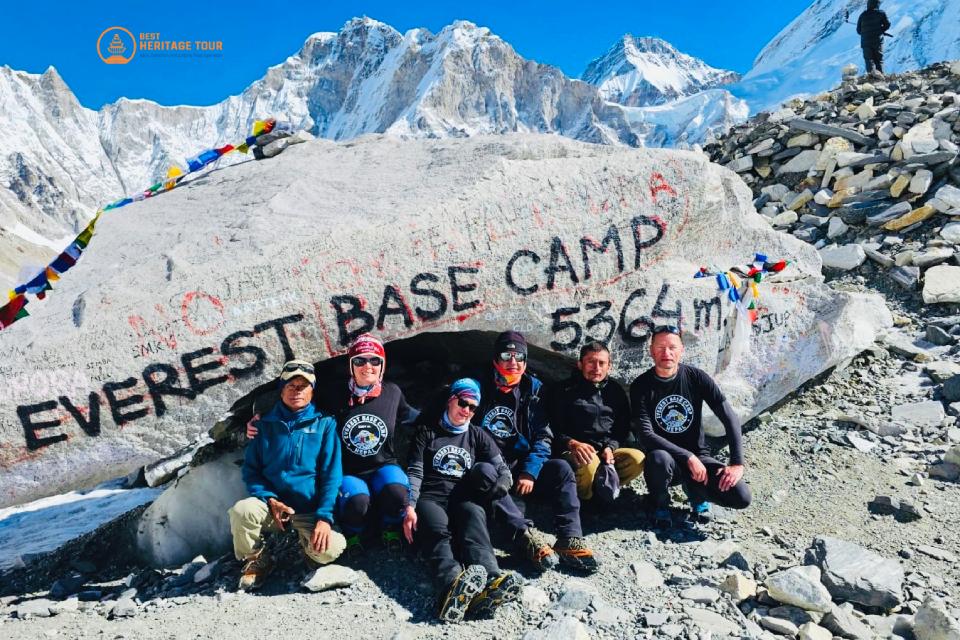
Everest Base Camp (5,364m)
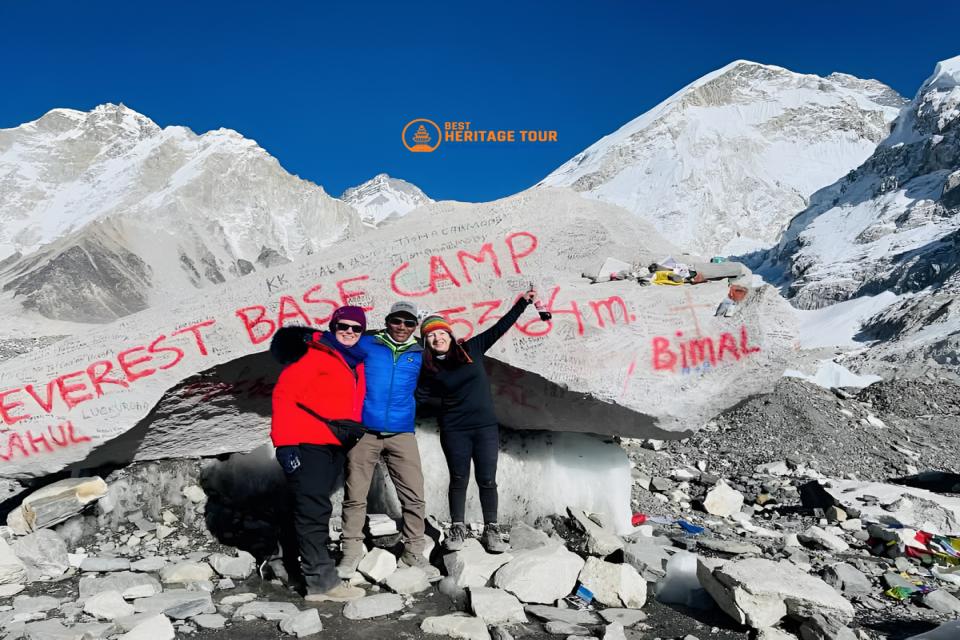
Generally, there is no public Wi-Fi at the base camp itself. The expedition tents you see have private satellite setups for climbers, but these are not accessible to trekkers. Your last reliable connection point is Gorak Shep.
5. The Hidden Costs: Charging and Data
One thing many bloggers forget to mention is that internet is only useful if your phone is charged.
In the mountains, electricity is generated via solar panels. Because of this, lodges charge a fee for plugging in your devices.
-
Charging Costs: Ranges from $2 to $6 per hour, or $10 for a full power bank.
-
Wi-Fi Costs: An Everest Link 10GB card currently costs approximately NPR 2,500 - 3,000 (roughly $20 - $25 USD).
Best Heritage Tour Advice: Carry a high-capacity power bank (20,000mAh). It will save you a fortune in charging fees over a 12-day trek!
6. Tips for Using Internet on the Trail
To make the most of your connection without ruining the experience, follow these Best Heritage Tour expert tips:
-
Download Offline Maps: Before leaving Kathmandu, download Google Maps for the Khumbu region. It works via GPS even without a data signal.
-
Airplane Mode is Your Friend: The cold drains batteries quickly, and your phone will waste energy searching for a signal that isn't there. Keep it on Airplane Mode unless you are actively using the Wi-Fi.
-
Update Before You Fly: Ensure all your apps (especially WhatsApp and Instagram) are updated in Kathmandu. Attempting an app update at 4,000 meters will eat your entire data plan in minutes.
-
Embrace the "Digital Detox": While we've explained how to get online, remember why you came here. The views of Ama Dablam and Everest are better than any screen. Use the internet to check in, then put the phone away and breathe the mountain air.
Conclusion
Staying connected on the Everest Base Camp trek is easier today than it has ever been. From the 4G towers of Namche Bazaar to the satellite links of Gorak Shep, the "Internet facility in EBC trek" is impressive for such a rugged environment. While the speed might fluctuate and the costs can add up, the ability to share your journey in real-time is a wonderful part of the modern adventure.
Are you ready to see the world from the top? Let Best Heritage Tour be your bridge to the Himalayas.
Phone / WhatsApp / Viber: +977-9851149197 / +977-9810043046
Email: info@bestheritagetour.com / bestheritagetour@gmail.com
Website: www.bestheritagetour.com
Office: Thamel Marg, Kathmandu, Nepal
Author: Best Heritage Tour
Date: 30th April, 2026