How Mad Honey Hunters Traditionally Harvest Wild Honey in Nepal?
Nepal is a land of legends, and among its most potent is the "Mad Honey". This isn't your average supermarket sweetener. Produced by the Apis laboriosa - the world's largest honeybee - this rare nectar is infused with grayanotoxins from the wild rhododendron flowers. In the right dose, it's a medicine; in the wrong dose, it’s a hallucinogen; and for the hunters, it’s a dance with death.
If you’re reading this, you’re likely not just looking for a vacation; you’re looking for a soul-stirring encounter with one of the world’s last great ancient traditions. Today, we are diving deep into the dizzying heights of the Himalayas to answer a question that carries both mystery and danger: How is Mad Honey harvested in Nepal? At Best Heritage Tour, we’ve stood at the base of these cliffs, watching the smoke rise and the brave hunters descend. Let’s peel back the layers of this ancient craft.
The Divine Bees: Meet the Apis Laboriosa
Before we talk about the "how," we must talk about the "who." The architect of this golden elixir is the Himalayan Giant Honeybee. These bees are nearly twice the size of regular honeybees and build their massive, crescent-shaped nests on sheer, south-facing rock walls to escape predators and maximize sunlight.
Mad Honey Hunting Locations in Nepal
You won't find Mad Honey in the flatlands. This is a high-altitude treasure. The primary mad honey hunting harvesting locations in Nepal are tucked away in the steep foothills of the Himalayas.
-
Lamjung District: Known as the epicenter of honey hunting, villages like Ghalegaun, Bhujung, and Chamche are home to the most skilled Gurung hunters.
-
Kaski District: Near the Annapurna circuit, cliffs around Ghandruk offer spectacular hunting sights.
-
Gorkha and Myagdi: Remote cliffs here still hold undisturbed hives of the giant bees.
At Best Heritage Tour, we specialize in taking cultural explorers to these specific, off-the-beaten-path villages where the tradition remains authentic and respectful of the ecosystem.
The Ritual: Appeasing the Spirit of the Cliff
For the wild honey hunters from Nepal, a hunt never begins with a ladder; it begins with a prayer. The Gurung and Magar tribes believe that the cliffs are guarded by powerful spirits.
Before any hunter touches a rope, a Puja (ceremony) is performed. We often see the lead hunter sacrifice a chicken or offer grains and incense to the "Cliff God" (Bhir-Durgu). This isn't just superstition; it is a psychological grounding for the life-threatening task ahead. If the omens aren't right, we don't climb. Period.
Traditional Equipment Used for Mad Honey Harvesting in Nepal
One of the most frequent questions we get during a Mad Honey Hunting tour in Nepal is: "Why don't mad honey hunters use modern climbing gear?"
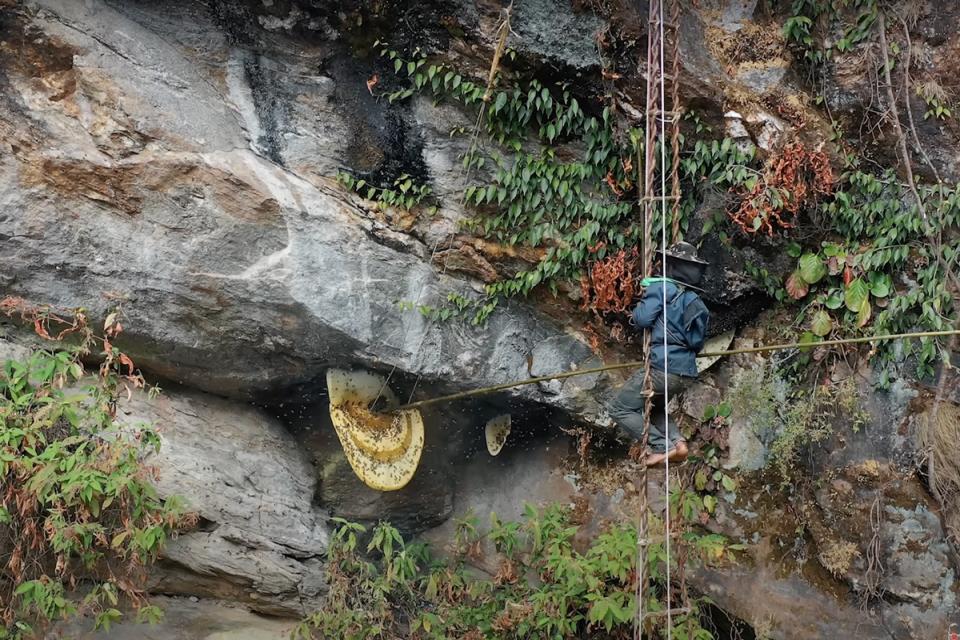
The answer is simple: tradition and flexibility. Modern metal carabiners and nylon ropes can be too rigid or slippery for the unique demands of a vertical rock face covered in bees. Instead, hunters rely on "jungle technology."
|
Equipment Name |
Material |
Function |
|---|---|---|
|
Prang |
Bamboo & Forest Vines |
A handmade rope ladder, often 200-300 feet long. |
|
Tango |
Bamboo Pole |
A 20-foot pole used to guide the basket and cut the comb. |
|
Tokari/Korka |
Woven Bamboo |
The collection basket, traditionally lined with sheepskin. |
|
Pechho |
Hemp/Allo Fiber |
The main rope used to lower the honey-filled baskets to the ground. |
|
Dabilo |
Wood or Iron |
A sickle-like blade attached to the Tango to slice the honeycomb. |
The Step-by-Step: How Traditionally Mad Honey is Harvested
The process is a masterclass in teamwork and courage. Here is the breakdown of a typical harvest day:
Step 1: The Smoke (The Distraction)
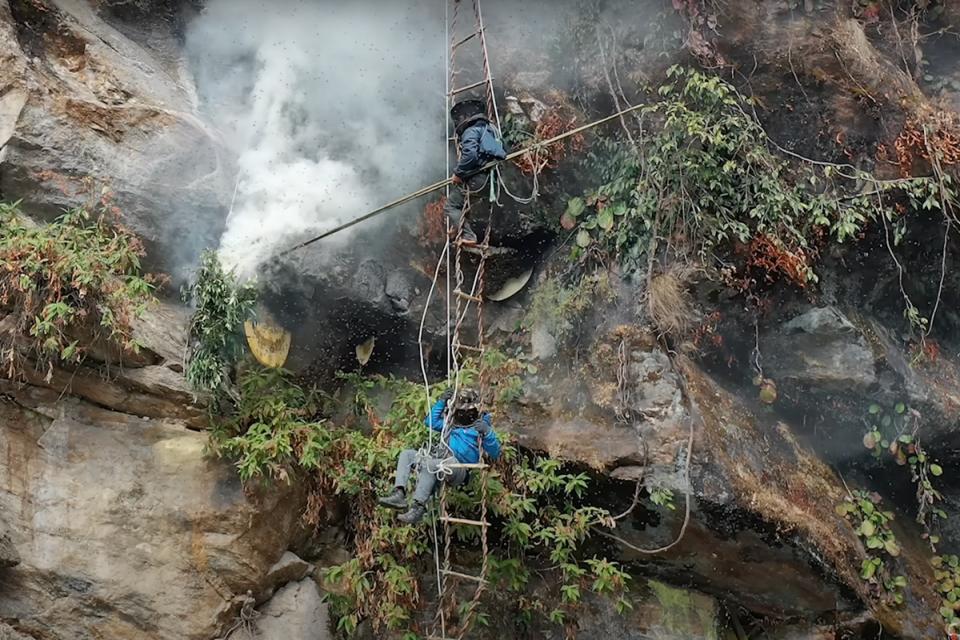
Villagers at the base of the cliff light a fire using green wood and leaves. The thick, acrid smoke rises toward the hives. This doesn't kill the bees; it disorients them and forces them to move away from the comb, giving the hunter a small window of opportunity.
Step 2: The Descent
The lead hunter, known as the Amecchi, descends the Prang (bamboo ladder). He has no harness, no parachute - just his toes gripped between the bamboo rungs and a single safety rope made of forest fiber.
Step 3: The "Tango" Dance
While dangling 300 feet in the air, the hunter uses two long bamboo poles (Tangos). One pole holds the basket (Tokari) directly under the hive. The other pole, fitted with a Dabilo, is used to slice the comb.
Step 4: The Strategic Cut
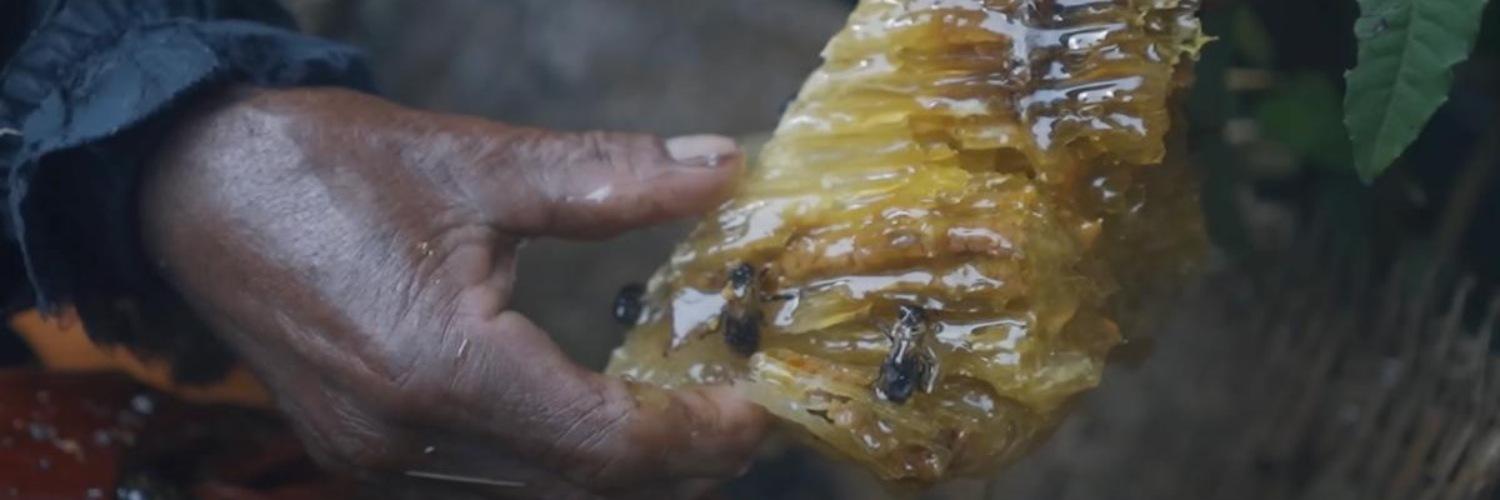
A master hunter never takes the whole hive. This is a crucial part of the traditional mad honey harvesting in Nepal. They leave the "brood" (the part containing the larvae) intact so the colony can rebuild. They only take the "honey head" - the top portion where the red, psychoactive nectar is stored.
The Science of the "Madness"
Why is it "Mad"? In the spring, the Himalayan hills turn a fiery red with Rhododendron blooms (Rhododendron arboreum). These flowers contain grayanotoxins. When the giant bees forage on these specific blossoms, the toxins end up in the honey.
-
In small doses: It acts as a vasodilator, often used by locals to treat hypertension and joint pain.
-
In moderate doses: It provides a "buzz" or mild hallucinogenic effect.
-
In high doses: It causes "Mad Honey Poisoning" - characterized by vomiting, dizziness, and a dangerous drop in heart rate.
Sustainable Tourism & The Best Heritage Tour Difference
As an eco-friendly travel company, we've seen the negative side of "over-tourism." Some companies "stage" hunts for photos, which stresses the bee colonies. At Best Heritage Tour, we strictly follow the natural harvest cycle (typically Spring and Autumn).
When you join a Mad Honey Hunting tour in Nepal with us, you aren't just a spectator. You are a guest of the village. You’ll stay in local homestays, eat Dal Bhat with the hunters' families, and learn the ethics of the forest. We ensure that a significant portion of our tour fees goes directly back to the community to help preserve this fading tradition.
Essential Tips for Travelers and Vloggers
If you’re planning to document this for your channel or blog, keep these "Guide Tips" in mind:
-
Respect the Bees: They are sensitive to smell. Avoid wearing strong perfumes or deodorants during the hunt.
-
Long Lenses are Life: You cannot get close to the cliff. Bring a 70-200mm or 400mm lens to capture the hunter’s expressions.
-
Tasting is an Art: Never take more than a teaspoon of fresh mad honey. I’ve seen many "brave" tourists end up spending their afternoon dizzy in a dark room because they underestimated the potency!
Conclusion: A Legacy Worth Preserving
Harvesting Mad Honey in Nepal is more than just a search for sugar; it is a testament to human bravery and the delicate balance between man and nature. As the younger generation moves toward the cities, these "cliff-walkers" are becoming a rare breed.
By choosing to witness this through a responsible agency like Best Heritage Tour, you are helping keep the Gurung heritage alive.
Ready to witness the hunt of a lifetime?
If you're ready to leave the paved roads behind and experience the authentic pulse of the Himalayas, we are ready to lead the way.
Contact Best Heritage Tour today:
Phone / WhatsApp / Viber: +977-9851149197 / +977-9810043046
Email: info@bestheritagetour.com / bestheritagetour@gmail.com
Website: www.bestheritagetour.com
Office: Thamel Marg, Kathmandu, Nepal
Author: Best Heritage Tour
Date: 16th March, 2026