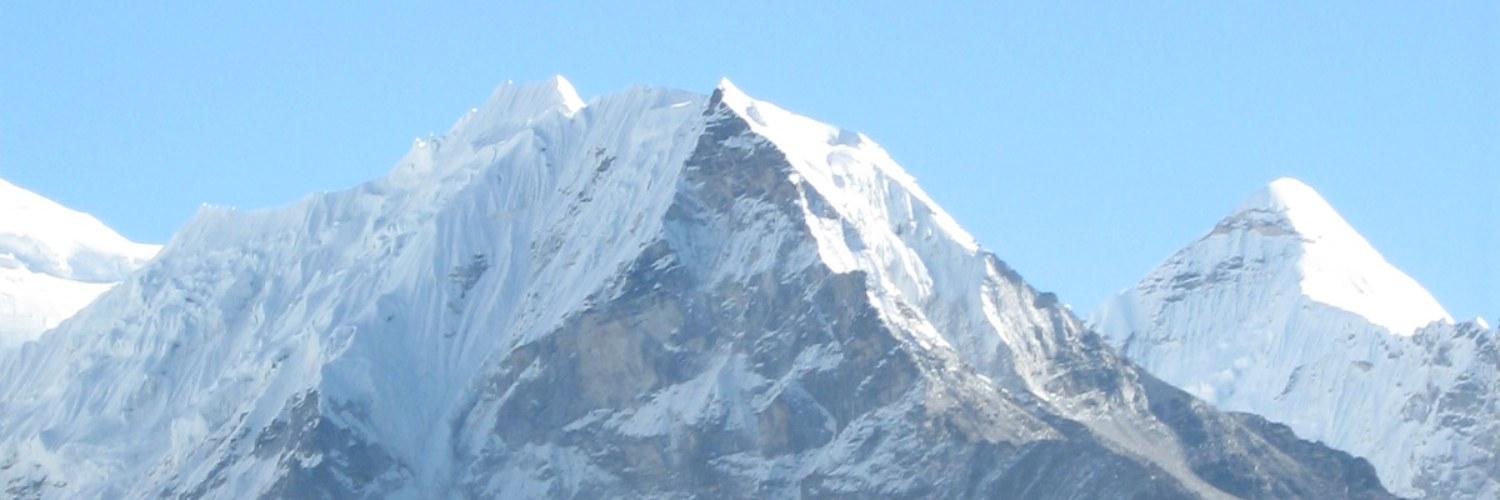
Namaste and greetings from the land of the Himalayas!
As a professional travel company - Best Heritage Tour, we’ve guided the travelers from the trails of the Everest region in the bone-chilling winter to stood amidst the blooming rhododendrons of Annapurna in the spring. We’ve seen travelers arrive at the "wrong" time for their specific goals, and we’ve seen others discover the magic of the "off-season."
If you are planning a trip to Nepal, you’ve likely realized that this isn’t a "one-size-fits-all" destination. The Seasonal Calendar of Nepal is a complex tapestry of weather, culture, and geography. Whether you want the crystal-clear views of the high peaks or the lush, emerald solitude of the monsoon, choosing the right month is the difference between a good trip and a life-changing one.
In this ultimate guide, we will break down each month of each season in Nepal, helping you find the perfect trek to choose for each season and discovering what each season has to offer.
1. The Golden Window: Autumn (September to November)
The Peak Season for Trekking
Ask any local guide, and they will tell you: Autumn is the "King of Seasons" in Nepal. After the monsoon rains wash away the dust and pollution, the atmosphere is scrubbed clean, leaving behind the most spectacular, high-definition mountain views you can imagine.
September: The Transition
Early September still carries the tail-end of the monsoon. You might encounter afternoon showers, but the landscape is incredibly lush. By mid-September, the "Trekking Season" officially kicks off.
-
What it offers: Waterfalls in full flow, green terraced fields, and fewer crowds than October.
-
Trek to Choose: Manaslu Circuit. As the rains fade, the fresh greenery of the Budhi Gandaki valley is breathtaking.
October: The Perfection
This is the gold standard for Nepal travel. The weather is stable, the skies are a deep cobalt blue, and the temperature is "Goldilocks" level—not too hot, not too cold.
-
What it offers: The Great Himalayan views and Nepal’s biggest festivals, Dashain and Tihar. The energy in the villages is electric.
-
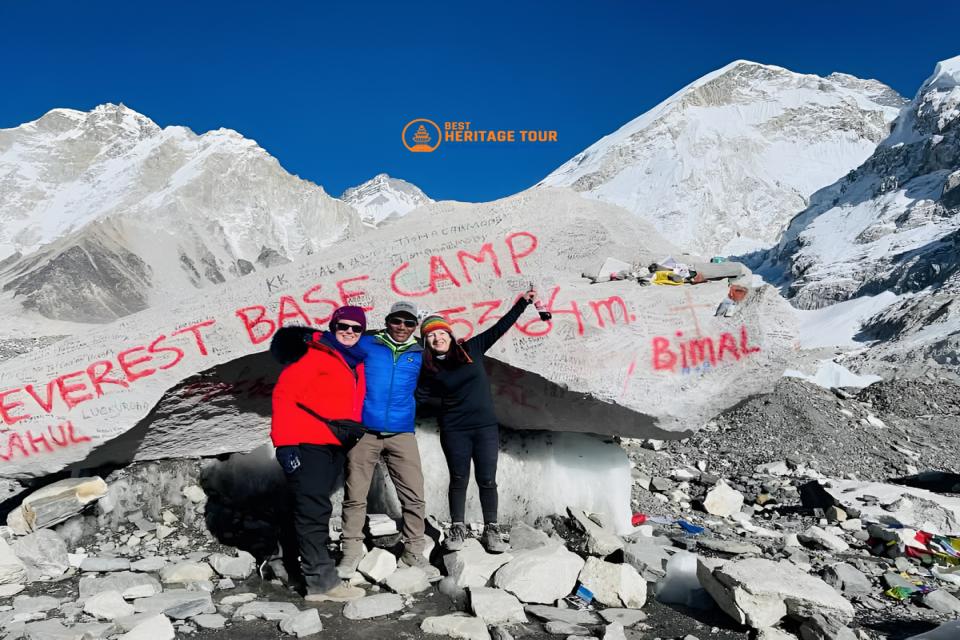
Trek to Choose: Everest Base Camp (EBC). If you want to see the world’s highest peak with zero cloud interference, this is your month.
November: The Clarity
November is the driest month. The air is crisp, and the visibility is at its absolute peak. It begins to get cold at night above 4,000m, but the daytime walking conditions are perfect.
-
What it offers: Perfect photography conditions. The "haze" of the plains hasn't yet moved into the mountains.
-
Trek to Choose: Annapurna Circuit. Crossing the Thorong La Pass (5,416m) is safest when the weather is this stable.
2. The Sleeping Giant: Winter (December to February)
Clear Skies and Quiet Trails
Many travelers avoid winter, thinking the mountains are "closed." This is a misconception! While the high passes (above 5,000m) may be blocked by snow, the lower hills offer some of the best hiking experiences with total solitude.
December: The Early Chill
December is surprisingly beautiful. The skies remain clear, but the temperatures start to drop.
-
What it offers: Sharp, clear mountain views and very few tourists. You’ll have the teahouses (and the views) all to yourself.
-
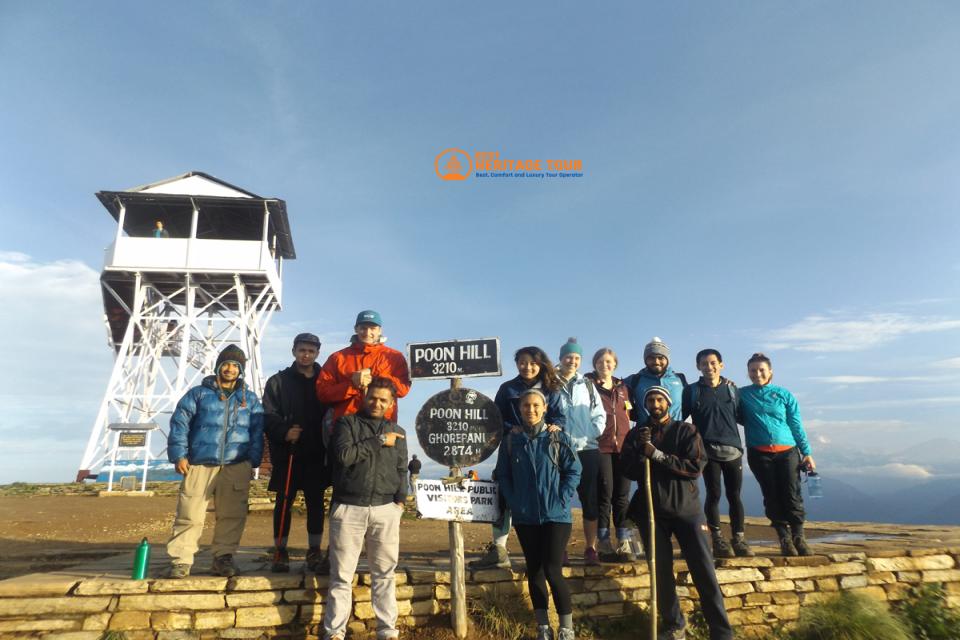
Trek to Choose: Ghorepani Poon Hill. At 3,210m, it’s low enough to be safe but high enough to offer a panoramic view of the Dhaulagiri and Annapurna ranges.
January: The Deep Freeze
This is the coldest month. While Kathmandu stays pleasant in the sun, the mountains are freezing at night.
-
What it offers: An authentic "Himalayan Winter" experience. It’s also the best time for wildlife spotting in Chitwan National Park, as the tall grass is cut, making rhinos and tigers easier to see.
-
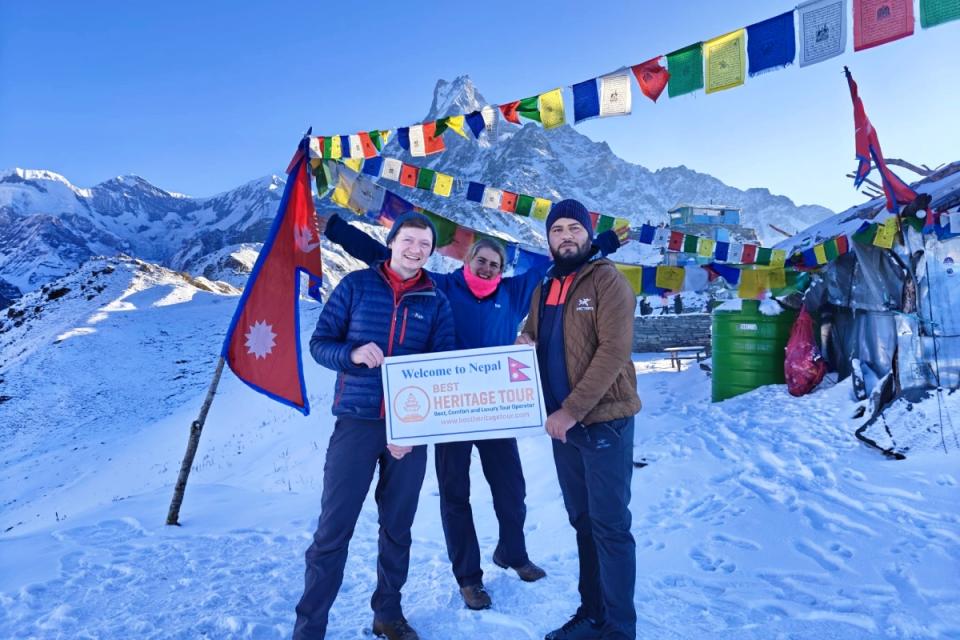
Trek to Choose: Mardi Himal Trek. A shorter trek that keeps you away from the extreme altitudes but offers "face-to-face" views of Machhapuchhre (Fishtail).
February: The Awakening
By late February, the first signs of spring appear. The days get longer, and the "winter haze" begins to lift.
-
What it offers: The festival of Maha Shivaratri, where thousands of sadhus gather at Pashupatinath Temple. It’s a cultural spectacle like no other.
-
Trek to Choose: Langtang Valley. Often called "The Valley of Glaciers," it’s a beautiful, moderate trek that is very accessible from Kathmandu.
3. The Blooming Canvas: Spring (March to May)
The Season of Colors and Climbing
If Autumn is about the views, Spring is about the life. This is the second most popular time to visit, and for nature lovers, it might even be the first.
March: The Rhododendron Bloom
As the weather warms up, the hillsides erupt in color. Nepal’s national flower, the Rhododendron, turns entire forests into shades of red, pink, and white.
-
What it offers: Vibrant forests and the Holi Festival (The Festival of Colors), which usually falls in March.
-
Trek to Choose: Ghorepani or Helambu. Both are famous for their dense rhododendron forests.
April: The Climber’s Month
April is the heart of the mountaineering season. If you trek to Everest Base Camp now, you will see a "tent city" of climbers preparing to summit.
-
What it offers: Excellent wildlife activity and stable climbing conditions. The days are warm, though it can be hazy at lower altitudes.
-
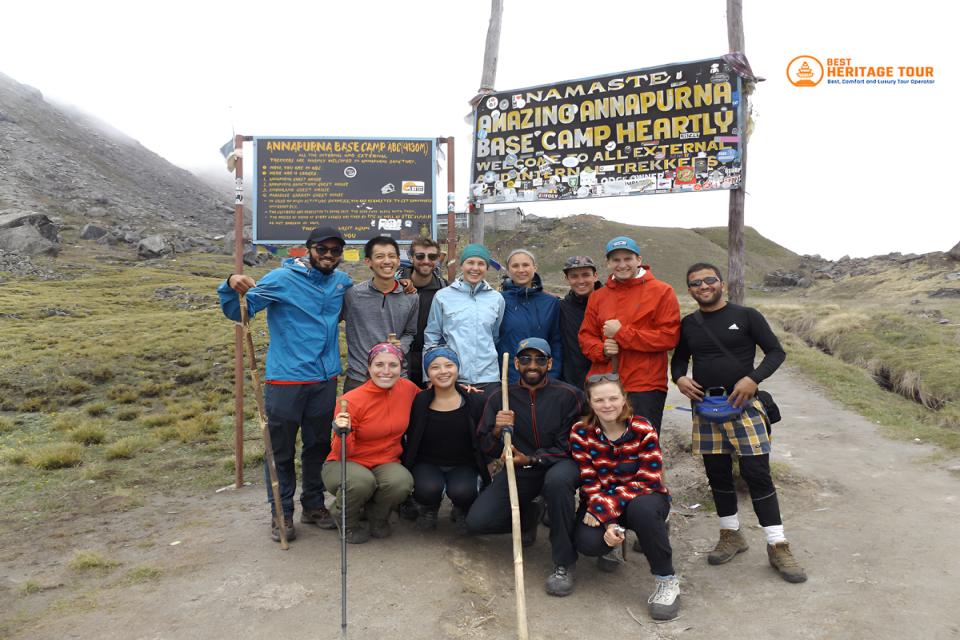
Trek to Choose: Annapurna Base Camp (ABC). You walk through a natural amphitheater of peaks that feel so close you can touch them.
May: The Pre-Monsoon Warmth
May is the warmest month before the rains. It can be quite hot in the lowlands, but it’s the perfect time to be at high altitudes where the air is cool.
-
What it offers: A final chance for high-altitude passes before the monsoon clouds roll in.
-
Trek to Choose: Kanchenjunga Base Camp. Because it’s a long, remote trek, the warmer May weather makes the high-altitude camps much more comfortable.
4. The Emerald Wild: Monsoon (June to August)
The Road Less Traveled
Most guidebooks say "don't go" during the monsoon. As a local guide, I say "choose wisely." While the main trails are wet and leeches can be a nuisance, there is a hidden side to Nepal that only reveals itself in the rain.
June: The Arrival of Rains
The monsoon usually arrives in mid-June. The dust is gone, and the air becomes humid.
-
What it offers: The Ropain (Rice Planting) Festival. Watching farmers sing traditional "Asare" songs while planting rice in the mud is a soul-stirring experience.
-
Trek to Choose: Upper Mustang. Located in the "Rain Shadow" of the Himalayas, this region stays dry while the rest of Nepal is soaking. It’s a desert-like landscape with ancient caves and Tibetan culture.
July: The Lush Greenery
This is the wettest month. Clouds often hide the peaks, but the waterfalls and rivers are at their most powerful.
-
What it offers: Total solitude. You won't see another trekker for days. The flora is at its most diverse - a botanist's dream.
-
Trek to Choose: Upper Dolpo. Like Mustang, Dolpo is a rain-shadow area. It’s rugged, remote, and was the setting for the famous movie Himalaya.
August: The Spiritual Peak
The rains begin to slow down towards the end of August.
-
What it offers: Significant festivals like Janai Purnima (Sacred Thread Festival) where pilgrims trek to high-altitude lakes like Gosaikunda.
-
Trek to Choose: Gosaikunda Lake. Join the pilgrims on a spiritual journey to the holy alpine lakes.
Seasonal Comparison Table for Quick Reference
|
Season |
Months |
Best For |
Typical Weather |
Top Recommended Trek |
|---|---|---|---|---|
|
Autumn |
Sept - Nov |
Mountain Views, Festivals |
Clear, Stable, Dry |
Everest Base Camp |
|
Winter |
Dec - Feb |
Solitude, Photography |
Cold, Clear Skies |
Ghorepani Poon Hill |
|
Spring |
Mar - May |
Wildflowers, Climbing |
Warm, Flowering |
Annapurna Base Camp |
|
Monsoon |
Jun - Aug |
Rain Shadow, Culture |
Wet, Humid, Green |
Upper Mustang |
Insider Tips from Your Nepal Guide
-
Layers are Your Best Friend: Even in the "warm" spring, temperatures at night in the mountains can drop below freezing. Always pack a down jacket and a moisture-wicking base layer.
-
The "Morning View" Rule: During the shoulder seasons (May/September), the mountains usually reveal themselves in the early morning (6 AM - 9 AM) before the clouds roll in. Wake up early!
-
Festival Timing: If you want a cultural experience, check the lunar calendar. Festivals like Holi and Dashain change dates every year.
-
Flight Flexibility: If you are flying into Lukla (for Everest) or Jomsom (for Mustang), always build in 2-3 "buffer days" in your itinerary. Mountain weather can cause flight delays in any season.
Conclusion
Nepal is not a destination you visit once; it’s a place you experience in different "colors" depending on when you arrive. From the fiery reds of the spring rhododendrons to the golden hues of the autumn harvest, the Seasonal Calendar of Nepal offers something for every type of traveler.
Ready to find your perfect window? Whether you are a solo trekker looking for the peace of winter or a family wanting the comfort of spring, the Himalayas are calling.
Want to start planning your dream Himalayan adventure?
Contact Best Heritage Tour today for a customized itinerary tailored to your preferred season and fitness level.
Phone / Whatsapp / Viber: +977-9851149197 / +977-9810043046
Email: info@bestheritagetour.com / bestheritagetour@gmail.com
Website: www.bestheritagetour.com
Office: Thamel Marg, Kathmandu, Nepal
Author: Best Heritage Tour
Date: 8th March, 2026