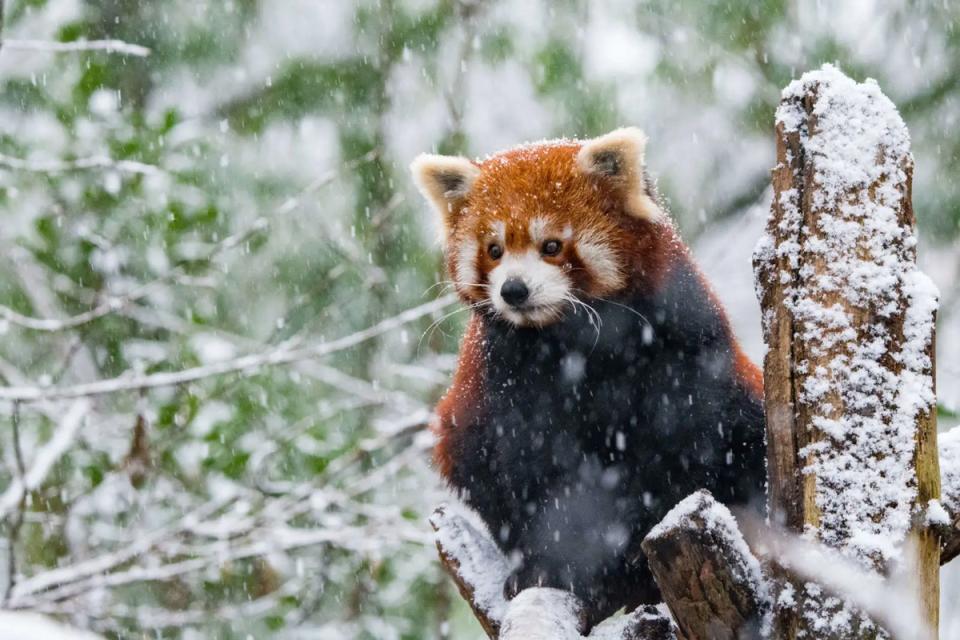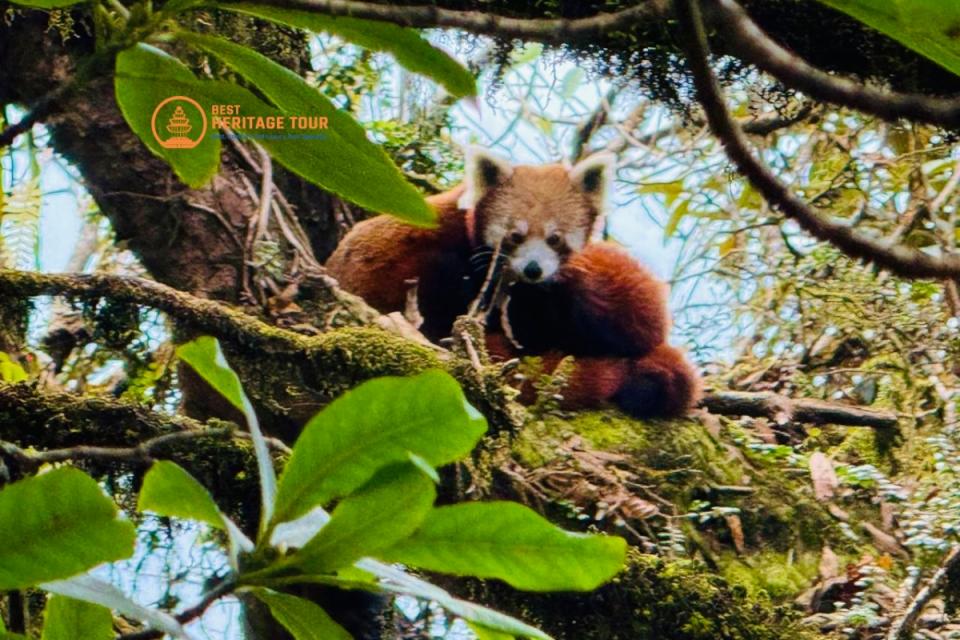
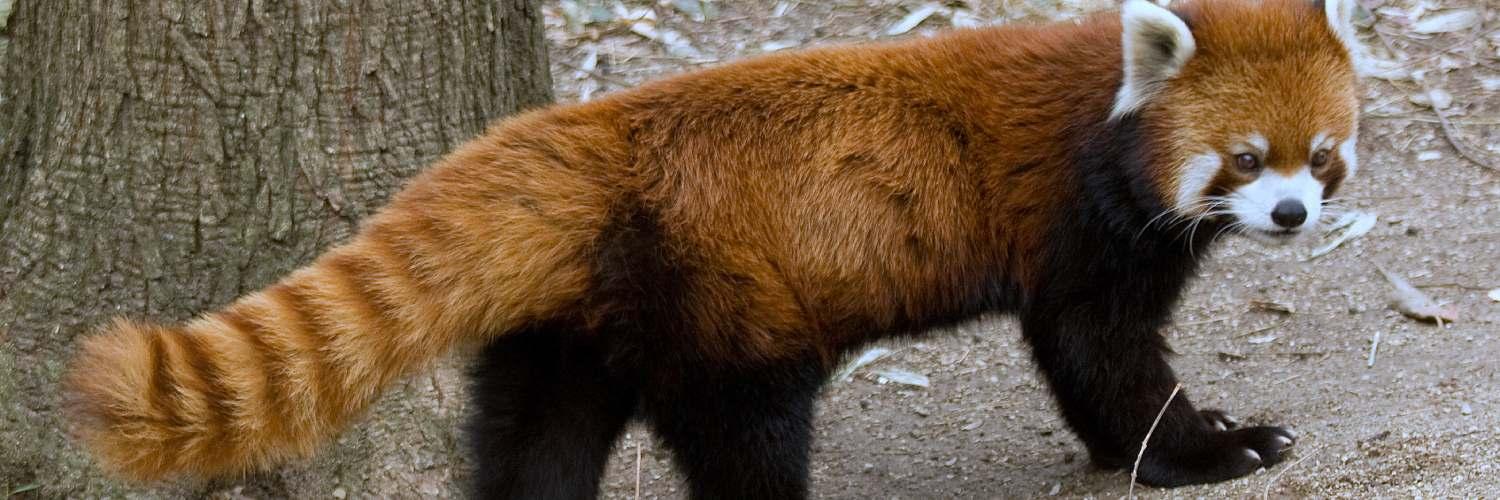
The mist clings to the silver firs and the air carries the scent of damp moss and blooming rhododendron. You are standing at 3,500 meters, your camera lens capped, your breath visible in the crisp Himalayan morning. This is Cholangpati, a serene ridge-line stop on the legendary Gosaikunda trail. But beyond the panoramic views of Langtang Lirung and the Ganesh Himal, a more secretive resident draws the eyes of the patient: the Himalayan Red Panda (Ailurus fulgens).
For years, travelers have asked, "Can I see Red Panda in the forest of Cholangpati?" At Best Heritage Tour, we have spent decades navigating these trails, and the answer is a resounding yes - but with a caveat: this is an encounter that rewards the prepared and the respectful.
In this deep-dive guide, we explore the habitat, the best photography spots, and the essential tips for tracking the elusive Red Panda in the Langtang National Park.
Where is Cholangpati? Navigating the Heart of Langtang
Before we dive into the "how," let’s look at the "where." Cholangpati is situated within the Langtang National Park, Nepal’s first Himalayan national park. It sits at an elevation of approximately 3,500m to 3,650m, strategically positioned between the lush sub-tropical forests of the lower valley and the high-alpine tundra of the Gosaikunda lakes.
Most trekkers reach Cholangpati by ascending from Dhunche or Thulo Syabru, passing through Sing Gompa (Chandanbari). The trail from Sing Gompa to Cholangpati is characterized by ancient forests of hemlock, oak, and silver fir - the precise ecosystem required for the Red Panda’s survival.
Why the Cholangpati Forest is a Red Panda Hotspot?
The Red Panda is a habitat specialist. Unlike the more generalized macaque or the hardy Himalayan Tahr, the Red Panda requires a very specific "micro-climate." The forest surrounding Cholangpati and the nearby Polangpati area provides a perfect storm of environmental factors:
-
The Bamboo Understory: Red Pandas are nearly 98% herbivorous, with mountain bamboo (Arundinaria) being their primary food source. The shaded, moist slopes of the Cholangpati forest are carpeted in this essential snack.
-
The Canopy Cover: These arboreal mammals spend the majority of their lives in trees to avoid ground predators like leopards. The massive girth of the Rhododendron barbatum and Abies spectabilis (Silver Fir) in this region offers the perfect resting platforms.
-
Proximity to Water: Research conducted by wildlife experts (including the seminal work of Dr. Prahlad Yonzon in this very region) shows that Red Pandas are rarely found more than 100 meters from a water source. The small glacial streams trickling through the Cholangpati ridges make it an ideal home.
Red Panda Photography in Langtang National Park: A Masterclass
For a wildlife photographer, capturing a Red Panda is the "Holy Grail" of Himalayan photography. However, the conditions are challenging. Here is how we at Best Heritage Tour recommend you prepare for your expedition.
1. The Best Time for Sighting (The Golden Windows)
Timing is everything. You cannot simply walk the trail at noon and expect a sighting.
-
Spring (March to May): This is the "Color Season." The rhododendrons are in full bloom, providing a stunning red and pink backdrop. The pandas are active as they search for fresh bamboo shoots.
-
Autumn (October to November): This is the "Clarity Season." The monsoon has washed the dust from the air, providing the sharpest mountain views. Photographers prefer this time for the crisp light and the possibility of seeing mothers with their cubs.
2. Essential Gear for Red Panda Photography
The forests of Cholangpati are dense and often mist-laden. To get "The Shot," you need specific gear:
-
Telephoto Lens: A minimum of 400mm to 600mm is recommended. Red Pandas are small (roughly the size of a domestic cat) and you must maintain an ethical distance.
-
Fast Aperture: Because the forest canopy is thick, light levels can be low. A lens with an aperture of f/2.8 or f/4 will help you keep your shutter speed high enough to avoid motion blur.
-
Weather Sealing: The Langtang weather can turn in minutes. Ensure your camera body and lenses are protected against moisture.
3. The Ethical Approach: Viewing without Disturbing
As a company committed to Ethical Wildlife Tourism, we emphasize that the welfare of the animal comes first.
-
Silence is Golden: Red Pandas have acute hearing. Whispering and slow movements are mandatory.
-
No Flash: Never use a flash, as it can startle the animal and cause it to fall or flee.
-
Local Trackers: At Best Heritage Tour, we work with local "Forest Guardians" - experts who know the specific trees where pandas frequently nest. Using a guide significantly increases your success rate while ensuring the animal's habitat is respected.
Can I see Red Panda in the Forest of Cholangpati? (What to Expect)
While we can confirm the presence of Red Pandas, we always remind our guests: This is the wild, not a zoo. A typical day tracking Red Pandas in Cholangpati involves waking up before dawn. You will move off the main trekking trail (under the guidance of your park-certified guide) into the quieter ridges. You aren't looking for a panda - you are looking for a "flash of rust" or a "bushy striped tail" among the green leaves.
Even if the panda remains hidden, the Cholangpati forest offers incredible secondary subjects:
-
The Danphe (Himalayan Monal): Nepal’s national bird, often seen flashing its rainbow feathers near the treeline.
-
Blood Pheasants: Frequently found scratching in the leaf litter.
-
Himalayan Tahr: Often visible on the rocky crags just above the forest.
Conclusion
The forests of Cholangpati are one of the few places on earth where the ancient rhythm of the Himalayas remains undisturbed. To see a Red Panda in the wild is to witness a survivor of a vanishing world. It is a reminder of why conservation in Nepal is so vital.
Whether you are a professional wildlife photographer aiming for a cover shot or a traveler seeking a moment of profound connection with nature, the Cholangpati area is waiting.
Ready to track the "Fire Fox"?
Phone / WhatsApp / Viber: +977-9851149197 / +977-9810043046
Email: info@bestheritagetour.com / bestheritagetour@gmail.com
Website: www.bestheritagetour.com
Office: Thamel Marg, Kathmandu, Nepal
Author: Best Heritage Tour
Date: 19th March, 2026