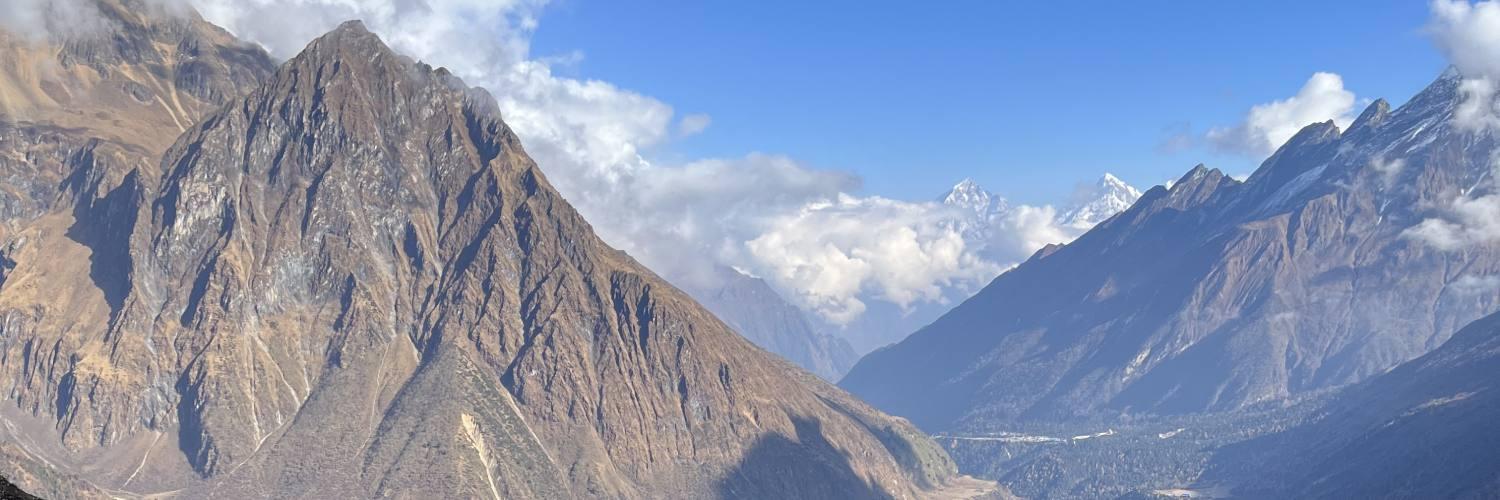
The Permit Guide for Solo Trekkers for the Restricted Area Permit
Getting into the Manaslu region isn't as simple as packing a bag and hitting the trail. If you’re a solo traveler eyeing the Manaslu Circuit for 2026, you’ve likely run into a wall of confusing permit regulations and "restricted area" labels.
While Nepal officially requires a minimum of two trekkers and a licensed guide for this route, "solo" trekking is still possible with the right logistics. This guide cuts through the red tape to show you exactly how to secure your permits, find a required partner, and navigate the latest 2026 government rules without the headache.
The Reality Check: Can You Trek Manaslu "Solo" in 2026?
Let’s start with the most important legal distinction. In the eyes of the Department of Immigration, the Manaslu region is a Restricted Area.
Unlike the Everest Base Camp or Langtang Valley (where you can technically trek without a specialized restricted permit), the Manaslu Circuit is highly regulated to preserve its fragile Tibetan-border culture and ensure trekker safety.
The Golden Rules for 2026:
-
No Solo Trekking: You cannot legally trek Manaslu completely alone.
-
The "Power of Two": A Restricted Area Permit (RAP) requires a minimum of two trekkers listed on the document.
-
Mandatory Licensed Guide: You must be accompanied by a government-licensed guide registered through a legitimate trekking agency (like Best Heritage Tour).
-
No DIY Permits: You cannot walk into the Immigration Office yourself to buy these permits. Only a registered agency can process them.
Guide’s Pro-Tip: Don't let the "two-person rule" discourage you. As an experienced agency, we frequently help solo travelers by "ghost-filing" (pairing your permit with another traveler - though not recommended) or joining you with a small, like-minded group.
The 4 Essential Permits You Need for the Manaslu Circuit
To complete the full circuit - from the humid lowlands of Jagat to the icy heights of the Larkya La Pass (5,106m) and down into the Annapurna region - you need four distinct documents.
1. Manaslu Restricted Area Permit (RAP)
This is the big one. It covers the stretch from Jagat until you reach Dharapani. The cost of this permit varies by season:
-
Autumn (Sept - Nov): USD 100 for the first 7 days, then USD 15 per additional day.
-
Winter/Spring/Summer (Dec - Aug): USD 75 for the first 7 days, then USD 10 per additional day.
2. Manaslu Conservation Area Permit (MCAP)
Managed by the National Trust for Nature Conservation (NTNC), this permit funds the protection of the local flora and fauna, including the elusive Snow Leopard.
-
Cost: Approximately USD 23 (NPR 3,000) for all seasons.
3. Annapurna Conservation Area Permit (ACAP)
Because the Manaslu trail exits into the Annapurna region at Dharapani, you officially enter a different protected zone.
-
Cost: Approximately USD 23 (NPR 3,000).
4. Chumnubri Rural Municipality Permit
A relatively new local government tax (implemented in late 2024/2025) to support community development in the Gorkha district.
-
Cost: Approximately USD 8 (NPR 1,000) or USD 15 depending on the latest local council updates.
Step-by-Step Guide for Solo Travelers to Get Permits
Since you cannot apply for these yourself, here is the exact workflow we follow at Best Heritage Tour to get you on the trail:
Phase 1: Pre-Arrival Preparation
Before you even land in Kathmandu, you should send us digital copies of:
-
A clear color scan of your Passport (valid for at least 6 months).
-
A digital passport-sized photo.
-
Travel Insurance that specifically covers emergency helicopter evacuation up to 6,000 meters.
Phase 2: The Kathmandu Arrival
Once you land, we need your Original Passport and a copy of your Nepal Tourist Visa. The Department of Immigration requires the original passport to stamp the Restricted Area Permit. This process usually takes one full working day.
Phase 3: Solving the "Solo" Dilemma
If you are truly traveling alone and haven't found a partner:
-
Group Joining: We can match you with other solo travelers starting on the same date.
-
Permit Sharing: If you prefer to trek only with your guide, we can often find another trekker's passport copy to "pair" with yours on the application. Note: This may involve paying the permit fee for the second (non-existent) person, which is a common practice for those who value total solitude.
2026 Cost Breakdown for a 14-Day Trek (Estimates)
|
Item |
Estimated Cost (USD) |
|---|---|
|
RAP (Autumn Peak) |
USD 205 |
|
MCAP & ACAP |
USD 46 |
|
Local Municipality Fee |
USD 10-15 |
|
Licensed Guide (Daily) |
USD 30 - USD 40 |
Why These Rules Exist: A Guide’s Perspective
As someone who has walked the Larkya La more times than I can count, I can tell you: Manaslu is not the Annapurna Circuit.
The trail is remote. Cell service is non-existent for days. The weather at the pass can turn from a bluebird sky to a whiteout in thirty minutes. The "Mandatory Guide" rule isn't just about revenue; it’s about survival.
In 2026, the Nepal government has doubled down on these regulations to prevent the "disappearing trekker" incidents of the past decade. Having a guide means:
-
Logistics: We know which tea houses are open and which have the warmest blankets.
-
Health: We monitor your oxygen saturation and watch for early signs of AMS (Acute Mountain Sickness).
-
Culture: We bridge the gap between you and the Tsumba or Nubri people, explaining the local Buddhism and traditions that a guidebook simply can't capture.
Avoiding the Online Guide Trap: Real Advice for 2026
You might find generic information online, but here are three "Guide-Only" secrets for 2026:
-
The Jagat Checkpoint: This is where the "real" Manaslu begins. Make sure your guide has your physical permits ready here. If you are caught without them, the fine is heavy, and you will be escorted back to Soti Khola.
-
Larkya Phedi (Dharamsala): In 2026, the accommodation here is still basic. Your guide’s relationship with the lodge owner is the difference between a bed in a room and a spot on a dining room floor.
-
The Road Construction: The road is creeping up the valley. A good agency knows exactly where to start the trek to avoid walking on dusty jeep tracks.
Frequently Asked Questions (FAQ)
Can I use a TIMS card for Manaslu?
While the TIMS (Trekkers' Information Management System) card was once a staple, for Manaslu, the RAP and Conservation permits take precedence. In 2026, the RAP serves as your primary tracking document.
How long does it take to get the permits?
Expect a 24-hour turnaround. If you give us your documents on Sunday morning, we usually have your permits by Monday afternoon. Remember, the Immigration Office is closed on Saturdays and public holidays.
Is there a limit on the number of permits issued?
Unlike the Inca Trail, there is currently no hard daily cap on Manaslu permits, but the government does monitor the "flow" to ensure tea houses aren't over capacity.
Conclusion
Trekking the Manaslu Circuit as a solo traveler is entirely possible, provided you have the right partner on the ground. It remains one of the most authentic, tea-house-based treks in the world - offering a "raw" Himalayan experience that is slowly fading in other regions.
At Best Heritage Tour, we don't just "process paperwork." We curate an experience that respects the local culture, ensures your safety at 5,000 meters, and handles the red tape so you can focus on the mountains.
Ready to get your Manaslu Permit?
Don't let the paperwork stand between you and the Larkya La. Whether you are looking for a group to join or need a private guide to facilitate your solo journey, we are here to help.
Phone / WhatsApp / Viber: +977-9851149197 / +977-9810043046
Email: info@bestheritagetour.com / bestheritagetour@gmail.com
Website: www.bestheritagetour.com
Office: Thamel Marg, Kathmandu, Nepal
Author: Best Heritage Tour
Date: 18th March, 2026