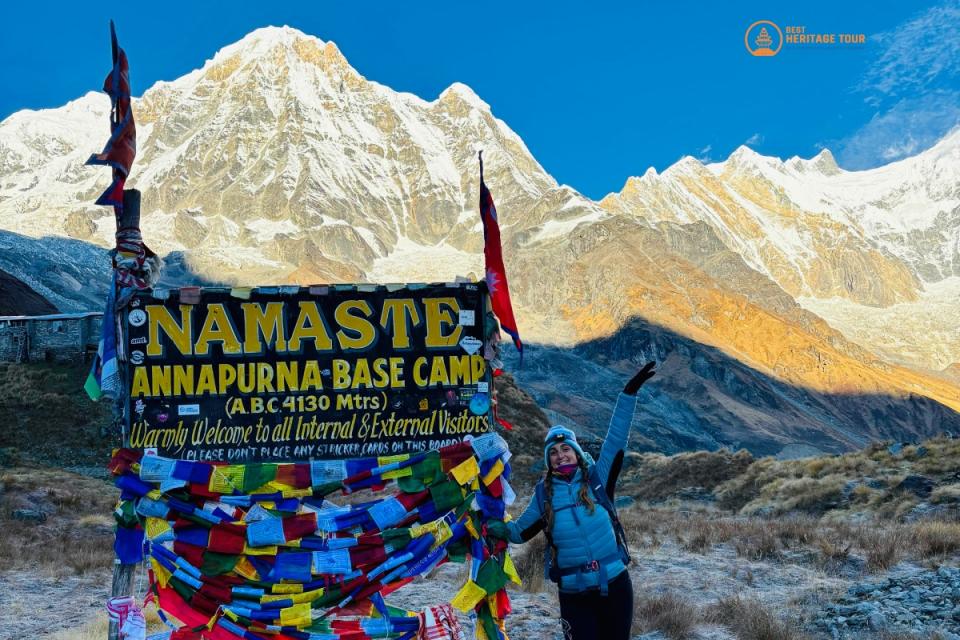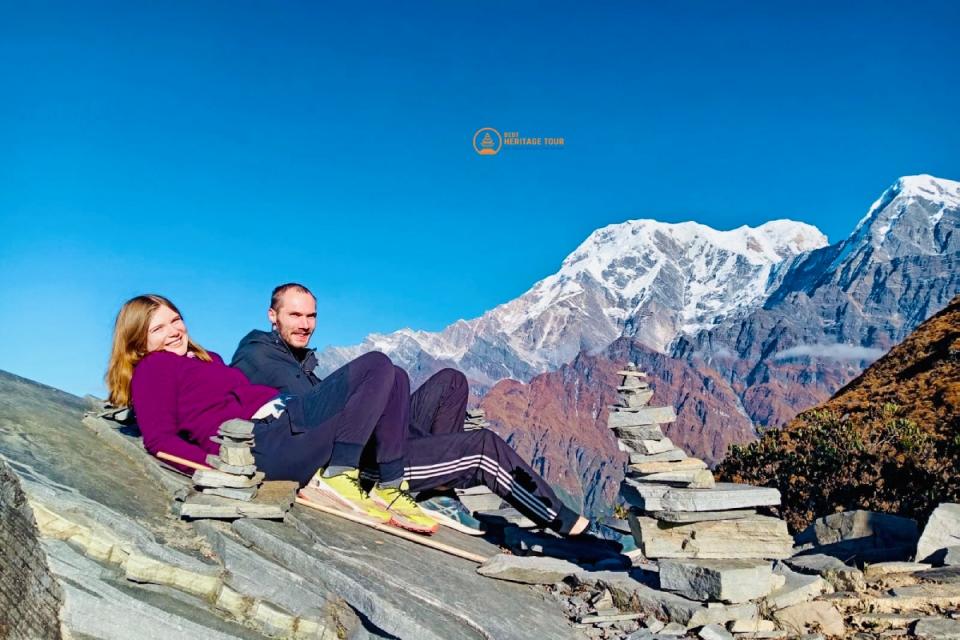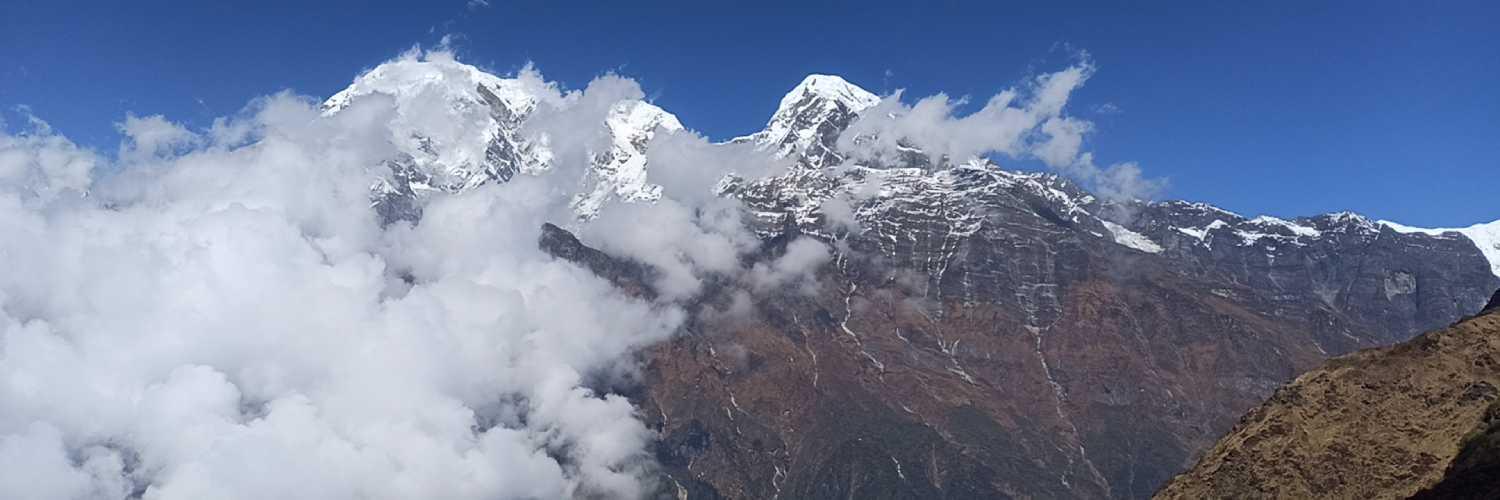
Namaste and welcome! If you’re reading this, you’re likely preparing for one of the most visually spectacular journeys in the Annapurna region: the Mardi Himal Trek.
As someone who has guided many trekkers to the ridgelines of Nepal for over a decade - from the steep stone stairs of Ulleri to the thin air of Everest Base Camp - the question we get asked most in our briefing room is: "Do I really need trekking poles for Mardi Himal?"
Some hikers see them as a sign of "getting older," while others won't step onto a trail without them. In the rugged terrain of the Himalayas, the answer isn't just about fitness; it’s about joint longevity, safety, and rhythm.
In this guide, we’ll break down the specific terrain of the Mardi Himal route, the biomechanics of using poles, and why your knees might thank you for making that small investment before you head to the trailhead.
Understanding the Mardi Himal Terrain: A Tale of Two Halves
To understand if you need poles, you first need to understand what your feet will be doing. Unlike the more gradual incline of the Annapurna Circuit, the Mardi Himal Trek is characterized by its rapid elevation gain and sharp descents.
1. The Forest Section (Deurali to Low Camp)
The first two days of the trek involve walking through dense rhododendron and oak forests. Here, the trail consists largely of uneven stone stairs and "natural" steps formed by tree roots.
-
The Challenge: These steps can be slippery, especially if there was rain the night before or if you’re trekking during the shoulder months (March or September).
-
The Pole Advantage: Poles act as a "second set of legs" here, helping you push off on the high steps and providing stability on the damp, moss-covered rocks.
2. The Great Ridge Walk (Low Camp to High Camp)
Once you break through the tree line, the terrain changes dramatically. You are now walking on a narrow alpine ridge.
-
The Challenge: The wind picks up, and the path becomes narrower. On your left is the deep valley of the Modi Khola; on your right, the Mardi Khola valley.
-
The Pole Advantage: On a narrow ridge, wind can catch your backpack and throw off your balance. Trekking poles provide that "four-point" stability, ensuring a gust of wind doesn't cause a stumble.
3. The Summit Push (High Camp to Base Camp - 4,500m)
This is the "Crux" of the trek. You’ll likely start at 4:00 AM in the dark with a headlamp.
-
The Challenge: The trail to the Mardi Himal Upper Viewpoint and Base Camp is a mix of loose gravel (scree) and, depending on the season, ice or snow.
-
The Pole Advantage: Climbing 1,000 meters in the dark is exhausting. Poles help you maintain a consistent "climbing rhythm," which is essential for managing your breathing in the thin air.
5 Scientific Reasons to Use Trekking Poles on Mardi Himal
As a professional trekking company, Best Heritage Tour doesn't just recommend gear because it looks professional - we recommend it because of the science of the human body.
1. Reducing the "Knee-Crushing" Force
When you descend from Mardi Himal High Camp (3,580m) to Siding (1,700m), you are dropping nearly 2,000 meters in a single day. Studies show that trekking poles can reduce the compressive force on your knees by up to 25%. Without poles, your patella (kneecap) and meniscus absorb the entire impact of your body weight plus your backpack with every single step.
2. Full-Body Power (The 4x4 Drive)
Think of your body as a vehicle. Without poles, you are a "front-wheel-drive" car trying to climb a mountain. By using poles, you engage your chest, shoulders, and triceps. This distributes the workload, meaning your quadriceps don't burn out as quickly on the steep climb to Badal Danda.
3. Balance on "Nepali Flat"
In Nepal, we have a joke: "A little bit up, a little bit down - that’s Nepali flat." These constant micro-adjustments on uneven ground tire out the stabilizing muscles in your ankles. Poles provide two extra points of contact, significantly reducing the risk of a sprained ankle.
4. Testing the Ground
Is that patch of snow solid? Is that mud deep? A quick "poke" with your pole gives you instant feedback. This is especially vital in the winter season (December-February) when sections of the ridge can be covered in ice.
5. Managing Your "Center of Gravity"
When you carry a 5-8 kg daypack, your center of gravity shifts backward. On steep sections, this can make you feel "tippy." Poles move your center of gravity forward, allowing for a more natural and upright posture.
Seasonal Considerations: When are Poles Mandatory?
|
Season |
Necessity Level |
Reason |
|---|---|---|
|
Spring (March-May) |
High |
Melting snow above High Camp can make the ridge very muddy and slippery. |
|
Autumn (Sept-Nov) |
Recommended |
High traffic and dry dust on the Siding descent can make footing "slick." |
|
Winter (Dec-Feb) |
Mandatory |
Ice and hard-packed snow require the stability of poles (paired with micro-spikes). |
|
Monsoon (June-Aug) |
Mandatory |
Muddy trails and leeches make speed and stability essential. |
Pro-Tips from the Best Heritage Tour Guides
If you decide to bring poles, you need to know how to use them. Many trekkers use them incorrectly, which can actually lead to wrist fatigue.
-
The "90-Degree" Rule: On flat ground, your elbows should be at a 90-degree angle.
-
Shorten for the Climb: When heading up toward the Viewpoint, shorten your poles by 5-10 cm so you aren't reaching too high.
-
Lengthen for the Descent: When going down to Siding, lengthen them. This allows you to plant the pole further ahead and "brake" with your arms instead of your knees.
-
The Wrist Strap Secret: Don't just grip the handle. Put your hand through the strap from underneath and rest your weight on the strap. This allows you to keep a loose, relaxed grip on the handle, preventing "climber's cramp."
Frequently Asked Questions (FAQ)
1. Can I buy trekking poles in Nepal?
Absolutely! If you are staying in Kathmandu (Thamel) or Pokhara (Lakeside) before your trek with Best Heritage Tour, there are hundreds of gear shops. You can buy local "knock-off" brands for $10-$15, or high-end Black Diamond/Leki poles for $100+.
2. Can I rent poles in Pokhara?
Yes, many shops in Pokhara rent poles for about 100-200 NPR per day. However, for a 5-day trek, it’s often cheaper and more hygienic to buy your own.
3. Carbon Fiber vs. Aluminum Trekking Poles?
For the rugged terrain of Mardi Himal, we recommend Aluminum (7075 series). Carbon fiber is lighter, but if it gets caught between two rocks on the ridge, it can snap. Aluminum tends to bend rather than break, which is a life-saver when you’re miles from the nearest road.
Is the Mardi Himal Trek Right for You?
Mardi Himal is a "Moderate" trek, but don't let that label fool you. It is a steep, rewarding, and physically demanding journey. Whether you are a solo traveler or trekking with a group, your comfort should be your priority.
At Best Heritage Tour, we believe that trekking is not a race; it is a pilgrimage to the heart of the mountains. If a pair of $20 poles helps you keep your eyes on the majestic Machhapuchhre (Fishtail) instead of staring at your feet in pain, then they are the best investment you will ever make.
Conclusion
Do I really need trekking poles for the Mardi Himal Trek?
While a young, elite athlete might finish the trek without them, for 90% of trekkers, trekking poles are highly recommended. They provide safety on the narrow ridges, power on the steep ascents, and - most importantly - they protect your joints so you can continue trekking for years to come.
Don't let knee pain be the "souvenir" you take home from Nepal. Grab a pair of poles, find your rhythm, and let the Himalayas do the rest.
Ready to Explore the Annapurna Region?
At Best Heritage Tour, we specialize in creating authentic, safe, and culturally immersive experiences. From the hidden ridges of Mardi Himal to the ancient streets of Patan, we are your local partners in adventure.
Plan your dream Mardi Himal Trek with us today!
Phone / WhatsApp / Viber: +977-9851149197 / +977-9810043046
Email: info@bestheritagetour.com / bestheritagetour@gmail.com
Website: www.bestheritagetour.com
Office: Thamel Marg, Kathmandu, Nepal
Author: Best Heritage Tour
Date: 9th March, 2026