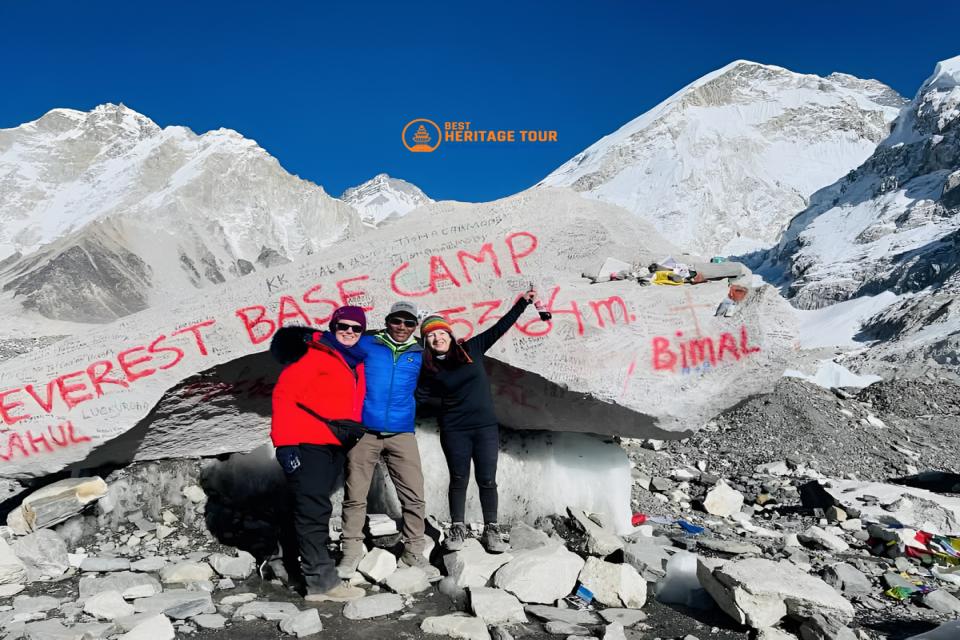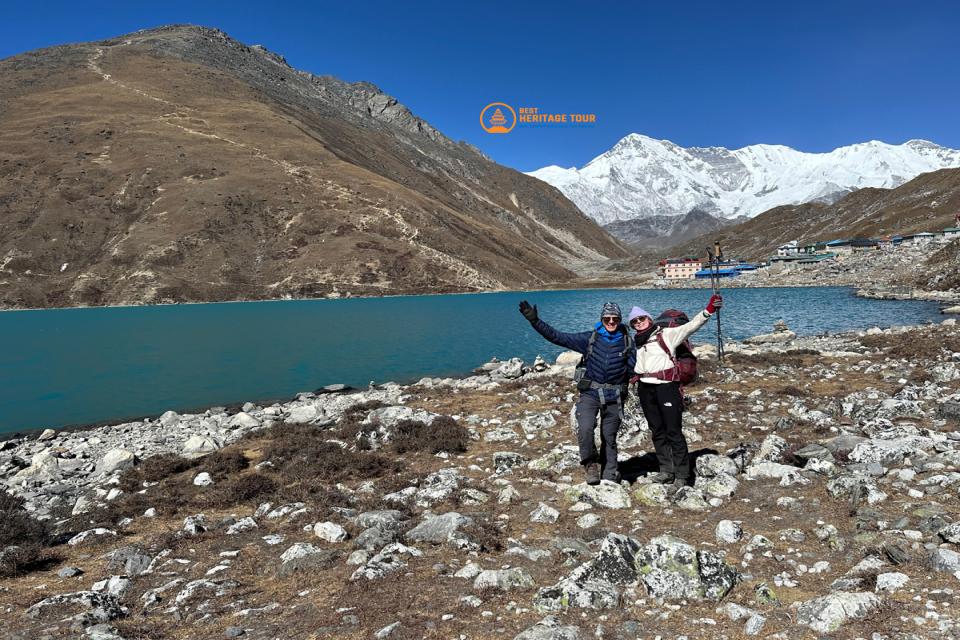
For many, the Everest region is synonymous with the iconic journey to Everest Base Camp (EBC). However, for those who seek the "road less traveled" - where the air is thinner, the silence is deeper, and the views are vastly more panoramic - there is the Kongma La Pass Trek.
Often described as the "hidden giant" of the Khumbu, Kongma La (5,535m) is the highest and arguably the most demanding of the legendary Everest Three Pass Trek. Whether you are attempting it as a standalone challenge or as part of the full circuit, this pass represents the pinnacle of high-altitude trekking in Nepal.
In this comprehensive guide, we at Best Heritage Tour draw upon decades of field experience to provide you with everything you need to know about the Kongma La Pass Trek. From navigating the Khumbu Glacier to managing the rigorous altitude, let’s prepare you for the adventure of a lifetime.
What is the Kongma La Pass?
Standing at an impressive 5,535 meters (18,159 ft), Kongma La is a high mountain pass situated above the Dingboche valley. It serves as a direct, albeit strenuous, link between the Chhukung Valley and the village of Lobuche.
While the standard EBC trail follows the valley floor, the Kongma La route takes you over the ridgelines, offering a perspective of the Himalayas that most tourists never see. From the summit, you are treated to a 360-degree theater of giants, including Lhotse (8,516m), Nuptse (7,861m), Makalu (8,481m), and the sharp spire of Ama Dablam (6,812m).
Why Choose Kongma La Over the Standard Route?
-
Solitude: While the main EBC trail can get crowded during peak seasons, you will often find yourself alone on the Kongma La.
-
The Views: You get a front-row seat to the massive South Face of Lhotse and the hidden glacial lakes of the Khumbu.
-
Personal Achievement: Crossing a 5,500m+ pass is a badge of honor for any serious trekker.
Kongma La Pass Trek Difficulty: Is It Right for You?
We often receive the question: "How hard is the Kongma La Pass?"
To be candid, the Kongma La Pass Trek difficulty is rated as Strenuous/Challenging. It is significantly more demanding than the standard trek to Everest Base Camp. Here is why:
1. The Altitude
At 5,535m, Kongma La is higher than Everest Base Camp (5,364m) and nearly the same height as Kala Patthar. At this elevation, oxygen levels are roughly 50% of what they are at sea level.
2. The Terrain
The trail is not a well-groomed path. It involves navigating steep, loose scree, crossing the shifting boulders of the Khumbu Glacier, and potentially trekking through snow or ice depending on the season. The descent toward Lobuche is particularly notorious for being steep and slippery.
3. Duration of the Day
The day you cross the pass is typically a 10 to 12-hour journey. There are no teahouses, shops, or water sources once you leave Chhukung until you reach Lobuche. You must be self-sufficient for the entire crossing.
Professional Tip: We highly recommend that trekkers have prior experience at altitudes above 4,000m before attempting Kongma La. If this is your first time in the Himalayas, we suggest starting with our Classic EBC Trek or the Annapurna Circuit.
Best Time to Visit
Timing is everything in the Himalayas. For a successful crossing of the Kongma La, we recommend two primary windows:
Spring (March to May)
-
Pros: Stable weather, blooming rhododendrons in the lower valleys, and longer daylight hours.
-
Cons: The pass may still have significant snow from winter, requiring micro-spikes.
Autumn (September to November) - Our Top Recommendation
-
Pros: The clearest skies of the year. The views of Makalu and Lhotse are razor-sharp. The trail is generally drier and safer.
-
Cons: It is the busiest time in the Khumbu (though Kongma La remains relatively quiet).
Winter (December-February) and Monsoon (June-August) are generally not recommended for this specific pass due to extreme cold, heavy snow blocking the route, or dangerous slippery conditions.
Navigating the "Big Day": Chhukung to Lobuche
The crossing of Kongma La is the centerpiece of this trek. Here is a breakdown of what to expect on that pivotal day:
The Ascent
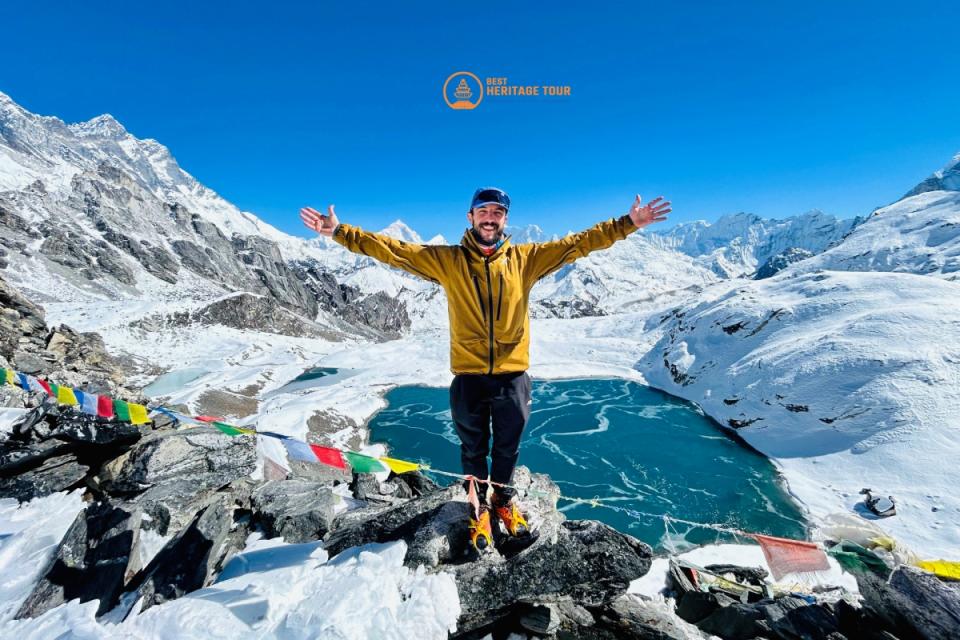
Starting before dawn (around 5:00 AM) from Chhukung is essential. The trail climbs steadily, passing several frozen lakes. The final push to the prayer-flag-strewn summit is a test of willpower, but the sight of the Khumbu Glacier stretching out below you is worth every gasp for air.
The Summit
From the top of Kongma La, you are standing higher than many peaks in Europe and North America. Take your photos, enjoy your packed lunch, but do not linger too long - the weather can change rapidly in the afternoon.
The Khumbu Glacier Crossing
This is the most technically confusing part of the trek. After descending from the pass, you must cross the Khumbu Glacier to reach Lobuche. The glacier is a living thing; the "trail" across the ice and moraine changes every year as the ice melts and rocks shift.
Safety Warning: It is very easy to lose the trail on the glacier in foggy conditions. We strongly advise trekking with one of our certified guides who knows the current year's safest route through the moraine.
Gear and Preparation Checklist
To tackle the Kongma La Pass Trek, your gear must be as resilient as your spirit.
Technical Gear
-
Sturdy Trekking Boots: Ensure they are broken in. You will be walking on sharp, jagged rocks.
-
Micro-spikes: Essential if there is lingering ice on the pass.
-
Trekking Poles: Non-negotiable. They will save your knees during the 1,000m+ descent.
Clothing
-
Layering System: Base layers (merino wool), an insulating mid-layer (fleece), and a heavy down jacket for the summit.
-
Gaiters: Useful for keeping scree and snow out of your boots.
Health and Logistics
-
Water Purification: Bring tablets or a LifeStraw. Boiled water becomes expensive at higher altitudes.
-
AMS Medication: Consult your doctor about Diamox.
-
Travel Insurance: Ensure your policy covers helicopter evacuation up to 6,000m. Standard policies often cap out at 4,000m.
Frequently Asked Questions (FAQ)
1. Do I need a permit for the Kongma La Pass?
Yes. You will need the Sagarmatha National Park Entry Permit and the Khumbu Pasang Lhamu Rural Municipality Entrance Permit. If you book with us, we handle all the paperwork for you.
2. Can I do Kongma La Pass Trek solo?
While possible for elite trekkers, it is highly discouraged. The Kongma La section is remote, and a simple twisted ankle on the Khumbu Glacier can become a life-threatening situation without a companion or guide.
3. How do I train for Kongma La Pass trek?
Focus on cardiovascular endurance (running, swimming) and, most importantly, "stair-climbing" or hiking with a weighted pack. Your legs need to be prepared for 8-10 hour days.
Conclusion
The Kongma La Pass Trek is more than just a hike; it is a pilgrimage into the heart of the world's highest mountain range. It tests your physical limits and rewards you with a sense of peace and perspective that only the high Himalayas can provide.
At Best Heritage Tour, we are committed to making your Himalayan dreams a reality with safety, expertise, and a touch of local warmth. The mountains are calling - will you answer?
Plan Your Adventure with Best Heritage Tour
If you are ready to stand on the summit of Kongma La and look out over the roof of the world, we are here to lead the way.
Phone / WhatsApp / Viber: +977-9851149197 / +977-9810043046
Email: info@bestheritagetour.com / bestheritagetour@gmail.com
Website: www.bestheritagetour.com
Office: Thamel Marg, Kathmandu, Nepal
Author: Best Heritage Tour
Date: 6th May, 2026