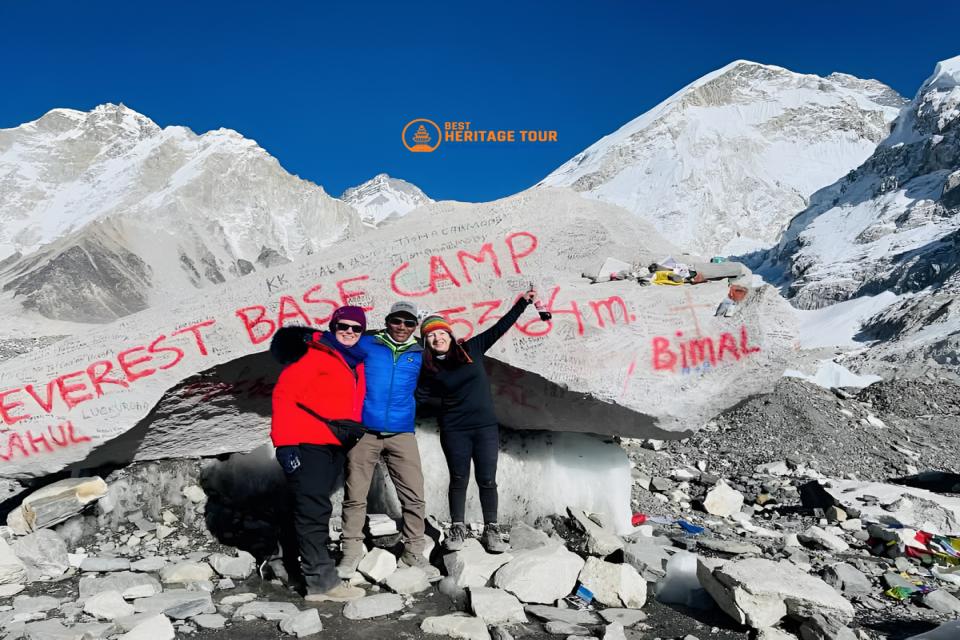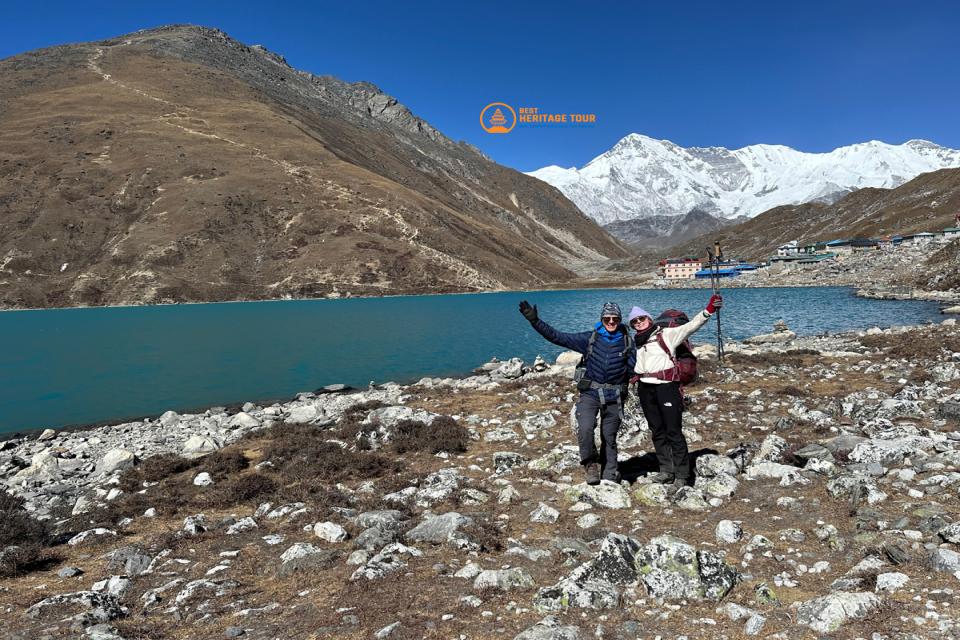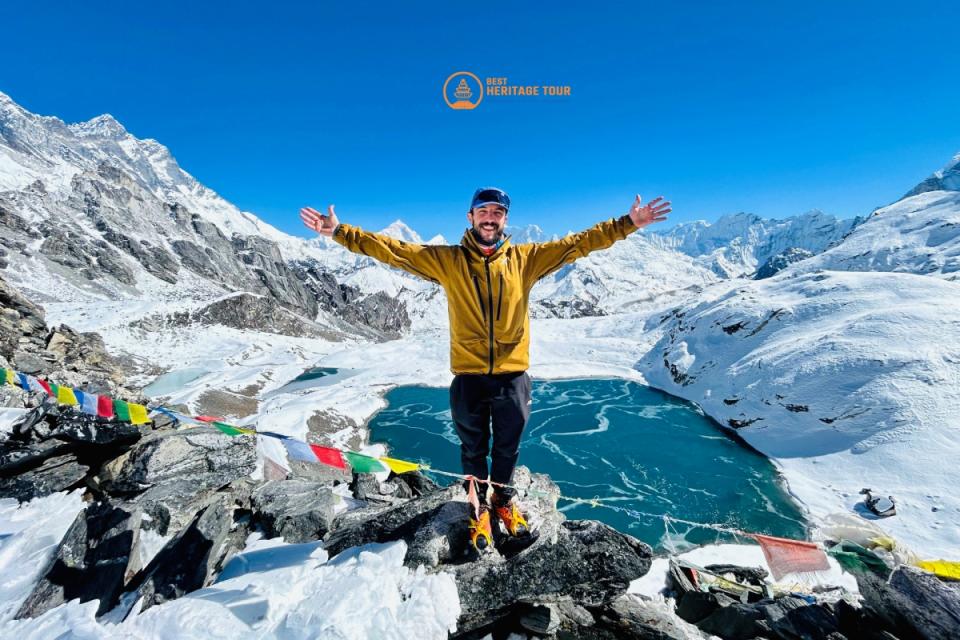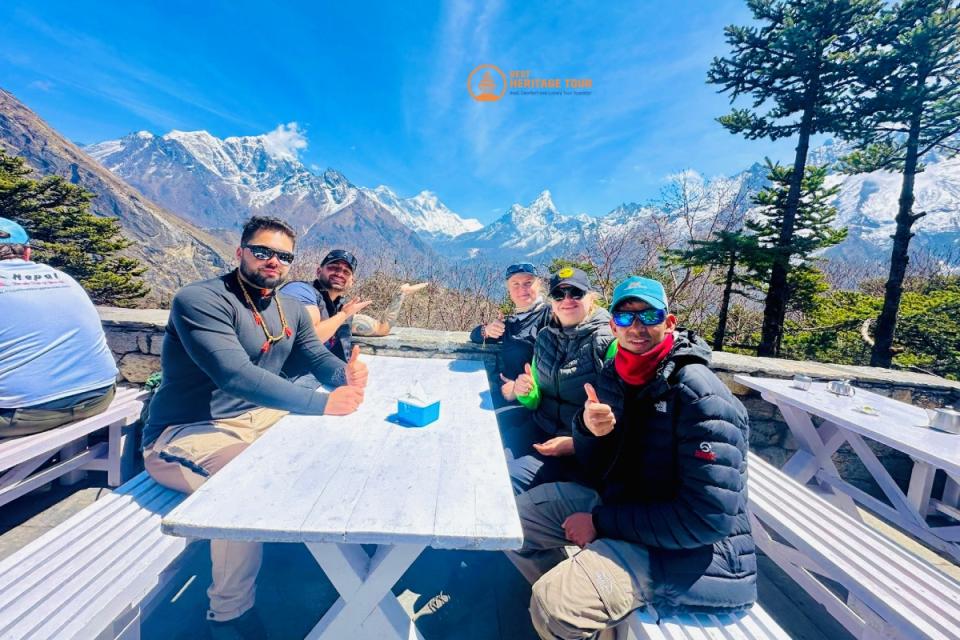
Namaste and welcome to the Best Heritage Tour blog! If you are reading this, chances are you’re preparing for the journey of a lifetime: the Everest Base Camp (EBC) Trek. You’ve likely already bought your sturdy trekking boots, a warm down jacket, and perhaps even some high-tech trekking poles. But there is one small item that often gets overlooked in the packing frenzy, yet it is arguably the most critical for your safety and comfort: a high-quality pair of sunglasses.
Is it just a fashion statement for those iconic photos at the Khumbu Glacier? Absolutely not. In the Himalayas, sunglasses are a piece of medical equipment.
In this comprehensive guide, we will dive deep into why sunglasses are non-negotiable for EBC, the science of high-altitude UV radiation, and how to choose the perfect pair so you don't end up "snow-blind" in the middle of your adventure.
Why Sunglasses are Mandatory for EBC: The Science of High Altitude?
When you are trekking in the Everest region, you aren't just walking; you are ascending into a thin atmosphere that behaves very differently from the air at sea level.
1. Increased UV Intensity
At sea level, the thick atmosphere acts as a filter, absorbing a significant portion of the sun’s harmful Ultraviolet (UV) rays. However, as you climb higher toward Everest Base Camp (which sits at 5,364 meters), the air becomes thinner. For every 1,000 meters you ascend, UV radiation levels increase by approximately 10% to 12%. By the time you reach Gorak Shep, you are being bombarded by nearly 50% more UV radiation than you would be at the beach!
2. The "Mirror Effect" of Snow
The Khumbu region is a world of white. While dirt trails reflect only about 10% of light, fresh snow reflects up to 80% to 90% of UV radiation. This means your eyes are getting hit twice: once from the sun above and once from the reflection off the ground. This "double whammy" is what makes high-altitude trekking so dangerous for unprotected eyes.
3. Preventing Snow Blindness (Photokeratitis)
This is the primary reason we insist all our clients at Best Heritage Tour carry professional-grade eyewear. Snow Blindness is essentially a sunburn on your cornea.
-
The Symptoms: It doesn't happen instantly. You might feel fine during the day, but by evening, your eyes feel like they are filled with burning sand. Other symptoms include extreme redness, excessive tearing, light sensitivity, and temporary loss of vision.
-
The Danger: Imagine being at 5,000 meters, needing to navigate a rocky glacial moraine, and suddenly being unable to open your eyes due to excruciating pain. It is a recipe for a rescue-level emergency.
What Happens if You Don't Wear Sunglasses?
Skipping eye protection in the Himalayas isn't just about temporary discomfort. Long-term exposure to the intense Himalayan sun can lead to:
-
Cataracts: Premature clouding of the eye’s natural lens.
-
Pterygium: A fleshy growth on the white of the eye that can eventually block vision (often called "Surfer’s Eye" or "Trekker’s Eye").
-
Retinal Damage: Chronic exposure to high UV can cause permanent damage to the sensitive light-collecting cells in the back of your eye.
Choosing the Right Sunglasses: Key Features to Look For
Not all sunglasses are created equal. Those $10 fashion shades you bought for a summer festival will not cut it on the way to Everest. Here is what you actually need:
1. 100% UV Protection (UV400)
This is the baseline. Your glasses must block 100% of UVA and UVB rays. Look for the UV400 rating. If they don't have this, they are useless for EBC.
2. Lens Category (Cat 3 or Cat 4)
Sunglasses are rated by how much light they let through (Visible Light Transmission or VLT):
-
Category 3: Great for trekking in lower altitudes (Lukla to Namche). They let in 8%–18% of light.
-
Category 4: Essential for the "High Alpine" zones (Dingboche to EBC/Kala Patthar). These are very dark lenses that let in only 3%-8% of light.
Local Pro Tip: Do not wear Category 4 lenses while driving - they are so dark they make it dangerous to see the road!
3. Polarized Lenses
Polarization is a game-changer. These lenses have a special filter that blocks the horizontal glare reflecting off the snow and ice. This significantly reduces eye strain and helps you see the contours of the trail much more clearly.
4. Wraparound Design or Side Shields
In the mountains, light doesn't just come from the front. It bounces off the snow and enters from the sides of your glasses. Professional "Glacier Goggles" often have leather or plastic side shields to block this peripheral light. At the very least, choose a "wraparound" style that sits close to your face.
5. Anti-Fog Coating
When you are breathing hard during a steep ascent (like the "Toughest Hill" before Namche Bazaar), your body heat can cause your glasses to fog up. Look for lenses with anti-fog treatments or frames with good ventilation.
Comparison: Regular Sunglasses vs. Glacier Goggles
|
Feature |
Regular Sunglasses |
Glacier Goggles (Recommended) |
|---|---|---|
|
UV Protection |
Usually 100% |
Always 100% |
|
Lens Category |
Cat 2 or 3 |
Cat 4 |
|
Side Protection |
Minimal |
Side shields or deep wrap |
|
VLT (Light Entry) |
15% - 25% |
3% - 8% |
|
Durability |
Plastic/Metal |
High-impact Polycarbonate |
Essential Tips for Eye Care on the Trail
As your experienced guides, we’ve seen it all. Follow these tips to keep your vision sharp:
-
Wear them even on cloudy days: UV rays penetrate clouds. Just because you can't see the sun doesn't mean it isn't burning your corneas.
-
Bring a backup pair: It happens - you sit on them, they fall off a cliff, or a strap breaks. In the Khumbu, a spare pair of $20 polarized glasses from a shop in Namche is a life-saver.
-
Use a Retainer Strap: Wind can be fierce at high altitudes. A simple "Chums" or neck strap ensures your expensive glasses don't blow away into a crevasse.
-
Don't forget the hat: A wide-brimmed sun hat adds an extra layer of physical shade for your eyes, reducing the amount of light your sunglasses have to filter.
Can I wear Contact Lenses or Prescription Glasses?
Yes, but with caveats.
-
Contacts: The air is very dry and dusty. This can irritate contact lens wearers. Bring plenty of rewetting drops and a backup pair of glasses.
-
Prescription: If you wear glasses, look into "Fit-over" sunglasses or specialized prescription glacier goggles (like those from brands like Julbo or Smith). Alternatively, you can use "Clip-ons," though they don't offer as much side protection.
Conclusion
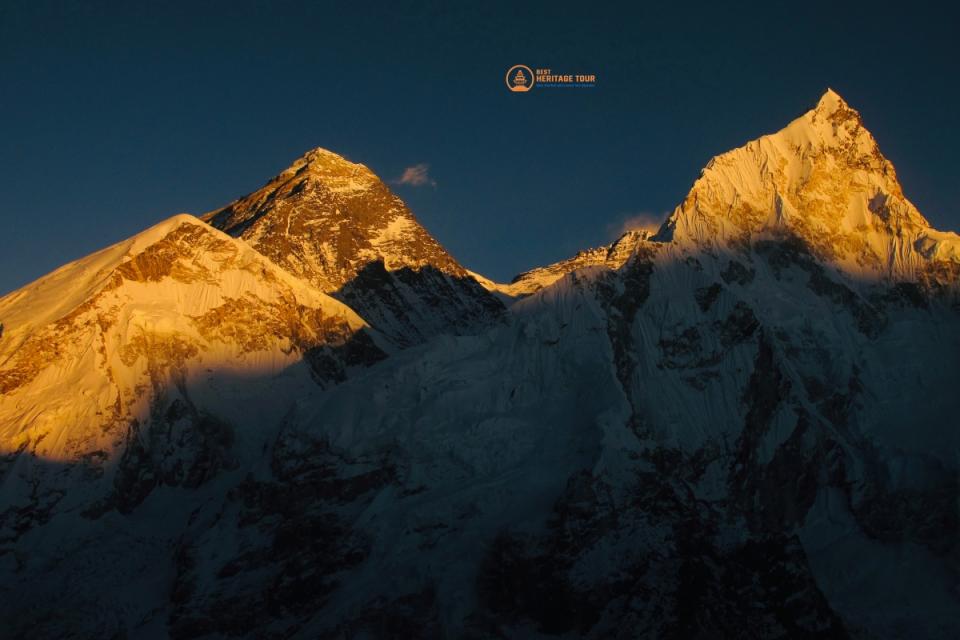
The Everest Base Camp trek is an assault on the senses - the smell of juniper incense, the sound of yak bells, and the breathtaking sight of Nuptse, Lhotse, and Everest. To truly enjoy these views, you must protect the tools that allow you to see them.
Investing in a proper pair of Category 4 or polarized Category 3 sunglasses isn't just a "nice to have"; it is a safety requirement for any high-altitude trekker. Don't let a preventable condition like snow blindness ruin your dream of standing at the foot of the world's highest peak.
Ready to Start Your Himalayan Adventure?
At Best Heritage Tour, we don't just book trips; we curate experiences backed by decades of local expertise. From choosing the right gear to navigating the trails safely, our team is with you every step of the way.
Contact us today to plan your Everest Base Camp Trek!
Phone / WhatsApp / Viber: +977-9851149197 / +977-9810043046
Email: info@bestheritagetour.com / bestheritagetour@gmail.com
Website: www.bestheritagetour.com
Address: Thamel Marg, Kathmandu, Nepal
Author: Best Heritage Tour
Date: 8th March, 2026