Embarking on a journey to the shadow of the world’s highest peak is a dream for many. However, behind the breathtaking vistas of the Himalayas lies a complex logistical reality that every trekker must navigate: basic hydration. At Best Heritage Tour, we believe that a well-informed trekker is a successful trekker. One of the most frequent questions we receive, "Is bottled water available on EBC trek?" and "How much should I budget for water in EBC Trek?"
In this comprehensive guide, we break down the cost of mineral water bottles in the Everest Region, from the gateway of Lukla to the high-altitude settlement of Gorakshep. We also provide professional insights into sustainable alternatives that save you money and protect the fragile mountain ecosystem.
Why Does Water Get More Expensive as You Climb?
Before we dive into the specific prices, it is essential to understand the "vertical economy" of the Khumbu. In the Everest region, there are no roads. Every single bottle of mineral water must be transported.
-
Human and Animal Power: Goods are flown into Lukla and then carried by porters or yaks over rugged terrain, suspension bridges, and steep mountain passes.
-
Altitude Logistics: As the air thins and the trails become more treacherous, the cost of labor and transportation increases.
-
Fuel Costs: In areas where bottled water isn't sold, boiling water for safety requires kerosene or gas, which is equally expensive to transport.
At Best Heritage Tour, we emphasize that these prices reflect the immense effort required to keep the trails stocked for international visitors.
Breakdown: Cost of Mineral Water Bottle in the Everest Region
As you ascend from the lush forests of the lower Khumbu to the stark glacial moraines of the high Himalayas, you will notice a steady increase in prices. Below is the current price list for a standard 1-liter mineral water bottle.
1. Cost of Mineral Water Bottle in Lukla (2,860m)
Price: Rs. 120 - Rs. 150
Lukla is the primary entry point for most trekkers. Because it has an airport and is the start of the trail, prices here are relatively stable. It is the cheapest place to buy bottled water before you head deeper into the Sagarmatha National Park.
2. Cost of Mineral Water Bottle in Phakding (2,610m)
Price: Rs. 150 - Rs. 200
Though slightly lower in altitude than Lukla, Phakding requires porters to carry goods a few hours down and then up the trail. Prices start to creep up here as you move away from the main transport hub.
3. Cost of Mineral Water Bottle in Namche Bazaar (3,440m)
Price: Rs. 200 - Rs. 250
As the "Sherpa Capital," Namche is a bustling hub. While you can find almost anything here - from gear shops to Irish pubs - the cost of mineral water bottle in Namche reflects its position as a major transit point. Most trekkers spend at least two nights here for acclimatization, so water expenses can add up quickly.
4. Cost of Mineral Water Bottle in Tengboche & Dingboche (3,860m - 4,410m)
Price: Rs. 200 - Rs. 400
Once you pass Namche, the terrain becomes more challenging. In Tengboche, home to the famous monastery, prices stay around Rs. 200-250. However, by the time you reach the stone-walled fields of Dingboche, expect to pay between Rs. 300 and Rs. 400 per liter.
5. Cost of Mineral Water Bottle in Pheriche & Lobuche (4,240m - 4,940m)
Price: Rs. 300 - Rs. 500
In these high-altitude settlements, the price reflects the scarcity of resources. At nearly 5,000 meters, Lobuche is a rigorous climb for porters, and the retail price of water scales accordingly.
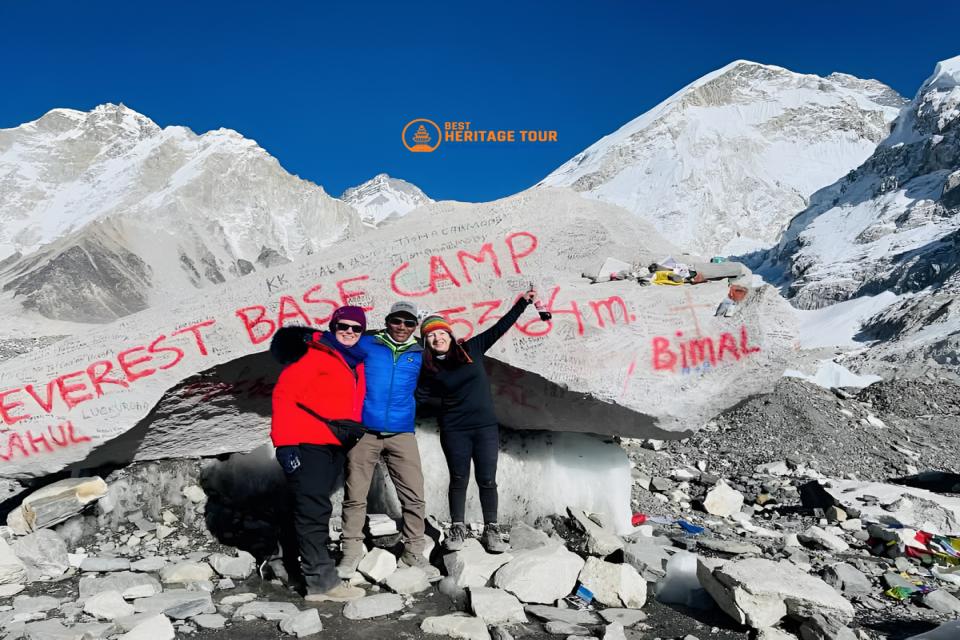
6. Cost of Mineral Water Bottle in Gorakshep (5,164m)
Price: Rs. 500 - Rs. 600
Gorakshep is the final stopping point before Everest Base Camp. It is a dry, frozen landscape where liquid water is a precious commodity. The cost of mineral water bottle in Gorakshep is the highest on the trek, often reaching Rs. 600 per liter.
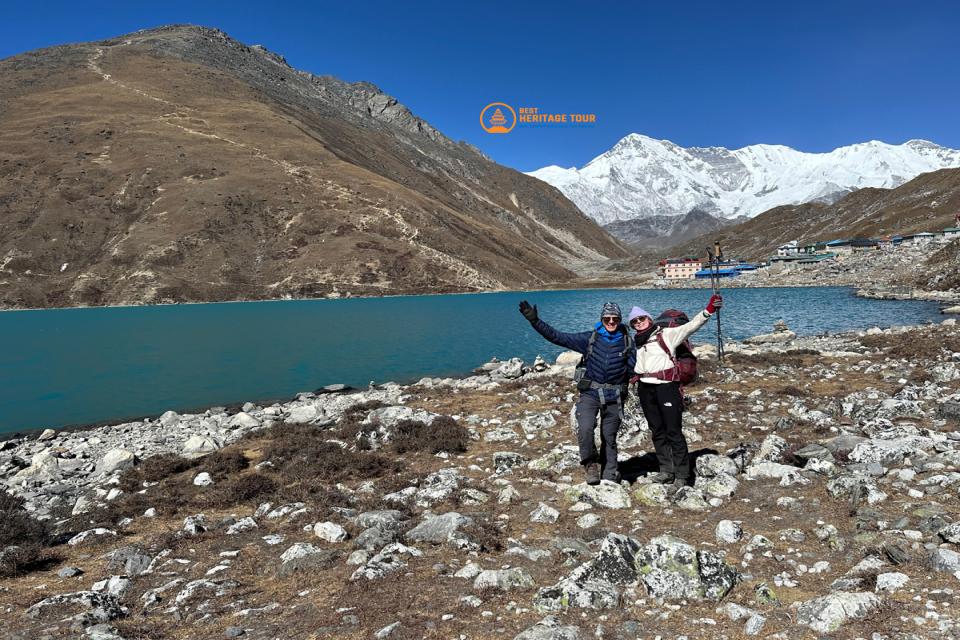
7. Cost of Mineral Water Bottle in Gokyo (4,750m)
Price: Rs. 500 - Rs. 600
For those taking the scenic route to the emerald lakes, the cost of mineral water bottle in Gokyo is comparable to the highest points of the EBC trail. The remote nature of the Gokyo Valley makes logistics particularly difficult.
Quick Reference Table: Water Prices by Location on Everest Region
|
Location |
Altitude (m) |
Estimated Price (Per 1L Bottle) |
|---|---|---|
|
Lukla |
2,860m |
Rs. 120 - 150 |
|
Phakding |
2,610m |
Rs. 150 - 200 |
|
Namche Bazaar |
3,440m |
Rs. 200 - 250 |
|
Tengboche |
3,860m |
Rs. 200 - 250 |
|
Dingboche |
4,410m |
Rs. 300 - 400 |
|
Pheriche |
4,240m |
Rs. 300 - 400 |
|
Lobuche |
4,940m |
Rs. 400 - 500 |
|
Gorakshep |
5,164m |
Rs. 500 - 600 |
|
Gokyo |
4,750m |
Rs. 500 - 600 |
Hydration Strategy: The "3 to 4 Liter" Rule
At Best Heritage Tour, our guides emphasize that hydration is your best defense against Acute Mountain Sickness (AMS). High altitude causes the body to lose moisture faster through respiration and increased urination.
-
The Goal: You should aim to drink 3 to 4 liters of water per day.
-
The Math: If you rely solely on bottled water at higher elevations (e.g., Gorakshep), you could spend upwards of Rs. 2,400 ($18 - $20 USD) per day just on water.
-
The Impact: Over a 12-to-14-day trek, bottled water alone can add $150 - $200 to your total trip cost.
Sustainable Alternatives: Saving Money and the Environment
While mineral water is convenient, it poses a significant environmental threat. Thousands of plastic bottles are discarded in the Khumbu every year, straining local waste management systems. As a responsible travel partner, Best Heritage Tour recommends the following alternatives:
1. Boiled Water from Teahouses
Most teahouses offer "Boiled and Filtered" water. You can buy this by the liter or by the pot.
-
Cost: Usually 30% to 50% cheaper than bottled mineral water.
-
Benefit: It’s safe, warm (which helps maintain body temperature), and plastic-free.
2. Water Purification Tablets or Drops
This is the most budget-friendly method. You can fill your bottle from local taps (available in most villages up to Lobuche) and treat it yourself.
-
Best Options: Aquatabs (Chlorine-based) or Iodine drops.
-
Pro Tip: Add a powdered electrolyte or "Tang" to mask the chemical taste and boost your energy.
3. UV Purifiers (Steripen)
A Steripen uses ultraviolet light to destroy 99.9% of bacteria and viruses. It is a favorite among our regular trekkers at Best Heritage Tour.
-
Initial Investment: Higher upfront cost, but pays for itself within one EBC trek.
-
Efficiency: Purifies a liter of water in about 90 seconds.
4. Integrated Filter Bottles
Brands like LifeStraw or Katadyn provide bottles with built-in filters. These allow you to drink directly from mountain streams safely.
Best Heritage Tour’s Tips for Mountain Hydration
-
Carry Two Bottles: We recommend two 1-liter wide-mouth Nalgene bottles. They can handle boiling water (serving as a bed warmer at night) and won't crack if the water freezes.
-
Start Early: Drink at least 500ml before you even leave the teahouse in the morning.
-
Monitor Your Health: Urine should be clear or very light yellow. If it’s dark, you are dehydrated and need to increase your intake immediately.
-
Avoid Excessive Caffeine: While a cup of tea is great, too much coffee can act as a diuretic, causing further dehydration.
Conclusion
The cost of mineral water bottle in the Everest Region is more than just a price tag; it is a reflection of the challenges of life in the high Himalayas. While a budget of $100-$150 for water is realistic for those who prefer bottled convenience, we encourage our guests to embrace more sustainable and cost-effective methods. Not only will you save money, but you will also help preserve the pristine beauty of the Sagarmatha National Park for future generations.
At Best Heritage Tour, we handle all the logistical details - from permits to tea house bookings - so you can focus on the climb. Our experienced guides are experts at ensuring you stay hydrated and healthy throughout your trek.
Plan Your Himalayan Adventure with Best Heritage Tour
Ready to stand at the base of the world's highest peak? Let us handle the details.
Phone / WhatsApp / Viber: +977-9851149197 / +977-9810043046
Email: info@bestheritagetour.com / bestheritagetour@gmail.com
Website: www.bestheritagetour.com
Office: Thamel Marg, Kathmandu, Nepal
Author: Best Heritage Tour
Date: 23rd April, 2026