The Everest region is a land of legends, but for the modern adventurer, the true test of grit lies beyond the standard base camp trail. At Best Heritage Tour, we have guided hundreds of explorers through the high-altitude theaters of the Khumbu, and if there is one name that commands both respect and excitement, it is the Cho La Pass.
Standing at an altitude of 5,420 meters (17,782 ft), Cho La is not merely a mountain crossing; it is a high-altitude bridge that connects the turquoise serenity of the Gokyo Lakes with the rugged, granite world of Everest Base Camp.
Whether you are planning the iconic Everest Three Pass Trek or a focused Gokyo-Cho La circuit, this guide provides the definitive technical breakdown, route logistics, and safety protocols for a successful 2026 crossing.
Understanding the Cho La Pass: An Overview
The Cho La Pass is the physical link between the Gokyo Valley and the Khumbu Valley. In the world of Himalayan trekking, it transforms a linear "up and back" journey into a grand loop, allowing you to see the best of both worlds without retracing your steps.
-
Maximum Altitude: 5,420m / 17,782 ft
-
Best Season: Spring (March-May) and Autumn (September-November)
-
Key Geography: Crosses the divide between the Ngozumpa Glacier (the longest in Nepal) and the Chola Glacier.
-
Trip Type: Strenuous High-Altitude Trekking
At Best Heritage Tour, we often categorize this trek as "Alpine-lite." While it doesn't require technical mountaineering skills like ice climbing or rappelling, it demands a high level of "mountain sense" - the ability to navigate over shifting moraine, icy slopes, and thinning air.
Assessing Cho La Pass Trek Difficulty: How Hard is it?
The question we get most frequently at our Kathmandu office is: "Can a regular trekker do it?"
The answer is yes - but with respect. The Cho La Pass trek difficulty is rated as strenuous. Unlike the well-trodden paths to Namche Bazaar, Cho La involves technical terrain that changes with the season.
Physical Demands
You should be prepared for 8 to 10-hour trekking days. The climb to the pass is a vertical grind over loose scree and boulders. Because the air contains roughly 50% less oxygen than at sea level, every step feels like three.
Technical Complexity
While you won't need a harness or ropes, the glacier crossing is the defining challenge. Depending on the time of year, you may encounter:
-
Black Ice: Extremely slippery surfaces on the glacier.
-
Hidden Crevasses: Usually small, but require staying on the marked track.
-
Loose Scree: On the descent toward Dzongla, the trail consists of "moving rocks" that test your ankle stability.
Mental Resilience
Weather in the Khumbu can turn in minutes. Crossing the pass requires an early start (often 4:30 AM) to beat the high winds that lash the summit by midday. This early push, combined with the cold, requires a strong mental game.
The Glacier Crossing: What to Expect
Crossing the Chola Glacier is the highlight of the journey. For many travelers, this is their first time walking on ancient, moving ice.
Navigation on the Ice
As you approach the summit from the Thangnak side, the rocky path gives way to a vast, shimmering snowfield and glacier. The "trail" here is often marked by prayer flags or previous footprints, but these can be obscured by fresh snow. Our Best Heritage Tour guides use GPS and local knowledge to ensure we steer clear of unstable sections.
Equipment for the Glacier
In 2026, we strictly advise all our guests to carry microspikes or crampons.
-
Microspikes: Lightweight and easy to slip over trekking boots. Perfect for the hard-packed ice typical of late autumn.
-
Crampons: Necessary if you are trekking in early spring or winter when the snow is deep and the ice is thick.
Pro-Tip from the Field: Do not attempt the glacier crossing in simple sneakers or worn-out boots. The risk of a slip-and-fall injury is the leading cause of evacuations in this sector.
The Complete Route: Step-by-Step Logistics
The most common and recommended way to tackle this route is from West to East (Gokyo to Everest Base Camp). This direction allows for better acclimatization as you spend several days at the Gokyo Lakes (4,750m) before pushing for the 5,420m pass.
Phase 1: The Gateway (Lukla to Gokyo)
The journey begins with a flight to Lukla, followed by a trek through the Sherpa heartlands of Namche Bazaar. Instead of following the crowds toward Tengboche, we branch off toward the Gokyo Valley.
-
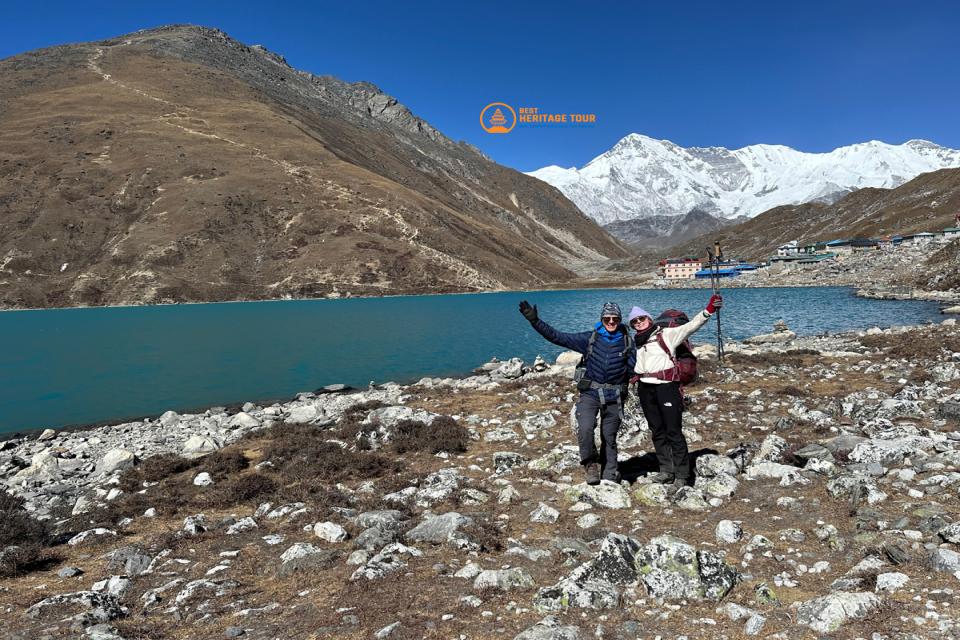
Highlight: Walking alongside the Ngozumpa Glacier and seeing the reflection of Mt. Cho Oyu in the third Gokyo Lake.
Phase 2: The Crossing (Thangnak to Dzongla)
This is the "Big Day."
-
Departure: Leave Thangnak at 5:00 AM.
-
The Ascent: A steep, rocky climb to the base of the pass.
-
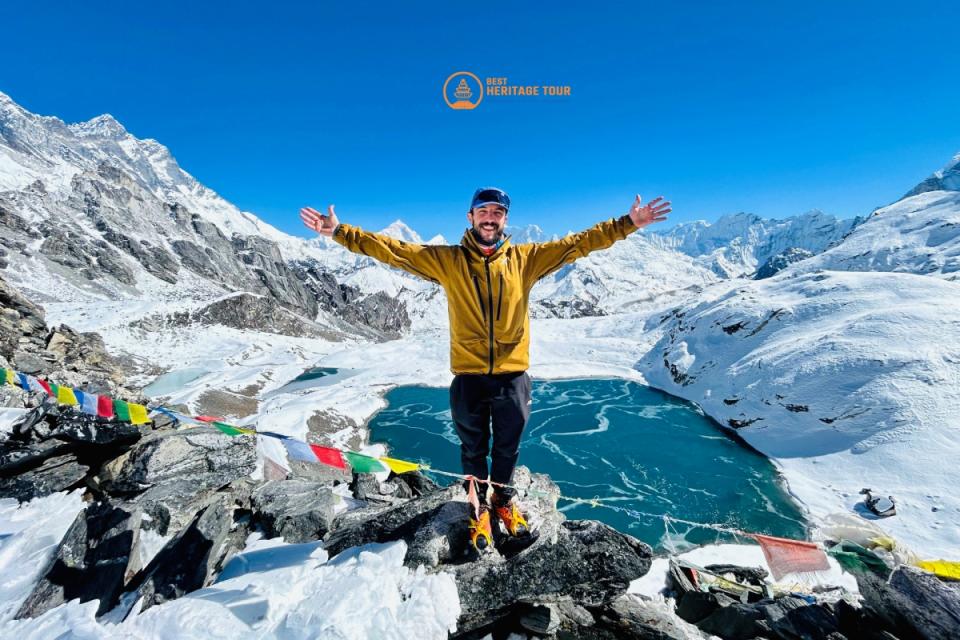
The Summit: Reaching the prayer-flag-strewn top of Cho La. On a clear day, you are rewarded with a 360-degree view of Ama Dablam, Cholatse, and Baruntse.
-
The Glacier: A 45-minute traverse across the Chola Glacier.
-
The Descent: A technical, knee-jarring descent over scree into the small settlement of Dzongla.
Phase 3: The Khumbu Link (Dzongla to EBC)
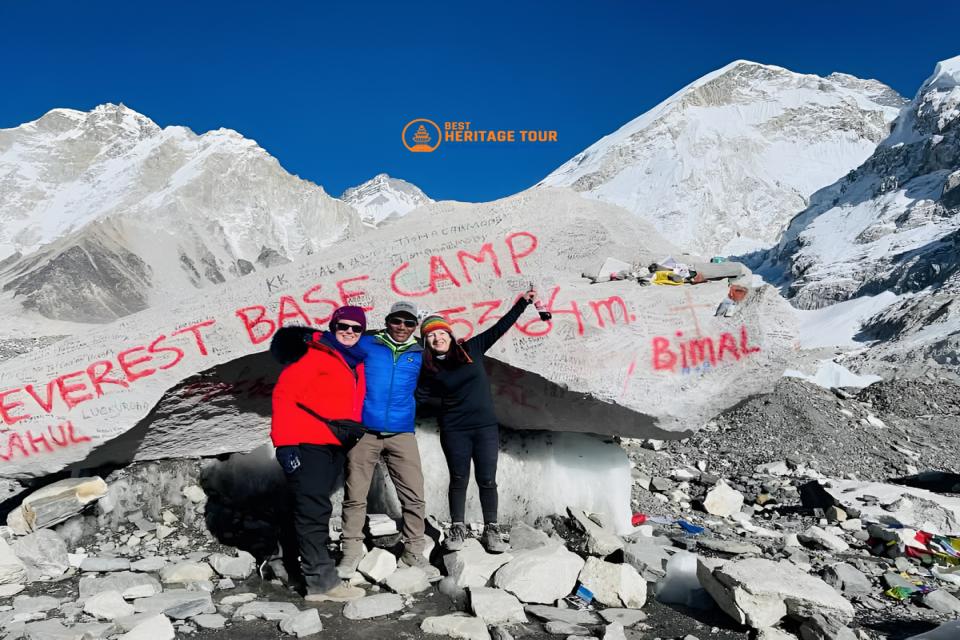
From Dzongla, the trail contours around the base of Cholatse with stunning views of Pheriche valley below. You eventually merge with the main Everest trail at Lobuche, heading toward the ultimate goal: Everest Base Camp.
Essential Gear Checklist for 2026
Pack like a pro. At Best Heritage Tour, we recommend the "Layering System" to combat the extreme temperature swings.
|
Category |
Item |
Why? |
|---|---|---|
|
Traction |
Microspikes / Spikes |
Non-negotiable for the glacier. |
|
Footwear |
Stiff-soled Trekking Boots |
Must have ankle support for scree slopes. |
|
Clothing |
Down Jacket (-20°C rated) |
The pass summit is bone-chillingly cold. |
|
Accessories |
Polarized Sunglasses |
To prevent snow blindness on the glacier. |
|
Tech |
Power Bank |
Cold drains batteries; keep your camera charged! |
|
Safety |
Trekking Poles |
Essential for balance during the steep descent. |
Safety and Acclimatization Strategy
High-altitude pulmonary edema (HAPE) and cerebral edema (HACE) are real risks at 5,000 meters. A successful Cho La crossing isn't about speed; it's about science.
The "Climb High, Sleep Low" Rule
Our itineraries include mandatory acclimatization days in Namche and Gokyo. We recommend hiking to Gokyo Ri (5,357m) the day before the pass. This "primes" your lungs for the altitude of Cho La without the weight of a full pack.
Hydration and Nutrition
Drink at least 4 liters of water daily. Avoid alcohol and salty foods, which contribute to dehydration. At Best Heritage Tour, our guides monitor your oxygen saturation levels every evening using an oximeter to ensure you are fit to continue.
Why Choose the Cho La Pass over the Standard EBC Trek?
While the classic EBC trek is iconic, the Cho La Pass offers a premium experience:
-
Less Crowded: The trails between Gokyo and Lobuche are significantly quieter.
-
Better Views: You get a perspective of Everest and Lhotse from Gokyo Ri that the main trail simply cannot match.
-
Personal Achievement: Crossing a high pass adds a level of prestige to your Himalayan resume.
Conclusion
The Cho La Pass is a bridge between the emerald lakes of Gokyo and the soaring peaks of the Khumbu. It is a journey for those who want more than just a selfie at Base Camp - it is for those who want to feel the pulse of the Himalayas beneath their boots.
Crossing a glacier at 5,420 meters is a life-changing experience, but it requires meticulous planning, expert navigation, and a deep respect for the mountain's temperament. At Best Heritage Tour, we don't just provide a guide; we provide a bridge between your ambition and the summit.
Ready to Cross the Divide?
Don't leave your Himalayan dream to chance. Join Best Heritage Tour for a safe, expertly led, and culturally immersive experience.
Phone / WhatsApp / Viber: +977-9851149197 / +977-9810043046
Email: info@bestheritagetour.com / bestheritagetour@gmail.com
Website: www.bestheritagetour.com
Office: Thamel Marg, Kathmandu, Nepal
Author: Best Heritage Tour
Date: 6th May, 2026