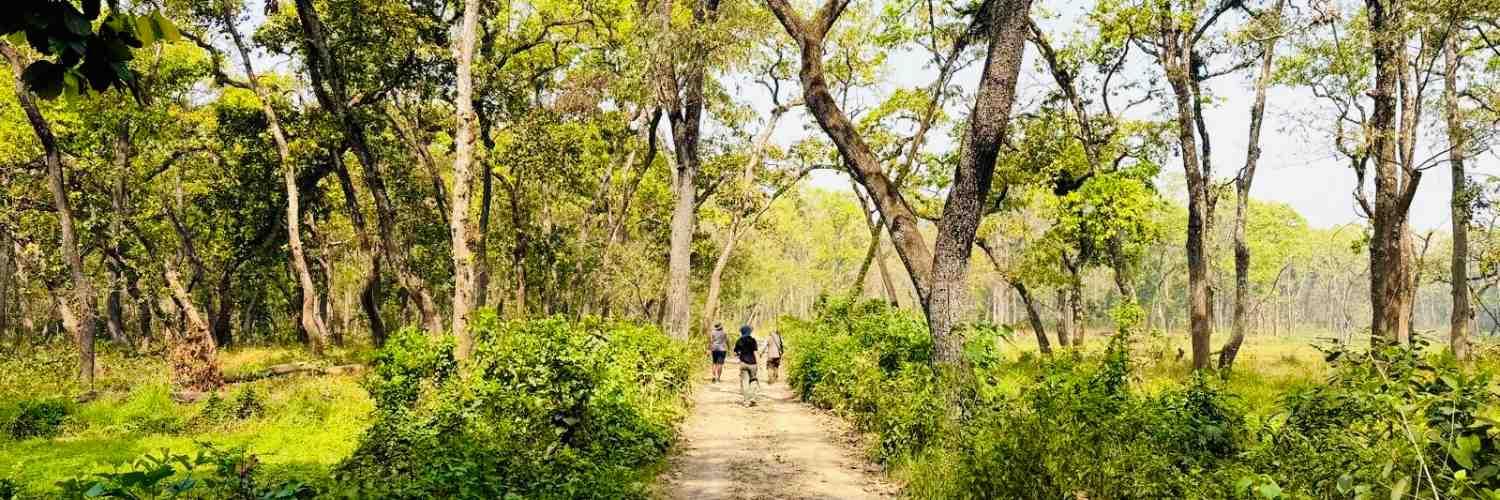
The rustle of elephant grass, the distant trumpet of a wild tusker, and the unmistakable, prehistoric silhouette of a Greater One-Horned Rhinoceros emerging from the mist - this is the magic of the Nepali Terai. For trekkers who have conquered the heights of the Himalayas and families seeking a soulful connection with nature, the question isn't just if you should see a rhino, but where the absolute best vantage point lies.
At Best Heritage Tour, we have spent decades navigating the sub-tropical jungles of our home country. While Nepal offers several pockets of biodiversity, one destination stands unrivaled. If you are searching for the best place to see wild rhino in Nepal, look no further than Chitwan National Park.
In this comprehensive guide, we’ll dive deep into why Chitwan is the undisputed king of rhino conservation, how a Jeep Safari in Chitwan National Park can change your perspective on wildlife, and the practicalities of planning a family-friendly jungle adventure in 2026.
Why Chitwan is the Best Place in Nepal to See Wild Rhino?
While Nepal’s conservation success story has seen rhino populations grow across the western plains of Bardia and the grasslands of Shuklaphanta, Chitwan National Park remains the heartland.
1. The Numbers Don't Lie
According to the most recent 2021 census (with updated 2025/2026 monitoring data showing continued steady growth), Nepal is home to over 752 rhinos. Of these, more than 90% reside within the borders of Chitwan. Statistically speaking, your chances of a sighting here are significantly higher than anywhere else in Asia.
2. Accessible Wilderness
Unlike the remote corners of Western Nepal, which require internal flights or grueling 15-hour drives, Chitwan is a comfortable 5-6 hour journey from either Kathmandu or Pokhara. For family groups and trekkers looking to "thaw out" after a cold mountain expedition, Chitwan offers the perfect balance of raw wilderness and accessible luxury.
3. A UNESCO World Heritage Success
Chitwan isn't just a park; it’s a global icon. As Nepal's first national park (established in 1973), it has perfected the art of community-based conservation. When you visit Chitwan with Best Heritage Tour, you aren't just a tourist; you are contributing to a delicate ecosystem that has brought the Greater One-Horned Rhino back from the brink of extinction.
Exploring the Jungle: Jeep Safari in Chitwan National Park
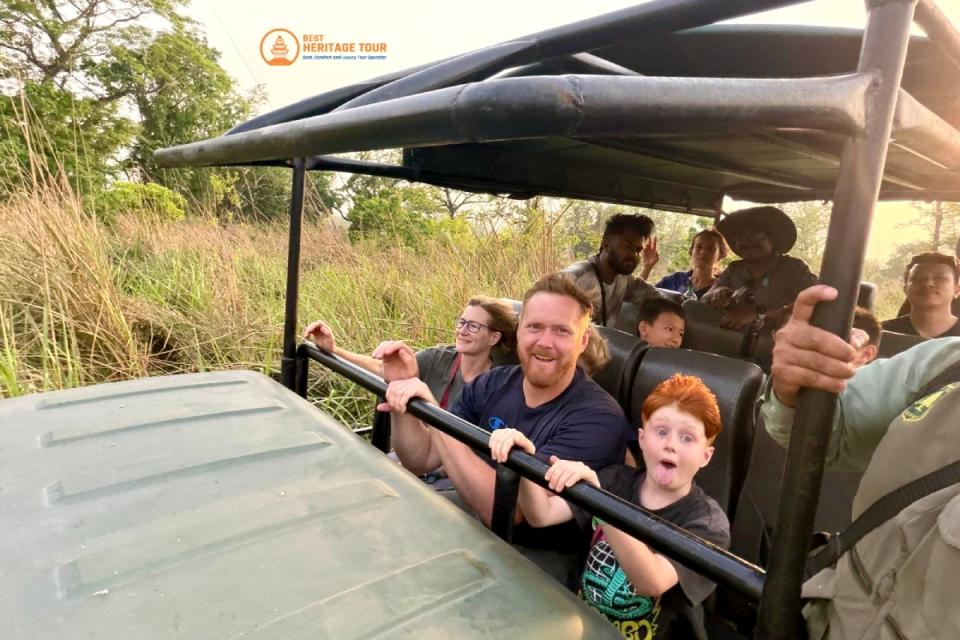
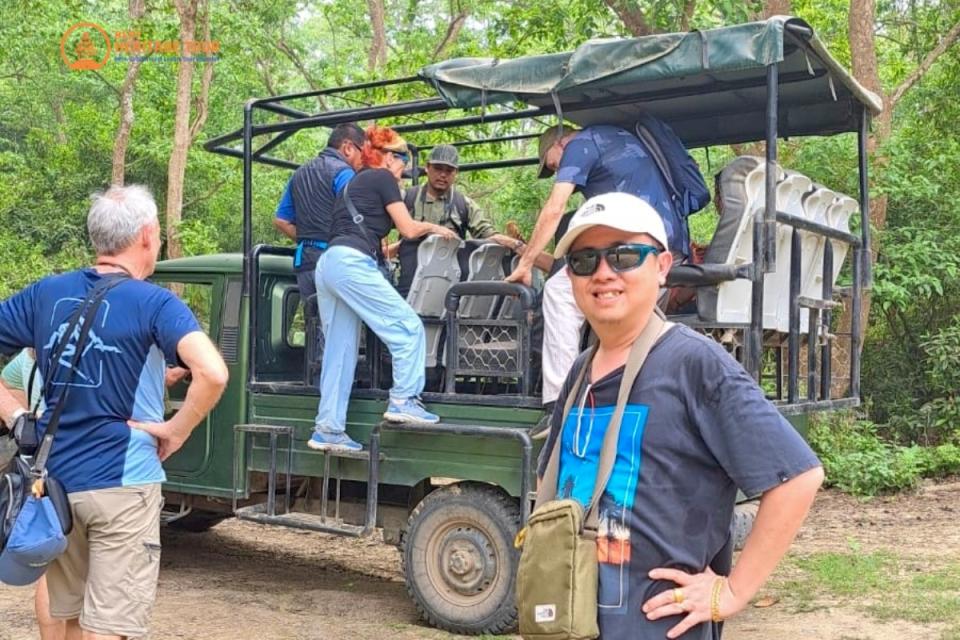
While there are many ways to explore the jungle - ranging from serene canoe trips to heart-pumping jungle walks - the Jeep Safari in Chitwan National Park is widely considered the gold standard for rhino spotting.
Why Choose a Jeep Safari?
-
Greater Range: A 4WD Jeep allows us to penetrate deep into the "Core Zone" of the park, reaching the oxbow lakes and dense Sal forests where the big bulls prefer to lounge.
-
Safety for Families: If you are traveling with children or seniors, the elevated seating of a Jeep provides a safe "bubble" while still offering 360-degree views.
-
Photography: The stability and height of a Jeep are unmatched for capturing that perfect shot of a rhino mother and her calf without disturbing their natural behavior.
-
Expert Narratives: Our Jeeps are accompanied by seasoned naturalists who can "read" the jungle - interpreting alarm calls of monkeys and deer to track a rhino’s movement before it even appears.
What to Expect on Your Safari
A typical safari starts in the early morning or late afternoon when temperatures are cooler and wildlife is most active. You will navigate through three distinct habitats:
-
Grasslands: Home to the towering "elephant grass," the primary food source for rhinos.
-
Riverine Forests: Shady groves where rhinos escape the midday sun.
-
Sal Forests: Dense, majestic woodlands that house leopards and the elusive Royal Bengal Tiger.
Alternative Ways to Spot Rhinos in Chitwan
While the Jeep is king, we often recommend a multi-sensory approach to our guests.
The Silent Canoe Trip
Gliding down the Rapti River in a traditional hand-carved dugout canoe is a surreal experience. Rhinos are semi-aquatic by nature and love to submerge themselves in the cool waters during the afternoon. Watching a 2,000kg rhino graze on the riverbank while you drift silently past is a moment of pure Zen.
Guided Jungle Walks
For the adrenaline-seeking trekkers, nothing beats a walking safari. Under the strict supervision of two licensed guides, you’ll track footprints (pugmarks) and dung piles to find rhinos on foot. It is a raw, humbling experience that puts the scale of these magnificent creatures into perspective.
Planning Your Trip: Best Time to Visit (2026-2027 Edition)
Timing is everything when it comes to wildlife photography and sightings.
|
Season |
Months |
Rhino Sightings |
Notes |
|---|---|---|---|
|
Peak Season |
Oct - March |
Excellent |
Clear skies, cool weather. The grass is cut in Jan/Feb, making visibility 10/10. |
|
The "Hot" Window |
April - June |
High |
Very hot, but rhinos congregate around water holes, making them easy to find. |
|
Monsoon |
July - Sept |
Low |
Dense vegetation and muddy tracks make many areas inaccessible. |
Pro Tip from Best Heritage Tour: If your primary goal is photography, visit in late January or February. This is when the local Tharu people are permitted to harvest the grass, stripping away the "curtain" of the jungle and revealing the wildlife beneath.
Essential Travel Tips for Families and Trekkers
1. What to Wear
Neutral colors are your best friend. Avoid bright reds, whites, or yellows, which can startle the animals. Think khaki, olive green, and stone. Don't forget a light jacket for early morning drives, as the Terai mist can be surprisingly chilly.
2. Health and Safety
Chitwan is much lower in altitude (approx. 150m) than the trekking trails. While malaria is extremely rare in the tourist zones, we always recommend high-quality insect repellent. Always follow your guide's instructions - never exit the Jeep unless told it is safe to do so.
3. Entry Fees and Permits (2026 Updates)
Currently, the park entry fee for foreigners is approximately NPR 2,000 per person, per day. At Best Heritage Tour, we handle all permit logistics on your behalf, ensuring a seamless transition from your hotel to the jungle.
Beyond the Rhino: A Biodiversity Hotspot
While the rhino is the "star of the show," Chitwan is a complete ecosystem. During your stay, keep your binoculars ready for:
-
The Royal Bengal Tiger: Over 120 tigers call this park home.
-
Gharial Crocodiles: One of the world’s rarest crocodilians, with their distinct long, thin snouts.
-
The Sloth Bear: Often seen near termite mounds in the late afternoon.
-
Avian Wonders: Over 540 species of birds, including the Giant Hornbill and the Paradise Flycatcher.
Conclusion
The Greater One-Horned Rhino is a symbol of resilience. Standing before one in the wild is a bucket-list experience that stays with you long after the dust of the Jeep safari has settled. Nepal has worked tirelessly to protect these giants, and Chitwan National Park is the shining example of that success.
Whether you are a solo traveler, a couple on a honeymoon, or a family introducing your children to the wonders of the natural world, the rhinos of Chitwan are waiting.
Ready to hear the call of the wild?
Let Best Heritage Tour take care of the details while you focus on the horizon. From luxury jungle resorts to rugged trekking-safari combos, we are your gateway to the real Nepal.
Phone / WhatsApp / Viber: +977-9851149197 / +977-9810043046
Email: info@bestheritagetour.com / bestheritagetour@gmail.com
Website: www.bestheritagetour.com
Office: Thamel Marg, Kathmandu, Nepal
Author: Best Heritage Tour
Date: 26th April, 2026