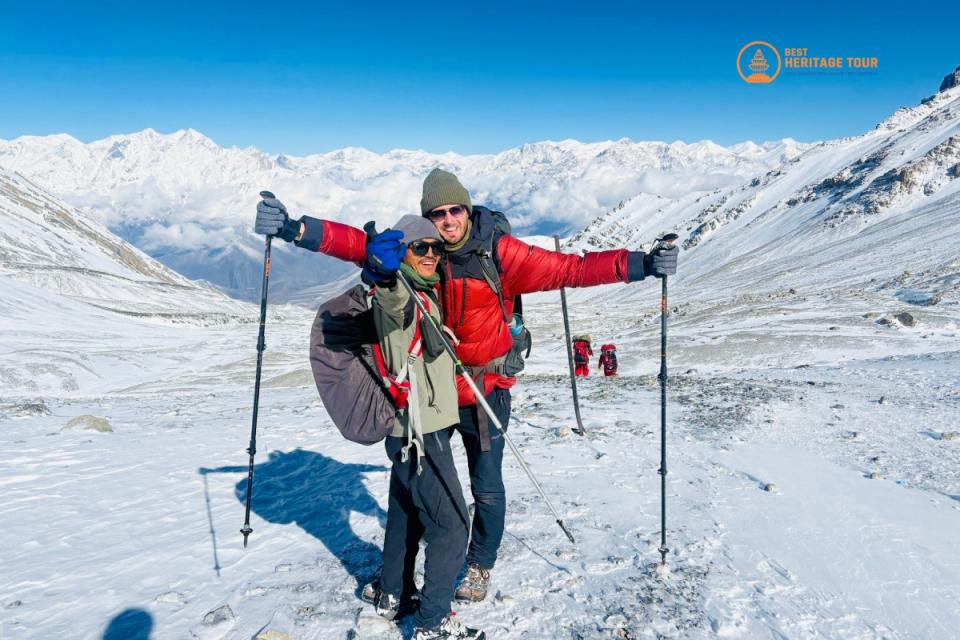
The Annapurna Circuit is often whispered about in traveler circles as the "holy grail" of long-distance trekking. It’s a journey that transitions from emerald-green subtropical forests to the stark, lunar landscapes of the Tibetan plateau. But as the trekking landscape in Nepal shifts, a critical question arises for the independent spirit: Is solo trekking the Annapurna Circuit safe in 2026?
At Best Heritage Tour, we believe in empowering travelers with the truth. While the allure of the "lone wolf" adventure is strong, the reality of high-altitude trekking involves a complex mix of local regulations, physical risks, and logistical hurdles. In this comprehensive guide, we’ll break down everything you need to know about safety, new 2026 government mandates, and why "solo" might not mean what you think it does anymore.
The Big Question: Is Solo Trekking Legally Allowed in 2026?
Before we dive into trail safety, we must address the legal elephant in the room. As of early 2023, and strictly reinforced through 2026, the Nepal Tourism Board (NTB) implemented a landmark policy: The Mandatory Guide Rule.
The 2026 Regulatory Landscape
For years, the Annapurna Circuit was a haven for "Free Individual Trekkers" (FITs). However, to enhance safety and provide immediate support during emergencies, the government now requires all foreign trekkers to be accompanied by a licensed local guide.
-
The Mandate: You can no longer legally trek the Annapurna Circuit completely alone. You must be registered through a government-authorized trekking agency like Best Heritage Tour.
-
The TIMS Update: The "Green TIMS" card (for soloists) has been phased out. In 2026, only "Blue TIMS" cards are issued, which require an agency and a guide's credentials to be validated at checkpoints.
-
Checkpoint Enforcement: From Besisahar to Muktinath, checkpoints are more rigorous than ever. Attempting to bypass these without a guide can lead to fines, being turned back, or complications with your visa.
Company Insight: At Best Heritage Tour, we see this not as a restriction, but as an evolution of safety. A guide isn't just a "tag-along"; they are your cultural bridge, your medic, and your navigator.
Evaluating the Risks: Is the Annapurna Circuit Actually Dangerous?
Safety is subjective, but the mountains are objective. The Annapurna Circuit poses several physical and environmental challenges that every trekker - solo-minded or not - must respect.
1. Acute Mountain Sickness (AMS)
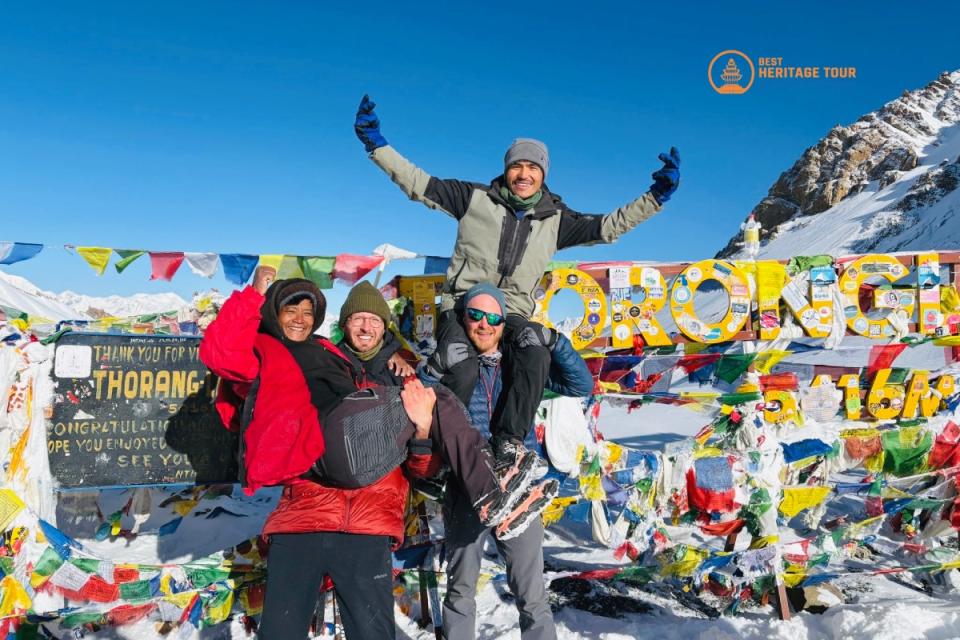
The highest point of the trek, Thorong La Pass (5,416m), sits in the "extreme altitude" category. At this height, there is roughly 50% less oxygen than at sea level.
-
The Solo Danger: AMS symptoms (headache, nausea, dizziness) can impair your judgment. Without a partner or guide to notice your slurred speech or lack of coordination, a manageable situation can turn into HAPE or HACE (fluid in the lungs or brain) within hours.
2. Weather Volatility
The weather in the Himalayas is notoriously fickle. Even during the peak seasons (March-May and September-November), a sudden "Western Disturbance" can dump feet of snow on the pass.
-
Whiteouts: Losing the trail in a whiteout is the leading cause of trekkers going missing.
3. Trail Hazards
While the "road-building" on some parts of the circuit has made paths wider, other sections remain exposed.
-
Landslides & Rockfalls: Areas near Tal and the stretch between Manang and Yak Kharka are prone to seasonal rockfalls.
-
River Crossings: During late spring or early autumn, glacial melt can make smaller stream crossings surprisingly treacherous.
How Safe is the Solo Annapurna Circuit for Women?
This is one of our most frequent inquiries at Best Heritage Tour. We are proud to say that Nepal is widely regarded as one of the safest destinations in Asia for women.
Cultural Respect and Safety
The mountain communities (Gurung, Magar, and Manangi) are deeply hospitable. Cases of harassment or theft on the Annapurna trail are extremely rare. Unlike urban environments, the "teahouse culture" creates a communal safety net where lodge owners treat guests like extended family.
The "Solo-But-Not-Alone" Strategy
Even though a guide is mandatory, many women choose to trek with a female guide. This provides the independence they crave with an added layer of sisterhood and security.
-
Social Connectivity: The Annapurna Circuit is a social highway. You will share communal dining halls with travelers from around the world, making it easy to find "trail buddies" for the day.
Essential Safety Tips for the "Independent" Spirit
If you value your independence but want to stay within the 2026 legal framework and maximize safety, follow these "Best Heritage" golden rules:
1. The "Golden" Acclimatization Rule
Never skip your rest days in Manang. This village at 3,519m is the crucial staging ground for the pass.
-
Pro Tip: "Walk High, Sleep Low." Spend your rest day hiking up to Gangapurna Lake or the Ice Lake (4,600m), then return to Manang to sleep.
2. Physical Preparation is Non-Negotiable
Safety starts in the gym 3 months before you land in Kathmandu.
-
Focus: Leg strength (squats/lunges) and cardiovascular endurance.
-
The Weight Factor: If you are trekking without a porter, practice hiking with a 10-15kg pack. Fatigue leads to stumbles, and stumbles lead to injuries.
3. Tech as Your Secondary Safety Net
-
Offline Maps: Apps like Maps.me or Gaia GPS are essential.
-
Satellite Communicators: Devices like the Garmin inReach are becoming standard for safety-conscious trekkers, allowing for SOS signals even where cell service fails.
4. Comprehensive Travel Insurance
In 2026, your permit may actually be denied if you cannot show proof of insurance that covers helicopter evacuation up to 6,000 meters. A single heli-rescue can cost upwards of $5,000 USD - ensure your policy is robust.
Solo vs. Guided: A Comparison for the Annapurna Circuit
|
Feature |
Solo (Pre-2023 Style) |
Guided (Best Heritage Style) |
|---|---|---|
|
Legal Status |
Illegal in 2026 |
100% Compliant |
|
Safety |
High risk in emergencies |
Immediate medical/SOS support |
|
Navigation |
Prone to wrong turns |
Expert pathfinding |
|
Cultural Insight |
Superficial interaction |
Deep local storytelling |
|
Logistics |
Stressful (finding beds in peak season) |
Seamless (reserved rooms/meals) |
What to Pack for Maximum Safety
Your gear is your life-support system. At Best Heritage Tour, we provide a full equipment checklist, but here are the "safety essentials":
-
Medical Kit: Diamox (for altitude), Ibuprofen, rehydration salts, and blister kits.
-
Water Purification: Don't rely on plastic bottles. Use a SteriPen or Grayl filter to avoid waterborne illnesses.
-
Layers: High-quality merino wool and a down jacket rated for -15°C. Hypothermia is a silent threat at the Thorong Phedi base camp.
The Verdict: Is it Safe?
The Annapurna Circuit is safe if you respect the mountain and the law. In 2026, "Solo Trekking" has transitioned into "Supported Independent Trekking." By hiring a guide through a reputable agency, you aren't losing your adventure; you are gaining a safety net that allows you to actually look up at the peaks instead of constantly worrying about your map, your health, or the next checkpoint.
At Best Heritage Tour, we specialize in "flexible guiding." We understand that you want your space and your own pace. Our guides are trained to be as "invisible" or as "involved" as you prefer, ensuring you meet the legal requirements without sacrificing the meditative solitude of the Himalayas.
Conclusion
Trekking the Annapurna Circuit is a life-altering experience. Whether you are crossing the high pass of Thorong La or soaking in the hot springs of Tatopani, your safety is the foundation of your enjoyment. By following the 2026 regulations and preparing your body and mind, you can navigate this circuit with confidence.
Ready to start your Annapurna journey?
Don't let the new regulations overwhelm you. We handle the permits, the logistics, and the safety protocols so you can focus on the views.
Phone / WhatsApp / Viber: +977-9851149197 / +977-9810043046
Email: info@bestheritagetour.com / bestheritagetour@gmail.com
Website: www.bestheritagetour.com
Office: Thamel Marg, Kathmandu, Nepal
Author: Best Heritage Tour
Date: 6th May, 2026