When travelers think of trekking in Nepal, the mind almost instinctively wanders toward the towering giants of Everest or the classic horseshoe circuit of Annapurna. But for those of us at Best Heritage Tour, there is one region that holds a special place in our hearts - a place that feels less like a commercial trail and more like a homecoming.
The Langtang Valley Trek is often described as Nepal’s best-kept secret. Located just north of Kathmandu, it offers a profound mix of dramatic alpine scenery, ancient Buddhist traditions, and a story of incredible human resilience. If you are debating where to lace up your boots for your next adventure, here is why Langtang should be at the very top of your list.
1. Proximity Without Compromise
One of the most practical reasons to choose the Langtang Trek is its accessibility. Unlike the Everest region, which requires a flight into the "world’s most dangerous airport" at Lukla, or the Annapurna region, which often involves a long flight or bus ride to Pokhara, Langtang is reachable by road.
A scenic (and admittedly bumpy) drive from Kathmandu takes you to Syabrubesi, the starting point of the trek. This makes it an ideal choice for travelers who:
-
Have a limited timeframe.
-
Want to avoid the unpredictability of mountain flights.
-
Are looking for a high-altitude experience without long transit days.
2. The Majestic Views of Langtang Lirung
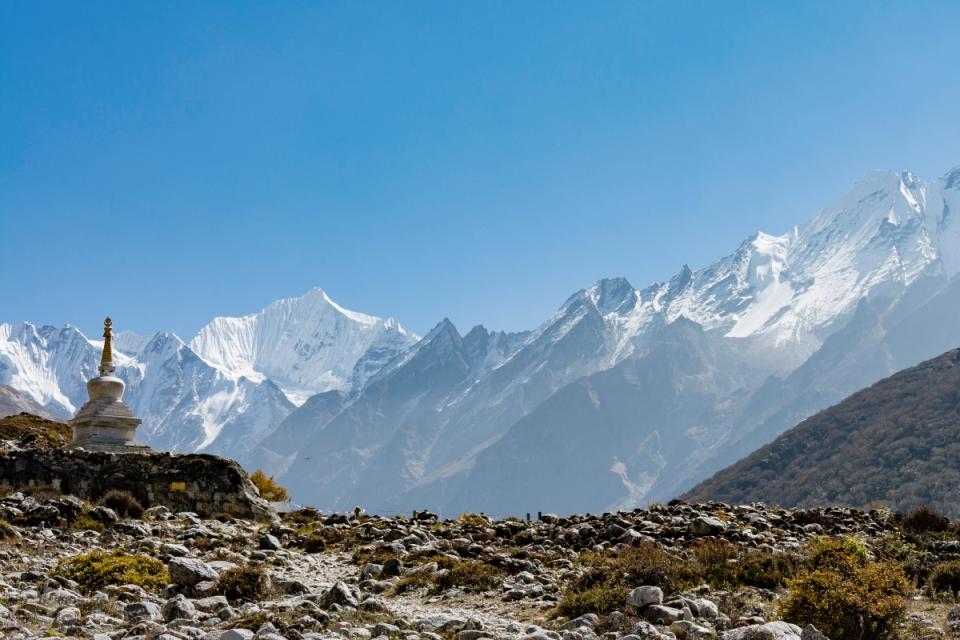
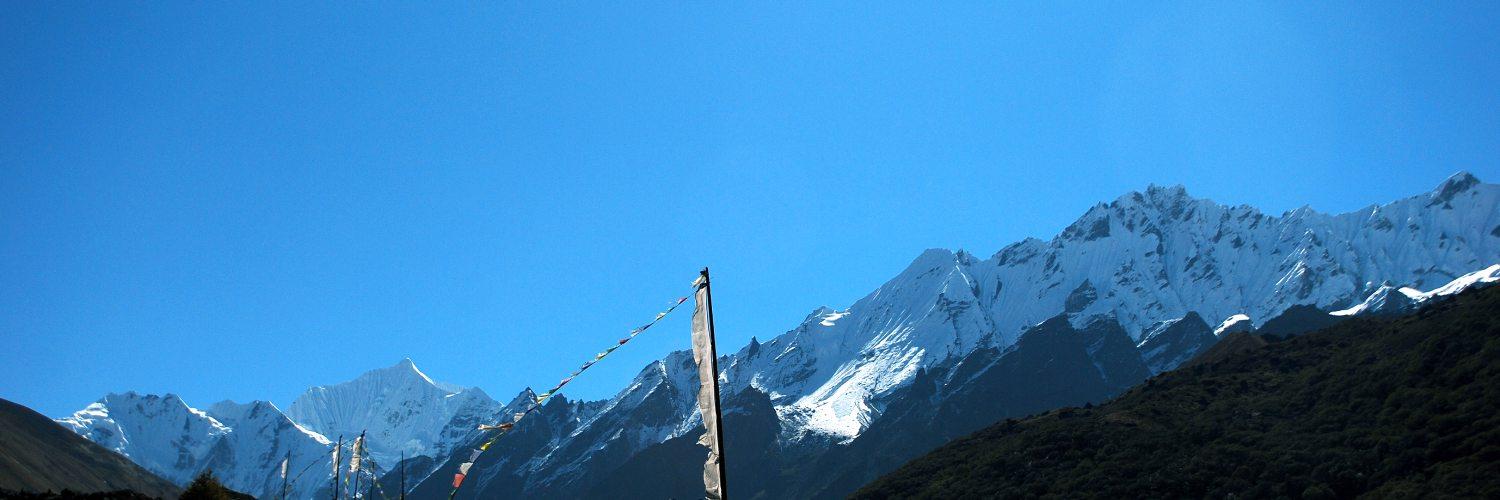
While you won't see Everest here, the mountain views in Langtang are arguably more intimate. The valley is dominated by Langtang Lirung (7,227m), the highest peak in the Langtang Himal.
As you trek through the glacial valley, the peaks don't just sit on the horizon; they loom directly over you. The proximity to these ice-clad giants provides a sense of scale that is difficult to find elsewhere. The sight of frozen waterfalls and hanging glaciers clinging to the ridges is enough to leave even the most seasoned trekker breathless.
3. A Deep Dive into Tamang Culture and Heritage
At Best Heritage Tour, we believe travel should be a bridge between cultures. The Langtang Trek is not just a walk in nature; it is a journey through the ancestral lands of the Tamang people.
The Tamangs are one of Nepal’s oldest ethnic groups, with a culture deeply rooted in Tibetan Buddhism. Along the trail, you will encounter:
-
Mani Walls: Stone walls inscribed with sacred mantras.
-
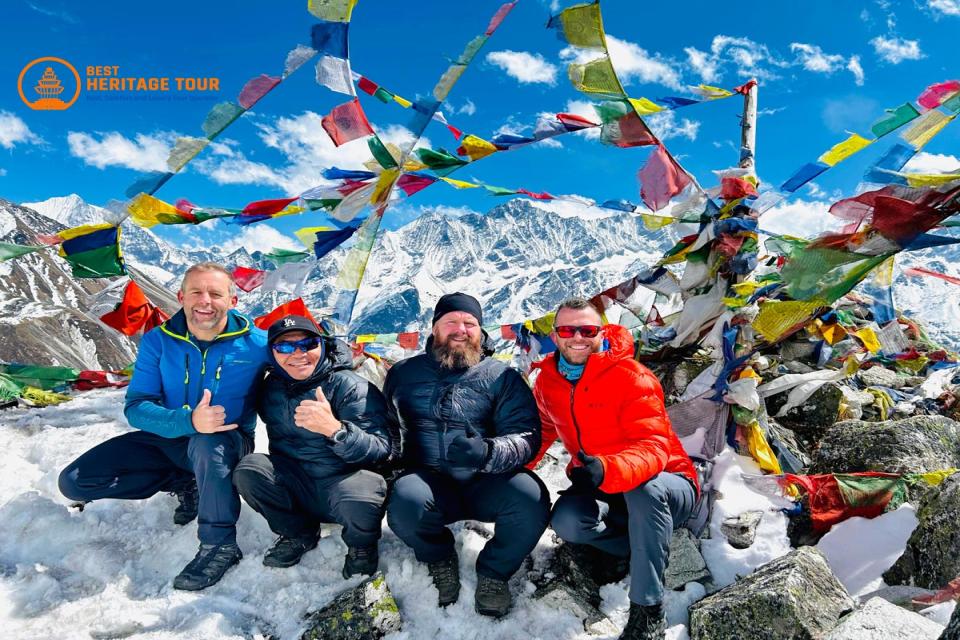
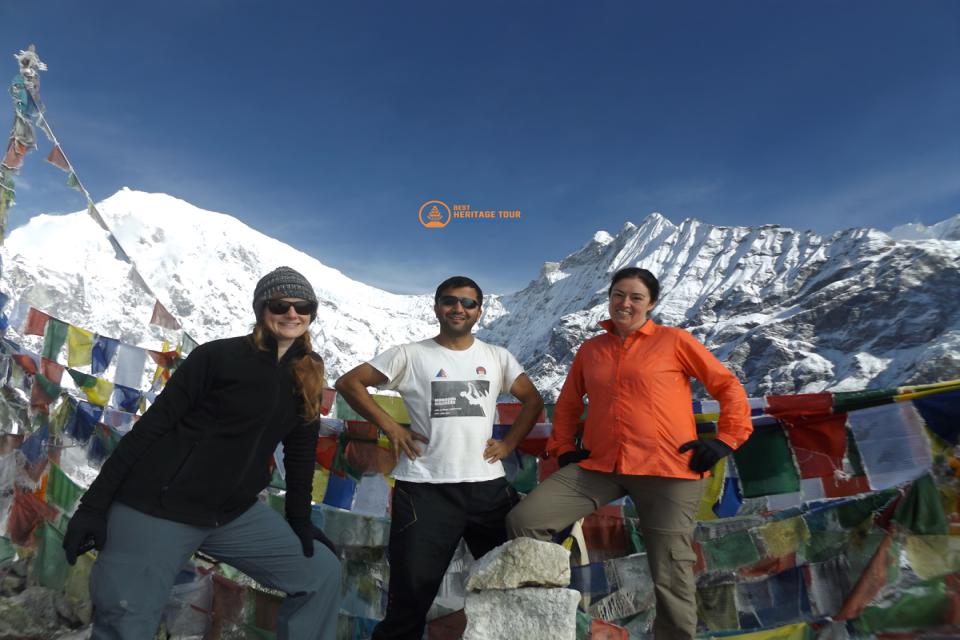
Prayer Flags: Colorful banners sending prayers into the wind.
-
Chortens: Ancient Buddhist shrines that dot the landscape.
Unlike the more commercialized routes, the hospitality in Langtang feels raw and genuine. Sitting by a wood-fired stove in a local teahouse, sipping suja (salted butter tea), you get a real sense of the rhythms of Himalayan life.
4. The Spiritual Heart: Kyanjin Gompa
The ultimate destination of the trek is Kyanjin Gompa (3,830m). This ancient monastery is the spiritual epicenter of the valley. Surrounded by snow-capped peaks, the Gompa exudes a sense of peace that is palpable.
Beyond the spiritual aspect, Kyanjin Gompa is also famous for its Yak Cheese Factory. Established with Swiss assistance decades ago, this factory produces some of the finest cheese in the Himalayas. Sampling fresh yak cheese while staring at a glacier is a "heritage" experience you won't find anywhere else in the world.
5. Incredible Biodiversity in Langtang National Park
Langtang was the first Himalayan region to be designated as a National Park in 1976. As you ascend from the lush forests of the lower valley to the alpine meadows above the treeline, the change in flora and fauna is staggering.
-
Flora: You will walk through dense forests of rhododendron (Nepal’s national flower), oak, and bamboo. In spring, the entire hillside turns shades of crimson and pink.
-
Fauna: Keep your eyes peeled for the elusive Red Panda. This endangered creature calls the bamboo thickets of Langtang home. You might also spot Himalayan Thar, Rhesus monkeys, and a dazzling array of migratory birds.
6. A Story of Resilience: Witnessing the Rebirth
In 2015, the Langtang Valley was devastated by a massive earthquake and subsequent landslide. The original Langtang Village was almost entirely lost. However, the story of Langtang today is not one of tragedy, but of triumph.
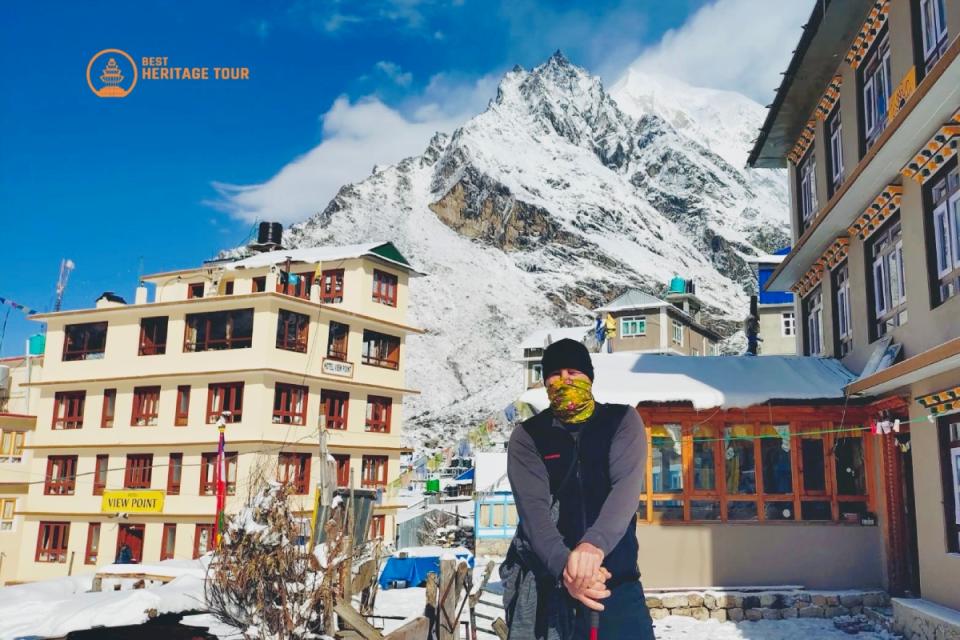
Choosing to trek in Langtang is a direct act of support for the local community. The locals have rebuilt their homes and lodges with modern safety standards while maintaining their traditional aesthetic. Witnessing their resilience firsthand adds a layer of emotional depth to your journey that most "standard" vacations lack.
7. Versatile Trekking Options (Gosainkunda & Helambu)
The Langtang Trek is incredibly flexible. For those with more time, the trail can be extended to include the Gosainkunda Lakes - a group of sacred alpine lakes located at $4,380m$. These lakes are a major pilgrimage site for both Hindus and Buddhists.
If you want to walk all the way back to the doorstep of Kathmandu, you can cross the Lauribina La Pass (4,610m) and trek through the Helambu region. This versatility makes Langtang perfect for both a short 7-day escape or a 15-day grand Himalayan traverse.
8. Fewer Crowds, More Serenity
If you’ve ever trekked the Annapurna Circuit or the Everest Base Camp trail during peak season, you know how "busy" the mountains can get. Langtang offers a much quieter alternative.
You won't find "traffic jams" on the suspension bridges here. Instead, you get long stretches of trail where the only sound is the rushing Langtang Khola river and the whistling wind. It is the ideal destination for the "introverted explorer" or anyone looking to truly disconnect from the digital world.
9. Ideal for Intermediate Trekkers
The Langtang Trek is what we categorize as a moderate trek. While it involves steady climbs, the altitudes are generally lower than those in the Khumbu (Everest) region, reducing the risk of severe altitude sickness.
The trails are well-maintained, and the gradual ascent allows for natural acclimatization. This makes it an excellent choice for:
-
First-time Himalayan trekkers.
-
Active families.
-
Photographers who want to spend more time behind the lens and less time gasping for air.
10. Cost-Effective Adventure
Compared to other regions, Langtang is remarkably budget-friendly. Because there are no domestic flights involved and the cost of permits is reasonable, you can enjoy a world-class Himalayan expedition at a fraction of the cost of an Everest trek.
At Best Heritage Tour, we pride ourselves on providing luxury within the wild, ensuring that even on a budget-friendly route, you receive the highest quality of service, safety, and cultural insight.
Planning Your Langtang Journey: Essential Tips
Before you pack your bags, here are a few things to keep in mind:
-
Best Time to Visit: Autumn (March to May) for rhododendrons and Spring (October to December) for crystal clear mountain views.
-
Permits: You will need a Langtang National Park Entry Permit and a TIMS (Trekkers' Information Management Systems) card.
-
Physical Prep: While moderate, don't underestimate the "Himalayan flat" (lots of up and down!). Cardio and leg strength training are recommended.
Conclusion
The Langtang Valley Trek is a rare gem that balances accessibility with wild, untamed beauty. It offers the high-altitude thrills of the great ranges, the spiritual serenity of ancient monasteries, and the heartwarming hospitality of the Tamang people. It is a place where every step tells a story of survival, faith, and the enduring power of nature.
Whether you are seeking a quiet retreat or a challenging climb to a panoramic viewpoint like Tserko Ri, Langtang will not disappoint. It is a journey that stays with you long after the dust has settled on your boots.
Are you ready to discover the Valley of Glaciers for yourself?
Phone / WhatsApp / Viber: +977-9851149197 / +977-9810043046
Email: info@bestheritagetour.com / bestheritagetour@gmail.com
Website: www.bestheritagetour.com
Office: Thamel Marg, Kathmandu, Nepal
Author: Best Heritage Tour
Date: 23rd January, 2026