The Himalayas have a way of calling to the soul, but for many modern travelers, the "call of the wild" is increasingly drowned out by the hum of crowded trails and the commercial buzz of popular trekking hubs. If you are a trekker who yearns for the Nepal of thirty years ago - pristine, silent, and deeply authentic - then there is one destination that needs to be at the top of your 2026 bucket list: The North Annapurna Base Camp (ABC) Trek.
At Best Heritage Tour, we have spent decades navigating the ridges and valleys of our homeland. While the classic South ABC trek remains a beautiful "romantic poem" of rhododendrons and teahouses, the North Annapurna Base Camp Trek is an "epic novel" of survival, history, and raw, cinematic grandeur.
In this comprehensive guide, we will explore exactly why this "hidden side" of the Annapurna I (8,091m) massif is the ultimate choice for the discerning traveler.
1. The Historical Soul: Walking the Maurice Herzog Trail
Every trek has a path, but the North ABC route has a legend. This is the original "First Base Camp." Long before the southern route became the standard, this was the rugged approach used by the French expedition led by Maurice Herzog in 1950.
When you trek here, you aren't just walking for the views; you are retracing the steps of the first humans to ever stand atop an 8,000-meter peak.
-
The Heritage Connection: At Best Heritage Tour, we emphasize the "Heritage" in our name. This trail is a piece of living mountaineering history.
-
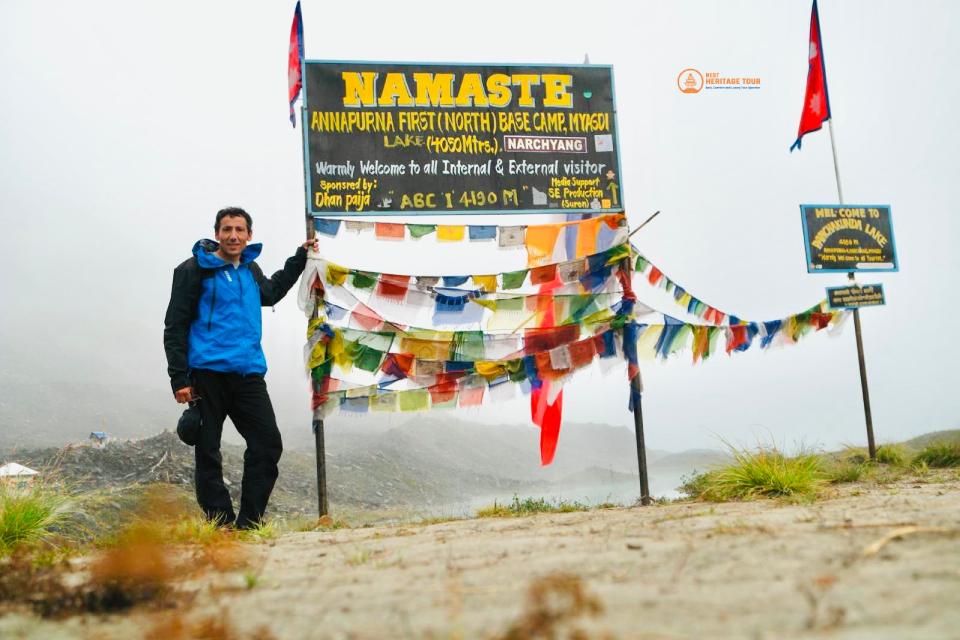
The Narrative: Standing at the North Base Camp (4,190m) and looking up at the North Face - a vertical wall of blue ice and rock - you feel a visceral connection to the golden age of exploration.
2. Crowds vs. Clouds: The Luxury of Solitude
The biggest complaint from modern trekkers in the Annapurna Sanctuary is the "traffic." During peak spring (March-May) and autumn (September-November) seasons, the southern route can see hundreds of trekkers daily.
The North ABC Trek offers a starkly different reality:
-
Exclusive Trails: On the northern route, you might go an entire day without seeing another group of foreigners.
-
Mindful Trekking: This silence allows for a meditative experience. You hear the wind through the pines, the distant thunder of an avalanche on Annapurna I, and the cry of a Himalayan griffon. It is a rare opportunity for true "digital detox" and mental clarity.
3. Untamed Landscapes: Beyond the Postcard
While the South ABC is famous for its lush forests and terraced fields, the North offers a more dramatic, high-alpine transition.
-
Narchyang Village & Hidden Waterfalls: The journey typically begins from the beautiful Magar village of Narchyang. Unlike more commercialized stops, Narchyang retains its traditional architecture and quiet pace of life.
-
Phutphute Waterfall: One of the most stunning hidden gems on this route is the Phutphute (Futfutey) waterfall. Its turquoise waters and misty spray feel like something out of a fantasy novel.
-
The Five Glacial Lakes (Panchakunda): Located near the base camp, these sacred lakes reflect the surrounding peaks like shattered mirrors. For many travelers, the reflection of Nilgiri and Annapurna I in the still waters of Panchakunda is the highlight of the entire trip.
4. Authentic Cultural Immersion (The "Human" Factor)
In the high-traffic areas of Nepal, "culture" is sometimes served on a menu alongside pizza and burgers. In the northern villages like Chhotepa and Sandikharka, hospitality isn't a business - it's a way of life.
|
Feature |
South ABC (Classic) |
North ABC (The Hidden Route) |
|---|---|---|
|
Vibe |
Social, vibrant, busy |
Remote, rugged, quiet |
|
Accommodation |
Standard Teahouses |
Homestays & Tented Camping |
|
Interaction |
Professional/Commercial |
Raw/Neighborly |
|
Food |
International Menus |
Traditional Dal Bhat & Local Produce |
When you travel with Best Heritage Tour, we ensure you don't just "pass through" these villages. We facilitate genuine interactions with the Magar and Thakali communities, allowing you to understand the resilience required to live in the shadow of the world’s most dangerous mountain.
5. The "Maurice Herzog" North Face View
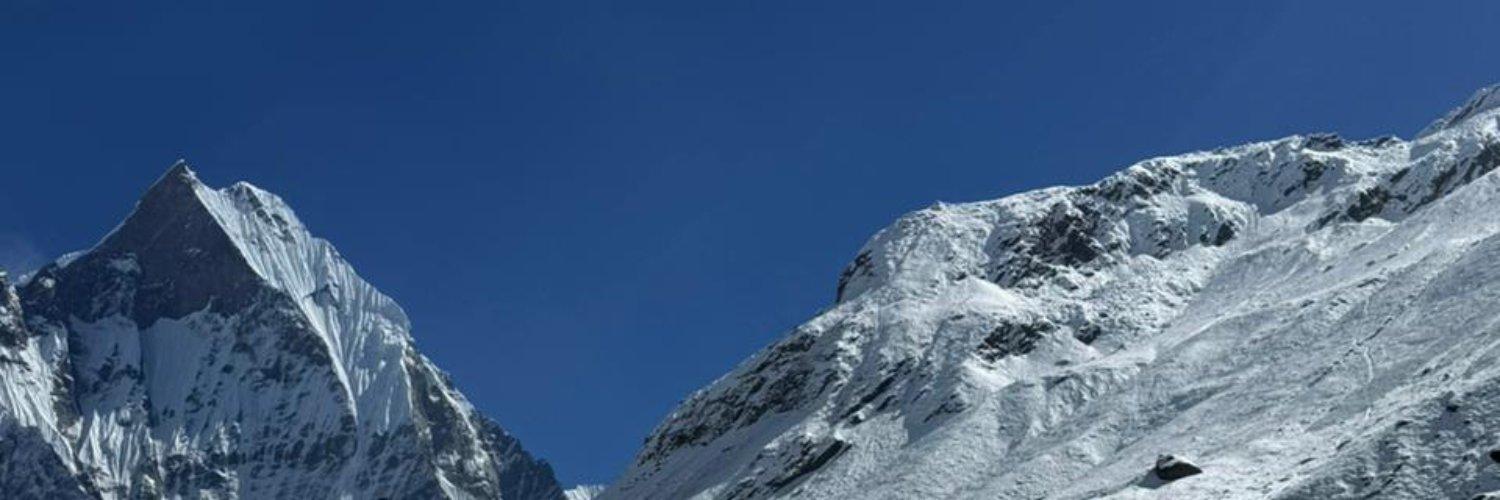
Let’s talk about the visual payoff. Most trekkers are familiar with the "Amphitheater" view from the South. It’s stunning, yes. But the North Face of Annapurna I is intimidating. It is a massive, sheer wall that dominates the horizon.
From the North Base Camp, you get an unobstructed, front-row seat to the 8,091-meter summit. There is no "filler" mountain in the way. It is just you and the 10th highest peak on Earth. The scale is so immense that it often takes a few minutes for the brain to process the height of the ice flutings and hanging glaciers above.
6. Physical Challenge & Reward
Is the North ABC Trek harder than the South? Yes and No.
-
The Challenge: The trail is less developed. There are fewer stone "staircases" and more "natural" paths. It requires better balance and a spirit of adventure. You will cross suspension bridges that feel a bit more "Indiana Jones" and navigate rocky moraines.
-
The Reward: Because the terrain is more varied, you don't get the "staircase fatigue" common on the Ghorepani route. The ascent is often more interesting for experienced hikers who enjoy a bit of route-finding.
Planning Your 2026 Journey: Logistics & Tips
To make the most of this off-beaten-path experience, preparation is key. Here is what we recommend at Best Heritage Tour for a successful expedition:
The Best Time to Go
-
Spring (March to May): This is the season of blooms. The rhododendron forests (Nepal's national flower) turn the hillsides into shades of crimson and pink. The weather is stable, and the mountain views are crisp.
-
Autumn (September to November): Post-monsoon, the air is at its clearest. The deep blue of the Himalayan sky provides the perfect contrast to the white peaks for photographers.
What to Pack (The Essentials)
Since this route involves more camping and basic homestays than the south, your packing list should be slightly more robust:
-
A 4-Season Sleeping Bag: Even in spring, temperatures at 4,000m can drop below freezing at night.
-
Sturdy Waterproof Boots: You will be crossing streams and walking on uneven glacial debris.
-
Layers: The "onion" method is best - moisture-wicking base layers, a warm fleece mid-layer, and a windproof/waterproof outer shell.
-
Personal Water Purification: To reduce plastic waste in the Annapurna Conservation Area, bring a LifeStraw or purification tablets.
Permits and Regulations
You will need two primary permits:
-
ACAP (Annapurna Conservation Area Project) Permit
-
TIMS (Trekkers' Information Management Systems) Card
Note: In 2026, the Nepal government strongly encourages (and in many areas mandates) trekking with a licensed guide for safety in remote regions like the North.
Why Book with Best Heritage Tour?
As a company deeply rooted in the soil of Nepal, we don't just sell "packages." We curate experiences. When you choose to trek the North Annapurna Base Camp with us, you are choosing:
-
Expert Local Guides: Our guides aren't just navigators; they are storytellers who grew up in these mountains.
-
Safety First: We provide Oximeters, comprehensive first-aid kits, and have a 24/7 emergency response team stationed in Kathmandu.
-
Sustainable Ethics: We believe in "Leave No Trace." We work exclusively with local porters and homestays to ensure your tourism dollars stay within the community.
-
The Heritage Touch: From your first welcome dinner in Kathmandu to the final celebratory toast in Pokhara, we treat you like a guest in our home, not a number in a group.
Conclusion
The North Annapurna Base Camp Trek is more than a hike; it is a pilgrimage into the heart of the wild. It is for the trekker who values the sound of a waterfall over the sound of a Wi-Fi notification. It is for the traveler who wants to see the Himalayas not as a tourist attraction, but as a sacred, historical monument.
In 2026, don't just follow the crowd. Turn North. Discover the silence, the history, and the raw power of Annapurna I.
Are you ready to write your own Himalayan epic?
Phone / WhatsApp / Viber: +977-9851149197 / +977-9810043046
Email: info@bestheritagetour.com / bestheritagetour@gmail.com
Website: www.bestheritagetour.com
Office: Thamel Marg, Kathmandu, Nepal
Author: Best Heritage Tour
Date: 29th January, 2026