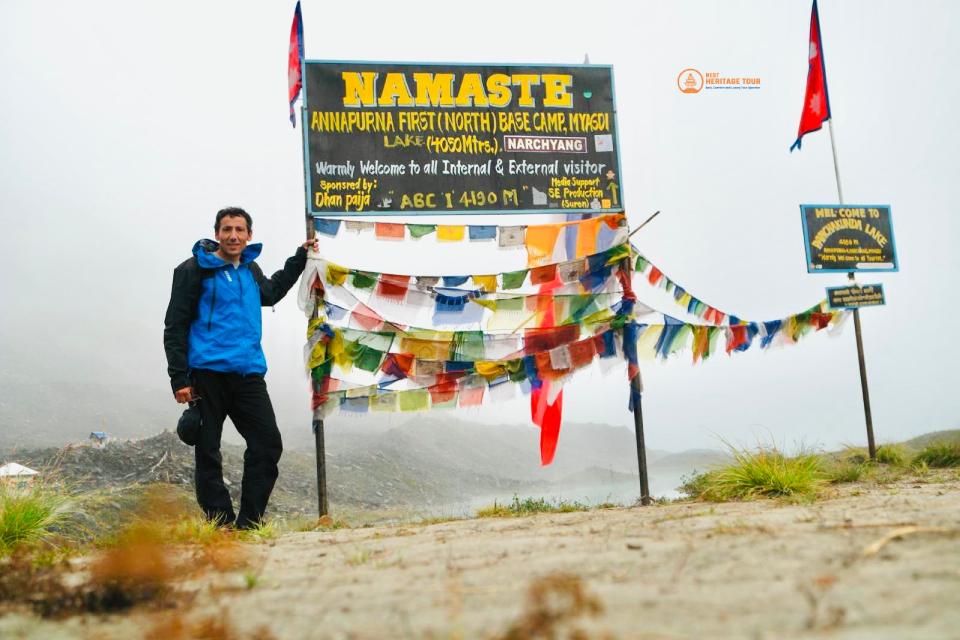
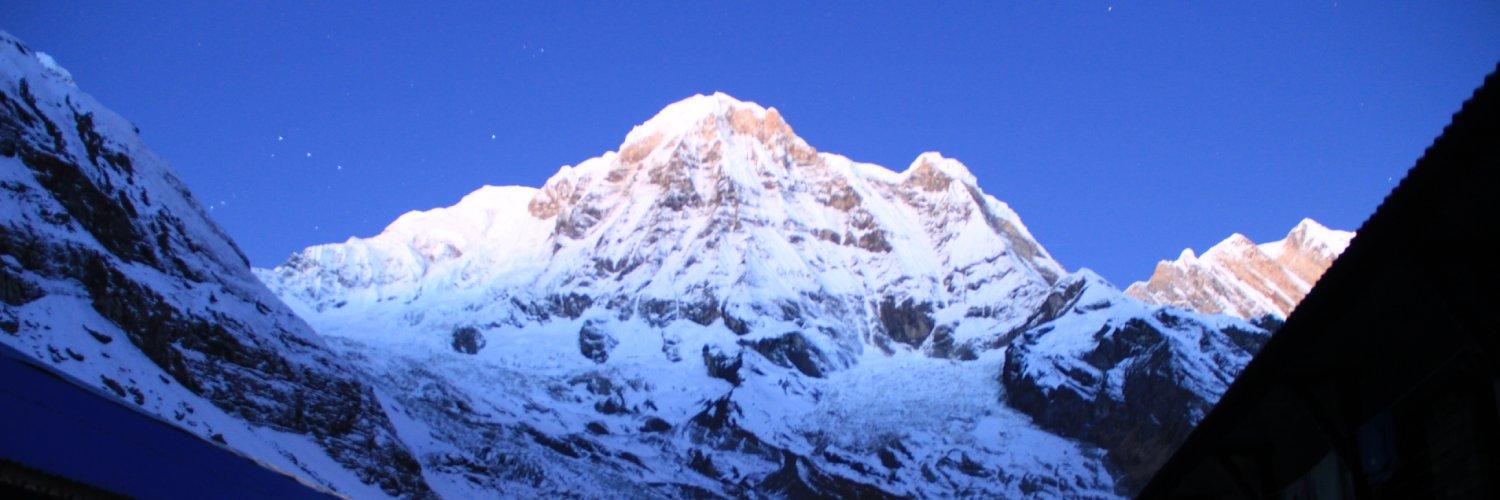
When you think of Annapurna, your mind likely drifts to the iconic stone stairs of the classic South Base Camp or the bustling teahouses of the Ghorepani circuit. But there is another side to the goddess - a quieter, more primal path that leads to the Annapurna North Base Camp (North ABC).
At Best Heritage Tour, we often get asked: "Is the North Annapurna Base Camp trek harder than the classic Annapurna Base Camp?" The short answer is yes - but the "difficulty" isn't just about steepness; it’s about the wildness. While the South is a social cultural journey, the North is a true wilderness expedition. In this comprehensive guide, we’ll break down exactly how difficult the Annapurna North Base Camp trek is, what you need to prepare for, and why its challenges make the reward that much sweeter.
Navigating the "Maurice Herzog" Legacy
The North Base Camp isn't just a destination; it’s a piece of mountaineering history. This is the original base camp used by Maurice Herzog and Louis Lachenal in 1950 during the first-ever successful ascent of an 8,000-meter peak.
Because this route was only recently "re-opened" for commercial trekking, the infrastructure is still in its infancy. You won't find luxury lodges or paved stone steps here. Instead, you’ll find the "Herzog Trail" - a path that demands respect and a steady foot.
Quick Difficulty Facts:
-
Max Altitude: 4,190m (North Base Camp) / 4,400m (Thulo Bugin Pass)
-
Trek Duration: 5 to 10 days (depending on the route)
-
Terrain: Rocky ridges, glacial moraines, riverbanks, and dense forests.
-
Accommodation: Primarily camping and basic homestays.
Terrain and Physical Demands: What to Expect
The difficulty of the Annapurna North Base Camp trek lies in its unpredictable terrain. Unlike the classic ABC trek, where the trails are well-trodden and wide, the North route is raw.
The Steep Ascents and Descents
You will begin your journey from the village of Narchyang or Tatopani. From the moment you leave the lower valleys, the trail tilts upward. You’ll be navigating:
-
The Hum Khola Gorge: A rugged section where you’ll walk along the banks of the raging river, often crossing small bridges and navigating slippery rocks.
-
Thulo Bugin Pass: For those taking the high route, this 4,400m pass is the technical "crux" of the trek. It involves a steep climb and an equally demanding descent.
-
The Glacial Moraine: As you approach the North Face of Annapurna I, the greenery fades into a lunar landscape of loose scree and boulders. Balance and ankle stability are key here.
Daily Walking Hours
Expect to spend 5 to 8 hours on your feet each day. While the total distance isn't as long as the Everest Base Camp trek, the constant "up and down" (Himalayan flat) through unmaintained trails can be more taxing on the knees and joints.
Altitude and Acclimatization
One of the "hidden" difficulties of the North route is the speed of ascent. Some itineraries drive you as far as Hum Khola (2,890m), meaning you start your trek at an altitude where oxygen is already beginning to thin.
Is Altitude Sickness a Risk?
Yes. Although the maximum altitude of 4,190m is lower than the Thorong La Pass (5,416m), the rate of ascent can be aggressive. At Best Heritage Tour, we emphasize a "Slow and Steady" philosophy.
-
Night 1 at 3,650m (Bhusket Mela): This is a significant jump. You may feel a slight headache or shortness of breath.
-
Hydration is Non-Negotiable: You must drink 3-4 liters of water daily to help your blood carry oxygen efficiently.
The Logistical Challenge: Beyond the Teahouse
For many travelers, the most difficult part of the North Annapurna trek isn't the walking - it's the lack of amenities.
Camping vs. Teahouses
On the South side, you can get a hot shower, Wi-Fi, and a pizza at 4,000 meters. On the North side, your "luxury" is a sturdy tent and a warm sleeping bag.
-
Limited Electricity: Charging your camera or phone becomes a challenge. You’ll need high-capacity power banks.
-
Simple Food: While our trek cooks prepare incredible meals, you won't have a 5-page menu. Expect hearty, energy-dense meals like Dal Bhat, porridge, and pasta.
-
Isolation: There are no permanent villages once you pass the initial settlements. You are truly in the wild.
When is it "Hardest"? (Seasonal Difficulty)
The difficulty of the trail changes drastically with the seasons.
|
Season |
Difficulty Level |
Atmosphere |
|---|---|---|
|
Spring (March-May) |
Moderate |
Best visibility, blooming rhododendrons, and stable snow. |
|
Autumn (Sept-Nov) |
Moderate |
The gold standard. Clear blue skies and crisp air. |
|
Winter (Dec-Feb) |
Extreme |
Heavy snow can block the Thulo Bugin Pass. Frigid temperatures (-15℃ at night). |
|
Monsoon (June-Aug) |
Not Recommended |
Landslide risks, leeches, and slippery riverbank trails. |
How to Prepare: Your Training Blueprint
To enjoy the Annapurna North Base Camp trek rather than just "surviving" it, you need to prepare your body at least 2-3 months in advance.
Cardiovascular Endurance
You don't need to be an Olympic athlete, but you do need "mountain lungs."
-
Action: 45 minutes of uphill walking, cycling, or swimming 3 times a week.
-
The "Secret" Training: Stair climbing. Find a local stadium or tall building and climb with a 5-7kg backpack. Your quads will thank you later.
Leg Strength and Balance
The North route’s uneven terrain requires strong ankles and a stable core.
-
Action: Incorporate squats, lunges, and planks into your routine. If possible, do some weekend "practice hikes" on rocky trails to get used to your trekking boots.
The Gear Factor: Don't Skimp on Quality
A poorly fitted boot or a thin sleeping bag can turn a "moderate" trek into a "miserable" one. Because you will be camping, your gear is your lifeline.
-
Boots: Waterproof, mid-to-high ankle support, and fully "broken in."
-
Sleeping Bag: Rated for at least -10℃. Even in spring, the North Base Camp gets freezing once the sun drops.
-
Trekking Poles: These are essential for the descent from the Bugin Pass. They reduce the impact on your knees by up to 25%.
-
Layering System: A moisture-wicking base layer, a fleece mid-layer, and a heavy down jacket.
Why Tackle the North Side? The Hidden Rewards
If the trek is more difficult, why do it? Because the North side offers things the South simply cannot:
-
Total Solitude: You might go the entire trek without seeing another group of foreigners.
-
The North Face: Seeing the 8,091m summit of Annapurna I from the north is a visceral experience. It’s a sheer wall of ice and rock that feels close enough to touch.
-
The Hidden Lake: Near the base camp lies the stunning Pancha Kunda Lake, a turquoise gem tucked away from the world.
Final Verdict: Is it Right for You?
The Annapurna North Base Camp trek is moderately difficult. It is not a technical climb, but it is a rugged, high-altitude walk that requires physical fitness and a "wilderness mindset."
This trek is for you if:
-
You have completed a trek like Everest Base Camp or the Annapurna Circuit and want something more "raw."
-
You hate crowds and love camping under the stars.
-
You are fascinated by the history of Himalayan exploration.
This trek is NOT for you if:
-
You require a hot shower and Wi-Fi every night.
-
You have severe knee issues (the descents are steep).
-
It is your very first time at high altitude (we’d suggest the South Base Camp first!).
Conclusion
At Best Heritage Tour, we believe the North Base Camp is one of Nepal’s last great secrets. It challenges you, it pushes your boundaries, and it strips away the noise of the modern world. When you finally stand at the foot of Annapurna I, looking up at that massive North Face, the "difficulty" of the past few days vanishes. You aren't just a tourist; you are an explorer following in the footsteps of legends.
Are you ready to see the other side of the goddess? Let us help you plan your journey. From professional guides who know every rock on the Herzog Trail to high-quality camping equipment that keeps the Himalayan chill at bay, we ensure your "difficult" trek is a safe and life-changing adventure.
Phone / WhatsApp / Viber: +977-9851149197 / +977-9810043046
Email: info@bestheritagetour.com / bestheritagetour@gmail.com
Website: www.bestheritagetour.com
Office: Thamel Marg, Kathmandu, Nepal
Author: Best Heritage Tour
Date: 29th January, 2026