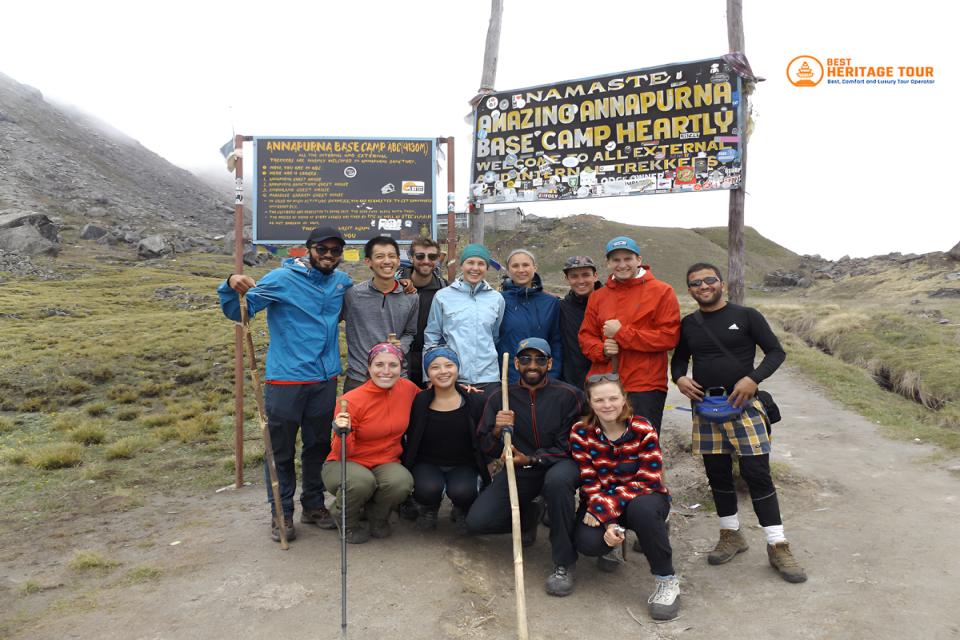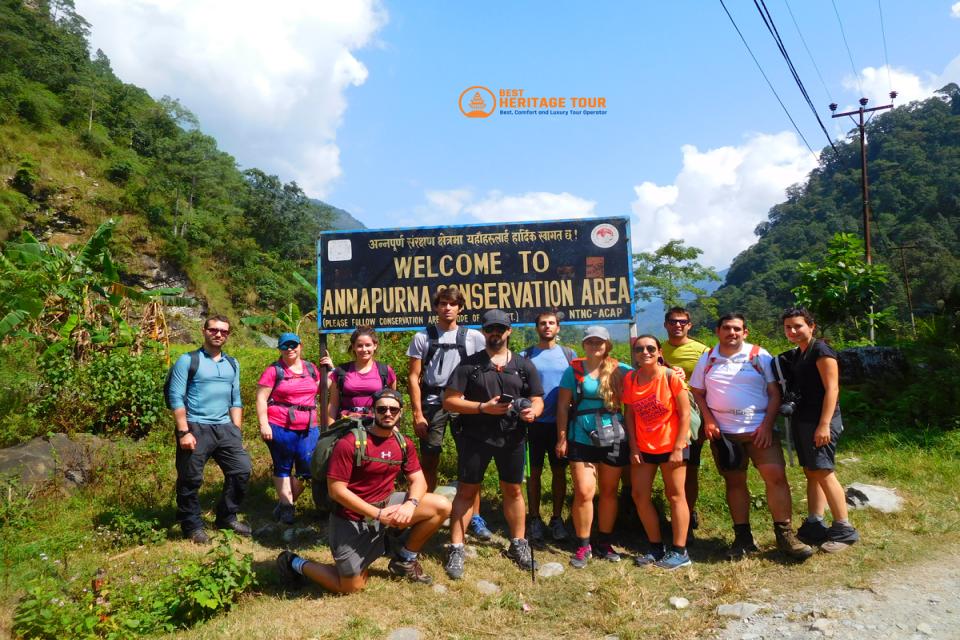
Choosing your first trekking adventure in the Himalayas can be as daunting as the peaks themselves. If you are standing at the edge of your comfort zone, looking toward Nepal, the question inevitably arises: Is the Annapurna Base Camp (ABC) trek suitable for beginners?
At Best Heritage Tour, we’ve guided thousands of first-time trekkers through these winding mountain paths. We have seen the apprehension in their eyes at the trailhead and the tears of triumph when they finally stand in the "Annapurna Sanctuary."
The short answer? Yes, absolutely. But like any great story, there is a "how" and a "why" that you need to know before you lace up your boots. In this comprehensive guide, we’ll break down everything from the physical demands to the hidden "stairways to heaven," helping you decide if ABC is the right first step for your Himalayan journey.
Understanding the Annapurna Base Camp Trek
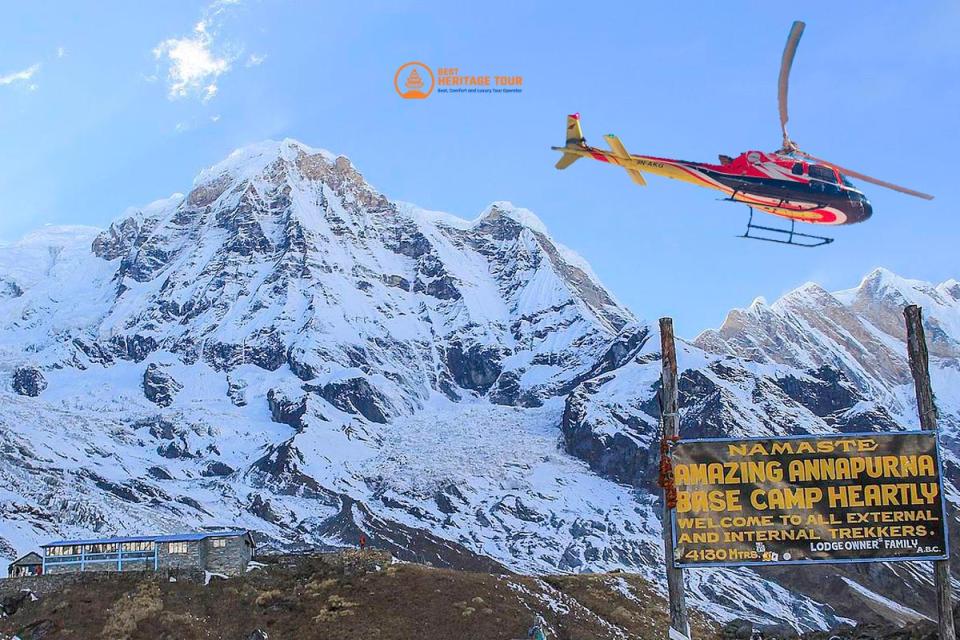
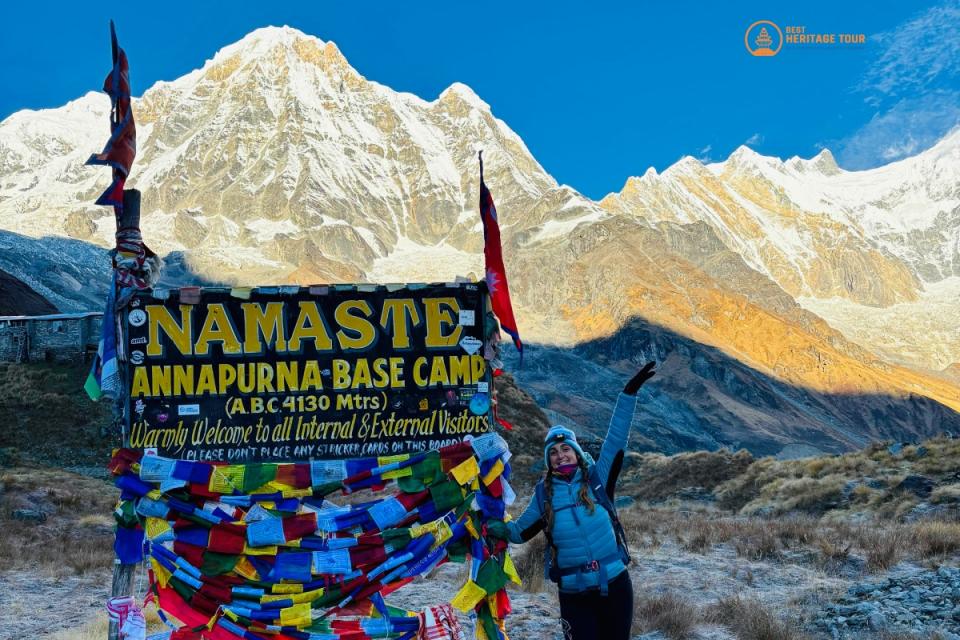
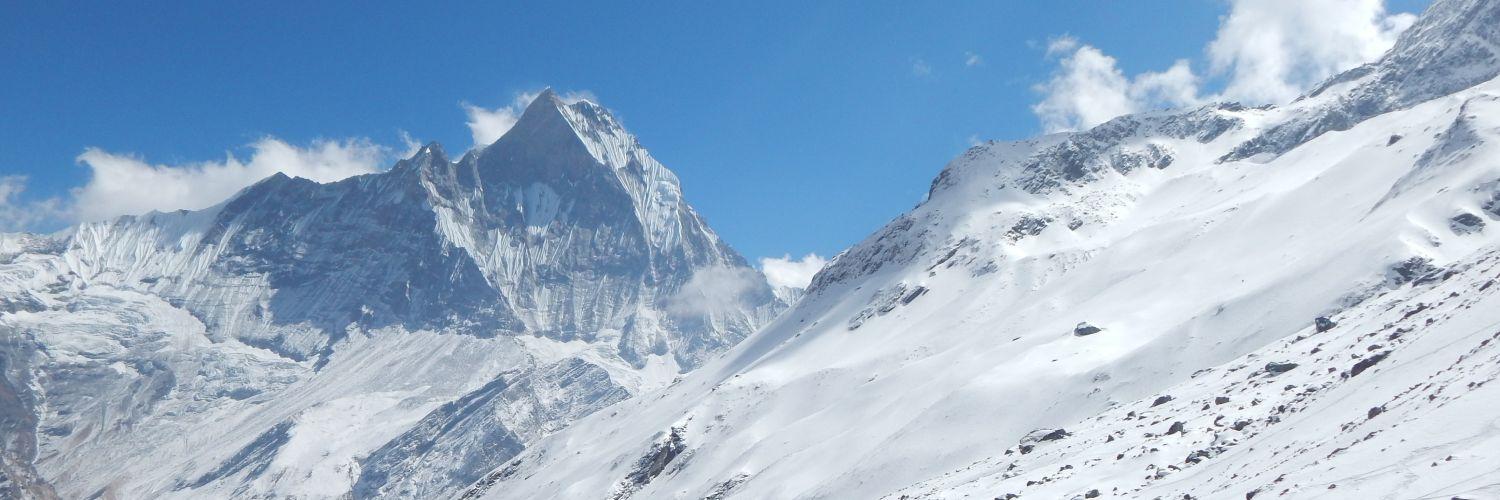
Before we dive into the difficulty, let’s look at the "specs" of this legendary route. The Annapurna Base Camp trek takes you into the heart of a natural amphitheater, surrounded by some of the highest peaks on Earth, including the formidable Annapurna I (8,091m) and the iconic Machhapuchhre (Fishtail Mountain).
Fast Facts for Beginners:
-
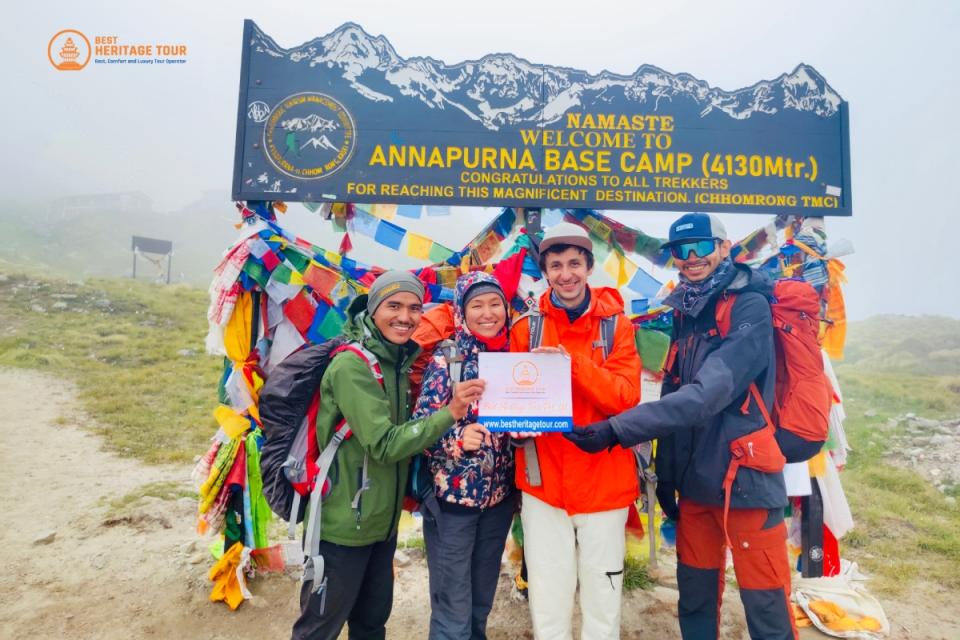
Maximum Elevation: 4,130m / 13,550 ft
-
Duration: 7 to 12 days (depending on your starting point and pace)
-
Walking Distance: Approximately 110km / 68 miles round trip
-
Trek Grade: Moderate
-
Accommodation: Cozy mountain teahouses
The Difficulty Level: "Moderate" but Not "Easy"
In the world of trekking, the word "moderate" can be deceptive. For us at Best Heritage Tour, moderate means that you don’t need technical climbing skills - no ropes, no ice axes, and no crampons.
However, "beginner-friendly" does not mean it’s a walk in the park. The challenge of ABC lies in two things: Endurance and Elevation.
The Famous Stone Steps
The Annapurna region is famous (or perhaps infamous) for its stone stairs. Between the villages of Ulleri and Chhomrong, you will encounter thousands of uneven stone steps. For a beginner, this is often the hardest part. It’s a test of your knee strength and your "glute" power.
-
Pro Tip: This is why we always recommend trekking poles! They act as your "extra legs," taking up to 25% of the weight off your joints.
Daily Walking Hours
You will be walking for 5 to 7 hours every day. While the distance might not seem huge on paper, doing it day after day at an incline changes the game. Recovery is key, and that is why our itineraries focus on "Slow and Steady" (or Bishutai, Bishutai in Nepali).
Managing the Altitude: The 4,000 m Threshold
One of the reasons ABC is so popular for beginners compared to the Everest Base Camp (EBC) trek is the maximum altitude.
-
EBC tops out at 5,364m
-
ABC tops out at 4,130m
That 1,200m difference is significant for your body’s oxygen intake. While Acute Mountain Sickness (AMS) is still a risk above 3,000m, the gradual ascent of the Annapurna trail allows for better natural acclimatization.
Signs to Watch For:
As a beginner, you must listen to your body. Common symptoms include:
-
Mild headaches
-
Loss of appetite
-
Difficulty sleeping
-
Shortness of breath
At Best Heritage Tour, our guides are trained to monitor your oxygen levels and heart rate daily. We ensure you drink at least 4 liters of water a day, which is the best "natural medicine" for altitude.
Training for the Trek: Can You Do It?
You don't need to be an Olympic athlete, but you shouldn't come "off the couch" either. If you have a basic level of fitness - meaning you can walk for 2-3 hours without getting completely winded - you are already halfway there.
The 8-Week Beginner Training Plan:
If you are 2 months out from your trek, here is how we suggest you prepare:
-
Cardio (3x a week): Swimming, cycling, or jogging. Build your lung capacity.
-
Stair Climbing: Find a local stadium or a tall building. Trust us, your legs will thank you when you’re in Chhomrong.
-
Hike with a Pack: Spend your weekends on local trails. Wear the actual boots you plan to use in Nepal to "break them in" and avoid blisters.
-
Leg Strength: Squats and lunges are your best friends.
When to Go: Picking the Right Window
Timing is everything for a beginner. You want the best weather to ensure the trails are dry and the views are clear.
-
Spring (March to May): The most popular time for beginners. The weather is mild, and the forests are ablaze with red Rhododendrons.
-
Autumn (September to November): The "Gold Standard." After the monsoon rains, the air is incredibly crisp, and the mountain views are high-definition.
-
Winter (December to February): Beautiful, but cold -10℃ to -15℃ at night). Not recommended for your very first trek unless you love the snow.
-
Monsoon (June to August): Wet, slippery, and leeches. We generally advise beginners to skip this season.
The "Teahouse" Experience: What to Expect
One thing that makes ABC great for beginners is the "infrastructure." You aren't camping in the middle of nowhere. You are staying in Teahouses - small, family-run mountain lodges.
Food and Fuel
You will be surprised by the menu! You can get everything from the traditional Dal Bhat (Lentil soup and rice - the ultimate power food) to pasta, pancakes, and even pizza.
The Golden Rule: Always eat Dal Bhat for dinner. It’s fresh, it’s bottomless, and it gives you the "24-hour power" you need for the next day's climb.
Comfort
The rooms are basic but clean, usually with two twin beds. While hot showers are available in the lower regions, they become a luxury (and a paid service) as you go higher. Embracing the "mountain life" is part of the charm!
Why Beginners Choose "Best Heritage Tour"
Going solo as a beginner is possible, but it’s not always recommended. The trail can be confusing during fog, and managing permits/logistics can be a headache.
When you trek with us, you get:
-
Expert Navigation: No getting lost on the "stairs."
-
Cultural Insight: Our guides don't just show you mountains; they tell you the stories of the Gurung and Magar people who live there.
-
Safety Net: We handle everything from your ACAP permits to emergency evacuations if needed.
-
Pace Management: We make sure you don't burn out on Day 3.
Packing Essentials for the First-Timer
Don't overpack! A heavy bag is a beginner’s worst enemy. If you hire a porter through us, they will carry your main kit (up to 10kg - 12kg), and you will only carry a small daypack with your essentials.
The "Big 5" Checklist:
-
Broken-in Hiking Boots: Never wear brand-new boots on Day 1.
-
Down Jacket: Even in spring, ABC is freezing at night.
-
Water Purification: A LifeStraw or purification tablets to save money and reduce plastic waste.
-
Sun Protection: High-altitude sun is brutal. Bring a hat and SPF 50+.
-
Personal First Aid: Ibuprofen, blister plasters, and rehydration salts.
Conclusion
The Annapurna Base Camp trek is more than just a hike; it’s a rite of passage. It is absolutely suitable for beginners who possess a positive mindset and a willingness to prepare.
The "difficulty" of the stone steps is quickly forgotten the moment you wake up at Base Camp, surrounded by a 360⁰ panorama of glowing white peaks as the sun hits the summit of Annapurna I. It is a moment that changes people forever.
So, stop wondering and start wandering. The mountains are calling, and we are here to make sure you reach the top safely.
Ready to take your first step into the Himalayas?
Best Heritage Tour offers customized ABC trekking packages designed specifically for first-timers, with extended acclimatization days and expert local guides.
Phone / WhatsApp / Viber: +977-9851149197 / +977-9810043046
Email: info@bestheritagetour.com / bestheritagetour@gmail.com
Website: www.bestheritagetour.com
Office: Thamel Marg, Kathmandu, Nepal
Author: Best Heritage Tour
Date: 22nd January, 2026