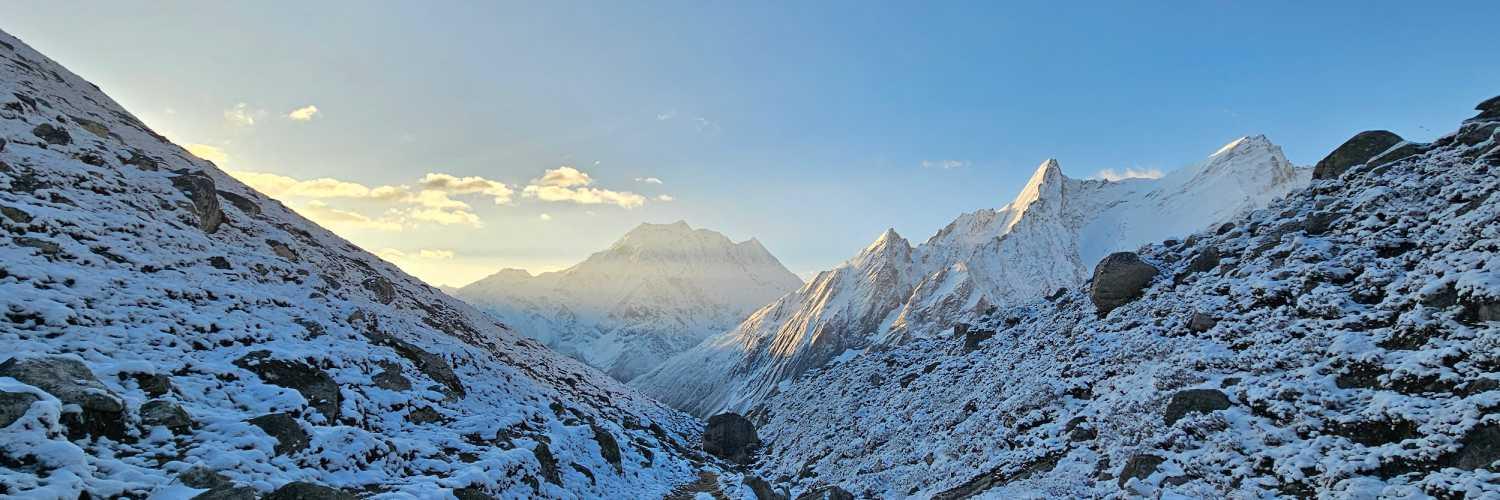
For the modern adventurer, the Himalayas offer many paths, but few hold the same mystic allure as the Manaslu Circuit. At the heart of this journey lies the formidable Larkya La Pass. Standing at 5,106 meters (16,752 feet), it is one of the longest and most dramatic mountain passes in Nepal.
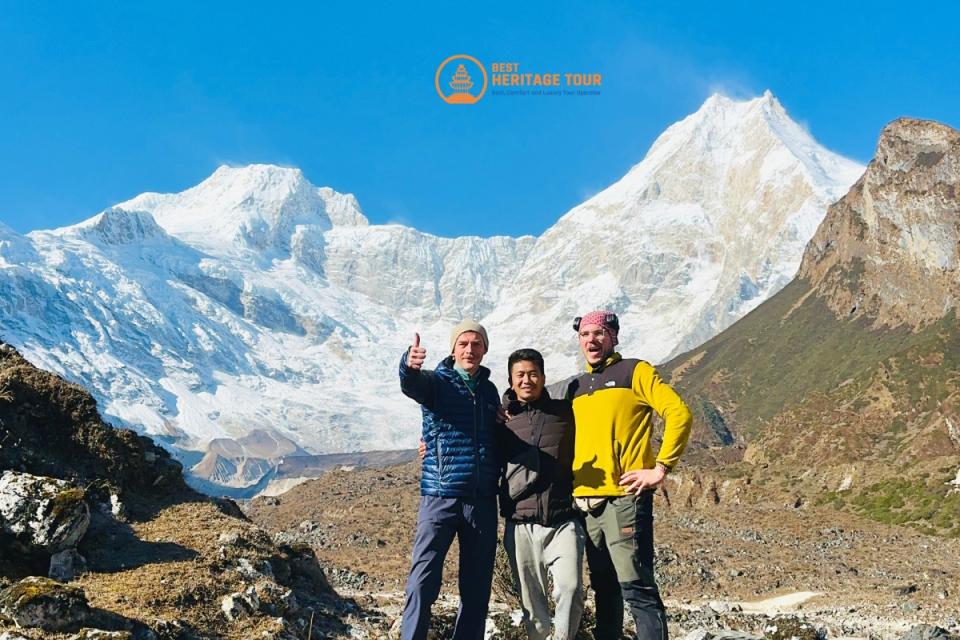
At Best Heritage Tour, we have walked these trails for decades. We have seen the sunrise hit the peak of Manaslu (8,163m) and felt the biting wind of the pass in every season. We know that success on this trek isn't about luck; it’s about meticulous preparation and a deep respect for the terrain.
In this comprehensive guide, we are sharing our collective "insider" knowledge to help you navigate the Larkya La with confidence.
Understanding the Geography: The Gateway between Two Worlds
The Larkya La isn't just a high point; it is a transition zone. It marks the boundary between the Gorkha District and the Manang District.
As you ascend from the eastern side (Gorkha), you are immersed in the Nubri Valley, where the culture is heavily influenced by Tibet. Once you cross the pass and descend into the west (Manang), you enter the Marsyangdi River valley, joining the classic Annapurna Circuit route.
Why the Larkya La is Unique:
-
The Viewpoint: Unlike some passes that are narrow notches, Larkya La offers a wide, glacial plateau view. You can see Cheo Himal, Kang Guru, and the massive Annapurna II.
-
The Length: The "Pass Day" is exceptionally long. You will likely cover 16km to 20km in a single day, with a steep 800m ascent followed by a staggering 1,500m descent.
The Physical Blueprint: Training Your Body
You cannot "wing it" on the Larkya La. Because the Manaslu Circuit is a teahouse trek, you won't be carrying a 20kg expedition pack, but your body still needs to be an engine.
Cardiovascular Endurance
Focus on Zone 2 training. This means long, slow runs or swims where you can still hold a conversation. This builds your aerobic base, which is exactly what you’ll be using for 6–8 hours a day in the mountains.
Strengthening the "Downhill Muscles"
Most injuries on the Larkya La happen during the descent to Bhimtang. The trail is often a mix of loose scree, ice, and steep rock steps.
-
Weighted Step-ups: Wear your trekking boots and a small backpack.
-
Eccentric Quat Exercises: This strengthens the muscles used for braking while walking downhill.
The Acclimatization Strategy: The "Golden Rule"
At Best Heritage Tour, we have a saying: The trek is won in Samagaon, not on the pass. Many trekkers try to shave days off their itinerary to save money. This is a mistake. To cross 5,000 meters safely, your blood chemistry needs time to adapt.
The Samagaon (3,530m) Stopover
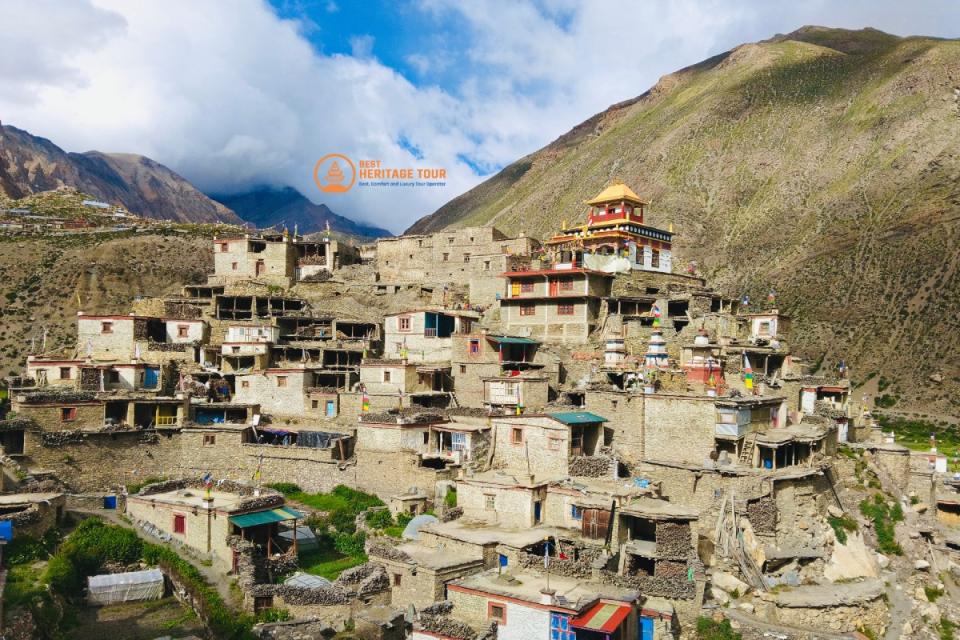
We always insist on two nights here. Samagaon is the cultural heart of the region. Use your "rest" day for an active acclimatization hike:
-
Birendra Tal: A stunning glacial lake at the foot of the Manaslu Glacier. It’s a relatively easy 2-hour hike.
-
Manaslu Base Camp (4,800m): For those feeling strong, this is the ultimate acclimatization hike. It’s a steep climb, but it prepares your lungs for the thin air of the pass.
The Samdo (3,860m) Transition
Samdo is the last true village before the pass. Here, you are high enough that you will feel the altitude. Sleep early, avoid alcohol completely, and keep your heart rate low.
The Night Before: Dharmasala (4,460m)
Dharmasala, also known as Larkya Phedi, is not a village - it is a base camp. The accommodation here is the most basic on the entire trek.
-
The Sleeping Situation: During peak season (October), rooms are scarce. You might find yourself in a sturdy mountain tent. Embrace it! It’s part of the authentic Himalayan experience.
-
The Cold: The temperature inside the stone huts often drops below freezing.
-
Hydration Strategy: Fill your Nalgene bottles with boiling water before bed. Use them as hot water bottles in your sleeping bag, and by morning, you have drinkable (unfrozen) water for the climb.
Summit Day: Step-by-Step Breakdown
The alarm goes off at 3:30 AM. The air is silent and freezing. This is the moment you’ve prepared for.
The Ascent (3-5 Hours)
The climb from Dharmasala to the top of the pass is a steady zig-zag. It isn't "technical" in a climbing sense, but the altitude makes every step feel like a mile.
-
Keep your head down: Focus on the heels of the person in front of you.
-
Rhythmic Breathing: Match your breath to your steps. One inhale per step, one exhale per step.
-
The False Summits: There are several prayer-flag-covered mounds that look like the top. Don't be discouraged! The real pass is marked by a massive collection of flags and a signpost.
At the Top (5,106m)
When you reach the summit, the feeling is electric. The prayer flags snap in the wind, and the peaks of the Peri Himal range appear.
-
Limit your time: As much as you want to celebrate, don't stay at the top for more than 15-20 minutes. The wind chill can lead to rapid heat loss, and you still have a long way to go.
The Descent (4-6 Hours)
The descent to Bhimtang (3,720m) is the most taxing part of the day. You will drop nearly 1,400 meters in elevation.
-
Use your poles: They take 25% of the weight off your knees.
-
Micro-spikes: If there is "old snow" or ice, put these on immediately. A slip on the Larkya moraine can result in a twisted ankle, which is a nightmare at that altitude.
Gear Selection: The Professional’s Checklist
If you are traveling with Best Heritage Tour, we provide a detailed packing list, but for the Larkya La, these specific items are non-negotiable:
|
Category |
Item |
Expert Tip |
|---|---|---|
|
Footwear |
B1 or B2 Rated Boots |
Ensure they are broken in. Blisters at 5,000m are a tragedy. |
|
Outerwear |
800-fill Down Jacket |
You only wear this at camp and for the first 2 hours of the pass day. |
|
Hands |
Liner Gloves + Mittens |
Mittens keep fingers together for shared warmth - essential for 4 AM starts. |
|
Head |
Buff/Neck Gaiter |
Protects your lungs from the "Khumbu Cough" (dry, cold air). |
|
Electronics |
Power Bank |
Batteries die instantly in the cold. Keep your phone in an inside pocket close to your body heat. |
Mental Preparedness: The Psychology of the Pass
The Larkya La is as much a mental game as a physical one. There will be a moment, likely an hour before the summit, where your brain tells you to turn back.
-
The "Ten More Steps" Rule: When you feel like quitting, tell yourself you’ll just do ten more steps. Then another ten. Small goals lead to big summits.
-
Trust Your Guide: Our guides at Best Heritage Tour are trained to spot the signs of AMS (Altitude Sickness) before you even feel them. If they tell you to slow down or drink more, trust their experience.
Cultural Etiquette in the Manaslu Region
As a "Heritage" tour company, we want our guests to leave a positive impact. The Manaslu region is a Restricted Area, meaning it has been preserved from the over-commercialization seen in other regions.
-
The Tsum Valley Connection: If you have the time, we highly recommend adding the Tsum Valley detour. It is one of the few places where "Polyandry" (one woman having multiple husbands, usually brothers) was traditionally practiced to keep land within families.
-
Monastic Life: When visiting the monasteries in Lho or Samagaon, always remove your shoes and hats. If you wish to make a small donation, there is usually a "donation box" near the main altar.
Frequently Asked Questions (FAQ)
Is the Larkya La Pass dangerous?
It is not "dangerous" in terms of technical climbing, but it is high-risk if you ignore the weather or altitude. With a professional guide and proper acclimatization, it is a very achievable goal for a fit trekker.
Can I do the Manaslu Circuit solo?
No. The Nepal government requires all trekkers in the Manaslu region to be accompanied by a licensed guide and to be in a group of at least two people. This is for your safety and to protect the local environment.
What is the best month to cross?
October and November offer the most stable weather and the clearest views. April and May are beautiful due to the wildflowers, but the pass can have more snow.
Conclusion
Crossing the Larkya La Pass is a rite of passage. It is the moment you transition from a "tourist" to a "trekker." It is a day of cold winds, burning lungs, and eventually, the most profound silence you will ever experience.
When you stand at 5,106 meters, looking down at the path you’ve conquered, the world feels a little smaller, and you feel a lot stronger. We invite you to join us on this journey. Let’s cross the pass together.
Ready to start planning your Manaslu adventure? Contact Best Heritage Tour today to see our upcoming departure dates and customized itineraries!
Phone / WhatsApp / Viber: +977-9851149197 / +977-9810043046
Email: info@bestheritagetour.com / bestheritagetour@gmail.com
Website: www.bestheritagetour.com
Office: Thamel Marg, Kathmandu, Nepal
Author: Best Heritage Tour
Date: 28th January, 2026