Crossing the legendary Thorong La Pass is often the "make or break" moment for many adventurers on the Annapurna Circuit. At Best Heritage Tour, we’ve guided hundreds of trekkers through these winding mountain trails, and the most common question we get is always the same: "How difficult is it really to cross Thorong La Pass?"
The short answer? It’s a challenge that demands respect, but it is entirely achievable for most healthy, determined travelers. It isn't a technical climb - you won't need ropes or ice axes - but it is a grueling test of endurance, mental grit, and how well your body handles the thin Himalayan air.
In this deep-dive guide, we’re going to pull back the curtain on the Thorong La Pass difficulty, sharing the raw truth about the altitude, the terrain, and what you can do to ensure you’re on the side of the 5,416m summit holding a cup of hot tea in triumph.
The Numbers: Altitude and Elevation Gain
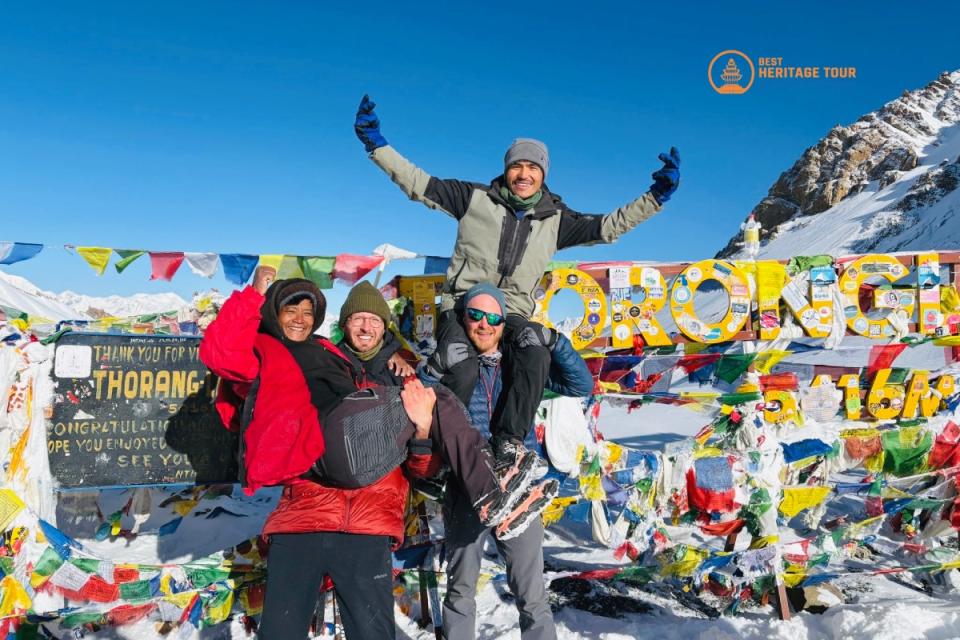
When we talk about difficulty, we have to start with the sheer height. Thorong La Pass sits at an elevation of 5,416 meters (17,769 feet). To put that in perspective, you are standing higher than the base camps of many of the world’s tallest peaks.
The "Pass Day" is notoriously long. Most trekkers start their journey from Thorong Phedi (4,540m) or High Camp (4,880m).
-
The Ascent: If you start from High Camp, you face a 536-meter vertical climb. In the thin air, this can feel like climbing a staircase with a mask on.
-
The Descent: Once you hit the prayer flags at the summit, the work isn't over. You must descend nearly 1,600 meters to reach the sacred village of Muktinath (3,800m). This knee-knocking descent is often where the real physical "difficulty" lies for many.
Is Thorong La Pass Technically Difficult?
A common misconception is that you need mountaineering skills. You don't. The path is a well-established trekking trail. Under normal conditions, it’s a wide, rocky path.
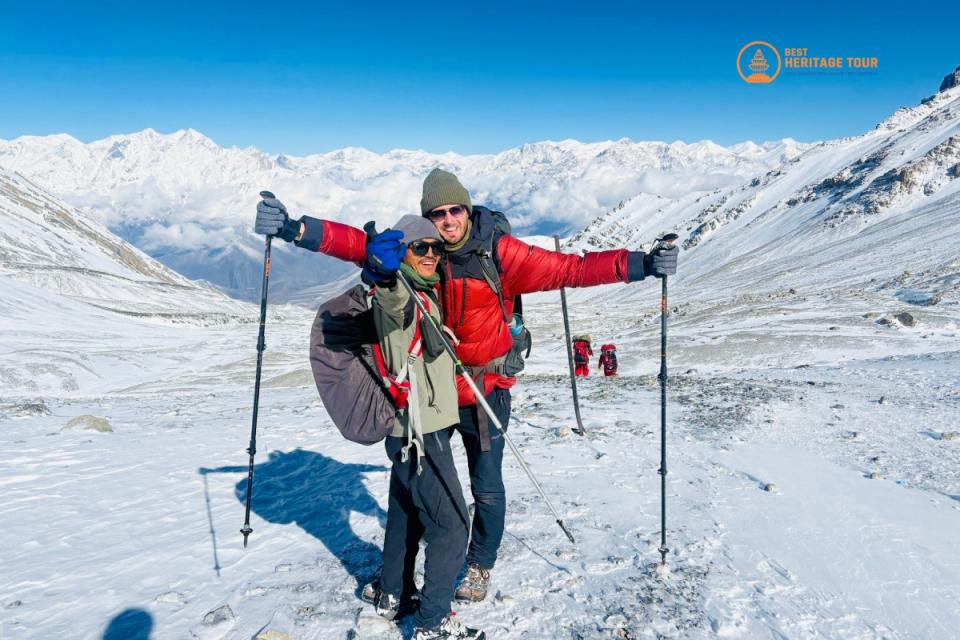
However, "technicality" changes with the weather. If you are trekking in early spring (March) or late autumn (November), you might encounter snow or ice. In these cases, the trail becomes slippery, and simple micro-spikes can make the difference between a safe crossing and a dangerous slip. At Best Heritage Tour, we always advise our guests that while the path is "just a walk," it is a walk on the edge of the world.
The Invisible Wall: Altitude Sickness (AMS)
This is the single biggest factor in Thorong La’s difficulty. It doesn't matter how many marathons you’ve run; altitude is the great equalizer. At 5,400 meters, there is roughly 50% less oxygen available than at sea level.
Symptoms to watch for:
-
Persistent, throbbing headaches.
-
Loss of appetite and nausea.
-
Dizziness or "heavy" limbs.
-
Difficulty sleeping (Cheyne-Stokes breathing).
Our philosophy is simple: Walk slow, drink more. We design our itineraries with built-in acclimatization days in Manang (3,540m). These aren't just "rest days"; they are vital periods where your body produces more red blood cells to carry what little oxygen is available.
The Famous "Pass Day" Routine
Why do we wake you up at 3:00 AM? It’s not just to be cruel! The weather at Thorong La is notorious for "afternoon winds." By midday, the wind at the summit can reach gale forces, making the crossing dangerous and freezing.
A typical timeline looks like this:
-
03:30 AM: Quick breakfast (porridge and ginger tea are your best friends).
-
04:00 AM: Headlamps on, starting the slow "bistari, bistari" (slowly, slowly) crawl upward.
-
08:00 AM - 09:00 AM: Reaching the summit. The feeling of seeing the Dhaulagiri and Annapurna ranges from the top is a spiritual experience that wipes away the fatigue.
-
01:00 PM: Arriving in Muktinath for a well-deserved feast.
Physical Fitness vs. Mental Resilience
You don't need to be an Olympic athlete, but you should be "mountain fit." If you can comfortably hike for 6-8 hours with a 5kg pack back home, you have the physical foundation.
However, the mental difficulty is often underestimated. There will be moments - usually around 5,100 meters - where your brain tells you to turn back. The air is cold, your breath is short, and the summit looks miles away. This is where your heritage tour guide comes in, offering the encouragement and pace-setting you need to keep moving.
Weather: The Wild Card
The "Best Time to Visit" isn't just a suggestion; it's a safety requirement.
-
Spring (March-May): Beautiful rhododendrons, but higher chance of lingering winter snow on the pass.
-
Autumn (September-November): The "Goldilocks" zone. Clear skies, stable weather, and the highest success rates.
-
Winter (December-February): Only for the extreme. Temperatures can drop to -20°C, and the pass is frequently closed due to heavy snow.
Pro-Tips from the Best Heritage Tour Team:
-
Hydration is Life: Aim for 4 liters of water a day. Dehydration mimics altitude sickness, and you don't want to confuse the two.
-
Garlic Soup: It’s a local Himalayan "superfood." It helps with blood circulation and is a staple at every teahouse.
-
Protect Your Knees: Bring trekking poles. The 1,600m descent to Muktinath is brutal on the joints.
-
Layer Up: It might be 15°C in the sun, but the moment you hit the shade or the wind picks up, it feels like an ice box.
Conclusion
Crossing Thorong La Pass is difficult, yes. It will test your limits, and it will likely be the hardest physical thing you do all year. But as you stand among the fluttering prayer flags, looking out at the vastness of the Mustang Valley and the towering peaks of the Annapurna Massif, the "difficulty" disappears. You aren't just a tourist anymore; you’re someone who conquered one of the highest passes in the world.
At Best Heritage Tour, we don't just provide a guide; we provide a safety net. From monitoring your oxygen levels to ensuring you have the best room in the teahouse, we handle the logistics so you can focus on the journey.
Contact Best Heritage Tour to book your Thorong La Pass Trek
Phone / WhatsApp / Viber: +977-9851149197 / +977-9810043046
Email: info@bestheritagetour.com / bestheritagetour@gmail.com
Website: www.bestheritagetour.com
Office: Thamel Marg, Kathmandu, Nepal
Author: Best Heritage Tour
Date: 28th January, 2026