There is a moment on every trek where the world seems to expand, and the air carries a different kind of silence - a silence that speaks of ancient ice and soaring granite. For those of us at Best Heritage Tour, that moment always happens at the summit of Kyanjin Ri.
If you are planning a journey into the Langtang Valley, you’ve likely heard of Kyanjin Gompa, the famous stone village nestled at 3,870 meters. But for the traveler seeking the ultimate "high point" - both literally and figuratively - the real magic lies another 900 meters above. Kyanjin Ri (4,773m) is more than just a viewpoint; it is the spiritual and geographical crescendo of the entire Langtang circuit.
In this guide, we’ll take you through everything you need to know about conquering this peak, from the technical details to the soulful experiences that await you at the top.
Why Kyanjin Ri is the Heart of Langtang?
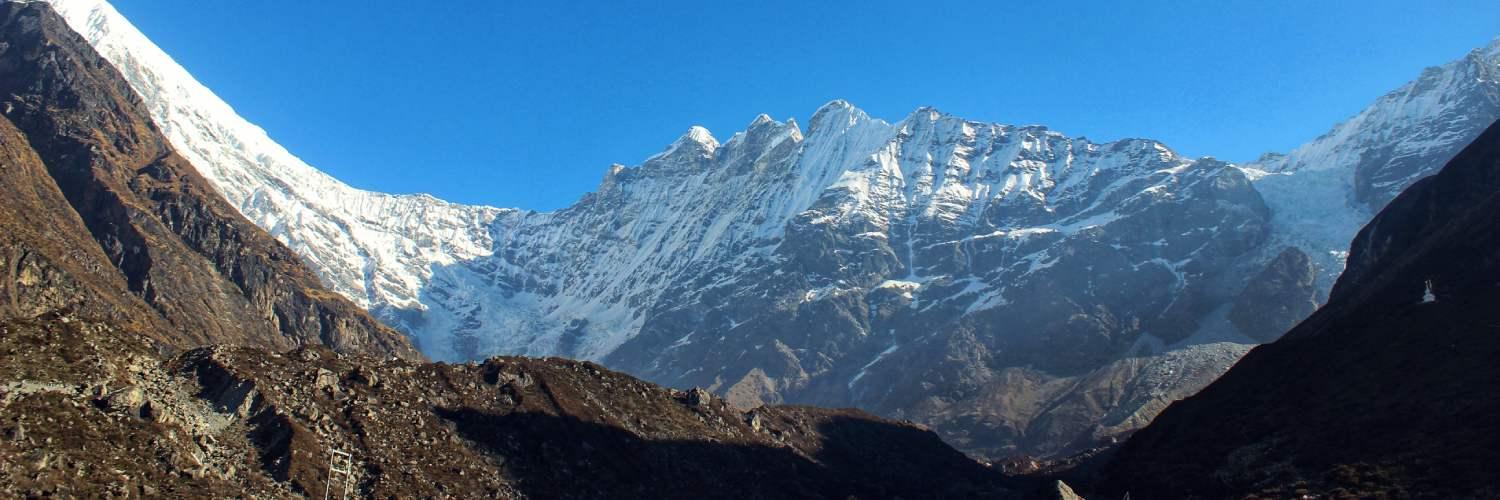
Many trekkers ask us, "Should I hike Kyanjin Ri or Tserko Ri?" While Tserko Ri is technically higher (reaching 5,033m), Kyanjin Ri offers a unique perspective. It sits like a natural balcony over the Langtang Lirung glacier.
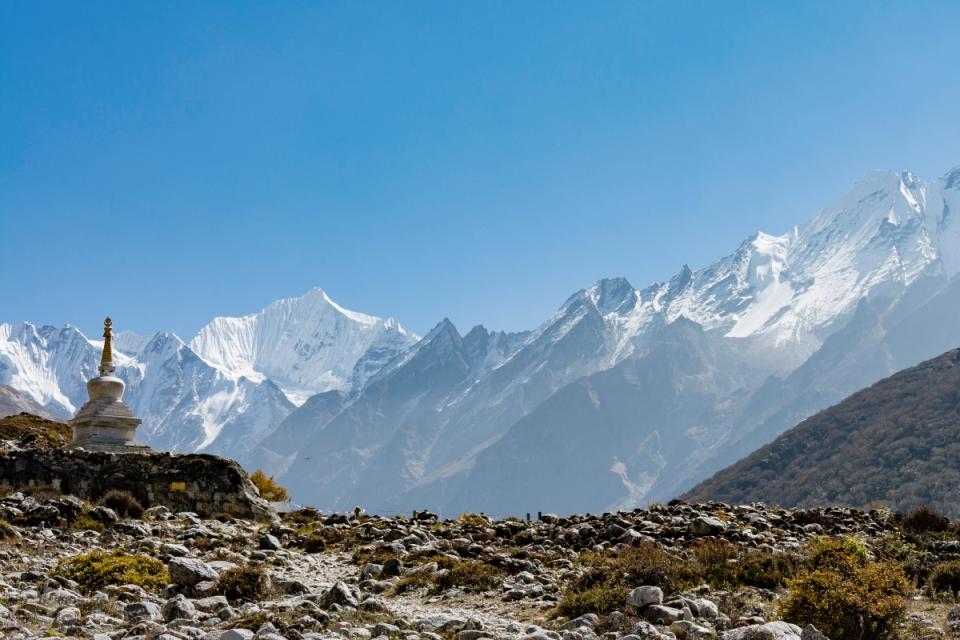
From the summit, you aren’t just looking at the mountains; you are part of them. You can hear the distant "crack" of moving ice from the Yubra Icefall and see the entire valley floor spread out like a map. It’s the perfect blend of accessibility and high-altitude challenge, making it the favorite side-trip for our guests.
Essential Facts: Know Before You Go
To help you prepare, here is a quick breakdown of the climb from Kyanjin Gompa to the peak:
|
Feature |
Details |
|---|---|
|
Maximum Altitude |
4,773 meters (15,659 feet) |
|
Altitude Gain |
~903 meters from Kyanjin Gompa |
|
Trek Duration |
3 to 5 hours (Round Trip) |
|
Difficulty Level |
Moderate but steep (Non-technical) |
|
Best Time |
March-May (Spring) & Sept-Nov (Autumn) |
|
Key Views |
Langtang Lirung, Yala Peak, Gangchempo, Lirung Glacier |
The Route: A Step-by-Step Ascent
The beauty of Kyanjin Ri is that you don't need crampons or ropes. However, don't let the word "non-technical" fool you - at nearly 4,800 meters, every step requires intention.
1. The Early Morning Start
At Best Heritage Tour, we always recommend an early start - ideally around 5:00 AM or 6:00 AM. Why? Because the Himalayan weather is like a clock. The mornings are crisp and crystal clear, but by midday, clouds often roll in from the lower valleys, masking the peaks in a white veil.
2. Lower Kyanjin Ri (The First Victory)
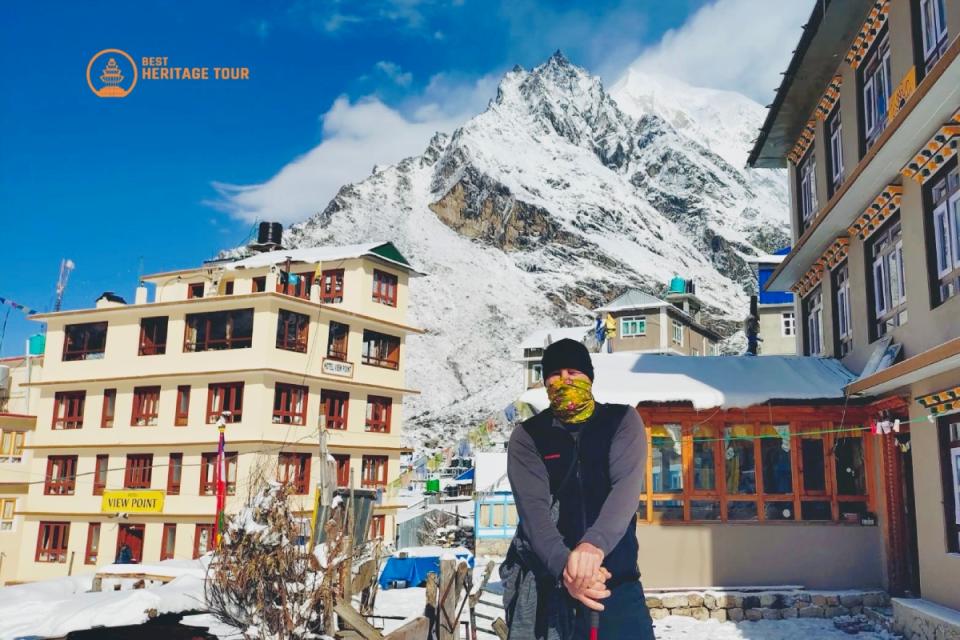
The trail starts directly behind the village of Kyanjin Gompa. It begins with a series of steep switchbacks. About two-thirds of the way up, you’ll reach "Lower Kyanjin Ri" (approx. 4,300m). Many trekkers choose to stop here. The views are already spectacular, and it’s a great place to catch your breath. If you’re feeling the effects of altitude (headaches or extreme fatigue), this is a perfectly respectable place to celebrate and head back.
3. The Push to the Summit (Upper Kyanjin Ri)
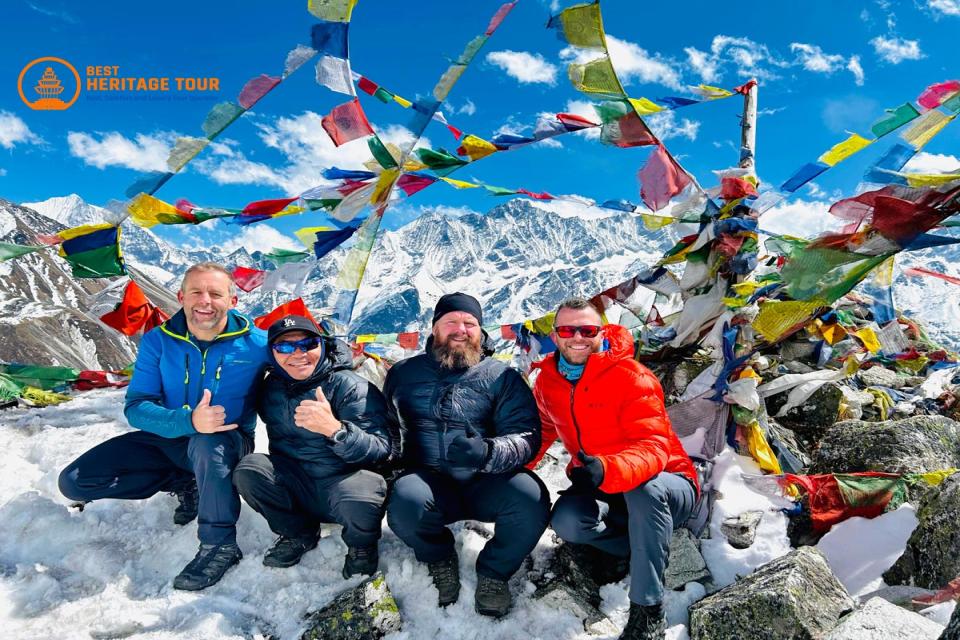
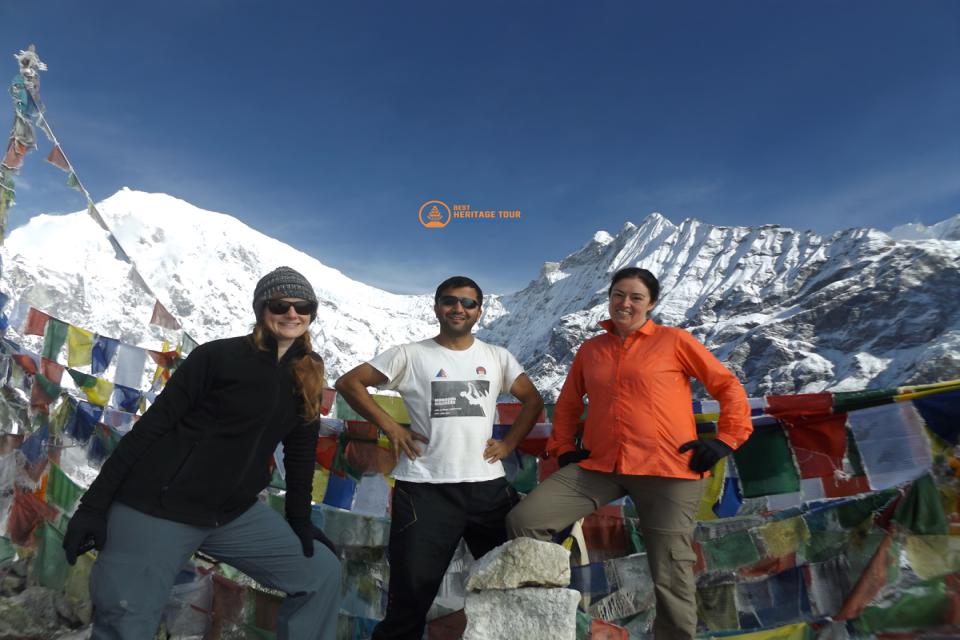
For those with the "Himalayan spirit," the trail continues along a rocky ridge to the true summit at 4,773m. This section is more exposed and can be windy. As you reach the top, the prayer flags (Lungta) will come into view, dancing wildly in the wind. These flags carry prayers for peace and compassion - a fitting end to a grueling climb.
What You See From the Top: The "Himalayan Cinema"
Once you reach the summit, the 360-degree panorama is nothing short of life-changing. Here are the giants you’ll be sharing the air with:
-
Langtang Lirung (7,227m): The monarch of the valley. Its massive south face looms so close you feel like you could touch it.
-
Gangchempo (6,387m): Also known as the "Fluted Peak," this mountain is famous for its perfect, sharp-edged pyramid shape.
-
Yala Peak (5,520m): A popular trekking peak that looks surprisingly humble compared to its neighbors.
-
Lirung Glacier: Watching the river of ice and debris flow down from the heights of Langtang Lirung is a humbling reminder of the power of nature.
Pro-Tips for a Successful Hike
Since we’ve led hundreds of trekkers up this ridge, we’ve learned a few tricks to make the experience better:
-
Hydration is Non-Negotiable: At high altitudes, your body loses moisture through breathing. Drink at least 3-4 liters of water a day.
-
The "Slow and Steady" Rule: Locally known as "Bistari, Bistari." Don't race. Keeping a steady, slow rhythm is the best way to prevent Altitude Sickness (AMS).
-
Layer Up: It might be warm when you start in the village, but the summit wind is biting. Bring a down jacket, a windcheater, and a warm beanie.
-
The Cheese Factory Treat: After you descend, head over to the Kyanjin Cheese Factory. There is nothing quite like fresh Yak cheese to replenish your energy after a 900-meter climb!
Culture and Heritage: More Than Just Rocks
At Best Heritage Tour, we believe travel should be as much about the people as it is about the mountains. The Langtang region is home to the Tamang people, whose culture is deeply influenced by Tibetan Buddhism.
On your way up, you’ll pass mani walls (stone tablets inscribed with mantras) and chortens. These aren't just landmarks; they are the heart of the valley. We encourage our guests to walk to the left of these sacred structures, as is the local custom. Climbing Kyanjin Ri is a physical challenge, but it’s also an opportunity to walk in the footsteps of a culture that has thrived in these harsh conditions for centuries.
The Best Time to Visit
To get the most out of your Kyanjin Ri experience, timing is everything:
-
Spring (March to May): This is the season of color. The lower trails are ablaze with red and pink Rhododendrons (Nepal’s national flower). The weather is mild, and the views are generally clear.
-
Autumn (September to November): This is the "Golden Season." After the monsoon rains have washed the dust from the air, the visibility is at its absolute peak. This is the best time for photography.
-
Winter (December to February): Beautiful, but tough. The trail to Kyanjin Ri may be covered in deep snow, requiring more experience and warmer gear.
Safety and Altitude
Your safety is our priority. While Kyanjin Ri is a "hike," it takes you to an altitude where Acute Mountain Sickness (AMS) is a real possibility.
Always listen to your body. If you feel dizzy, nauseous, or have a severe headache, descend immediately. At Best Heritage Tour, our guides are trained to monitor your oxygen levels and heart rate to ensure your "high point" doesn't become a health risk.
Conclusion
There is a specific feeling you get when you stand at 4,773 meters, surrounded by the Langtang giants. It’s a feeling of perspective. The worries of "real life" seem to vanish when you are staring at a glacier that has been there for millennia.
Kyanjin Ri isn't just a checkbox on a trekking itinerary; it’s a moment of clarity. It’s the reason we do what we do at Best Heritage Tour. We don't just want to show you the mountains; we want you to feel the soul of the Himalayas.
Are you ready to see the world from 4,773 meters?
Phone / WhatsApp / Viber: +977-9851149197 / +977-9810043046
Email: info@bestheritagetour.com / bestheritagetour@gmail.com
Website: www.bestheritagetour.com
Office: Thamel Marg, Kathmandu, Nepal
Author: Best Heritage Tour
Date: 23rd January, 2026