Do I Need Special Trekking Socks for Nepal, or Are Regular Socks Okay?
Welcome to the Himalayas! As your trusted guide - Best Heritage Tour, we’re thrilled you’re preparing for your adventure. You’ve likely invested time (and money) into finding the perfect trekking boots, but your preparation shouldn't stop there. Now, let’s talk about what goes inside those boots: your socks.
This is perhaps the most overlooked piece of gear, yet it is arguably the most critical component for foot comfort and blister prevention on the multi-day, challenging trails of Nepal.
The short, expert answer to your question is definitely: No, regular socks are NOT okay.
Trekking in Nepal requires specialized socks designed for the rigors of multi-day hiking, dramatic temperature swings, and prolonged moisture management. Using everyday cotton or gym socks is the single biggest mistake first-time trekkers make, and it can rapidly turn a dream journey into a painful blister-ridden ordeal.
Let’s dive deep into why your feet demand an upgrade and how to choose the right trekking sock for your Himalayan adventure.
The Footwear System: Why Cotton is the Enemy in the Himalayas
To understand why trekking socks are essential, you must first recognize the fundamental difference between them and everyday socks.
The Blister Catastrophe: Cotton vs. Performance
Your average regular sock (typically cotton) is fantastic for the office or a casual stroll, but it is a disaster on the trail.
|
Feature |
Regular Socks (Cotton) |
Trekking Socks (Merino/Synthetic) |
Impact on Trekking in Nepal |
|---|---|---|---|
|
Moisture Management |
Hydrophilic (Absorbs sweat/water like a sponge). Slow to dry. |
Hydrophobic/Wicking (Pulls moisture away from the skin). Dries quickly. |
Wet skin is soft, fragile, and prone to friction. A damp cotton sock guarantees blisters, athlete’s foot, and cold feet at high altitude. |
|
Insulation |
Loses nearly all insulating properties when wet. |
Retains warmth even when damp (especially wool). |
Your feet will become dangerously cold in the high, damp Himalayan mornings or evenings, increasing the risk of cold injuries. |
|
Cushioning |
Minimal, uniform padding that quickly compresses and flattens. |
Strategic padding in the heel, toe, and Achilles tendon areas. |
Lack of padding means your foot takes the full impact of sharp rocks and steep steps, leading to foot fatigue and bruising. |
Expert Insight: In the cold, high-altitude environment, if your cotton socks get wet from sweat or a stream crossing, the water will draw heat away from your foot, chilling you rapidly - a major risk factor for non-freezing cold injury. The rule on the mountain is: Cotton kills.
Specialized Trekking Socks: The Three Pillars of Performance
High-quality trekking socks are engineered pieces of gear designed to provide specific protection over multiple days on challenging terrain. They excel in three key areas:
Pillar 1: Material Science
The fabric is the most important differentiator. You have two primary, high-performance choices for the Himalayas:
|
Material |
Pros |
Cons |
Ideal Use for Nepal |
|---|---|---|---|
|
Merino Wool |
Odour Resistance (naturally antimicrobial), Temperature Regulation (warm when cold, cool when warm), Insulates when wet, extremely soft and comfortable. |
More expensive, slightly less abrasion-resistant than synthetics, dries a little slower than synthetics. |
The Gold Standard. Best for multi-day treks (EBC, Annapurna Circuit) due to odor control and cold-weather performance. |
|
Synthetic Blends (Nylon, Polyester, Spandex) |
Quick Drying, high durability (abrasion resistance), generally cheaper, maintains shape/fit well. |
Less odor resistant, can feel clammy if sweat can't evaporate within the boot. |
Great for warmer, lower-altitude treks, or as liner socks under wool for friction control. |
Best of Both Worlds: Most premium trekking socks use a Merino-Synthetic Blend (e.g., 60% Merino wool, 30% Nylon, 10% Spandex) to combine the warmth and odor control of wool with the durability and quick-drying properties of synthetics. This blend is ideal for the varying conditions of Nepal.
Pillar 2: Strategic Construction and Fit
Trekking socks are not knitted uniformly. They feature specific design elements that prevent problems:
-
Targeted Cushioning: Extra dense padding is knit into high-impact areas (heel and ball of the foot) to absorb shock from uneven ground and heavy backpacks.
-
Seamless Toe Box: The toe seam is flat or non-existent to prevent rubbing and pressure points, which are common causes of blisters on the downhill sections.
-
Arch Support and Compression: Many quality socks include elasticized arch support and mild compression to help reduce foot fatigue during long trekking days.
-
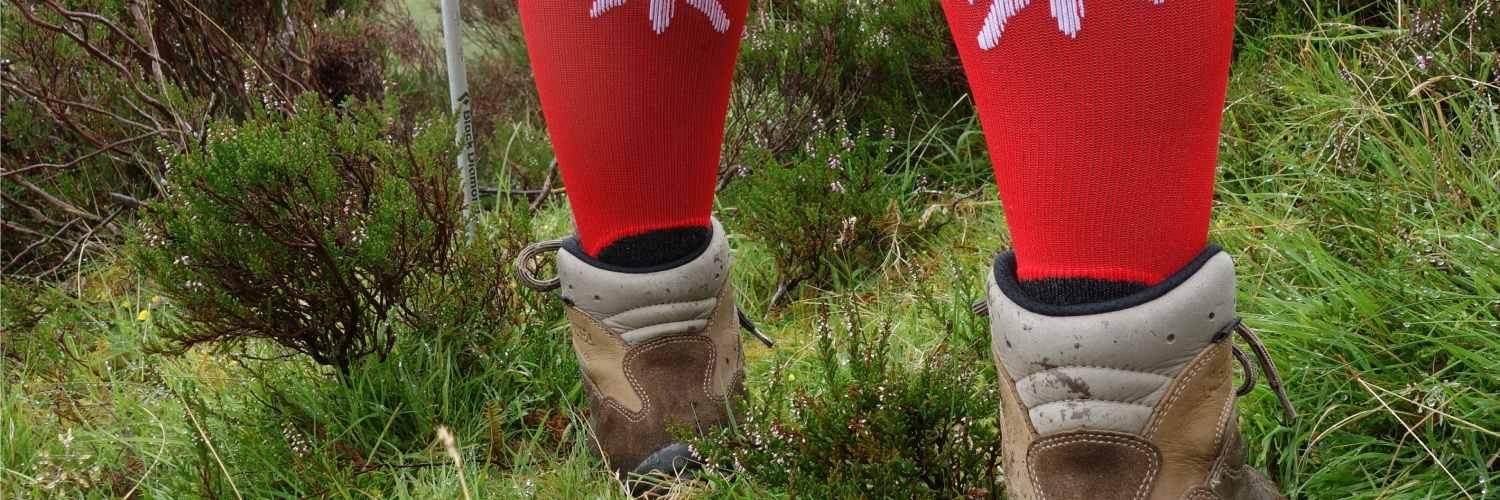
Height: Choose Crew Height socks. They must be several inches higher than your trekking boots to protect your skin from the boot collar and tongue.
Pillar 3: The Two-Sock System
For long, serious treks in Nepal, the most effective blister prevention technique is often the Two-Sock System:
-
Liner Sock (Thin Synthetic/Silk): Worn directly against the skin. Its job is to wick moisture away from the skin and absorb the initial friction between the two layers of fabric. They dry extremely fast.
-
Outer Sock (Medium-Weight Merino Blend): Worn over the liner. This layer provides cushioning, insulation, and the final moisture management.
The two layers move against each other, reducing the friction that occurs against your skin - a small investment that pays massive dividends in comfort.
Your Nepal Sock Checklist: Thickness, Quantity, and Care
Choosing the right sock also depends on the specific altitude and time of year you are trekking.
1. Match Cushioning to Your Trek
|
Cushioning Level |
Thickness/Warmth |
Ideal for Nepal Treks |
|---|---|---|
|
Light Cushion |
Thin, breathable, minimal padding. |
Day hikes, low-altitude, warm spring/autumn, or for use with a liner sock. |
|
Medium Cushion |
Balanced padding and insulation. |
Recommended Standard. Versatile for moderate to high-altitude treks (EBC, ABC) in peak seasons. |
|
Heavy Cushion |
Thickest, highest insulation and padding. |
Treks in the peak winter months (Dec-Feb), high-altitude passes, or for trekkers with cold-sensitive feet. |
2. How Many Socks Do I Need?
On a typical 10-14 day trek, you won't be able to wash and dry socks effectively every night (especially at altitude where drying is slow).
-
Minimum Goal: 4 to 6 pairs of performance trekking socks.
-
Liner Socks: If using a two-sock system, bring 3-4 pairs of liners, as they dry quickly and can be washed more easily.
-
Crucial Rule: Bring one extra pair designated as "Camp Socks." These should be thick, warm, and used only in the teahouse in the evenings. Putting on a fresh, dry, warm sock at the end of a cold day is pure bliss and helps circulation recover. Never wear your hiking socks inside your sleeping bag - always use a designated, clean pair.
3. Foot and Sock Care on the Trail
The best sock is useless if your feet are neglected:
-
Change Frequently: On a long day, change into a fresh pair during your lunch break. Even a damp sock can soften the skin, so a dry sock at midday can make all the difference.
-
Air Your Feet: Whenever you stop for more than 15 minutes, remove your boots and socks to let your feet air out and cool down.
-
Overnight Drying: Hang your socks (and boots) outside your sleeping bag near the stove or fire in the teahouse dining hall. Never leave them at the foot of your bed in the unheated sleeping room, as they will freeze or remain damp.
Conclusion: Investing in Comfort is Investing in Success
While regular socks might seem like a simple way to save money, they are a false economy. They will drastically increase your risk of pain, injury, and a miserable experience in the Himalayas. The small investment in Merino wool or high-quality synthetic trekking socks is non-negotiable for a safe and enjoyable trek.
Your feet will carry you hundreds of kilometers, up thousands of steps, and through dramatic temperature changes. Give them the armor they deserve. When you prioritize a quality footwear system - from the boots to the socks - you set yourself up for total success on the trails.
At Best Heritage Tour, we ensure every aspect of your trek is planned for comfort and safety. If you have any further questions about gear, or are ready to secure your high-altitude adventure, our expert team is here to assist you every step of the way.
Ready to Plan Your Perfect Himalayan Trek?
Phone / WhatsApp / Viber: +977-9851149197 / +977-9810043046
Email: info@bestheritagetour.com / bestheritagetour@gmail.com
Website: www.bestheritagetour.com
Office: Thamel Marg, Kathmandu, Nepal
Author: Best Heritage Tour
Date: 12th December, 2025