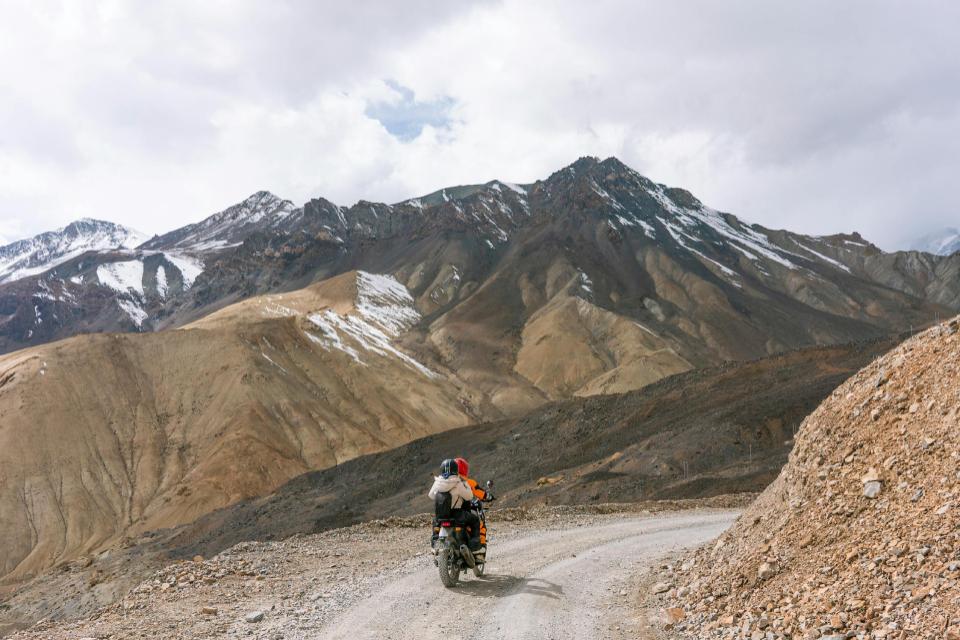
Deep in the rain-shadow of the Himalayas, where the wind-sculpted cliffs of red and ochre rise against a stark azure sky, lies a land that seems to have defied the very passage of time. This is the "Last Forbidden Kingdom" of Lo, known today as Upper Mustang. For centuries, this region remained hidden from the outside world, a sanctuary of pure Tibetan Buddhist culture protected by its remote geography and the high-altitude deserts of the Tibetan Plateau. While the landscape itself is a masterpiece of nature, the true heartbeat of Upper Mustang is felt during the Tiji Festival.
As we approach the Upper Mustang Tiji Festival 2026, the anticipation among cultural explorers and spiritual seekers is already profound. At Best Heritage Tour, we have spent decades navigating the ancient salt-trade routes that lead to the walled city of Lo Manthang. We have seen the long horns echo across the valleys and watched the masked monks swirl in the royal courtyard. This is more than a tour; it is a journey into the soul of an ancient civilization. In this definitive guide, we provide a deep dive into the history, the mythology, and the vital logistical details - including the Tiji Festival exact date and permit regulations - that you need to know for your 2026 expedition.
The Living Legend: What is the Tiji Festival?
The word "Tiji" is an abbreviation of the Tibetan phrase "Tempa Chirim," which translates to "Prayer for World Peace." It is a three-day ritualistic celebration that commemorates the victory of good over evil, specifically the triumph of the deity Dorje Jono over a malevolent demon.
The Myth of Dorje Jono and the Demon
The origins of the festival are rooted in a powerful legend that every local "Loba" child knows by heart. According to ancient lore, the region of Mustang was once terrorized by a demon named Ma Tam Ru. This creature was a bringer of chaos - he caused devastating droughts, spread strange diseases among the livestock, and dried up the sacred springs that the people relied on for survival.
The deity Dorje Jono (also known as Vajrakila or Dorje Phurba), an incarnation of the Buddha's compassion and power, fought a cosmic battle against this demon to save the Kingdom of Lo. For three days, the battle raged across the spiritual and physical planes. On the third day, Dorje Jono finally vanquished the demon, restoring the rains, healing the sick, and bringing peace back to the valley. The Tiji Festival is the yearly reenactment of this struggle, performed to ensure that the demon never returns and that the region remains protected for another year.
A Spiritual Requirement, Not Just a Performance
For the people of Mustang, the Tiji Festival is not "entertainment" in the Western sense. It is a vital spiritual necessity. The monks of the Chhode Monastery undergo weeks of rigorous preparation and meditation before the festival begins. The lead dancer, known as the Tsowo, must complete a three-month retreat to purify his mind and body before he can embody the deity Dorje Jono. When you stand in the courtyard of the Mustang Royal Palace, you are not just watching a play; you are witnessing a sacred act of purification intended to cleanse the world of negative energy.
Planning for the Tiji Festival Tour: Tiji Festival Exact Date in 2026
Timing is everything when it comes to visiting Upper Mustang. The festival is scheduled according to the Tibetan lunar calendar, which means the dates shift every year on the Gregorian calendar. For those looking to secure their spot for the 2026 season, the Tiji Festival exact date has been confirmed by the monastic authorities:
-
Day 1: May 14, 2026 (The Tsa Chham)
-
Day 2: May 15, 2026 (The Nga Chham)
-
Day 3: May 16, 2026 (The Rha Chham)
The festival always takes place in the third Tibetan month. May is the perfect time for this journey, as the winter snows have melted from the high passes, the weather is stable, and the visibility of the Dhaulagiri and Annapurna ranges is often at its peak.
The Restricted Kingdom: Permits Required for Tiji Festival
Upper Mustang is classified as a "Restricted Area" by the Government of Nepal. This status was designed to protect the fragile environment and the unique cultural heritage of the Loba people. Navigating the permit process is one of the most important aspects of planning your Upper Mustang Tiji Festival Tour 2026.
The USD 50 Per Day Regulation
The most significant logistical factor is the Restricted Area Permit (RAP). In a move to make the region more accessible while still maintaining its exclusivity, the government has moved away from the old fixed-fee model.
-
The Cost: The permit for Upper Mustang is USD 50 per day, per person.
-
The Minimum: Most travelers spend at least 10 days in the restricted zone (from Kagbeni and back), making the baseline cost USD 500. However, the flexibility of the per-day fee allows for shorter or longer customized itineraries depending on your pace.
-
Annapurna Conservation Area Permit (ACAP): In addition to the RAP, you also require an ACAP permit, which costs approximately USD 30 (NPR 3,000).
-
TIMS Card: The Trekkers' Information Management System card is also mandatory for safety tracking.
Essential Rules for Entry
You cannot simply buy these permits and walk into Upper Mustang alone. The law requires that:
-
There must be a minimum of two foreign travelers in the group to secure the Restricted Area Permit.
-
All travelers must be accompanied by a licensed guide from a government-registered trekking agency like Best Heritage Tour.
-
Permits must be processed in advance in Kathmandu; they cannot be obtained at the border checkpoints in Jomsom or Kagbeni.
The Three-Day of Rituals in Tiji festival
To understand how long is the Tiji Festival, one must look at the specific structure of the three days. Each day builds in intensity, culminating in a grand finale that involves the entire community.
Day 1: The Descent of the Thangka and "Tsa Chham"
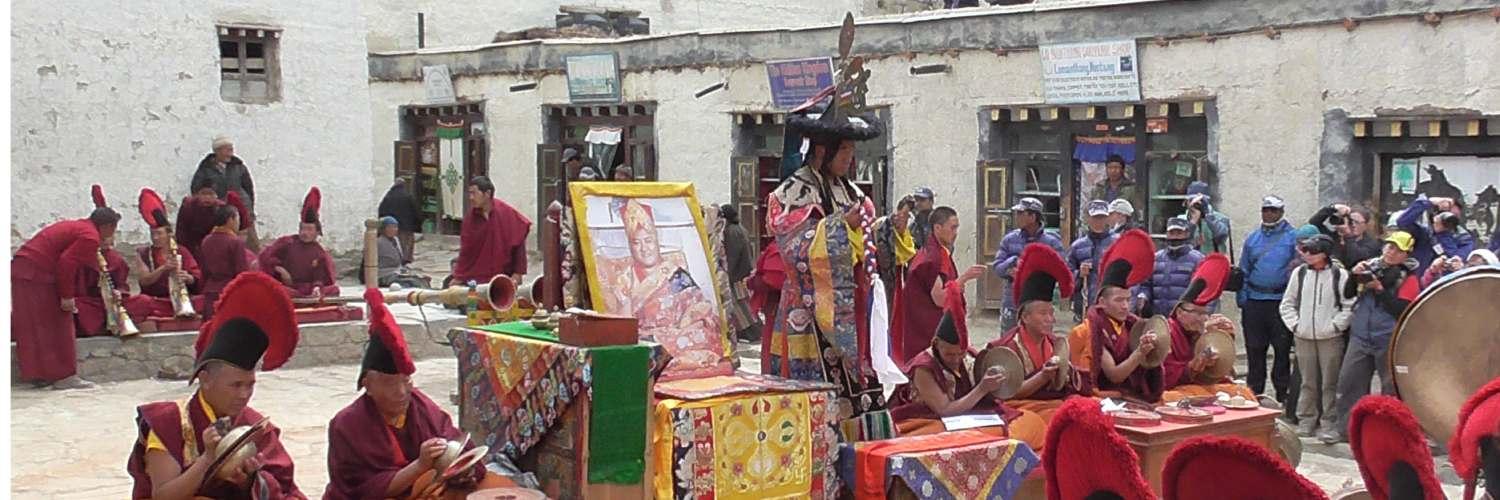
The festival begins with the sounding of the Dhungchen - massive Tibetan long horns that can be heard for miles across the desert. A giant, centuries-old thangka (religious tapestry) depicting Guru Rinpoche (Padmasambhava) is unfurled down the wall of the palace courtyard.
The monks then emerge in their first set of costumes. The Tsa Chham dance is performed to "clear the ground." The movements are slow and deliberate, designed to summon the protective deities and purify the space where the battle will take place. The air is thick with the scent of juniper incense and the low-frequency chanting of dozens of lamas.
Day 2: The Cosmic Struggle and "Nga Chham"
On the second day, the intensity heightens. This day represents the actual battle between Dorje Jono and the demon Ma Tam Ru. The monks wear more aggressive, colorful masks representing various animals and guardians of the Buddhist faith - lions, tigers, and mystical birds.
The Nga Chham dance is more rhythmic and vigorous. It depicts the deity's attempts to transform the demon's negative energy into something pure. Local residents from all over the "Seven Provinces" of Lo arrive in the courtyard, dressed in their finest traditional silks and turquoise jewelry, creating a sea of color against the white-washed walls of the palace.
Day 3: The Victory and "Rha Chham"
The final day is the climax of the Upper Mustang Tiji Festival. The ritual moves from the palace courtyard to the outskirts of the city. The monks perform the Rha Chham, the dance of victory.
The highlight of the afternoon is when the lead monk, representing Dorje Jono, carries a ritual effigy made of tsampa (barley flour). This effigy represents the remains of the demon. Amidst the firing of antique muskets and the cheering of the crowd, the effigy is cast out into the desert, symbolizing the final banishment of evil from the kingdom. The festival concludes with a blessing for the "Seven Villages," as the people pray for rain and a bountiful harvest.
The Heart of the Experience: Lo Manthang
While the festival is the focus, the stage itself - Lo Manthang - is equally captivating. Established in 1380 by the warrior king Ame Pal, Lo Manthang is one of the few remaining medieval walled cities in the world.
Within these walls, you will find:
-
Jampa Lhakhang: The "God House," built in the 15th century, containing massive gold-painted statues and some of the finest mandalas in the Himalayas.
-
Thubchen Gompa: A massive red assembly hall that dates back to the peak of the Kingdom of Lo's power.
-
The Royal Palace: A four-story white-washed structure that remains the residence of the cultural King of Mustang.
Walking the narrow alleys of Lo Manthang during Tiji feels like stepping into a living museum. You will see old women spinning wool on their rooftops, monks practicing their mudras (hand gestures) in quiet corners, and the vibrant life of the Loba people as they prepare for their most important social and religious event of the year.
Cultural Immersion: The Loba People
To visit during the Tiji Festival is to be invited into the community of the Loba people. Ethnically Tibetan, the Loba have preserved a way of life that has largely vanished across the border. Their language, their dress (the long bakhu for men and the colorful striped aprons for women), and their social structures remain remarkably intact.
During the festival, you have the rare chance to interact with these resilient people. You will see the reverence they hold for their cultural king and the deep faith they place in the Chhode monks. It is a time of social bonding; families travel for days from remote settlements like Ghiling and Dhakmar to attend the Tiji, making it the most significant social gathering in the Upper Mustang calendar.
Beyond the Festival: Exploring the Kingdom of Lo
If you are traveling all the way to Upper Mustang for the Tiji Festival Date in 2026, we recommend extending your exploration of the surrounding areas. The landscape of Upper Mustang is often compared to the American Southwest, but with 7,000m peaks on the horizon.
The Chhoser Sky Caves
Just a short jeep ride or horse trek from Lo Manthang lies the valley of Chhoser. Here, you can witness the "Sky Caves" - thousands of man-made caves carved into vertical cliffs. Some of these, like the Jhong Cave, are five stories high and contain dozens of rooms. Historians believe these were used as burial chambers, living quarters, and even meditation retreats over 2,000 years ago.
The Red Cliffs of Dhakmar
On your way to or from the festival, the village of Dhakmar offers some of the most surreal scenery in Nepal. The massive red cliffs here are said to be stained by the blood of the demon defeated by Guru Rinpoche. It is one of the most photogenic spots in the entire region.
Conclusion: A Once-in-a-Lifetime Invitation
The Upper Mustang Tiji Festival 2026 is not just an item to cross off a bucket list. It is an immersive cultural encounter that challenges your perspective on time, spirituality, and community. In a world that is becoming increasingly homogenized, the walled city of Lo Manthang remains a bastion of tradition.
As the "Prayer for World Peace" echoes through the red canyons on May 14th, 2026, the question is: will you be there to hear it? At Best Heritage Tour, we pride ourselves on being more than just a travel company. We are your bridge to this ancient kingdom. We handle the complex permits, the challenging logistics, and the cultural nuances so that you can simply be present in the moment.
Secure Your Journey to the Forbidden Kingdom
Phone / WhatsApp / Viber: +977-9851149197 / +977-9810043046
Email: info@bestheritagetour.com / bestheritagetour@gmail.com
Website: www.bestheritagetour.com
Office: Thamel Marg, Kathmandu, Nepal
Author: Best Heritage Tour
Date: 24th December, 2025