Crossing the roof of the world is a feat that stays with a person forever. If 2026 is the year you’ve marked for your Himalayan odyssey, the Thorong La Pass is likely the centerpiece of your dreams. As the highest point of the legendary Annapurna Circuit Trek, this pass is a transition between two worlds: the lush, emerald forests of Manang and the stark, arid, Tibetan-like landscapes of Mustang.
At Best Heritage Tour, we have watched the sunrise over these peaks for decades. We know that crossing Thorong La is 10% gear, 40% fitness, and 50% mental resilience. In this 2026 guide, we’re going beyond the basic maps to give you the raw, lived experience of what it takes to conquer the world’s highest trekking pass.
The Stats: Thorong La Pass Altitude and Geography
Before you lace up your boots, let’s look at the numbers. The Thorong La Pass altitude sits at a staggering 5,416 meters (17,769 feet). To put that in perspective, you are standing higher than most permanent settlements on Earth and even higher than Everest Base Camp (5,364m).
The pass sits in the Damodar Himal range and serves as the vital link between the village of Manang to the east and the sacred temple of Muktinath to the west. In 2026, the geography remains as dramatic as ever, though shifting weather patterns mean that being prepared for "four seasons in one day" is no longer a suggestion - it’s a requirement.
Thorong La Pass Difficulty Level: A Brutally Honest Assessment
Is it hard? Yes. Is it impossible? Not at all.
The Thorong La Pass difficulty level is officially categorized as "Challenging." However, unlike peak climbing, you don't need ropes, ice axes, or technical mountaineering skills. It is essentially a very long, very high-altitude walk.
Why is it challenging?
-
Oxygen Deprivation: At the summit, you are breathing roughly 50% of the oxygen available at sea level. Every step feels like you're wearing lead boots.
-
The "Big Day" Endurance: The crossing day from Thorong Phedi to Muktinath is a 12-to-16-kilometer journey that takes 8 to 10 hours of grueling movement.
-
Temperature Extremes: Even in the "warm" months, pre-dawn temperatures at High Camp can plummet to -15°C (5°F).
Thorong La Pass Trek Duration: The 2026 Reality
The landscape of the Annapurna Circuit Trek has changed significantly due to road expansions in lower regions. In 2026, you have more flexibility than ever.
-
The Classic Circuit: 14 to 18 days. This remains the gold standard for proper acclimatization.
-
The Modern Short Circuit: 10 to 12 days. This version utilizes Jeep transfers to Chame or Dharapani, skipping the lower dusty roads to focus entirely on the high-altitude core.
-
The "Big Day" Breakdown:
-
Ascent: 4-6 hours from Thorong Phedi/High Camp to the summit.
- Descent: 3-5 hours of steep, knee-shaking downhill to Muktinath.
-
The 2026 Itinerary - Managing the Thorong La Pass Trek Duration
In the past, the circuit took 21 days. With the advent of mountain roads, the Thorong La Pass trek duration is now highly customizable. However, speed is the enemy of safety.
The Recommended 14-Day Strategic Itinerary
-
Day 1-3: Drive from Kathmandu to Besisahar and trek/drive to Chame (2,670m).
-
Day 4: Chame to Upper Pisang (3,300m). The views of Annapurna II begin here.
-
Day 5: Upper Pisang to Manang (3,540m). Take the high route through Ghyaru for better views and better acclimatization.
-
Day 6: Mandatory Rest Day in Manang. Visit the Himalayan Rescue Association (HRA) for their daily altitude lecture.
-
Day 7: Manang to Yak Kharka (4,110m). A short, slow walk.
-
Day 8: Yak Kharka to Thorong Phedi (4,450m).
-
Day 9: The Big Day. Phedi to Thorong La Pass (5,416m) and down to Muktinath (3,760m).
-
Day 10: Explore Muktinath and drive/trek to Jomsom.
-
Day 11-14: Return to Pokhara and then Kathmandu.
The Experience: A Day in the Life of a High-Pass Trekker
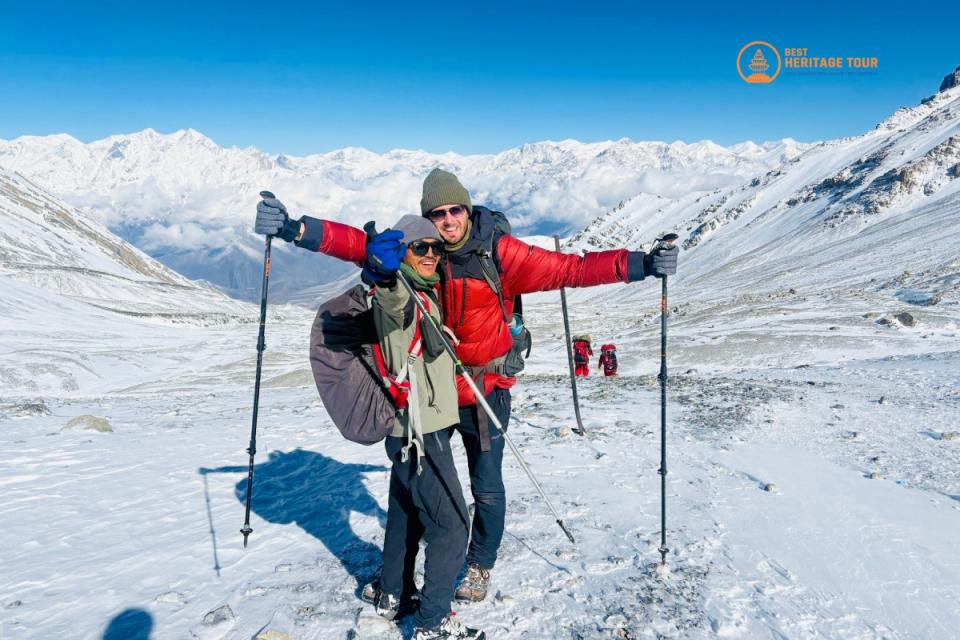
Imagine it’s 3:30 AM. Your headlamp cuts through the freezing darkness. The air is so crisp it stings your lungs. This is the start of your push for the pass.
The Ascent
Most trekkers leave Thorong Phedi (4,450m) or High Camp (4,880m) under a canopy of stars. The trail is a relentless series of switchbacks. In 2026, we’ve seen more trekkers using "micro-spikes" for the final 200 meters of ascent where patches of black ice can linger well into the spring.
The Summit (The "Tea House in the Sky")
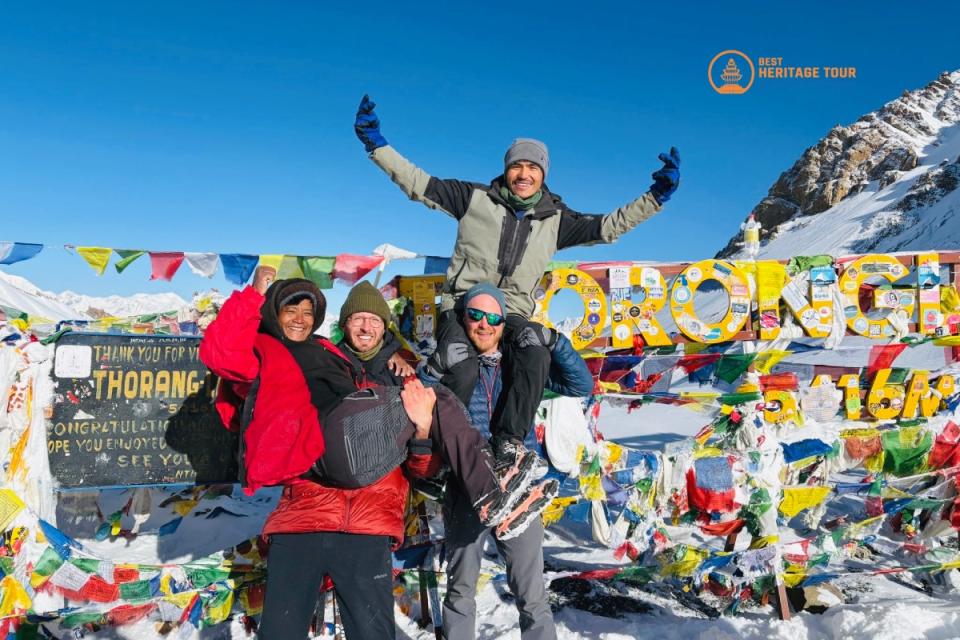
Reaching the summit is a sensory overload. There is a small stone hut that sells the world’s most expensive (and most appreciated) cup of hot tea. The sight of thousands of colorful prayer flags snapping in the wind, set against the backdrop of the Annapurna Massif and Dhaulagiri, is a moment of pure spiritual and physical triumph.
The Descent to Muktinath
Many believe the climb is the hardest part, but your knees might disagree. You will drop nearly 1,600 vertical meters in a single afternoon. The terrain shifts from snow and ice to loose scree, and finally to the desert-like vistas of the Mustang region.
Thorong La Pass Crossing Tips
After years of leading expeditions through trekking Nepal 2026 routes, our guides have distilled their knowledge into these five "Golden Rules":
1. The Manang Rule (Acclimatization)
Never, under any circumstances, skip your acclimatization days in Manang (3,540m). Use this time to hike to Ice Lake or Gangapurna Lake. You are teaching your blood how to carry more oxygen. If you rush here, Thorong La will push back.
2. Hydration vs. Altitude
Altitude dehydrates you faster than a desert. We recommend 4 to 5 liters of water per day. In 2026, we strongly encourage the use of reusable bottles and purification tablets rather than buying plastic bottles, as part of our commitment to keeping the Annapurna region pristine.
3. The 10:00 AM Deadline
The winds at Thorong La Pass are legendary. By noon, the "wind tunnel" effect between the peaks can make standing difficult. Our goal is always to have our clients at the summit by 9:00 AM or 10:00 AM at the latest to ensure a safe, calm descent.
4. Gear Evolution
Don't skimp on your socks or your sunglasses. Snow blindness is a real risk at Thorong La Pass altitude. Ensure your eyewear is Category 4 rated. For 2026, we also recommend a lightweight power bank; cold temperatures drain phone batteries in minutes, and you’ll want those summit photos!
5. Listen to the "Khumbu Cough" and Other Signs
If you develop a persistent dry cough, a headache that won't go away with water and rest, or loss of coordination, descend immediately. The mountains will always be there; your health is what matters.
Why the Annapurna Circuit Still Matters in 2026
With the rise of road construction, some purists say the "Circuit is dead." We disagree. While the low-altitude walking has changed, the Nepal high altitude trek experience remains untouched.
In 2026, the trek is more about "choice." You can choose to skip the dusty road sections and spend those saved days exploring side trails like Tilicho Lake (the world's highest lake) or the hidden Nar Phu Valley. The heart of the Annapurna - the culture of the Thakali and Manangi people - remains as warm and welcoming as it was fifty years ago.
Conclusion
The Thorong La Pass is a rite of passage. It is a place where the air is thin but the spirit is thick with resolve. When you stand at 5,416 meters, looking out over the vastness of the Himalayas, the stresses of modern life seem to vanish. You are left with only the essentials: your breath, your footsteps, and the incredible beauty of the natural world.
2026 is the year to challenge yourself. Whether you are a seasoned trekker or a first-time adventurer, the Annapurna Circuit and its crown jewel, the Thorong La, offer an experience that is simply unmatched.
Start Your Journey with Best Heritage Tour
Don't leave your Himalayan dreams to chance. Partner with the local experts who live and breathe these trails. Whether you need a full-service trek or just a professional Annapurna trek guide, we are here to ensure your journey is safe, memorable, and life-changing.
Contact Details:
Phone / WhatsApp / Viber: +977-9851149197 / +977-9810043046
Email: info@bestheritagetour.com / bestheritagetour@gmail.com
Website: www.bestheritagetour.com
Office: Thamel Marg, Kathmandu, Nepal
Author: Best Heritage Tour
Date: 2nd January, 2026