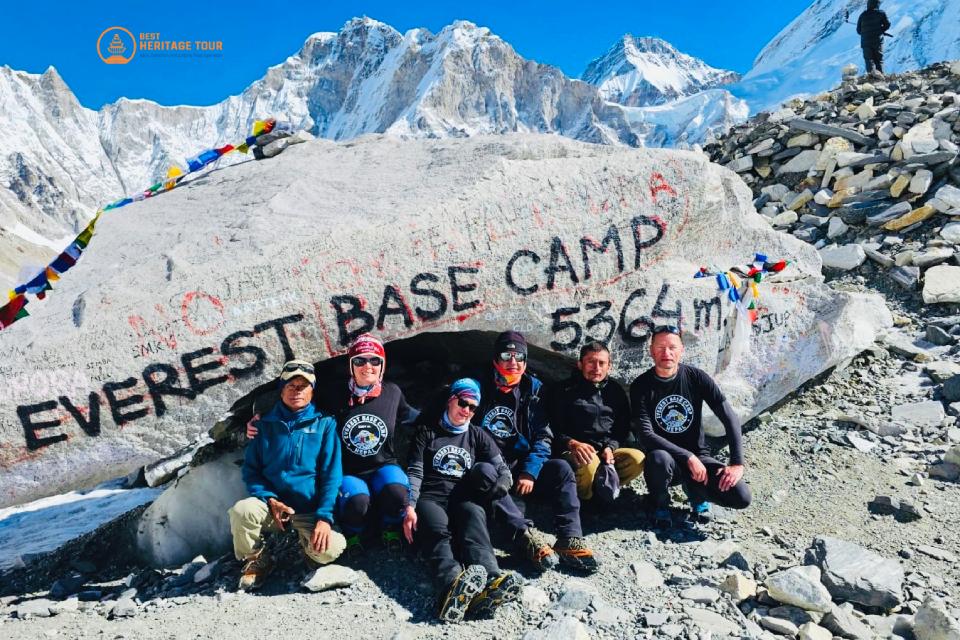
For many, the trek to Everest Base Camp is a physical challenge - a test of lungs and legs against the thin air of the Khumbu. But for those who pause at the crest of the ridge in Tengboche, the journey transforms into something far more profound.
At Best Heritage Tour, we believe that travel should be more than just a series of checkpoints. It should be an immersion into the soul of a destination. There is no place in the Nepal Himalayas that captures this soul quite like Tengboche Monastery (also known as Dawa Choling Gompa). Perched at a staggering altitude of 3,867 meters (12,687 feet), this sacred site isn't just a resting point; it is the spiritual heartbeat of the Sherpa people and a gateway to the heavens.
In this guide, we invite you to discover the history, the views, and the deep-rooted spirituality that make Tengboche a must-visit destination for every Himalayan traveler.
The Legacy of Tengboche: A Story of Resilience
The history of Tengboche Monastery is as dramatic as the peaks that surround it. Founded in 1916 by Lama Gulu, the monastery was built on a site that had been prophesied centuries earlier by the saint Lama Sangwa Dorje. He envisioned a place where the teachings of the Nyingmapa lineage - the oldest school of Tibetan Buddhism - could thrive amidst the clouds.
However, the path of this spiritual sanctuary has not been easy. Over the last century, Tengboche has faced two devastating events:
-
The 1934 Earthquake: A massive tremor leveled much of the original structure. It was later meticulously rebuilt by the local community.
-
The 1989 Fire: A tragic electrical short circuit caused a fire that consumed the monastery’s ancient manuscripts, delicate thangkas (religious paintings), and its grand statues.
What you see today is a testament to the unwavering faith of the Sherpa community. With help from international donors and the local people, the monastery was once again restored to its former glory. When you walk through its gates, you aren't just entering a building; you are entering a monument to human resilience.
A Grandstand for the Gods: The Views from the Ridge
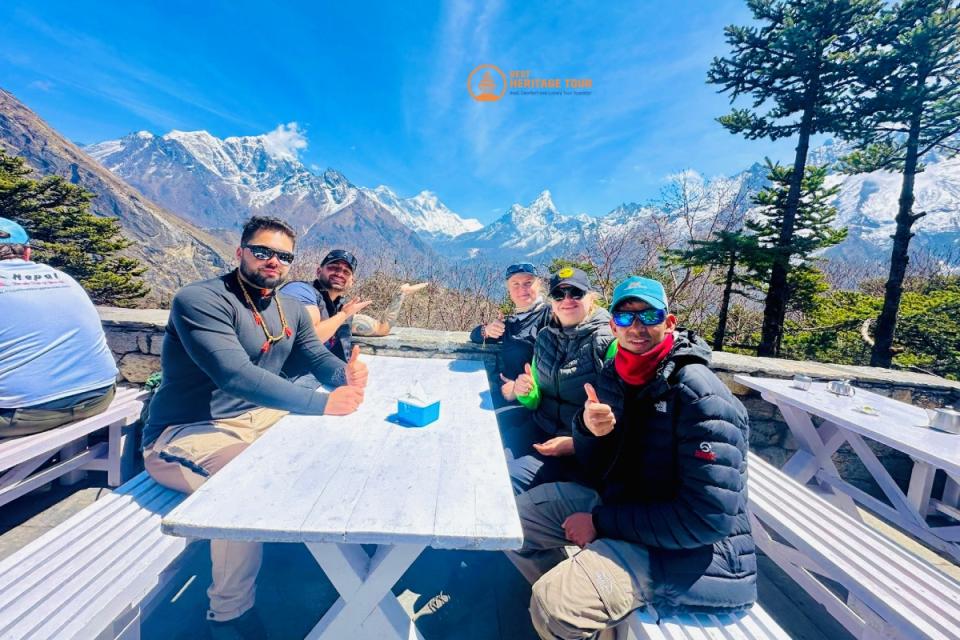
Ask any seasoned trekker where the best view in the Khumbu is, and they will likely point you toward the courtyard of Tengboche. While the goal for many is the base of the world's highest peak, the panoramic vista from this monastery is arguably more beautiful.
-
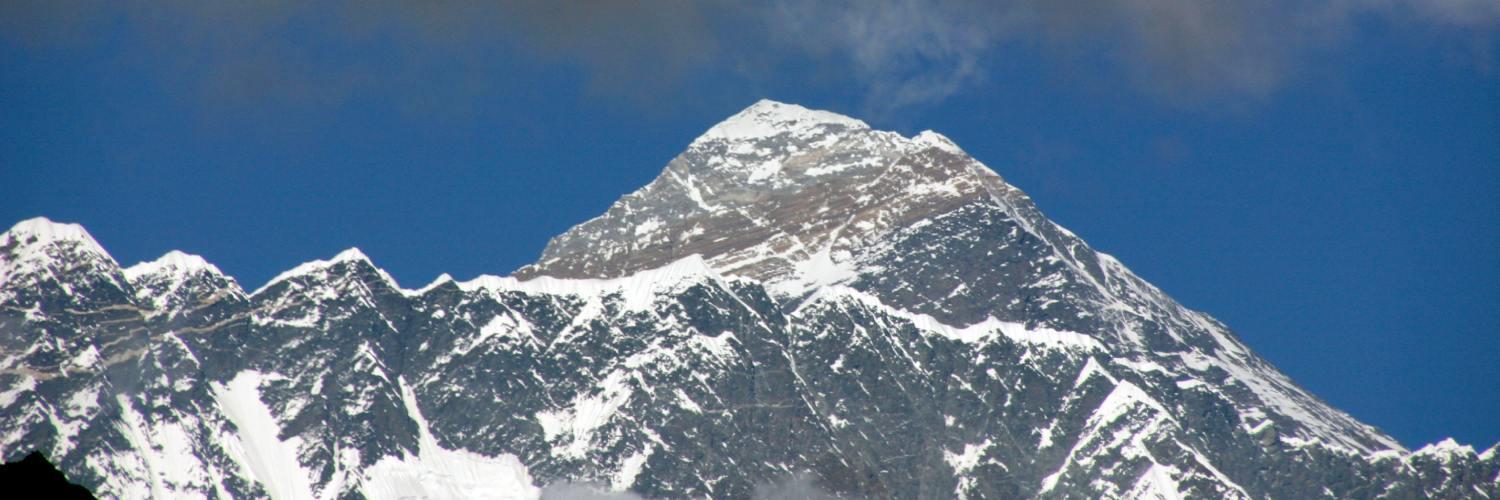
Mount Everest (8,848m): Looming in the distance, the "Mother Goddess of the World" (Chomolungma) peeks over the Lhotse-Nuptse wall.
-
Ama Dablam (6,812m): Often called the "Matterhorn of the Himalayas," this iconic peak stands directly across from the monastery. Its soaring ridges and hanging glaciers make it one of the most photographed mountains in the world.
-
Lhotse and Nuptse: These giants form a dramatic backdrop, their jagged summits piercing the deep blue Himalayan sky.
At sunrise, the first rays of light hit the summit of Everest, turning the snow into liquid gold. As a traveler with Best Heritage Tour, we often recommend spending an extra night here just to witness this spectacle in the quiet of the morning.
Experiencing Himalayan Spirituality
Tengboche is the leading Buddhist center in the Khumbu region, governing several smaller monasteries and nunneries. For trekkers, it offers a rare glimpse into the daily lives of the monks who call these heights home.
The Daily Puja (Prayer Ceremony)
Twice a day - typically in the early morning and mid-afternoon - the air at Tengboche is filled with the rhythmic sound of chanting, the deep resonance of long horns (dungchen), and the clashing of cymbals. Visitors are often welcome to observe the Puja ceremonies inside the main prayer hall (Dokhang).
Inside, you will find a massive 3.5-meter statue of Shakyamuni Buddha, flanked by Manjushri (the deity of wisdom) and Maitreya (the future Buddha). The walls are adorned with intricate murals and colorful silk thangkas that tell stories of enlightenment and the triumph of good over evil.
The Mani Rimdu Festival
If you are planning your trip for the autumn, you might be lucky enough to witness the Mani Rimdu Festival. Usually held in late October or November (following the Tibetan lunar calendar), this 19-day festival is the most important event for the Sherpa community.
The public celebrations last for three days and include:
-
Masked Dances (Chham): Monks wear elaborate costumes and masks to perform symbolic dances that depict the victory of Buddhism over ancient, malevolent forces.
-
The Sand Mandala: A beautiful, intricate universe created entirely from colored sand, which is ritually destroyed at the end of the festival to symbolize the impermanence of life.
-
Blessings: Thousands of pilgrims travel from across the Khumbu to receive blessings from the High Lama.
Planning Your Visit: What You Need to Know
How to Get There
Tengboche is located on the classic route to Everest Base Camp. Most travelers begin their journey with a flight from Kathmandu to Lukla, followed by a two-day trek to Namche Bazaar. From Namche, a steady 5-to-6-hour hike through rhododendron and pine forests brings you to the ridge of Tengboche.
Best Time to Visit
-
Spring (March to May): The rhododendrons are in full bloom, adding splashes of pink and red to the trail. The weather is stable, and the views are clear.
-
Autumn (September to November): This is the peak trekking season. The air is crisp, the visibility is at its best, and you have the chance to experience the Mani Rimdu Festival.
Cultural Etiquette
As a guest in this sacred space, we ask our travelers to follow these simple rules of respect:
-
Remove your shoes before entering any temple or prayer hall.
-
Walk clockwise around the monastery, stupas, and mani stones (prayer walls).
-
Ask for permission before taking photos of the interior or the monks.
-
Dress modestly: Ensure your shoulders and knees are covered.
-
Silence is golden: Keep your voice low while ceremonies are in progress.
Why Tengboche Matters to the Trekker
For many, the climb from the Dudh Koshi River up to Tengboche is the most grueling part of the trek. But as you reach the top and the monastery comes into view, the exhaustion tends to vanish.
There is a palpable energy here - a sense of peace that is hard to find anywhere else. It is a place where many climbers stop to receive a "Khata" (a white ceremonial scarf) and a blessing for a safe journey toward the summit of Everest. Even if you aren't climbing to the top of the world, a blessing at Tengboche feels like a spiritual "reset" for the soul.
Final Thoughts
Tengboche Monastery is more than just a landmark on a map. It is a symbol of the harmony between nature and spirit. Whether you are a seasoned trekker or a first-time traveler to Nepal, standing in the shadow of Ama Dablam while the monks' chants echo through the valley is an experience that stays with you long after you’ve returned home.
At Best Heritage Tour, we specialize in creating journeys that honor these sacred spaces. We don't just show you the mountains; we introduce you to the culture that makes them majestic. We can customize an itinerary that aligns with the Mani Rimdu Festival dates or arrange a private audience with a local Lama for a truly personal experience.
Contact Best Heritage Tour today to start your Himalayan adventure!
Phone / WhatsApp / Viber: +977-9851149197 / +977-9810043046
Email: info@bestheritagetour.com / bestheritagetour@gmail.com
Website: www.bestheritagetour.com
Office: Thamel Marg, Kathmandu, Nepal
Author: Best Heritage Tour
Date: 8th January, 2026