When you think of Nepal, your mind immediately conjures images of the colossal, snow-capped Himalayas. And while eight of the world's ten highest mountains certainly provide the most majestic backdrop imaginable, the true genius of Nepal's landscape photography lies in its extraordinary vertical diversity.
Within a few hours of travel, you can move your lens from the sub-tropical jungles of the Terai (around 60 meters above sea level) to the high alpine meadows (over 4,000 meters). This rapid change in elevation creates a dramatic and unique collection of subjects that no other single country can match.
For landscape photographers seeking depth, texture, and variety in their portfolio, Nepal is a Dream Destination. At Best Heritage Tour (BHT), we specialize in photography tours designed to maximize your time in the most photogenic zones, ensuring you capture every layer of this stunning nation.
Here is the definitive guide to why Nepal is the ultimate choice for your next landscape photography expedition.
The Vertical Layers of Nepal's Landscape
Nepal's landscape is comprised of three distinct geographical belts, each offering a unique photographic challenge and reward.
1. The High Himalaya: The Ultimate Grandeur
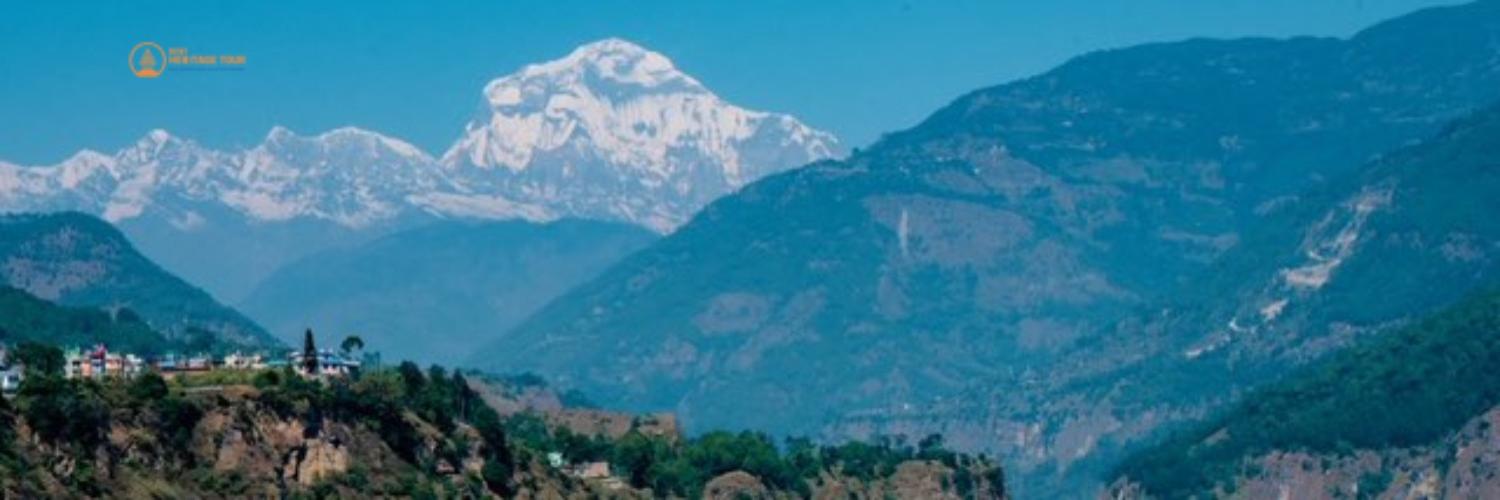
The colossal scale of the Everest, Annapurna, and Langtang ranges provides the world's most dramatic wide-angle compositions.
-
The Subject: The sheer magnitude of the peaks, often featuring five of the world's highest mountains visible from a single viewpoint.
-
The Shot: The classic Himalayan Sunrise Photography captured from vantage points like Sarangkot (Pokhara) or Kala Patthar (Everest Region). The golden and pink light ("alpenglow") hitting the snow-capped summits provides a warm contrast to the deep blue sky.
-
Technique Tip: Use a wide-angle lens (16-35mm) to emphasize the scale, but don't forget your telephoto lens (200-500mm) to compress the distant peaks and make them look even more massive.
2. The Middle Hills: Cultural & Terraced Textures
The mid-hills, home to the majority of Nepal's population, offer a perfect blend of natural beauty and human architecture. This is where culture integrates seamlessly into the land.
-
The Subject: The breathtaking Rice Terrace Photography Nepal. The hillsides are carved into intricate, sweeping steps that change color dramatically with the seasons.
-
The Shot: The deep, curved patterns of the terraces, often incorporating a lone farmhouse, a trekking path (a natural leading line), or a local farmer for scale and context.
-
Seasonal Tip:
-
Monsoon (June-August): Lush, vibrant green, and often misty, great for moody shots.
-
Autumn (September-November): Golden and harvest yellow, offering the warmest color palette.
-
3. The Terai Plains: Sky and Water
The southern plains, though low in elevation, offer vast, open skies and water bodies that are perfect for capturing light, reflections, and wildlife within the landscape.
-
The Subject: The wide, dramatic skies, jungle silhouettes, and the serene rivers of Chitwan National Park and Bardia National Park.
-
The Shot: Silhouettes of Sal trees, a Rhino or deer drinking at a riverbank at dawn, or a dramatic sunset over the flat expanse of the plains.
-
Gear Tip: Bring a Polarizing Filter to manage the strong tropical light and enhance the deep blue of the sky and the reflections in the water.
Must-Visit Landscape Photography Spots
While the entire country is photogenic, these locations provide the highest density of landscape opportunities:
|
Location |
Primary Subject |
Best Time to Shoot |
Photographic Focus |
|---|---|---|---|
|
Sarangkot (Pokhara) |
Annapurna & Machhapuchhre Sunrise |
Autumn (Oct-Nov) for clarity |
Golden Hour, Telephoto compression |
|
Gokyo Lakes (Everest) |
Turquoise Lakes & Reflection of Everest |
Morning (still water) |
Symmetry, High-altitude contrast |
|
Nagarkot / Dhulikhel |
Panoramic Himalayan Views (near KTM) |
Early morning (pre-sunrise) |
Layers of hills, Long exposure clouds |
|
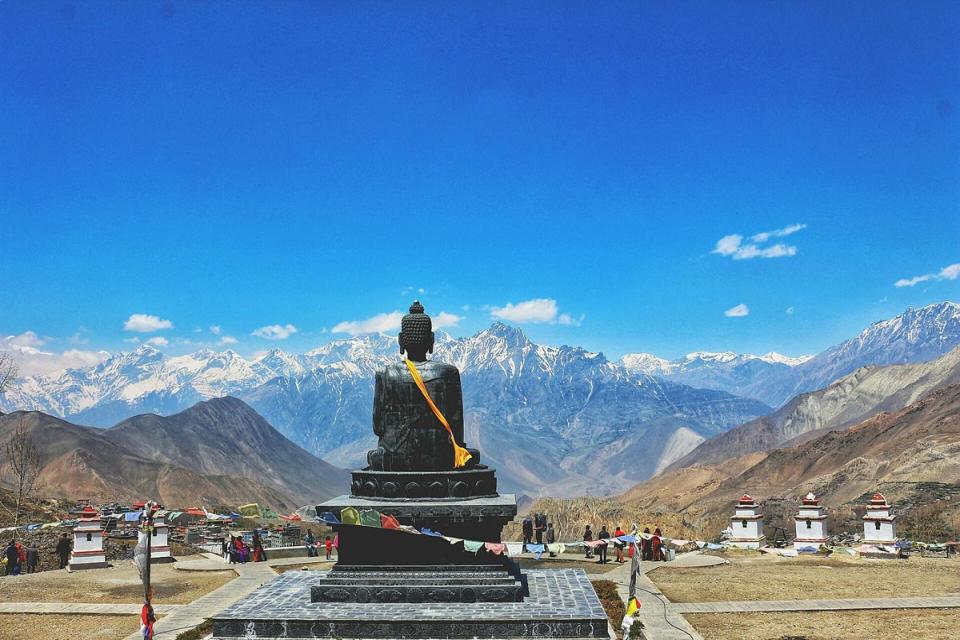
Upper Mustang |
Arid, Desert-like Canyons |
Mid-day (for rock texture) |
Contrast, Geology, Wide-angle vistas |
|
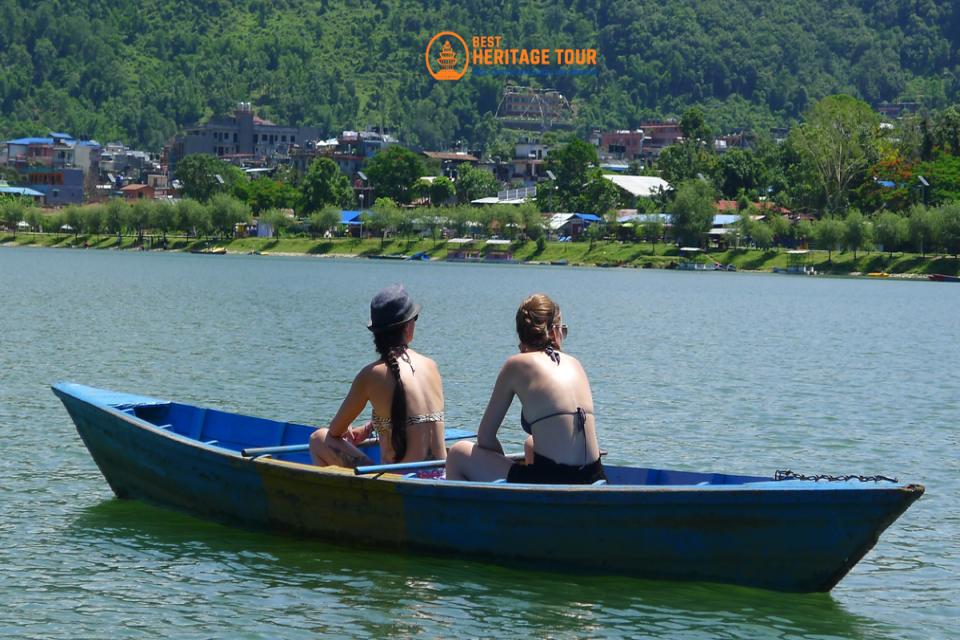
Phewa Lake (Pokhara) |
Phewa Lake Reflections Photography |
Blue Hour & Sunrise |
Foreground elements (boats), Water reflection |
The Essential Ingredient: People in the Landscape
What makes Nepal Landscape Photography truly unique is the presence of its rich culture and people, providing scale, context, and a powerful narrative to the epic scenery.
-
Human Scale: A solitary Sherpa guide, a line of trekkers, or a colorful lodge against the massive backdrop of Everest instantly conveys the immense scale of the mountains.
-
The Cultural Frame: Incorporate foreground elements like Mani walls, prayer flags, or a winding trekking trail (a strong leading line) to anchor the immense landscape to a human story.
-
Village Life: Photographing a traditional village like Namche Bazaar or Bandipur nestled into the hillside shows the harmony between nature and traditional architecture, adding depth to the purely scenic shot.
Conclusion: When to Capture Your Masterpiece
The visibility of the Himalayan range is the primary factor for optimal Nepal Landscape Photography.
Nepal is not just a good place for landscape photography; it is the place where the grandeur of the highest mountains meets the intimacy of ancient culture and terraced earth. Best Heritage Tour provides the expert logistics, local permits, and photographic guidance to ensure your lens captures the complete, layered beauty of this Nepal Photographer's Dream Destination.
Ready to capture the world's most diverse landscape? Contact us today to tailor your Nepal Photography Tour.
Phone / WhatsApp / Viber: +977-9851149197 / +977-9810043046
Email: info@bestheritagetour.com / bestheritagetour@gmail.com
Website: www.bestheritagetour.com
Office: Thamel Marg, Kathmandu, Nepal
Author: Best Heritage Tour
Date: 24th December, 2025