In the remote foothills of the Himalayas, where sheer rock faces meet the deep blue sky, a spectacular and perilous ritual unfolds. This is the stage for the Nepal Honey Hunting Tour, an age-old tradition that has catapulted beyond a local practice to become one of the world's most sought-after cultural adventures. It is a tradition that connects the brave men of the Gurung and Magar communities to their ancestors, to the gods of the cliffs, and to the massive, wild hives of the world’s largest honeybee.
The fame of this tour is multifaceted: it’s not just the honey, nor is it merely the adrenaline of watching a man hang hundreds of feet in the air. It is the perfect convergence of ancient Cultural Heritage, unique Himalayan Biodiversity, and a display of human Courage and Skill that is rarely witnessed in the modern world.
For the cultural explorer, the adventure enthusiast, and the documentary photographer, the Honey Hunting Tour in regions like Lamjung and Myagdi offers an experience unmatched anywhere else on Earth. Best Heritage Tour (BHT) is dedicated to facilitating responsible, ethical, and authentic encounters, ensuring the tradition is preserved and the local communities are uplifted by your visit.
Here is the definitive, in-depth guide to the enduring fame of the Nepal Honey Hunting Tour.
The Star of the Show -Apislaboriosa The Himalayan Giant Honey Bee
The global renown of the Nepal Honey Hunting Tour begins not with the hunter, but with the bee itself: Apislaboriosa, the Himalayan Giant Honey Bee. This bee is the largest species of honeybee in the world, and its unique ecology dictates the entire tradition.
1. The Largest Bee in the World
-
Physicality: Workers of Apislaboriosa can measure up to 3 centimeters (1.2 inches) in length, dwarfing common bees. This size is necessary for survival in the harsh, high-altitude climate.
-
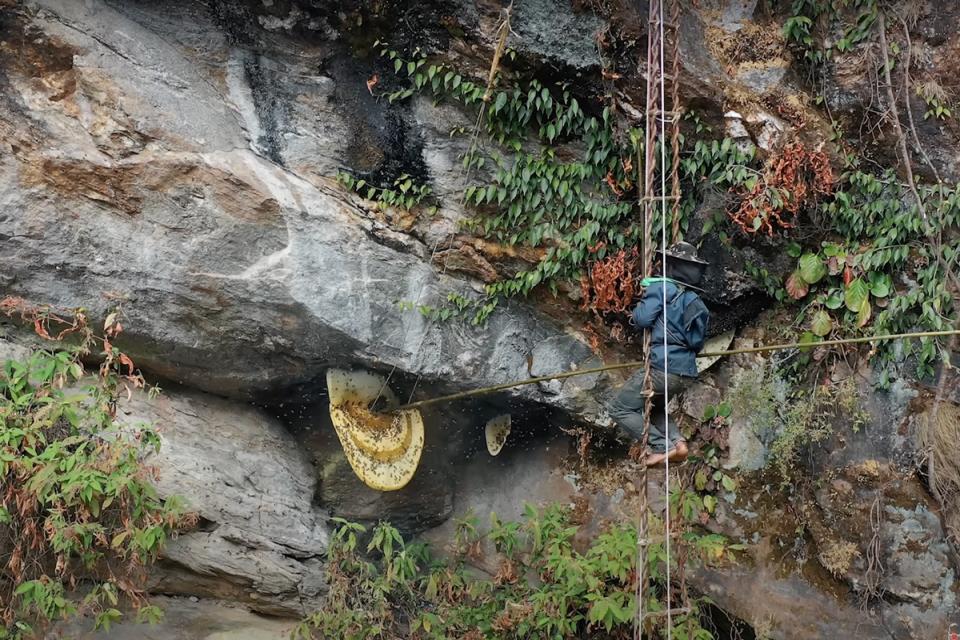
The Architect: This species is unique in that it builds enormous, open-air crescent-shaped hives, often measuring up to six feet (2 meters) wide, on the underside of rocky overhangs and steep, vertical cliff faces. These nests are built for protection from predators and to catch the sun on the southwest-facing cliffs.
-
Altitude Adaptation: These bees exclusively nest at altitudes generally between 2,500 and 4,100 meters above sea level - far higher than any other bee species. This high-altitude niche directly contributes to the scarcity and specialized nature of their product.
2. The Seasonal Migration and Sustainability
The Honey Hunting tradition is strictly controlled by the bee's lifecycle.
-
Twice-Yearly Harvest: The Gurung and Magar communities typically perform the hunt twice a year:
-
Spring Harvest (March to May): This is the most famous harvest, coinciding with the flowering of high-altitude rhododendrons. This honey contains the unique compound that gives it its notorious reputation (see Part IV).
-
Autumn Harvest (October to November): This honey is often collected from lower-altitude flowers and is prized as a food source for its clear, less intoxicating properties.
-
-
A Living Ecosystem: Experienced Gurung Honey Hunters are masters of sustainability. They never harvest the entire hive, ensuring the colony's central brood and enough honey are left for the bees to survive and return the following season. This long-term ecological knowledge is a key aspect of the cultural heritage tourists come to witness.
The Cultural Depth -Gurung and Magar Heritage
The true fame of the tour lies in its deep roots as an intangible cultural heritage, primarily preserved by the indigenous Gurung and Magar people of the mid-hills.
1. The Ritualistic Preparation and Spiritual Connection
For the Gurung and Magar, honey hunting is far more than a job; it is a spiritual ritual (Pooja) demanding respect and reverence for the mountain spirits and the bees themselves.
-
Appeasing the Gods: Before the perilous climb, hunters led by the Amecchi (master hunter) perform elaborate ceremonies. Offerings of rice, flowers, rice wine (raksi), and the sacrifice of a goat or chicken are made to appease the Cliff Gods and the bee deity, Bhramari Devi, to ensure a safe hunt and a plentiful yield.
-
The Rite of Passage: The practice serves as a demonstration of courage (Saahas) and a rite of passage for young men, solidifying their standing within the community. The knowledge and techniques - from tying the bamboo ropes to managing the fire smoke - are passed down orally, generation by generation.
-
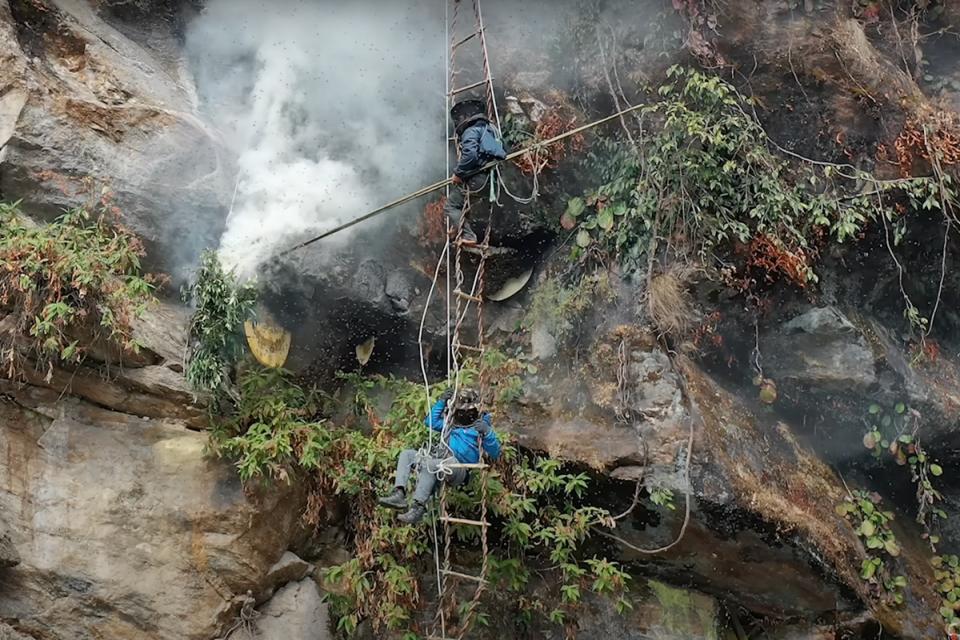
Communal Effort: The hunt is a collective affair, involving the entire village. While the lead hunter hangs from the cliff face, other villagers manage the ropes, the baskets (tokari), and the smoke-generating fire at the cliff's base, emphasizing the strong community unity embedded in the tradition.
2. The Traditional Technology
The raw, handcrafted nature of the tools highlights the hunters' reliance on ancestral knowledge and local materials.
-
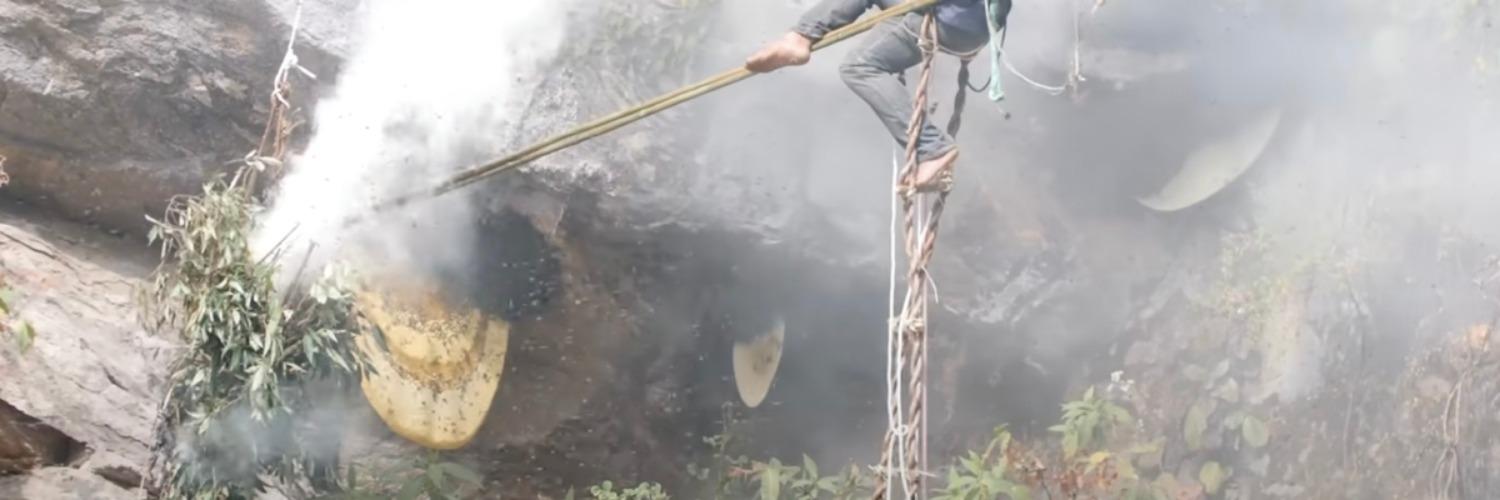
The Tango and Prang: The hunter's tools are simple yet ingenious. The Prang is the massive, handmade bamboo rope ladder that is anchored to tree roots or stable rock far above the hive. The Tango is a long, specialized bamboo pole used to slice the heavy honeycomb from the rock face.
-
Smoke, Not Poison: The hunters rely on thick, acrid smoke created from smoldering green leaves and wood to disorient and calm the bees. This time-tested method is crucial for safely approaching the hive while avoiding the aggressive, concentrated swarms.
The Thrill Factor - The Cliff and the Climb
The visual drama of the hunt - the sheer physics of the process - is what initially draws international attention, particularly from documentary filmmakers and adventure travelers.
1. A High-Altitude Spectacle
The hunt takes place on vertical cliffs ranging from 100 to 300 meters (330 to 1,000 feet) high, often with a deep river gorge yawning far below. The hunter's solitary figure, dangling mid-air, surrounded by a swirling cloud of bees and smoke, creates a breathtaking, almost unbelievable spectacle.
-
Fearlessness and Balance: The hunter must navigate the precarious, often slippery handmade ladder, sometimes twisting hundreds of feet in the air, using his core strength and centuries of practiced balance to stabilize himself while simultaneously using the long tango pole to cut the comb.
-
The Bee Sting Defense: Despite the smoke, stings are inevitable. The hunter typically wears minimal protection - often just local clothing. The acceptance of pain and risk underscores the dedication to the tradition.
2. The Destinations: Lamjung, Myagdi, and Kaski
Nepal Honey Hunting Tours are primarily focused in the mid-hills of the Gandaki Province, making them accessible from the tourism hub of Pokhara.
-
Lamjung District: Known for the Gurung villages of Ghanpokhara and Bhujung, which have successfully developed controlled, ethical tourism around the hunt. The treks here often combine the spectacle with cultural homestays and views of the Annapurna range.
-
Myagdi District: Villages like Darbang and Beni are renowned for their rugged cliffs and the Magar communities who uphold a similar tradition.
-
Kaski District: Locations near the Annapurna trekking regions, such as parts of Ghandruk, have also become popular sites for observation tours.
The Final Product - The Allure of "Mad Honey"
The most exotic and internationally famous element of the tour is the honey itself - specifically the springtime harvest, widely known as Mad Honey Nepal.
1. The Grayanotoxin Effect
-
The Source: During the spring, Apislaboriosa foragers collect nectar from the Rhododendron blossoms found at higher altitudes. This nectar contains grayanotoxins, naturally occurring neurotoxic compounds.
-
The Effects: When consumed in very small, controlled doses, this spring honey can produce a psychoactive effect - ranging from dizziness, a feeling of intoxication, slight hallucinations, and a tingling sensation, earning it the moniker "mad honey." In larger doses, it can be toxic, causing nausea, vomiting, and temporary hypotension.
-
Historical and Medicinal Value: The Mad Honey Nepal has been historically prized by local shamans and healers for its purported medicinal benefits, used traditionally for pain relief, high blood pressure, and as an energy booster. Its use by Gurung tribes dates back centuries, passed down as ancestral knowledge.
2. The Global Commodity
The unique properties of the spring honey have made it one of the world's most expensive and highly sought-after honeys, fetching high prices in international markets (particularly Japan, Korea, and Hong Kong) where it is valued for its unique properties.
-
Tourist Purchase: Tourists often seek to buy a small jar of authentic Mad Honey Nepal as a powerful souvenir, though agencies stress consuming it in tiny, controlled amounts and being mindful of international customs regulations.
Conclusion: A Journey of Courage and Culture
The fame of the Nepal Honey Hunting Tour is deserved. It is a fusion of extreme adventure and profound cultural heritage. It offers a unique window into the unwavering connection between an indigenous community and one of the most remarkable insects on the planet.
For the intrepid traveler, this tour provides a rare opportunity to witness human skill and courage operating at the highest level, while simultaneously supporting the conservation of the Apislaboriosa Giant Honey Bee and the unique traditions of the Gurung Honey Hunters.
Best Heritage Tour (BHT) organizes all the logistics - permits, safe transport to Lamjung or Myagdi, experienced cultural guides, and homestay arrangements - to ensure your focus remains on witnessing this spectacular and deeply respected ritual.
Are you ready to witness the living legend of the Himalayan Honey Hunters? Contact us today to secure your place for the next authentic spring or autumn harvest.
Phone / WhatsApp / Viber: +977-9851149197 / +977-9810043046
Email: info@bestheritagetour.com / bestheritagetour@gmail.com
Website: www.bestheritagetour.com
Office:Thamel Marg, Kathmandu, Nepal
Author: Best Heritage Tour
Date: 8th December, 2025