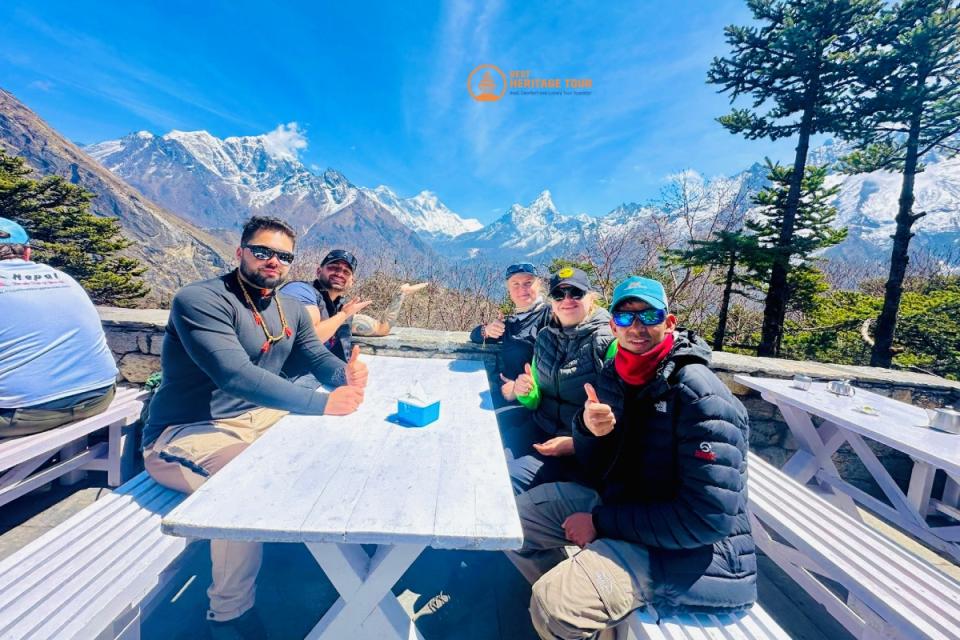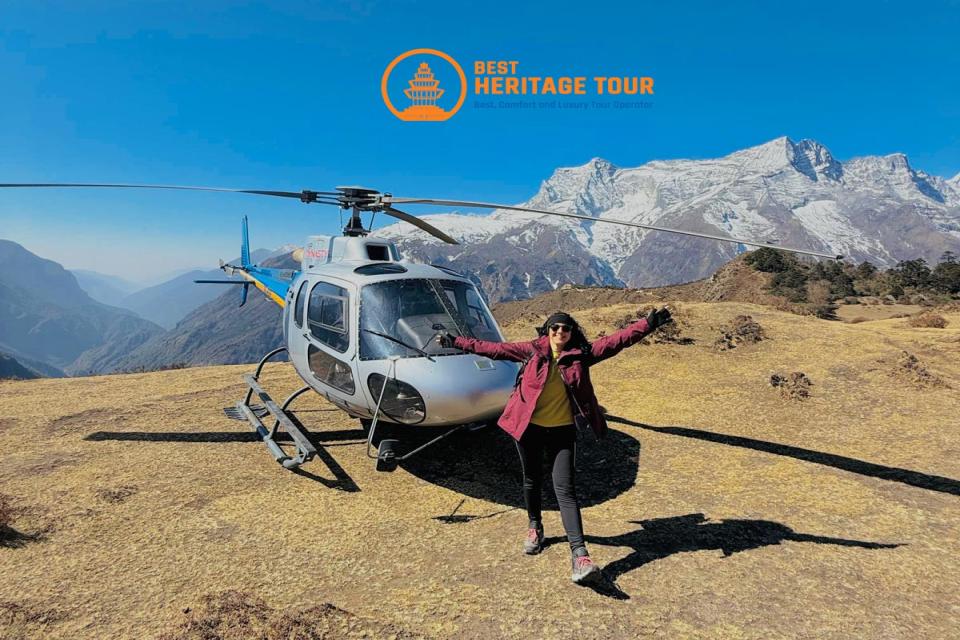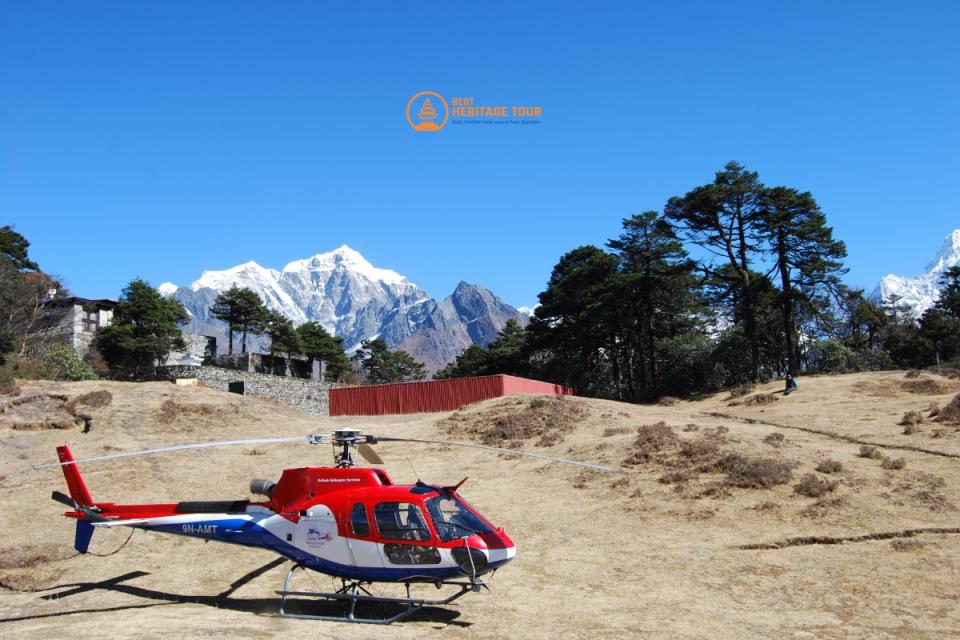
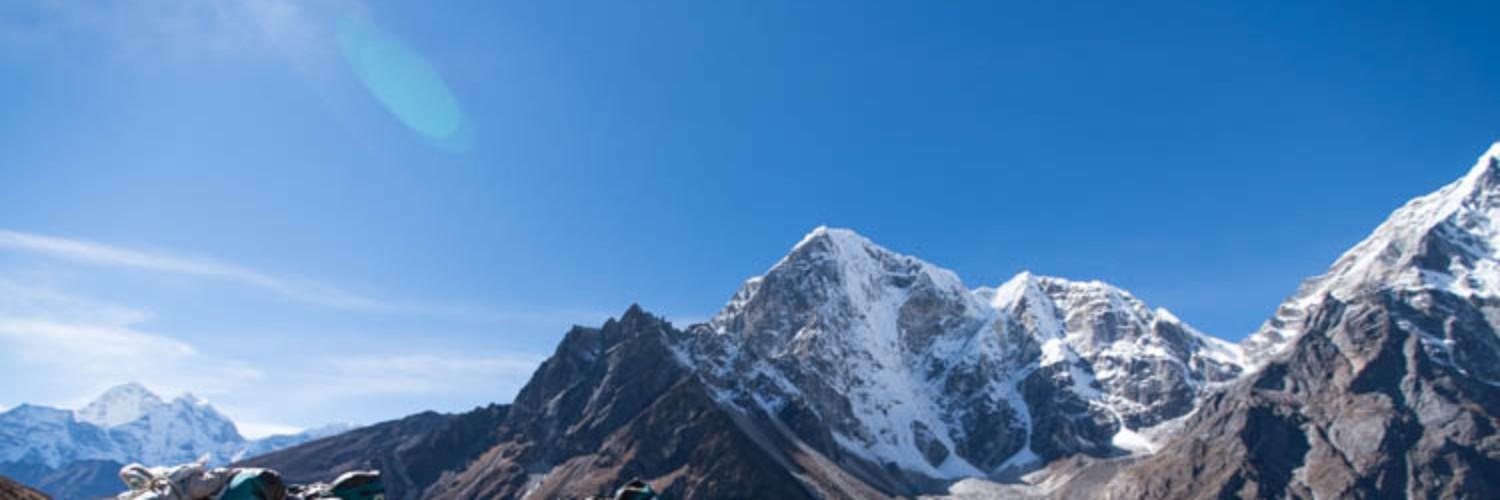
Standing at the foot of the world’s tallest mountain isn't just a physical achievement; it’s a sensory explosion. For most, the Everest Base Camp (EBC) trek is a once-in-a-lifetime journey through the heart of the Khumbu region, a place where jagged white peaks touch the heavens and Sherpa culture breathes life into the thin mountain air.
At Best Heritage Tour, we’ve led countless adventurers through these trails, and if there’s one thing we’ve learned, it’s that memories fade, but a well-captured photograph brings you right back to the moment the wind whipped against your face at 5,364 meters.
Whether you are an aspiring professional photographer with a full-frame mirrorless setup or a traveler with the latest iPhone, knowing where to point your lens is key. To help you document your journey, we’ve curated the 10 must-click Everest Base Camp photos that every trekker needs in their collection.
1. The "Gateway to Adventure": Landing at Lukla Airport
The journey begins with adrenaline. Tenzing-Hillary Airport in Lukla is famously known as one of the most dangerous airports in the world, but for photographers, it is a masterclass in scale and drama.
The Shot: Capture the tiny Twin Otter plane as it approaches the short, uphill runway carved into the side of a mountain.
Pro Tip: Position yourself near the perimeter fence or the lodges overlooking the runway. Use a fast shutter speed (at least 1/1000s) to freeze the motion of the aircraft against the backdrop of the lush, deep valleys of the lower Khumbu.
2. The Vertigo-Inducing Hillary Suspension Bridge
As you trek from Phakding to Namche Bazaar, you’ll cross several suspension bridges draped with colorful prayer flags. The highest and most iconic is the Hillary Suspension Bridge.
The Shot: A perspective shot from the middle of the bridge, looking down at the turquoise waters of the Dudh Koshi River far below. Alternatively, have a fellow trekker photograph you walking across, framed by the V-shaped valley.
Why it matters: This photo perfectly captures the "scale" of the Himalayas - showing just how small we are compared to the terrain.
3. The Amphitheater of Namche Bazaar
Namche Bazaar is the beating heart of the Sherpa community. Built into a natural horseshoe-shaped mountain bowl, the town is a kaleidoscope of brightly colored roofs, bustling markets, and stone-paved alleys.
The Shot: For the best view, hike up to the National Park Headquarters or the Everest View Hotel early in the morning. Looking back down at the town as the morning sun hits the colorful buildings with the peaks of Kongde Ri in the background is a quintessential EBC image.
Night Tip: If you have a tripod, Namche is the perfect place for a long exposure. The town lights glow like embers under a blanket of the Milky Way.
4. The Spiritual Soul: Tengboche Monastery
Perched on a ridge at 3,867 meters, Tengboche Monastery is the largest gompa in the Khumbu. It’s framed perfectly by the massive peaks of Everest, Lhotse, and the "Matterhorn of the Himalayas," Ama Dablam.
The Shot: Frame the ornate, colorful monastery gateway with Ama Dablam directly behind it. The contrast between the intricate Tibetan architecture and the raw, white granite of the mountains is breathtaking.
Cultural Note: Always ask for permission before photographing monks or the interior of the monastery. Respectful photography is part of the heritage experience.
5. Ama Dablam: The Photographer’s Muse
While Everest is the tallest, many trekkers agree that Ama Dablam is the most beautiful. Its sharp, soaring ridges and "mother's necklace" glacier make it a favorite for every lens.
The Shot: You’ll get your best views of Ama Dablam near Pangboche or Dingboche. Capture the peak during the "Golden Hour" - the hour before sunset - when the rock turns a fiery orange and the shadows deepen in the valleys.
6. The Memorial Chortens at Thukla Pass
The trek isn't just about the views; it’s about the history and the people. At the top of the steep climb from Thukla, you’ll find a plateau filled with stone memorials (chortens) dedicated to climbers who lost their lives on Everest.
The Shot: A poignant, close-up shot of a memorial draped in tattered prayer flags, with the peaks they once climbed looming in the distance.
The Intent: This photo tells the story of the mountain’s power and the respect every traveler must have for these giants.
7. The "Martian Landscape" of the Khumbu Glacier
As you approach Lobuche and Gorak Shep, the greenery disappears, replaced by a lunar landscape of rock, gravel, and ice.
The Shot: Wide-angle shots of the Khumbu Glacier. It looks like a frozen river of debris snaking through the valley. The textures of the grey lateral moraine against the blue-tinted ice are incredible for high-contrast black-and-white photography.
8. The Victory Moment: The Everest Base Camp Sign
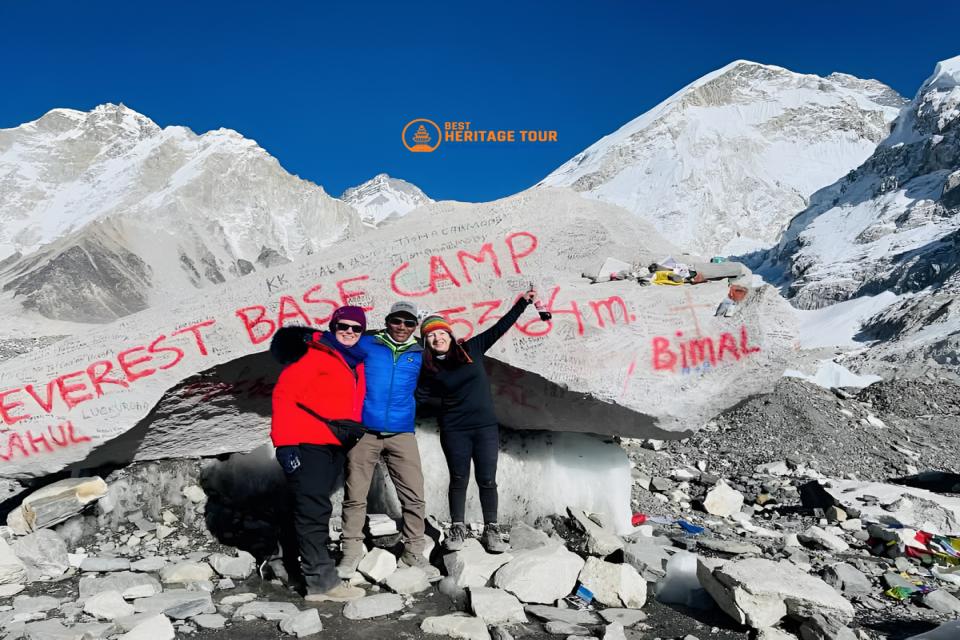
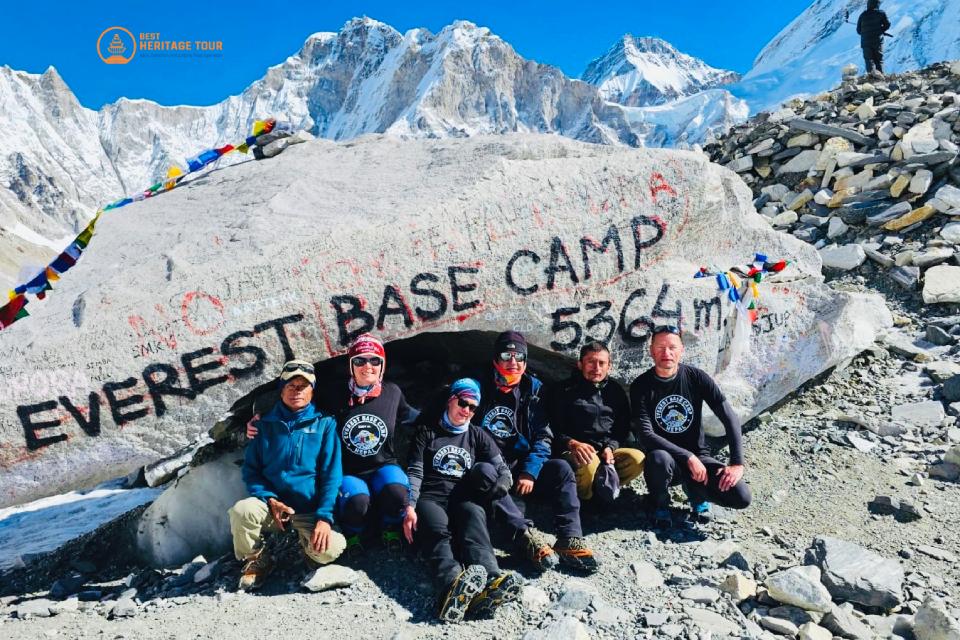
You’ve made it. After days of thin air and freezing temperatures, the iconic rock spray-painted with "Everest Base Camp 5364m" is the ultimate trophy.
The Shot: The "Victory Pose." Whether it’s a group hug, a solo "arms-wide" shot, or holding your national flag, this is the photo that proves you stood at the base of the world's highest peak.
Background Detail: During the spring climbing season (April-May), the base camp is a "yellow city" of hundreds of expedition tents. Capture the sprawl of the camp to show the sheer size of the Everest industry.
9. The Golden Giant: Everest from Kala Patthar
Interesting fact: You can't actually see the summit of Everest very well from Base Camp itself. For the most iconic view, you must climb Kala Patthar (5,545m).
The Shot: The "Money Shot." This is where you get the classic view of Everest, Nuptse, and Lhotse.
Pro Tip: Most people hike Kala Patthar for sunrise, but at Best Heritage Tour, we often recommend sunset. Why? Because as the sun sets in the west, it hits the face of Everest directly, turning the peak into a glowing pyramid of gold. At sunrise, the sun comes from behind Everest, leaving the face in shadow.
10. The Starry Himalayan Night
The air at 5,000 meters is incredibly thin and clear, making the Himalayas one of the best places on Earth for astrophotography.
The Shot: A long-exposure shot from outside your teahouse in Gorak Shep or Lobuche. With the Milky Way stretching across the sky and the silhouette of the mountains below, it’s a photo that feels truly out of this world.
Settings: Use a wide-angle lens, an aperture of f/2.8, and a shutter speed of about 20-25 seconds.
Essential Gear for Your Everest Photo Journey
To get these shots, you don't need to be a pro, but you do need to be prepared. The Khumbu environment is harsh on electronics.
|
Item |
Why You Need It |
|---|---|
|
Extra Batteries |
Cold weather drains batteries 50% faster. Keep them in your sleeping bag at night! |
|
Circular Polarizer |
Essential for cutting through haze and making the Himalayan sky look deep blue. |
|
Power Bank/Solar |
Charging at teahouses gets expensive the higher you go ($5-$10 per charge). |
|
Microfiber Cloth |
The trail is incredibly dusty. You’ll be cleaning your lens every hour. |
|
Dry Bag |
To protect your gear from sudden snow or rain. |
Why the "Human Element" Matters
While the mountains are the stars, don't forget the soul of the trek. Some of the most engaging photos you’ll take aren't of rocks and ice, but of the life on the trail:
-
The Yak Caravans: Capture the yaks with their ringing bells as they carry supplies up the trail.
-
The Sherpa Smile: A candid shot of your guide or a local child in a village.
-
The Teahouse Vibe: Steam rising from a bowl of garlic soup or trekkers huddled around a yak-dung stove in the evening.
Conclusion: More Than Just a Megapixel
At the end of your 12-to-15-day journey, you’ll return with thousands of photos. But the "best" photo isn't always the one that’s technically perfect. It’s the one that reminds you of the moment you pushed past your limits, the friends you made over ginger tea, and the overwhelming feeling of peace you felt standing among the giants.
At Best Heritage Tour, we don't just guide you to the base of a mountain; we help you experience the heritage, the culture, and the spirit of the Himalayas. We’ll make sure you’re in the right place at the right time to capture these 10 iconic moments - and a few secret ones of our own.
Ready to fill your camera roll with the world’s most beautiful landscapes?
Phone / WhatsApp / Viber: +977-9851149197 / +977-9810043046
Email: info@bestheritagetour.com / bestheritagetour@gmail.com
Website: www.bestheritagetour.com
Office: Thamel Marg, Kathmandu, Nepal
Author: Best Heritage Tour
Date: 20th January, 2026