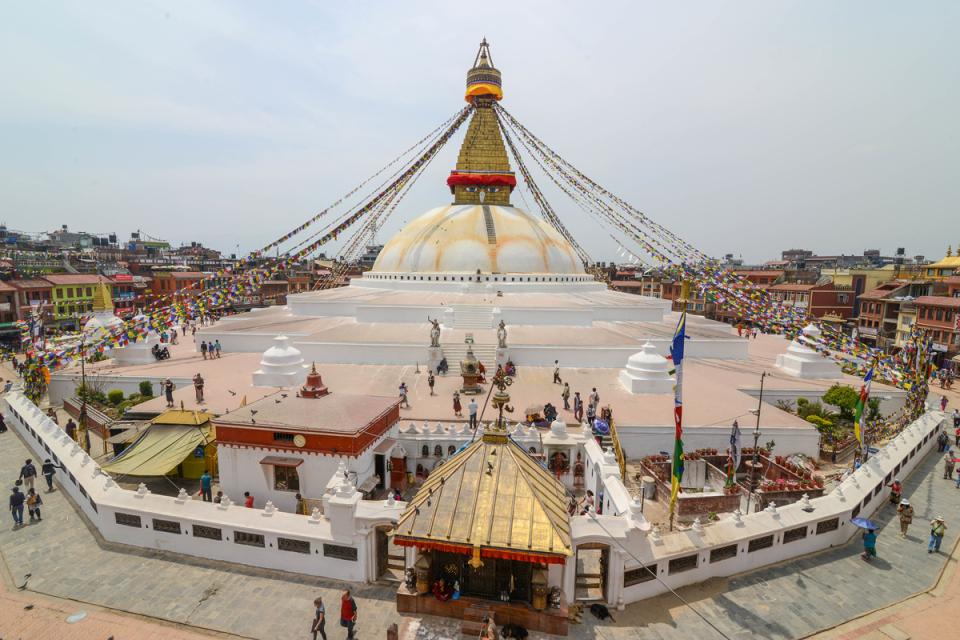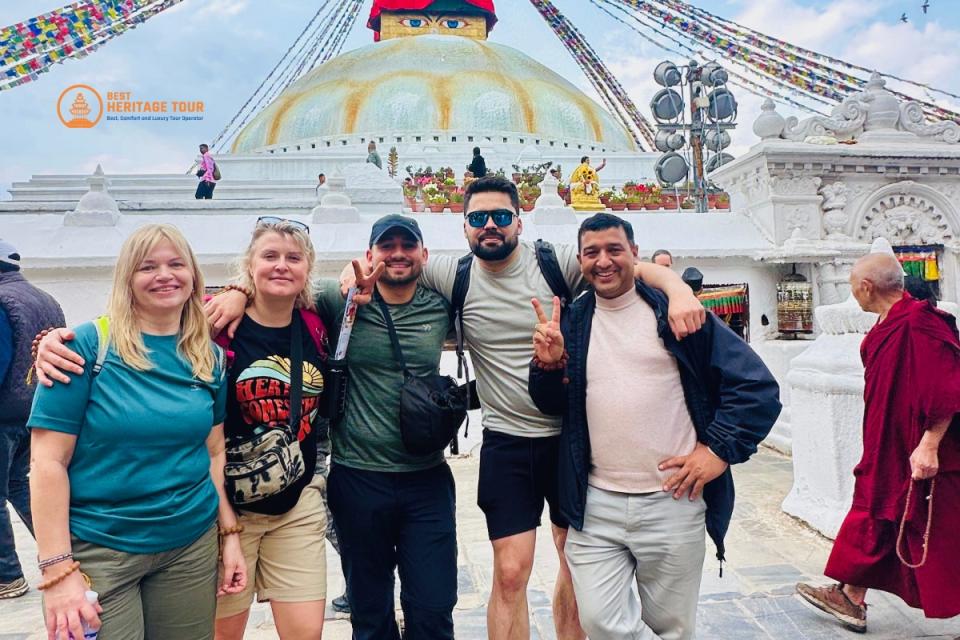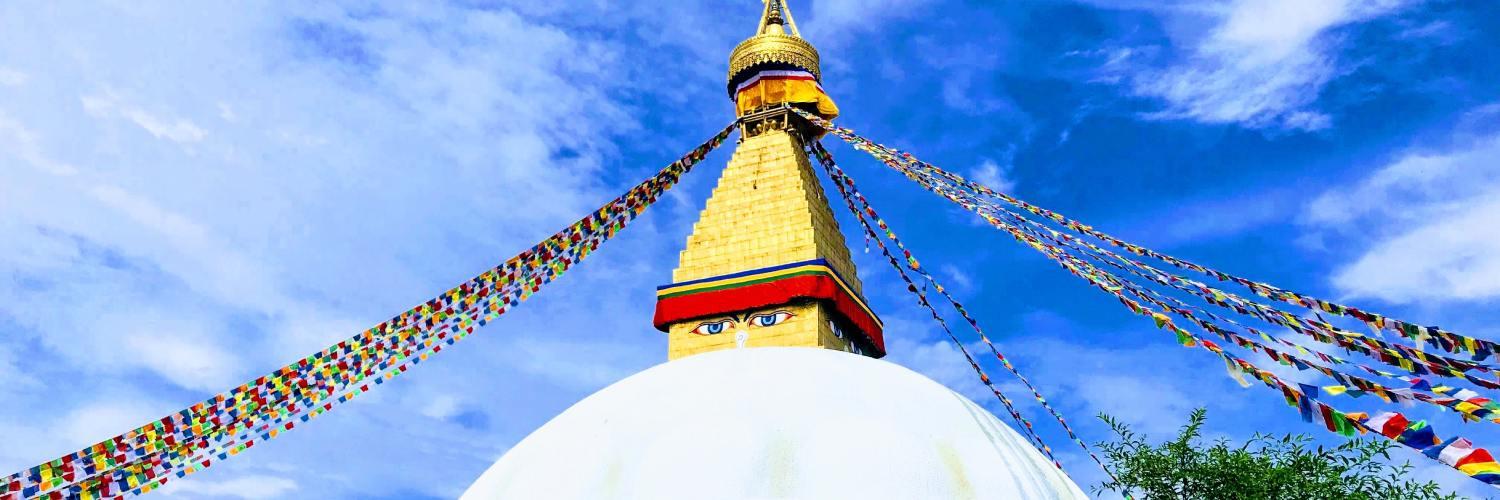
The massive, silent presence of the Boudhanath Stupa, with the all-seeing eyes of the Buddha gazing out over Kathmandu, is a profound experience in itself. But to truly understand the spiritual heartbeat of this UNESCO World Heritage Site, you must step off the main kora (circumambulation path) and explore the dozens of monasteries (gompas) that encircle it.
Since the Tibetan diaspora in 1959, Boudhanath has transformed into the most vital center for Tibetan Buddhism outside of its homeland. Each monastery, or gompa, is a vibrant cultural hub, representing a different lineage, a distinct architectural style, and a unique spiritual focus.
A visit to Boudhanath with Best Heritage Tour (BHT) is not complete without a tour of these sanctuaries. They offer a rare glimpse into the daily life of monks and the continuation of an ancient tradition.
Here is your guide to the most significant and accessible monasteries that define the spiritual landscape of Boudhanath.
The Four Pillars - Must-Visit Monasteries
These four monasteries are considered the most architecturally significant, historically important, and welcoming to foreign visitors, each representing a different school of Tibetan Buddhism.
1. Shechen Monastery (Nyingma Lineage)
-
Significance: Shechen is one of the six "mother" monasteries of the Nyingma school, the oldest tradition of Tibetan Buddhism. It was re-established in Nepal by the revered master Dilgo Khyentse Rinpoche after the original was destroyed in Tibet.
-
The Experience: This monastery is instantly recognizable for its breathtaking, rich architecture and stunning murals. Visitors are drawn to the peaceful inner courtyard, which is a perfect spot for quiet reflection.
-
What to See:
-
Architecture: Marvel at the vibrant, traditional colors and detailed gold-leaf work typical of the Nyingma tradition.
-
The Garden Cafe: Shechen features a tranquil café and shop, making it a welcoming place to pause and observe monastic life in a relaxed setting.
-
Study: It serves as a major college (Shedra) for hundreds of monks studying Buddhist philosophy, art, and ritual.
-
2. Ka-Nying Shedrub Ling Monastery (Kagyu/Nyingma Lineages)
-
Significance: Founded by Tulku Urgyen Rinpoche and led by Chokyi Nyima Rinpoche, this monastery is known for its strong focus on both traditional scholarship (Shedra) and meditation (Drubdra). It balances the teachings of the Kagyu and Nyingma lineages.
-
The Experience: Located slightly away from the main kora to the west of the Stupa, it offers a spacious, scholarly, and open atmosphere. It is one of the most accessible centers for Western practitioners.
-
What to See:
-
Public Teachings: Chökyi Nyima Rinpoche often hosts annual seminars and public Sunday teachings, which are highly popular with international students.
-
The Shrine Hall: The massive, beautiful main shrine hall showcases high ceilings and intricate thangka paintings.
-
The Gate: Note the distinctive, vibrant entrance gate which clearly identifies the monastery.
-
3. Thrangu Tashi Choling Monastery (Kagyu Lineage)
-
Significance: Affiliated with the highly respected Khenchen Thrangu Rinpoche, this is a major hub for the Kagyu school, emphasizing practical spiritual experience and education.
-
The Experience: Located near the eastern gate of the stupa, Thrangu is an active learning center with a palpable focus on formal monastic education.
-
What to See:
-
Monastic School: Witness the dedication of the young monks in their structured environment.
-
Residency: The monastery features a meditation center and retreat house, attracting both local and international practitioners for focused practice.
-
4. Tharlam Monastery (Sakya Lineage)
-
Significance: Initially built in Tibet in the 15th century, Tharlam was re-established in Boudhanath to preserve the monastic education and rich traditions of the Sakya school, one of the four main schools of Tibetan Buddhism.
-
The Experience: Located right next to the stupa, this monastery is a vital center for high-level Buddhist scholarship and traditional ritual practices of the Sakya lineage.
-
What to See:
-
Guest House: The Tharlam complex offers a guest house, making it a convenient location for travelers seeking to stay close to the spiritual center.
-
Hidden Gems and Local Favorites
While the main four are essential, the beauty of the Boudhanath Monasteries Guide is finding the smaller, more intimate spaces tucked away in the alleyways.
1. Guru Lhakhang (Tamang Gompa)
-
Significance: Tucked into a narrow alley off the main kora, this is a significant religious center for the Tamang Buddhist community, Nepal's largest ethnic group with strong Tibetan Buddhist ties. It is primarily dedicated to Guru Rinpoche (Padmasambhava).
-
The Experience: It’s a quiet sanctuary often missed by tourists, offering an authentic experience of local devotion. The scent of butter lamps and juniper is strong here.
-
Tip: Look for a small, unassuming entrance between shops near the stupa's main path. Stepping inside is like walking into a secret temple where devotion is palpable.
2. Samtenling Gompa
-
Significance: Known as a peaceful retreat focusing on meditation and Buddhist philosophy, Samtenling belongs to the Gelug tradition (the lineage of the Dalai Lama).
-
The Experience: Hidden away in a tiny alley, it is one of the best spots to escape the hustle and bustle of the main stupa area and find silence. It is a true sanctuary for deep reflection.
3. Kopan Monastery (The Hilltop Retreat)
-
Significance: While not directly within the Boudhanath Kora Monasteries perimeter (it sits on a hill overlooking the valley), Kopan is intrinsically linked to Boudhanath. It belongs to the Gelug tradition and is one of the most famous global centers for teaching Tibetan Mahayana Buddhism to Westerners.
-
The Experience: Kopan is renowned for its introductory and intensive courses on meditation and Buddhist philosophy. Its hilltop location offers spectacular views of the Kathmandu Valley, making it a beautiful destination for a half-day trip or an extended stay.
The Monastic Culture - Why the Monasteries are Famous
The fame of Boudhanath's monasteries lies in their role as living, breathing centers of a resilient, exiled culture.
1. A Center for the Arts and Scholarship
The monasteries are more than places of worship; they are educational institutions (Shedras) preserving sacred Tibetan arts:
-
Thangka Painting: Many monasteries, including Shechen, house workshops where monks meticulously paint vibrant thangkas (religious scrolls), maintaining a complex, centuries-old artistic tradition.
-
Rituals and Debates: Visitors can often observe monks engaging in spirited philosophical debates in the courtyards or hear the mesmerizing, low-pitched chanting during the morning and evening pujas (prayer rituals).
2. Respectful Visiting: Monastic Etiquette
The monks welcome visitors, but respect for the sacred space is paramount. BHT encourages all guests to follow these simple guidelines:
-
Circumambulate Clockwise (Kora): Always walk and spin prayer wheels in a clockwise direction.
-
Shoes Off: Remove your shoes before entering any main temple hall.
-
Dress Modestly: Cover your knees and shoulders.
-
Ask Permission to Photograph: Never take pictures of monks in deep meditation or during private rituals without explicit permission.
Conclusion: The Spiritual Heart of Kathmandu
Boudhanath Stupa is the beacon, but its surrounding monasteries are the warm hearth where the fire of Tibetan Buddhist culture is kept alive. Exploring these gompas is not simply sightseeing; it is an act of spiritual and cultural immersion.
Each monastery offers a different facet of the Dharma, providing unique opportunities to observe, learn, and meditate. This area is a true haven, a spiritual city within a city, and an essential highlight of any Best Heritage Tour itinerary in Nepal.
Ready to step into a world of chanting, butter lamps, and profound wisdom? Let BHT guide your visit to the monasteries of Boudhanath.
Plan Your Boudhanath Cultural Tour:
Phone / WhatsApp / Viber: +977-9851149197 / +977-9810043046
Email: info@bestheritagetour.com / bestheritagetour@gmail.com
Website: www.bestheritagetour.com
Office: Thamel Marg, Kathmandu, Nepal
Author: Best Heritage Tour
Date: 7th December, 2025