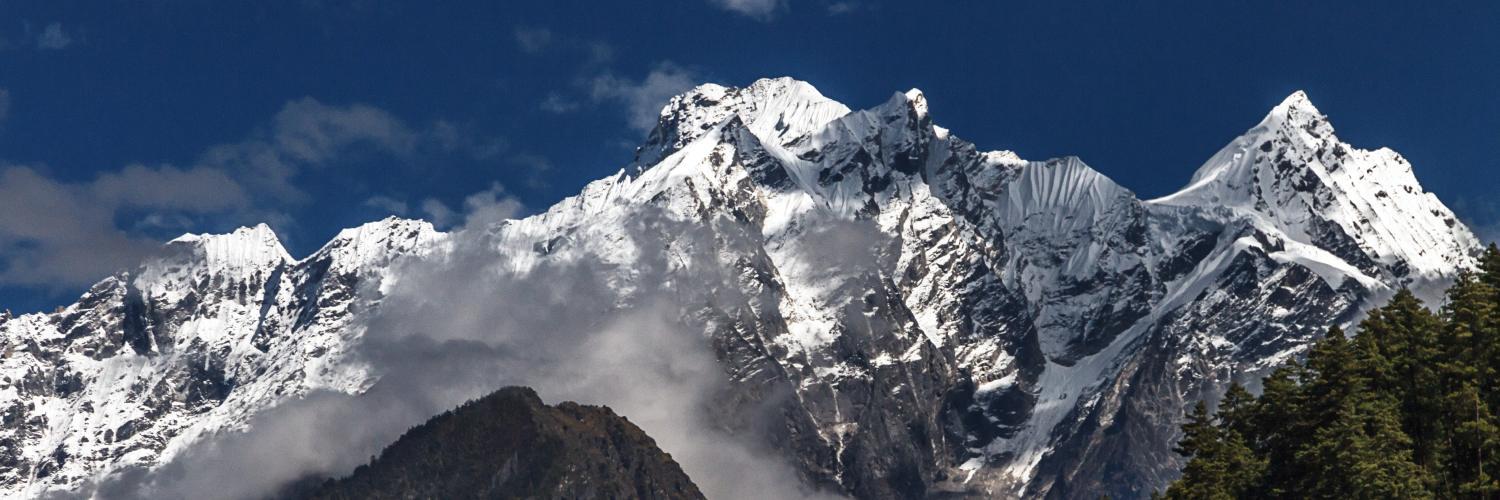
The Manaslu Circuit is widely celebrated as Nepal’s most complete and enriching trek, offering a blend of spectacular mountain scenery and raw, untainted culture. Named after the eighth highest mountain in the world, Manaslu (8,163m), the "Mountain of the Spirit," this remote region of the Gorkha district is a treasure trove of Himalayan Heritage.
For trekkers and cultural enthusiasts, this is a journey far beyond the tea houses. It is a pilgrimage that follows the ancient paths of the salt trade route along the mighty Budhi Gandaki River, transitioning dramatically from lush, subtropical hills to the arid, high-altitude borderlands of Tibet.
As specialists in providing genuine cultural experiences, Best Heritage Tour (BHT) recognizes that the true reward of the Manaslu Circuit lies in its people - the Gurung of the lower valleys, and the Tibetan-descended Bhotias (Nubri and Tsum) in the upper regions. This extensive guide is your deep dive into the historical significance, cultural sanctity, and spiritual power of the Manaslu Circuit Trek and the secluded Tsum Valley.
The Gorkha Gateway - History in the Lower Valleys
The Manaslu region begins in the lower, sub-tropical hills historically tied to the powerful Gorkha District, the birthplace of the unified Kingdom of Nepal. The heritage here is an intriguing mix of Hindu hill culture and the beginnings of Buddhist influence.
1. The Historical Significance of Gorkha
While the trek itself begins further north, the entire region is steeped in the history of the Shah Dynasty that unified Nepal in the 18th century.
-
Gorkha Palace: For a deeper understanding of the region's historical roots, a visit to the ancient Gorkha Durbar (Palace), perched high above the town, is recommended before starting the trek. It connects the trekker to the very foundation of modern Nepal and the martial history of the region.
2. Gurung Villages and Hill Culture
The initial stages of the trek (around Soti Khola, Machha Khola, and Jagat) pass through vibrant communities of the middle-hill ethnic groups.
-
Traditional Life: These villages, predominantly Gurung and Chhetri, offer a glimpse into the agricultural lifestyle of rural Nepal. Here, terraced rice fields cling to the steep slopes, and the trail is often shared with farmers and their livestock.
-
Jagat: The Cultural Checkpoint: Historically, Jagat served as an important administrative and commercial checkpoint. Its stone-paved lanes and old-style architecture mark the transition point before entering the restricted conservation area.
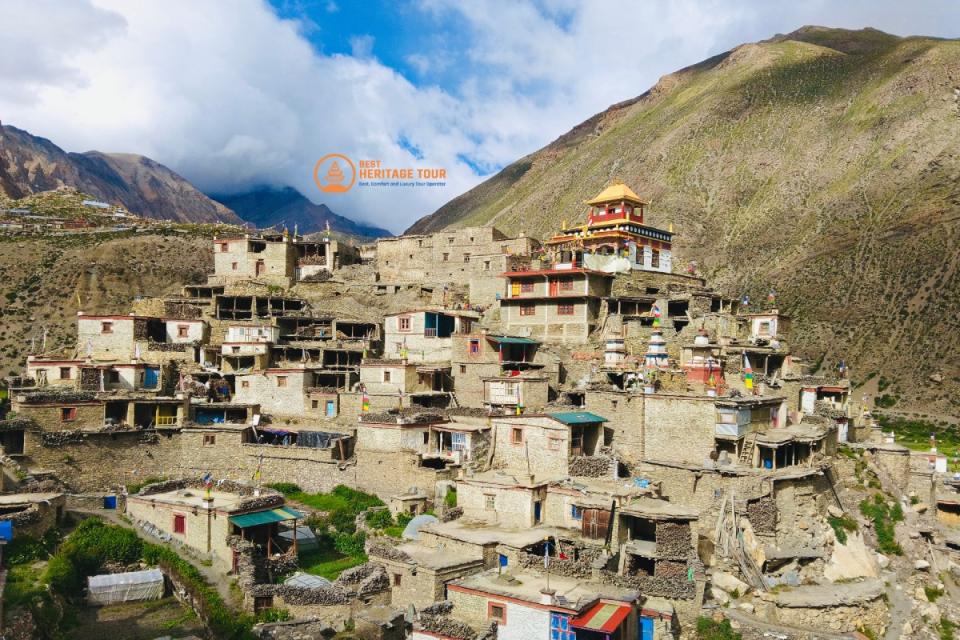
BHT Insight: Pay attention to the architecture as you move uphill. The change from the traditional slate-roofed Gurung homes to the flat-roofed, whitewashed Tibetan-style houses clearly marks the cultural and climatic shift, a key element of the Manaslu Circuit Cultural Trek.
Following the Ancient Salt Trade Route
The defining characteristic of the Manaslu Circuit is the trail's path along the turbulent Budhi Gandaki River - a route etched into history as a conduit for the Ancient Salt Trade Route Nepal connecting the Indian plains with Tibet.
1. The Vertical Journey of Trade
From centuries past until the 1950s, this path was a lifeline. Tibetan traders brought highly valued salt (from the high plateau) down to exchange for Indian-grown grains, spices, and textiles.
-
Trade Route Echoes: The trail is a marvel of engineering: carved into sheer cliff faces, crossing countless dramatic suspension bridges, and winding through narrow gorges. These bridges and paths are themselves historical structures, constantly maintained by the local communities.
-
The Thakali Influence: Though more prominent in the Kali Gandaki, the influence of the Thakali, the community that mastered the salt trade logistics, is visible in the commercial history and teahouse architecture of villages along the lower-mid sections.
2. Deng and the Transition to Tibetan Culture
Above the village of Deng, the shift becomes absolute. The prayer flags, mani walls, and chortens (stupas) begin to dominate the landscape, signaling entry into the domain of Tibetan-descended communities.
-
Mani Walls: These long walls, composed of thousands of stone slabs carved with Buddhist mantras and images, are not just decorations; they are acts of devotion. Trekkers must always pass them on the left side (clockwise) as a sign of respect, a fundamental aspect of the Tibetan Buddhist Culture Manaslu trail.
The Heart of the Spirit - Nubri Valley and Samagaon
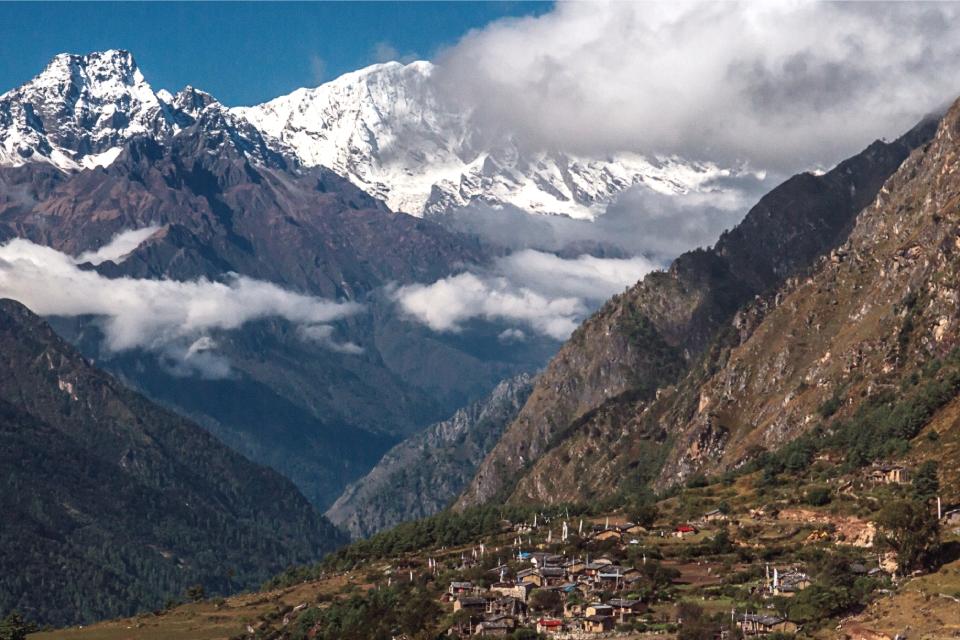
The upper valley, known as Nubri, is the cultural heartland of the Manaslu Circuit. Here, the landscape, religion, and daily life are all unmistakably Tibetan.
1. Lho: The Village of the View and the Spirit
The village of Lho offers the first spectacular close-up views of Manaslu's immense peak. More importantly, it is a spiritual center.
-
Ribung Monastery: Located above the village, this monastery is a thriving hub of learning and worship for young monks. Witnessing an afternoon prayer session here is an unforgettable, profound cultural immersion opportunity that speaks to the deep-seated faith of the community.
2. Samagaon: The Cultural Nexus
Samagaon (3,520m) is one of the largest and most historically significant villages in the Nubri Valley. It is an ideal spot for acclimatization and exploration.
-
Pungyen Gompa: A side trip to the Pungyen Gompa (monastery), nestled beneath the Manaslu massif, offers one of the most stunning mountain viewpoints. The word Pungyen means 'bracelet', referring to the glacier that encircles the mountain. This monastery has deep ties to the legendary Beyul (hidden valley) concept in Tibetan Buddhism.
-
Yak Herding Culture: The people of Samagaon still maintain traditional livelihoods based on agriculture (barley, buckwheat) and high-altitude yak herding. These practices are part of their ancient heritage, essential for survival in this extreme environment.
3. Samdo: The Borderlands
The village of Samdo lies close to the Tibetan border and was once a major settlement for salt traders and Tibetan refugees. Its stone houses and severe landscape reflect the harsh beauty and historical connection to the north. This is the last significant stop before the high pass.
The Sacred Sanctuary of Tsum Valley
For travelers seeking a deeper spiritual and historical detour, the Tsum Valley is an absolute must. Literally translating to "vivid," Tsum Valley was only opened to trekkers in 2008 and remains a spiritual, cultural, and geographical haven.
1. The Beyul and the Vow of Non-Violence
The valley is historically considered one of the Himalayas’ seven Beyuls - hidden valleys created by Guru Rinpoche (Padmasambhava) as sanctuaries from the outside world.
-
Tsum Shagya: Tsum is famed for its sacred pledge of non-violence, known as Tsum Shagya, dating back to 1920. This vow prohibits the killing of animals, giving the valley an extraordinary peaceful atmosphere and demonstrating an ancient, successful form of conservation. This makes it an incredibly unique and valuable Tsum Valley Sacred Heritage destination.
2. Ancient Monasteries and Nunneries
-
Rachen Gompa: Located in the lower Tsum Valley, this is one of the largest nunneries in the region, a vital center for preserving Tibetan Buddhist doctrine and the unique Tsum dialect.
-
Mu Gompa: One of the highest monasteries in the Tsum Valley, Mu Gompa (3,510m) houses ancient manuscripts and life-size statues, offering powerful insight into centuries of isolated spiritual practice.
BHT Perspective: Trekking the Manaslu Circuit and Tsum Valley is a rare opportunity to engage in Restricted Area Trekking Nepal Heritage. This protection has preserved the culture, but requires special permits and mandatory local guiding (provided by BHT) to ensure both your safety and respect for these pristine communities.
Conclusion: A Legacy Carved in Stone and Spirit
The Manaslu Circuit Trek and the neighboring Tsum Valley are more than just adventure tourism; they are an immersion into one of the world's most intact and revered Tibetan Buddhist Culture Manaslu heritage sites. From the Gurung homes in the south to the ancient monasteries of the Nubri and Tsum people, every step on this Ancient Salt Trade Route Nepal is a step through history.
At Best Heritage Tour, we pride ourselves on delivering culturally responsible and deeply informed journeys. We ensure that your mandatory trekking permits and locally hired guides contribute directly to the conservation of this fragile natural and Himalayan Heritage. This is a trek that challenges the body but nourishes the soul, connecting you directly to the timeless spirit of the Himalayas.
Ready to explore the authentic, sacred heart of the Gorkha District? Contact Best Heritage Tour to arrange your guided, restricted-area trek.
Plan Your Manaslu & Tsum Valley Heritage Trek:
Phone / WhatsApp / Viber: +977-9851149197 / +977-9810043046
Email: info@bestheritagetour.com/ bestheritagetour@gmail.com
Website: www.bestheritagetour.com
Office: Thamel Marg, Kathmandu, Nepal
Author: Best Heritage Tour
Date: 24th December, 2025