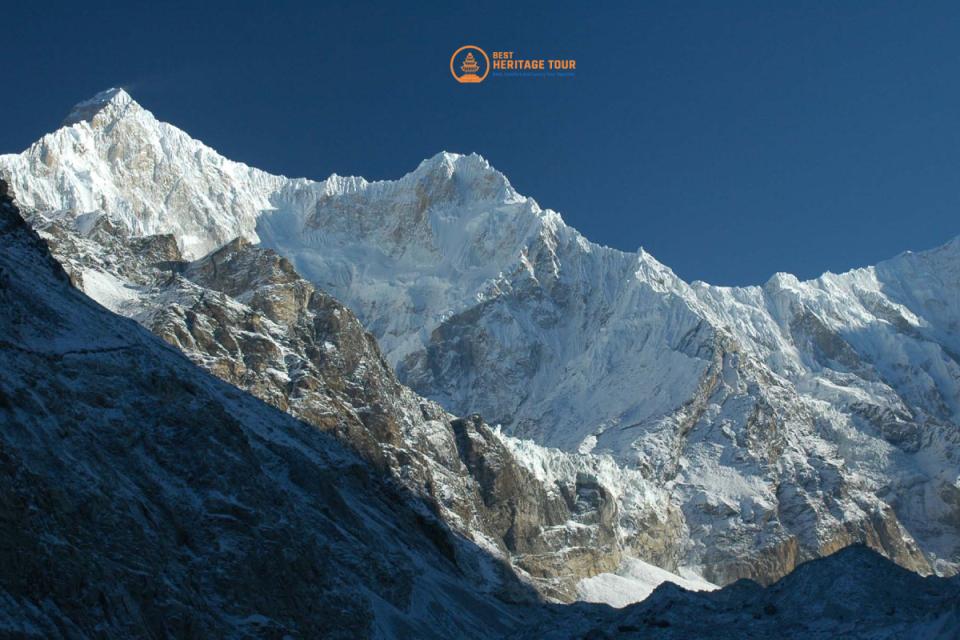
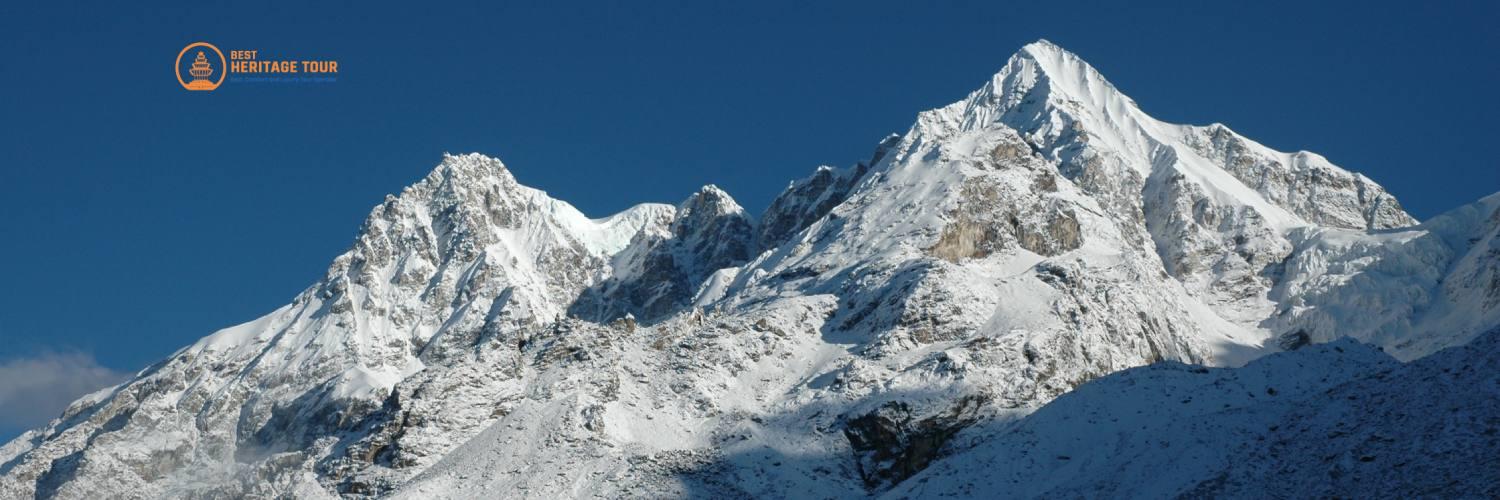
For the modern adventurer, the world is becoming increasingly crowded. The famous trails of the Khumbu and Annapurna, while magnificent, often feel like busy mountain highways. But in the far eastern corner of Nepal lies a giant that demands respect: Kanchenjunga. When travelers ask us, "How hard is the Kanchenjunga Circuit Trek really?" we don’t give a one-word answer. The Kanchenjunga Circuit Trek is not just a hike; it is a three-week expedition into the wild, eastern frontier of Nepal.
Standing at 8,586m, Kanchenjunga is the third-highest peak on Earth. The circuit trek that orbits this massif taking you to the both - Kanchanjunga North Base Camp and Kanchanjunga South Base Camp, is widely regarded as one of the most challenging and rewarding tea-house treks in the Himalayas. At Best Heritage Tour, we believe that preparation is the bridge between an extremely tiring trek and a life-changing adventure.
In this 2026/2027 definitive guide, we will peel back the layers of this trek’s difficulty, covering everything from the physics of the terrain to the psychological demands of the "Wild East."
At a Glance: The Difficulty Rating
When we categorize trekking grades at Best Heritage Tour, we use a scale of 1 to 5. While Everest Base Camp sits at a Grade 3 or 4, the Kanchenjunga Circuit is a firm Grade 5.
To put that in perspective, if the Annapurna Circuit is "Moderate to Difficult," Kanchenjunga is a level above. It requires a combination of high-altitude endurance, mental resilience, and the ability to adapt to basic living conditions.
|
Feature |
Kanchenjunga Circuit |
|---|---|
|
Duration |
18 to 26 Days |
|
Max Altitude |
5,143m (Pangpema / North Base Camp) |
|
Total Distance |
Approx. 220 km (136 miles) |
|
Daily Walking |
6-8 hours |
|
Terrain |
Glacial moraines, steep passes, dense jungles, and rocky ridges |
The Physical Terrain: A Journey of Two Halves
The difficulty of the Kanchenjunga Circuit is unique because it forces your body to adapt to two completely different climates.
The Lowland Humidity (Taplejung to Amjilosa)
The trek begins at relatively low altitudes (around 1,200m to 1,800m). Many trekkers underestimate this phase. Because you are in the eastern part of Nepal, it is much wetter than the west.
-
The Challenge: You will be hiking through dense rhododendron and bamboo forests in high humidity. The trails can be slippery, and the "up and down" nature of the river valleys means you’ll often gain $1,000m$ only to lose it the same afternoon.
-
Pro Tip: This is where most trekkers experience their first blisters. Keeping your feet dry in this humid climate is a skill in itself.
The High Alpine & Glacial Moraines (Ghunsa to Pangpema)
Once you cross the 3,500m mark at Ghunsa, the landscape shifts. You leave the trees behind and enter a world of rock and ice.
-
The Challenge: The trail from Kambachen to Lhonak involves crossing active glacial moraines. The ground is unstable, consisting of loose rocks and scree. You must be agile and have strong ankles.
-
The Wind: The Kanchenjunga massif creates its own weather system. High-altitude winds can make a 0°C day feel like -15°C.
The Great Pass Crossing: The Sele La Challenge
If you ask any of our guides at Best Heritage Tour what the hardest day is, they will point to the crossing from the North Base Camp side to the South Base Camp side. To do this, you must cross a series of high passes: Sinion La (4,440m), Mirgin La (4,480m), and Sele La (4,290m).
Why this section is the "Crux":
-
Back-to-Back Elevation: You aren't just crossing one pass; you are navigating a ridge of several.
-
Weather Exposure: This section is highly exposed. If a snowstorm hits, the trail disappears quickly.
-
Fatigue: By the time you reach these passes, you have usually been trekking for 12 to 14 days. Your energy reserves are naturally lower.
Crossing these passes in a single day (or two, depending on the itinerary) is what separates the Kanchenjunga Circuit from more moderate treks. It requires sheer mental grit.
Understanding Altitude: The Invisible Weight
The maximum altitude you will reach is Pangpema (North Base Camp) at 5,143m. At this height, there is roughly 50% less oxygen available in the atmosphere compared to sea level.
Altitude Sickness (AMS) Risks
Because the Kanchenjunga region is remote, an emergency evacuation is complicated and expensive. This makes the perceived difficulty higher because you must be extremely cautious.
-
The Best Heritage Tour Strategy: We utilize a "Slow Ascent" philosophy. We don't just walk; we observe. Our guides are trained to spot the early signs of AMS - headaches, loss of appetite, and sleep disturbance - long before they become dangerous.
-
Acclimatization Days: We insist on two nights in Ghunsa. This village is the cultural hub of the region and sits at the perfect altitude (3,475m) to prepare your lungs for the 5,000m push.
Logistics and "Roughing It": The Mental Game
Difficulty isn't just physical; it's psychological. In the Everest or Annapurna regions, you can find espresso machines, heated dining rooms, and electric blankets.
In Kanchenjunga, you find authenticity.
-
Accommodations: Teahouses here are often the actual homes of the local Limbu or Sherpa people. You will be sitting around a central fire, eating what the family eats.
-
Diet: Your primary fuel will be Dal Bhat (lentil soup, rice, and vegetable curry). It is the perfect trekking food, but for some Western palates, 20 days of it can be a mental challenge.
-
Isolation: You might go three or four days without seeing another group of trekkers. For some, this solitude is a blessing; for others, the lack of "social" infrastructure makes the trek feel much harder.
How to Train: A 4-Month Blueprint
You cannot "walk yourself into shape" on the Kanchenjunga trail. The first five days are too demanding. At Best Heritage Tour, we recommend our clients follow this regimen:
Phase 1: Foundation (Months 4 and 3 out)
-
Focus: Building a massive aerobic base.
-
Activity: 45 minutes of zone 2 cardio (swimming, jogging, or brisk walking) 4 times a week.
-
Strength: Start basic leg strength - squats and lunges - to protect your knees during those long Himalayan descents.
Phase 2: Specificity (Months 2 and 1 out)
-
Focus: Training for the "Weight."
-
Activity: Find the steepest hill or stairs near your home. Put on your trekking boots and a 10kg backpack. Hike up and down for 2 hours. This "weighted incline" work is the only way to simulate the Sele La pass.
-
Flexibility: Incorporate yoga or deep stretching. Himalayan trails are uneven; supple joints prevent sprains.
The Gear Factor: Light vs. Right
Inadequate gear increases the difficulty of a trek by 20%. Because the Kanchenjunga Circuit covers everything from tropical heat to arctic cold, your layering system must be flawless.
The "Must-Haves" for Kanchenjunga:
-
The Footwear: High-quality, waterproof boots with deep lugs. They must be "broken in" at least two months before you arrive in Kathmandu.
-
Sleeping System: A 4-season sleeping bag rated to -20°C. Even if the teahouse provides blankets, you need your own cocoon of warmth.
-
Water Purification: Since this is a remote trek, we discourage plastic bottles. Bring a LifeStraw or Grayl filter. Staying hydrated is the 1 way to fight altitude sickness.
-
Trekking Poles: These are not optional for Kanchenjunga. They reduce the impact on your knees by up to 25% on the steep descents from the passes.
Safety and Regulations: The Necessity of a Guide
It is important to note that the Nepal government classifies Kanchenjunga as a Restricted Area. You cannot legally trek here as a "Free Individual Trekker" (FIT).
The Requirements:
-
A Minimum of Two Trekkers: You must be a part of a group (we can help match you with others).
-
Licensed Guide: You must be accompanied by a guide from a registered agency like Best Heritage Tour.
-
Permits: You need the Kanchenjunga Conservation Area Project (KCAP) permit and a Restricted Area Permit (RAP).
Our guides act as more than just navigators. They are your translators, your medics, and your cultural bridge. When a trail is washed out by a small landslide or a pass is blocked by snow, their local knowledge is the difference between a successful summit and a dangerous retreat.
Final Verdict: Is it for You?
The Kanchenjunga Circuit Trek is for the trekker who has "done it all." If you have stood at the base of Everest, crossed the Thorong La, and now find yourself yearning for the silence of the high peaks, then Kanchenjunga is calling.
It is difficult? Yes. Is it dangerous? With the right team, no. Is it worth it? Absolutely.
At Best Heritage Tour, we don't just sell "packages"; we lead expeditions. We understand the Eastern Himalayas better than anyone, and we are committed to ensuring your safety while you touch the sky at the base of the world's third-highest mountain.
Are you ready to test your limits in the shadow of the world's third-highest peak?
Contact Us to Plan Your 2026/2027 Expedition:
Phone / WhatsApp / Viber: +977-9851149197 / +977-9810043046
Email: info@bestheritagetour.com / bestheritagetour@gmail.com
Website: www.bestheritagetour.com
Office: Thamel Marg, Kathmandu, Nepal
Author: Best Heritage Tour
Date: 17th December, 2025