The name Everest Base Camp instantly conjures images of epic scale, frozen landscapes, and intense, technical mountaineering. This reputation often leads trekkers to ask one pivotal question: How difficult is the Everest Base Camp Trek for an average traveler?
The short, honest answer from your local experts at Best Heritage Tour is that the EBC Trek is a Strenuous Hike, but it is not a technical climb. It is a challenge of endurance and mental resilience, one that is highly achievable by anyone with moderate physical fitness and a willingness to respect the mountains.
Forget the ropes, harnesses, and ice axes - this 12- to 14-day journey is a long-distance walk on well-established trails. However, it demands preparation, particularly concerning the single greatest hurdle: altitude.
We will break down the Everest Base Camp Trek Difficulty Level into three primary categories to help you understand the demands and prepare for a safe, successful, and truly unforgettable adventure.
1. The Physical Demands: It’s a Marathon, Not a Sprint
The EBC Trek Physical Demands are significant, but they center on sustained walking over consecutive days, not explosive athletic ability. Think of it as a 12-day commitment to walking up and down hills at a steady, slow pace.
A. Distance and Duration
-
Total Distance: The round trip from Lukla is approximately 130 km (80 miles).
-
Daily Walking Time: Trekkers typically spend 5 to 7 hours walking each day. This pace is deliberately slow and measured, which is essential for acclimatization.
-
Daily Distance: You cover an average of 10 to 15 kilometers (6 to 9 miles) per day.
-
Terrain: The trails vary dramatically:
-
Lower Regions (Lukla to Namche): Forest paths, well-trodden stone steps, and crossing thrilling suspension bridges, including the famous Hillary Bridge.
-
Upper Regions (Dingboche to EBC): Rocky moraines, glacial debris, open alpine meadows, and exposed trails where the footing can be uneven and dusty or snowy.
-
Our Verdict on Physicality: If you can comfortably walk 15 km on varied terrain for two to three days in a row before your trip, your physical fitness is likely sufficient. The key is endurance and the ability to maintain a slow, steady rhythm, known locally as the 'Nepali Flat.'
B. Key Challenging Sections
While the trek is non-technical, a few sections demand extra effort:
-
The Ascent to Namche Bazaar (Day 2): A steep, sustained uphill climb of over 800 meters. This is often the first day trekkers truly feel the difference in altitude and the difficulty of the trail.
-
Thukla Pass (Day 7): A short but very steep ascent where you begin to enter the high-altitude zone (near 4,800m). The climb is emotionally heavy, as you pass the stone memorials honoring climbers.
-
The Final Push to Kala Patthar (Day 9): Rising to 5,545m (18,192 ft), this early morning climb is brutal. It’s conducted in the dark, cold, and thin air, but the reward - the most iconic sunrise view of Everest - makes it mandatory.
2. The Defining Challenge: Altitude
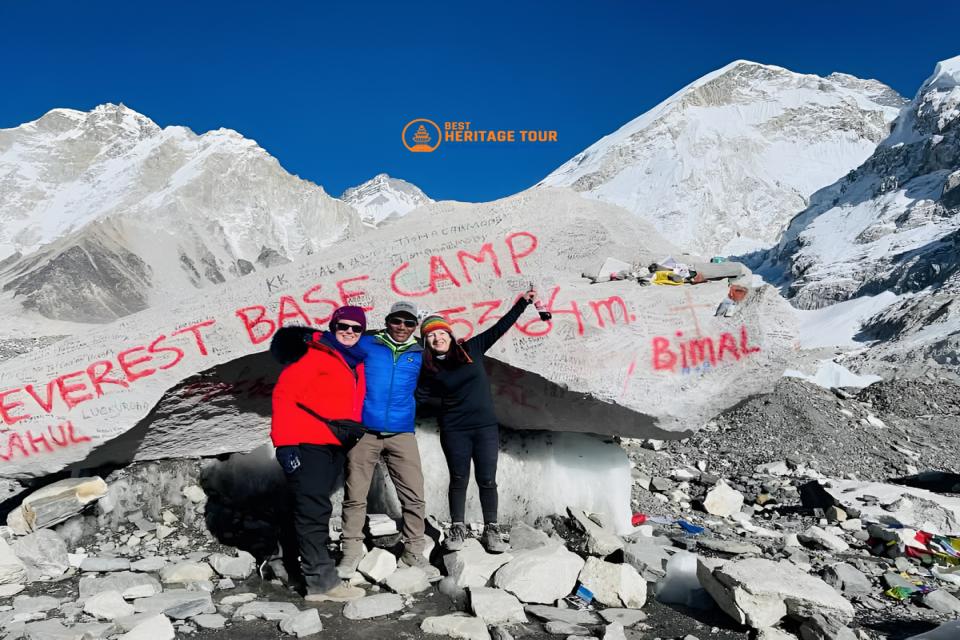
The true difficulty of the EBC Trek is not the distance or the technicality; it is the altitude. You start at Lukla (2,860m / 9,383 ft) and ascend to EBC (5,364m / 17,598 ft) and Kala Patthar (5,545m / 18,192 ft).
At 5,364 meters (17,598 ft), the air contains roughly 50% less oxygen than at sea level. This physiological reality is what makes the trek a genuine challenge, regardless of how fit you are at home.
Understanding Altitude Sickness (AMS)
Acute Mountain Sickness (AMS) can affect anyone, regardless of age or fitness level. Symptoms include headaches, nausea, loss of appetite, and dizziness. Ignoring these symptoms and ascending can lead to the life-threatening conditions of High-Altitude Pulmonary Edema (HAPE) or High-Altitude Cerebral Edema (HACE).
Our Safety Strategy: The Acclimatization Schedule
The standard 12- to 14-day itinerary, which Best Heritage Tour strictly adheres to, is built entirely around minimizing this risk through proper acclimatization.
|
Acclimatization Stop |
Altitude |
Purpose |
|---|---|---|
|
Namche Bazaar |
3,440m |
The first essential stop; allows the body to adjust to over 3,000m. |
|
Dingboche |
4,410m |
Crucial stop before entering the extreme high-altitude zone. |
Best Practice Rule: The golden rule above 3,000m is to limit your sleeping altitude gain to 300-500 meters (1,000-1,600 feet) per day. Our itinerary respects this principle meticulously.
3. Logistical and Mental Resilience
Beyond the physical and altitude factors, the EBC trek difficulty is compounded by the logistics of trekking in a remote, high-altitude region for two weeks.
A. Accommodation and Comfort
The Everest region offers teahouse trekking, meaning you stay in local lodges. The standard of living decreases as you ascend:
-
Lower Villages (Namche): Modern amenities, bakeries, better Wi-Fi, and private bathrooms are often available.
-
Higher Villages (Lobuche, Gorak Shep): Accommodation is very basic. Rooms are cold, unheated, and bathrooms are typically shared and simple. You will be relying on your sleeping bag for warmth.
-
The Mental Challenge: The daily routine, limited food variety, cold nights, and the reality of basic facilities demand mental toughness and a flexible attitude.
B. Weather and Timing
Mountain weather is notoriously unpredictable. Snow, high winds, and rapidly dropping temperatures can strike at any time, especially above 4,000 meters.
-
Best Seasons: The difficulty is lowest during the Autumn (Sept-Nov) and Spring (Mar-May) seasons, which offer the most stable weather and clear skies.
-
Off-Season Difficulty: Trekking in Winter (Dec-Feb) is significantly more difficult due to extreme cold and heavy snow, and Monsoon (Jun-Aug) presents difficulty from heavy rain, slippery trails, and flight delays.
C. The Flight to Lukla
The trip starts with the famed flight to Lukla’s Tenzing-Hillary Airport. The short runway, nestled on a mountainside, makes this an exciting but weather-dependent experience. Delays or cancellations due to weather are a common source of logistical difficulty and mental stress; a reputable agency like Best Heritage Tour always has contingency plans in place.
Everest Base Camp Trek for Beginners: Your Preparation Roadmap
The answer to "Can a beginner do the Everest Base Camp Trek?" is a resounding Yes, provided you prepare correctly and commit to a safe itinerary.
1. Physical Training (3-4 Months Prior)
Focus on building cardiovascular endurance and leg strength.
-
Cardio: Aim for 4-5 sessions per week (running, cycling, swimming).
-
Endurance: The most important training is long walks or hikes, ideally carrying a 5-8kg daypack, for 4-6 hours on consecutive days.
-
Stairs/Hills: Practice walking uphill continuously. The climb to Namche will thank you.
2. Mental Preparation
The trek is 50% physical and 50% mental. Adopt the following mindset:
-
Go Slow: The pace should feel easy. If you are breathing heavily, you are going too fast.
-
Listen to Your Guide: Your guide is trained in altitude sickness recognition and the pace of the mountain. Trust their judgment implicitly.
-
Stay Positive: The cumulative fatigue is real. Maintain a positive attitude, focus on the view, and know that every step gets you closer to an unforgettable goal.
3. Hydration and Health
-
Hydrate Constantly: Drink 3-4 liters of water daily. Dehydration mimics AMS symptoms.
-
Diet: Consume a high-carbohydrate diet (local Dal Bhat is perfect) for sustained energy.
-
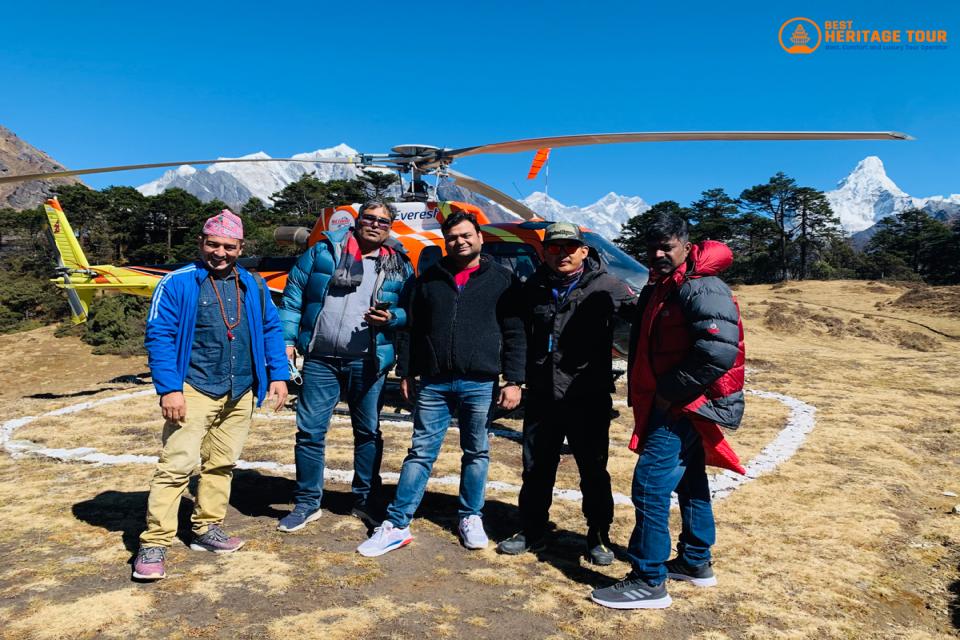
Insurance: Secure travel insurance that includes emergency helicopter evacuation up to 6,000 meters. This is non-negotiable for safety.
Conclusion: The Reward Outweighs the Challenge
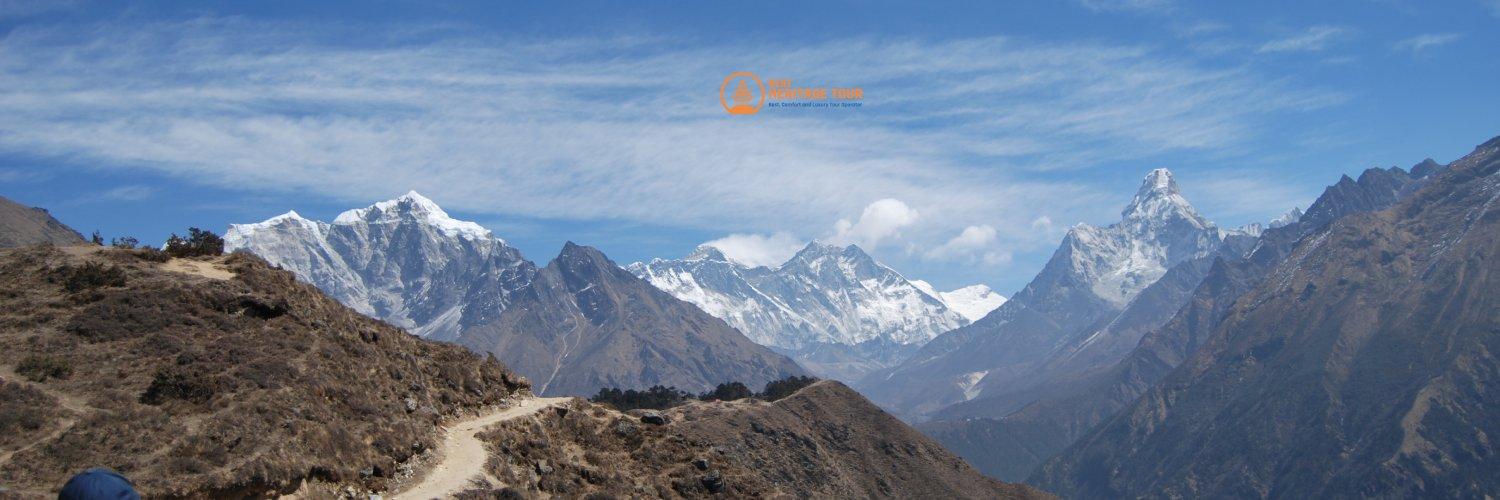
The Everest Base Camp Trek is graded as moderately challenging, primarily due to the high altitude. It is an extraordinary commitment of time, energy, and will. However, it is a journey of self-discovery - one where the physical strain is dissolved by the sight of Everest, Lhotse, and Ama Dablam piercing the sky.
With Best Heritage Tour, you are guided by local experts who prioritize a safe, sustainable, and properly paced itinerary, transforming the intimidating challenge into a lifetime achievement. We ensure you have the best preparation, the safest pace, and the most knowledgeable support team to help you overcome every hurdle on the road to Everest Base Camp.
Are you ready to embrace the challenge and stand at the foot of the world's tallest peak?
Contact Best Heritage Tour Today!
Phone / WhatsApp / Viber: +977-9851149197 / +977-9810043046
Email: info@bestheritagetour.com / bestheritagetour@gmail.com
Website: www.bestheritagetour.com
Office: Thamel Marg, Kathmandu, Nepal
Author: Best Heritage Tour
Date: 16th December, 2025