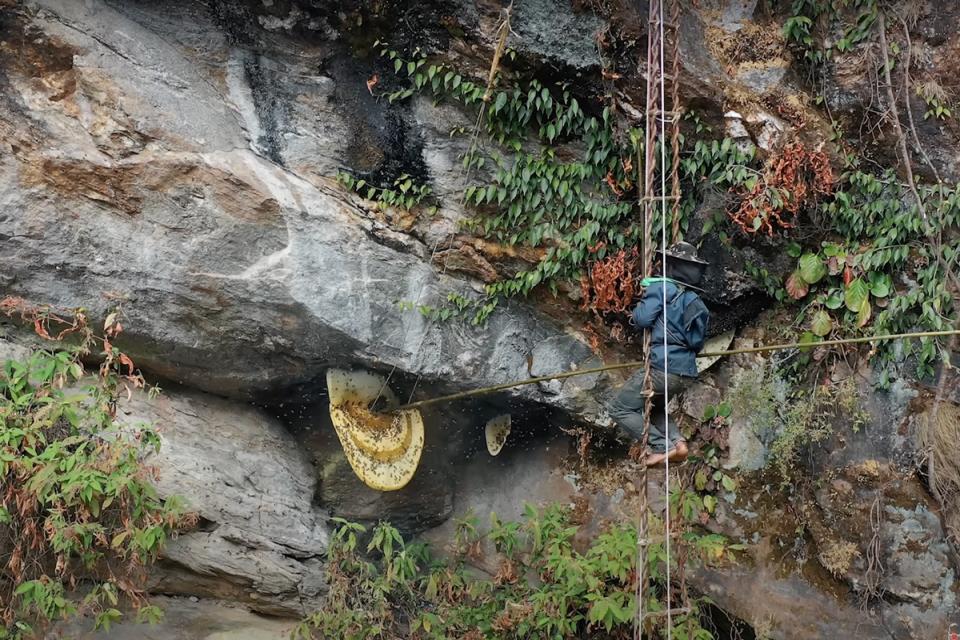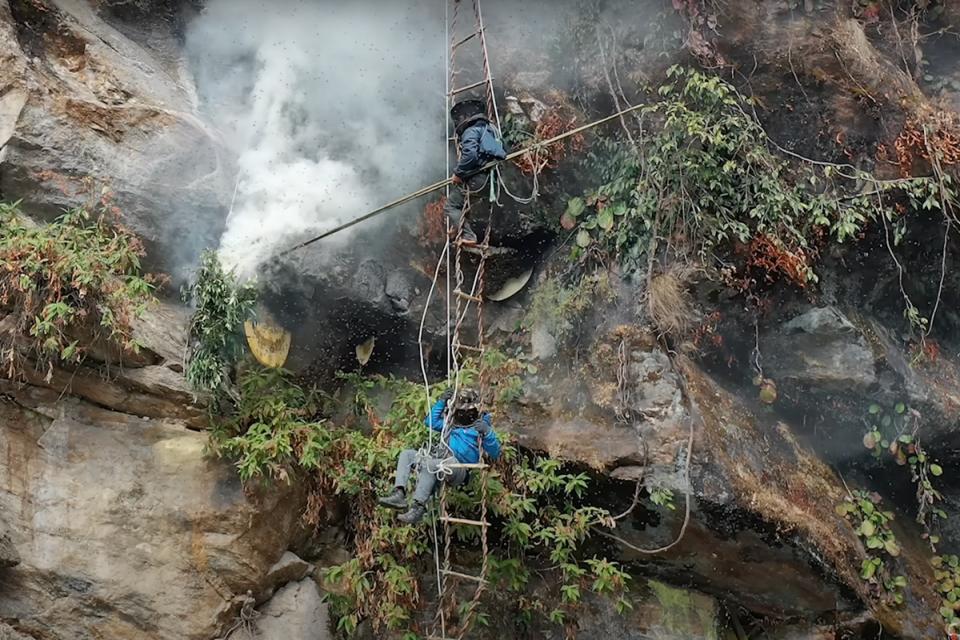
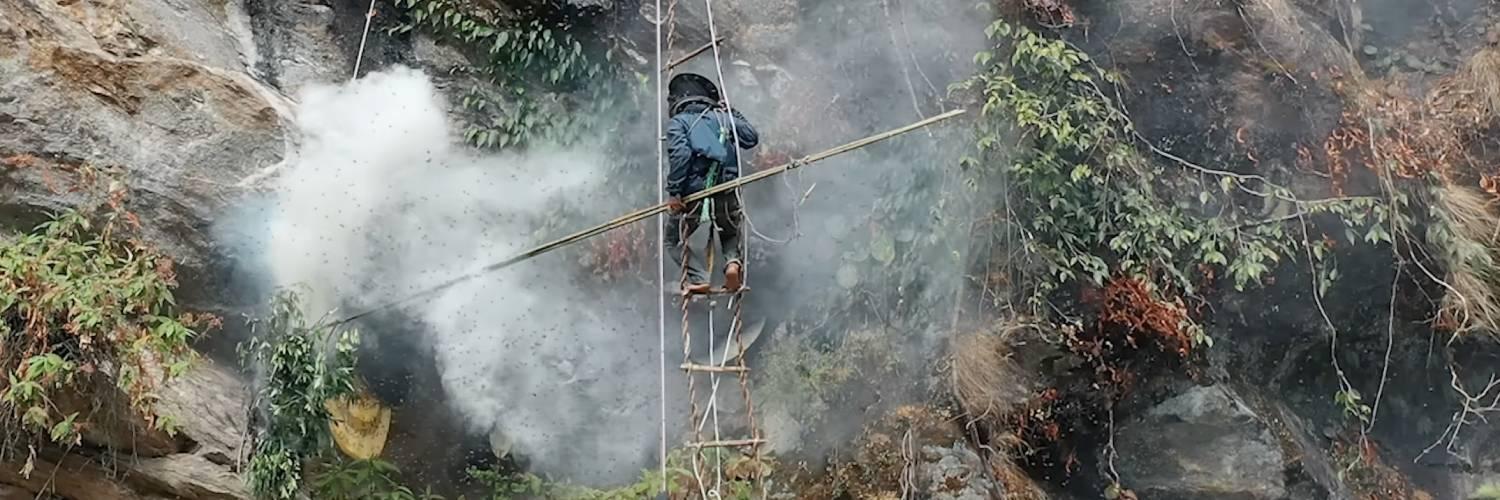
In the rugged cliffs of the Lamjung and Kaski districts, a tradition exists that looks like a scene out of a prehistoric documentary. Men, known locally as Kuiche, dangle from hand-woven hemp ropes, hundreds of feet in the air, surrounded by thousands of the world’s largest honeybees (Apis laboriosa).
For many travelers, photographers, and vloggers, witnessing this ancient "Mad Honey" harvest is a bucket-list dream. But a common concern often arises: How difficult is the Honey Hunting tour?
At Best Heritage Tour, we specialize in making these "extreme" traditions accessible. Since you aren't the one climbing the ladder, the "difficulty" changes entirely. In this guide, we break down exactly what to expect, from the jeep rides to the final hike to the cliffside.
The Spectator’s Experience: Defining the Difficulty
First, let’s clarify a vital point: You are not the hunter. The traditional honey hunting process is extremely dangerous and reserved for skilled locals who have inherited the craft through generations. As a tourist or vlogger, your role is to observe, document, and experience the ritual from a safe, nearby vantage point.
For the viewer, we grade the Honey Hunting Tour as Easy to Moderate.
Unlike long-distance Himalayan treks, this tour is designed around cultural immersion. Thanks to improving rural infrastructure, we can now use 4WD jeeps to cover the majority of the distance, leaving only a short, scenic walk to reach the villages and the hunting sites.
The Journey: Jeep Rides and "Himalayan Off-Roading"
The first phase of the "difficulty" isn't about walking; it’s about the drive. To reach authentic hunting grounds like Chamche, Ghalegaun or Bhujung, we leave the paved highways of Kathmandu or Pokhara behind.
-
The Terrain: You will spend 6-7 hours in a sturdy 4WD jeep. Expect winding mountain roads, some dust, and "bumpy" sections.
-
The Difficulty: For those prone to motion sickness, this might be the hardest part of the trip. However, for vloggers, this is a golden opportunity to capture the raw, rural beauty of Nepal’s mid-hills.
The Trekking Factor: 2 Days on Foot
While the jeep gets us close, the final "honey cliffs" are tucked away in pristine locations where roads cannot go. Our standard Honey Hunting itinerary involves roughly 2 days of trekking (one day in, one day out).
The Hike to the Village/Cliff
Once the jeep stops, we typically hike for 3 to 5 hours to reach the Gurung homestay or the specific cliffside.
-
The Path: These are established village trails. You will walk through rhododendron forests, past waterfalls, and across terraced rice fields.
-
Elevation: Most hunting sites sit between 1,500m and 2,500m. This is well below the "altitude sickness zone," meaning you won't have to worry about the thinning air that plagues Everest or Annapurna trekkers.
The Return
After the harvest is complete and you’ve had your fill of fresh wild honey, we trek back to the jeep pickup point. This is mostly downhill or flat, making it a gentle end to the adventure.
Challenges Specific to Bloggers and Vloggers
If you are coming to Nepal to film this event, your "difficulty" is technical rather than physical.
-
Vantage Points: To get the "money shot" of the hunter on the ladder, you may need to scramble up a small hillside or sit on a rocky outcrop. It’s not rock climbing, but it requires good balance.
-
Equipment Protection: The harvest involves smoke (used to calm the bees). This smoke is thick and can be tough on sensitive camera lenses.
-
Bee Safety: Even though you aren't on the ladder, you are in the "splash zone." You will be provided with protective headnets, but the sound of thousands of bees can be intimidating for some.
Fitness Requirements: Who is this tour for?
You do not need to be a marathon runner for this. We have successfully led families, senior travelers, and digital creators on this tour.
-
Basic Mobility: If you can walk for 3-4 hours on an incline with a light daypack, you are fit enough.
-
Mental Courage: You need to be comfortable with heights (looking at the cliffs) and the presence of bees.
-
No Age Limit: Because the trekking is short and the altitude is low, this is one of the most age-inclusive "adventure" tours in Nepal.
Why Witnessing the Hunt is Worth the Effort
The "difficulty" of a few hours of walking is a small price to pay for what you see.
-
The Ritual: You’ll see the hunters sacrifice a rooster or offer flowers to the cliff gods before they climb.
-
The Skill: Watching a man descend a 300 foot cliff with nothing but a rope made of forest vines is a humbling experience.
-
The Reward: You get to taste Himalayan Wild Honey straight from the comb. Depending on the season (Spring is best for the "Mad" variety), this honey is famous for its medicinal and mildly psychoactive properties.
Conclusion: Experience the Tradition
The Honey Hunting Tour in Nepal is not a test of your physical limits; it is a test of your senses. It is a rare chance to see a vanishing way of life that has remained unchanged for thousands of years. With the convenience of jeep transport and our expert local guides, the only "hard" part is saying goodbye to the incredible hospitality of the Gurung people.
At Best Heritage Tour, we bridge the gap between "extreme adventure" and "comfortable exploration." We handle the logistics, the permits, and the safety gear, so you can focus on the perfect shot or the perfect bite of wild honey.
Are you ready to witness the world's most daring harvest?
Contact Best Heritage Tour Today:
Phone / WhatsApp / Viber: +977-9851149197 / +977-9810043046
Email: info@bestheritagetour.com / bestheritagetour@gmail.com
Website: www.bestheritagetour.com
Office: Thamel Marg, Kathmandu, Nepal
Author: Best Heritage Tour
Date: 19th December, 2025