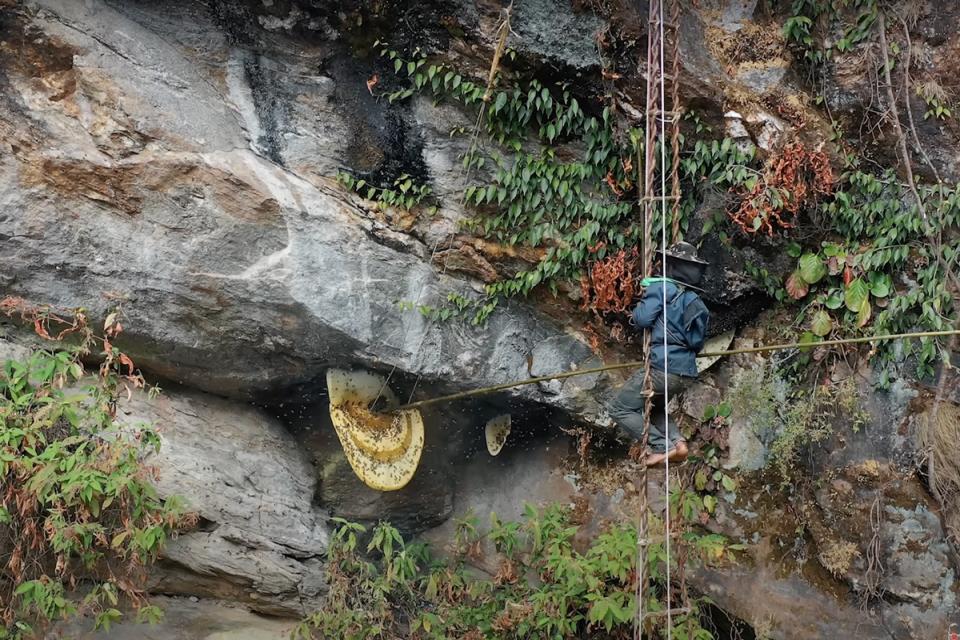
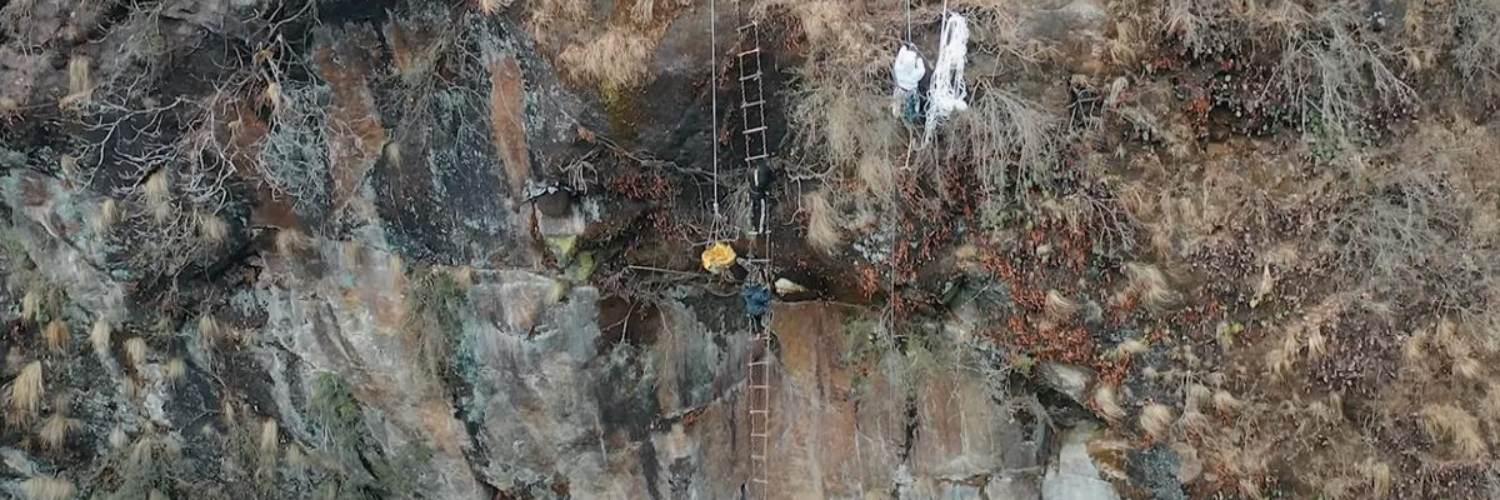
Imagine a sheer, vertical cliff face, hundreds of feet above a roaring Himalayan river. On that impossibly high wall, massive, crescent-shaped hives, the color of wet terracotta, cling precariously to the rock. Now, imagine a man, harnessed only by a handmade rope ladder woven from braided bamboo fibers, dangling directly beneath a swarm of the world's largest and most aggressive bees.
This is not a scene from a Hollywood epic; this is the reality of Honey Hunting in Nepal, one of the planet's last and most spectacular indigenous traditions.
For the Adventure Backpacker seeking true cultural immersion, the Vlogger hunting for incomparable footage, or the Traveler craving an experience that defies modern limits, the Wild Honey Hunt offers an unparalleled pilgrimage. In 2026, as this centuries-old practice faces challenges from commercialization and climate change, witnessing it firsthand is more than just an adventure - it’s an urgent cultural immersion.
This guide, curated by the local experts - Best Heritage Tour, plunges into the heart of this vertical harvest, detailing the culture, the risk, the seasons, the legendary Mad Honey, and how you can safely witness this breathtaking spectacle.
The Legend of the Cliff Honey: Understanding Nepal's Mad Honey Hunting
Before diving into the logistics of the adventure, you must understand the prize: the fabled Mad Honey (Mad refers to its intoxicating, psychoactive properties).
The Architects of the Adventure: The Giant Himalayan Honey Bee
The honey hunt is centered entirely around one creature: the Apis Laboriosa, or the Giant Himalayan Honey Bee.
-
Size and Habitat: This remarkable insect is the largest honeybee in the world, thriving only at high altitudes (between 2,500m and 4,000m). Unlike regular honeybees, the Apis Laboriosa constructs its massive hives on the underhangs of gigantic, rocky cliffs (bhir in Nepali), protecting them from predators and the elements.
-
The Hive: A single hive can be enormous, sometimes holding up to 60 kilograms of honey, giving the honey hunter a dangerous but potentially enormous reward.
The Secret Ingredient: Rhododendron Nectar
What transforms ordinary honey into the famed Mad Honey? The answer lies in the potent flora of the mid-Himalayas.
The Mad Honey (known locally as Red Honey due to its color) is harvested when the bees primarily feed on the nectar of certain species of rhododendron flowers (Laligurans in Nepali). These flowers contain a neurotoxin called Grayanotoxin.
When consumed by humans in small, controlled amounts, this toxin can induce a variety of intense effects:
-
Initial effects: A tingling sensation, a warming in the extremities, and lightheadedness.
-
Psychoactive effects: Heightened sensory perception, a gentle feeling of euphoria, and for some, mild auditory or visual hallucinations.
-
Traditional Uses: In Nepalese and Tibetan folk medicine, the honey is highly prized for its medicinal properties, traditionally used for hypertension, chronic pain, and as a potent aphrodisiac.
Crucial Vlogger/Traveler Note: The potency of the honey is highest in the Spring Harvest (Late April-May) because the rhododendrons are in full bloom. The Autumn harvest (Late October-November) is generally milder but harvested in more stable weather conditions.
A Ritual, Not a Sport: The Gurung Honey Hunting Ritual
The Gurung and Magar indigenous communities, primarily in the Lamjung, Gorkha, and Kaski districts, are the custodians of this ancient tradition. For them, the hunt is not just about collecting a product; it is a sacred, communal, and spiritual event that binds them to their ancestors and the powerful spirits of the cliff.
The Spiritual Preparation
The honey hunt is rarely undertaken lightly or spontaneously. A typical ceremony, which travelers on the Best Heritage Tour package will witness, involves:
-
The Sacrifice: Before the first climb, the head honey hunter (the Kipre) performs an ancient ritual. This often involves sacrificing a chicken or a goat and offering rice, flowers, and incense to the cliff gods (Bhir Devta). This is an offering of appeasement, asking the spirits for safety and a successful harvest.
-
The Chanting: Traditional chants and prayers are performed, often with musical accompaniment, instilling courage in the climbers and establishing a deep, almost meditative focus.
-
The Oath: The hunters take an oath to respect the hive, the land, and to only take what is necessary, ensuring the sustainability of the bees for the following season.
The Tools of the Ancestors
What is most astonishing to the modern eye are the tools used, which have remained virtually unchanged for millennia.
-
The Hemp Rope Ladder (Tungma): Hand-woven from locally sourced bamboo and hemp fiber, this is the hunter's lifeline. It is incredibly strong but provides only a thin barrier between the hunter and the rift below.
-
The Smoker (Dhawa): A bundle of smoldering, green leaves and bamboo is set alight to generate a thick, acrid smoke. This smoke is used to disorient and calm the enraged Apis Laboriosa bees, driving them momentarily away from the hive.
-
The Baskets (Karko): Large, funnel-shaped bamboo baskets are used to collect the dripping honeycombs as they are cut from the cliff face.
-
The Bamboo Pole (Tangali): A long, sturdy bamboo pole with a sharp, iron sickle or blade attached to the end is the primary cutting tool.
The Day of the Hunt: A Nepal Adventure Travel Spectacle
For Vloggers and Youtubers, the actual hunting day provides content that is raw, adrenaline-fueled, and deeply anthropological. The process is a dramatic, choreographed display of bravery and cooperation.
Phase 1: The Ascent and Descent
-
Placement: The Kipre and his team must first find a vantage point directly above the hive. This often involves a challenging, hours-long scramble and vertical trek through steep, rugged jungle to the cliff top.
-
Rope Lowering: The massive rope ladder is slowly lowered over the cliff edge. This task requires immense teamwork to secure the rope against shifting rocks.
-
The Climb: The Kipre, typically wearing minimal protection (sometimes just a hood or a rough blanket) to maintain agility, begins his terrifying descent, swinging and maneuvering the flimsy ladder into position directly beneath the giant hive.
Phase 2: Smoke, Swarm, and Cut
-
The Smoke Bomb: From the base or a separate high vantage point, the secondary team uses long poles to position the massive smoking bundle beneath the hive. The thick, white plume rises, blanketing the cliff face and sending the massive colony into a dizzying frenzy.
-
The Attack: This is the most dangerous moment. Hundreds of thousands of bees swarm the area. The Kipre must ignore the painful stings (despite the smoke, he will be stung) and focus on his task.
-
The Cut: Using the long Tangali, the Kipre carefully slices away the three sections of the hive:
-
Top (Saru): The water-rich, less valuable honey.
-
Middle (Mugu): The valuable, often intoxicating, rhododendron-rich Mad Honey.
-
Bottom (Khap): The bee larvae and pollen, often left behind to ensure the colony's survival.
-
Phase 3: Collection and Feat
As the honeycomb slices drop, a collector on the ground manipulates a rope to guide the bamboo baskets into position to catch the golden payload. Once the harvest is complete, the Kipre begins the slow, arduous, and triumphant ascent, greeted by the entire village with cheers, traditional music, and blessings.
The raw honeycomb is then ceremoniously squeezed and strained in the village, ready for sharing and consumption.
Planning Your 2026 Himalayan Honey Hunting Tour
The timing of your trip is critical. The quality of the honey and the safety of the hunt are dictated by the natural cycles of the bee and the rhododendron bloom.
|
Season |
Months |
Honey Potency |
Key Experience |
Ideal Audience |
|---|---|---|---|---|
|
Spring Harvest (Primary) |
Late April - Late May |
Highest Potency (Maximum Rhododendron Nectar) |
Dramatic hunts, vibrant blooms, focus on the famed Mad Honey. |
Vloggers, Seeking Psychoactive Honey, Adventure Seekers. |
|
Autumn Harvest (Secondary) |
Late October - Late November |
Milder, Sweeter Honey |
Stable weather, clearer mountain views, ideal for trekking. |
Beginners, Budget Travelers, Combining with Treks. |
|
Seasons to Avoid |
June - September (Monsoon) |
Minimal |
Heavy rains, slippery cliffs, bee inactivity, difficulty in travel. |
|
Where the Hunt Takes Place: Lamjung Honey Hunting
While honey hunting occurs across the Himalayan foothills, the most accessible and culturally preserved sites for tourists and film crews are found in the Lamjung district, near the Annapurna Conservation Area.
-
Bhujung & Ghalegaun: These Gurung villages are the most famous and offer established cultural experiences, including traditional homestays and the chance to witness the full ritual.
-
Chamche: A dramatic valley area known for some of the most impressive, high cliffs and largest beehives, providing the ultimate visual spectacle for filmmakers.
The Ethics and Safety of Your Adventure
The Honey Hunt is inherently dangerous for the local hunters. As a tourist, your role is that of a safe, respectful observer.
Safety for Tourists
When booking with a licensed company like Best Heritage Tour, your safety is guaranteed at all times:
-
Safe Observation Zone: You will be positioned hundreds of meters away from the cliff base, ensuring zero risk from falling ropes, rocks, or swarming bees. We provide optimal vantage points for photography and filming.
-
Expert Logistics: The journey involves trekking through rugged terrain. Our packages include experienced local trekking guides, porters, and all necessary permits to ensure the trek to the cliff site is safe and comfortable.
-
Cultural Guardianship: Our guides act as cultural bridges, ensuring you understand the sacred nature of the hunt. We prioritize respect over sensationalism.
Ethical Tourism and Sustainability
By booking your honey hunting package with Best Heritage Tour, you are directly funding the continuation of this tradition. Our packages ensure that:
-
Fair Compensation: The local Gurung communities and the hunters are paid directly and fairly, making the tradition economically viable.
-
Sustainability: We work only with communities that follow sustainable practices, ensuring a portion of the hive is always left intact for the bees to recover and survive, protecting the Apis Laboriosa for future harvests.
For Vloggers and Media Professionals: Capturing the Impossible Shot
This is a tailor-made expedition for visual storytellers. The juxtaposition of ancient tradition against the sheer, wild majesty of the Himalayas is unmatched.
-
The High-Altitude Drone Shot: Capture the terrifying scale of the cliff and the tiny figure of the Kipre on the ladder (with community permission and all necessary permits handled by Best Heritage Tour).
-
Cultural Access: The pre-hunt rituals, the post-hunt feast, and the homestay experience offer intimate, human-focused content that transcends mere adventure footage.
-
Soundscape: The raw sound of the river, the chanting, the crackling fire, and the deafening buzz of the bee swarm create an unforgettable audio experience.
Best Heritage Tour specializes in facilitating these requirements, providing the logistical support (remote accommodation, permits, local village access) needed to successfully film a high-production-value piece.
Book Your Best Adventure Tours Nepal 2026
The Honey Hunt is a living relic, a spectacular fusion of nature, culture, and extreme courage. It is the ultimate trip for the Adventure Backpacker who thinks they have seen it all.
Don't just watch the videos - be there. Best Heritage Tour offers the definitive, ethically managed, and safest Mad Honey Hunting Nepal packages, ensuring you witness this incredible Gurung tradition firsthand in 2026.
Ready to climb the cultural cliff face of Nepal? Secure your place for the next Spring or Autumn harvest!
Phone / WhatsApp / Viber: +977-9851149197 | +977-9810043046
Email: info@bestheritagetour.com | bestheritagetour@gmail.com
Info & Booking: www.bestheritagetour.com
Office: Thamel Marg, Kathmandu, Nepal
Author: Best Heritage Tour
Date: 28th November, 2025