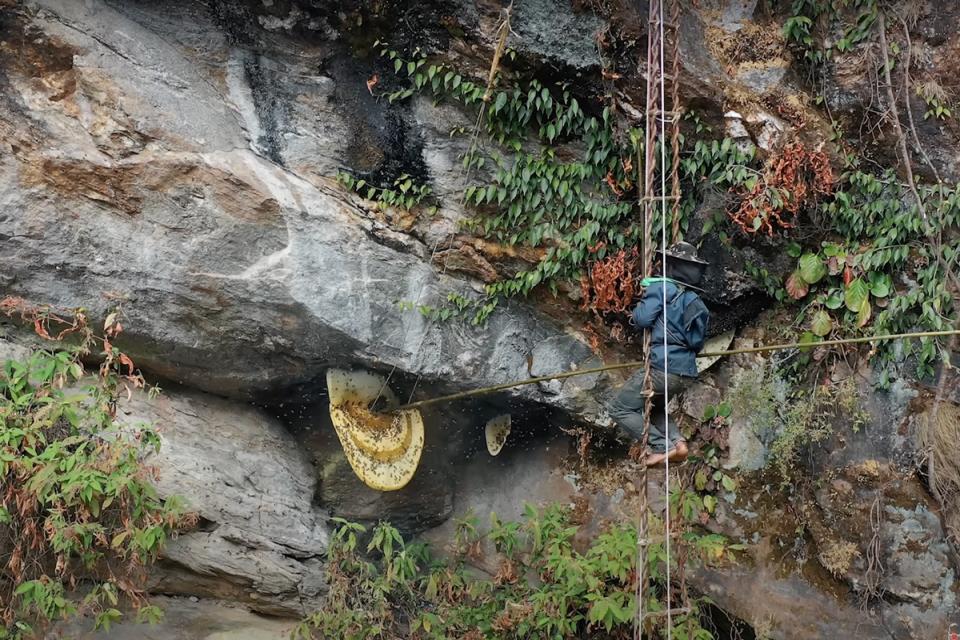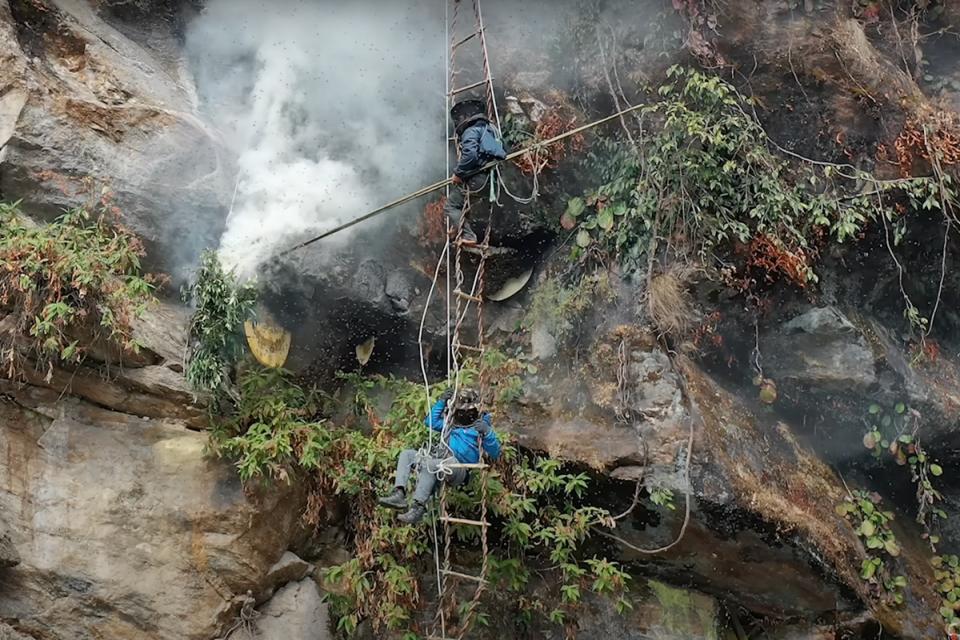
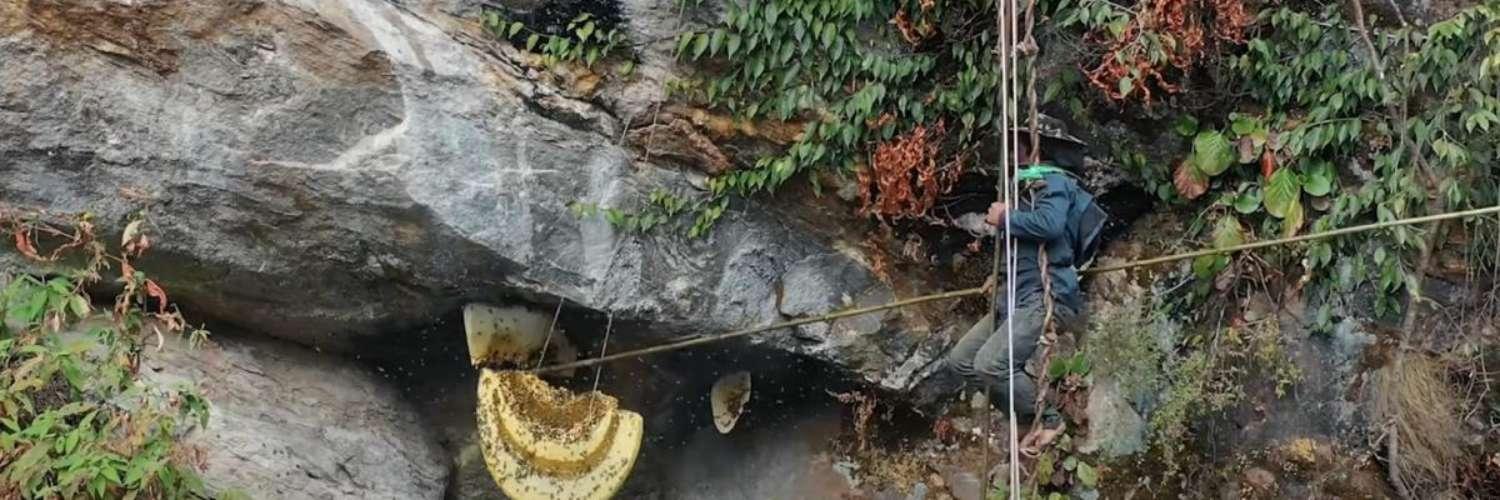
Nepal is world-renowned for the daring "Mad Honey" hunters who dangle from hemp ropes amidst swarms of giant bees. But for the true traveler, the vlogger seeking a deeper narrative, and the trekker who appreciates the stillness of the Himalayas, the off-season Observation Tour offers a perspective that the chaotic harvest season cannot.
While the harvest only happens twice a year (Spring and Autumn), the majestic cliffs, the massive dormant hives, and the rich Gurung heritage are permanent fixtures of the landscape. This guide by Best Heritage Tour will explain why visiting these "Honey Cliffs" during the off-season is a hidden gem for those who want to understand the where and why behind the world's most dangerous tradition.
What is a Honey Hunting Area Observation Tour?
Most travel agencies focus solely on the harvest event. However, at Best Heritage Tour, we believe the story starts long before the ladders are woven. An Observation Tour is a specialized itinerary designed for those who want to see the "Stage" without the "Performance."
During this tour, there is no honey harvesting. You won’t see hunters climbing, and you won’t see smoke rising from the cliff base. Instead, you get an uninterrupted look at:
-
The Massive Beehives: The Apis laboriosa (Himalayan Giant Honey Bee) builds semi-circular nests that can be over 5 feet wide. In the off-season, these are clearly visible against the limestone cliffs.
-
The Geography of Fear: Standing at the base or at a nearby viewpoint, you can truly appreciate the verticality and the sheer impossibility of the hunters' task.
-
The Ecological Balance: You learn about the flora - specifically the Rhododendron forests - that gives the honey its "mad" (medicinal/hallucinogenic) properties.
Why This is a Vlogger’s and Photographer’s Dream?
During the harvest, the air is thick with smoke, and the crowds of villagers and tourists can make it difficult to get a clean shot. During an observation tour, the lighting is better, the environment is peaceful, and you can use drones (with local permits) or long lenses to capture the intricate hexagonal structures of the hives without disturbing a delicate cultural ritual.
Top Locations for Observation Tours: Lamjung and Beyond
1. The Ghalegaun & Bhujung Circuit (Lamjung)
Ghalegaun is a "Model Tourist Village," but its real secret lies in the cliffs surrounding it. Bhujung, a massive settlement of over 400 houses, is the gateway to some of the most famous honey cliffs in Nepal.
-
The Hives: Nestled along the banks of the Midim Khola.
-
Why Visit Now: You get to experience the authentic Gurung "Homestay" culture. You can sit with the Amechi (the lead hunter) and have him explain the tools - the Tangos (bamboo poles) and Prangs (rope ladders) - without the pressure of a looming hunt.
2. The Cliffs of Chamje (Annapurna Region)
Located along the classic Annapurna Circuit, the cliffs near Chamje are legendary. Trekkers often walk past them without realizing they are looking at one of the world's most significant biological sites.
-
The Hives: Visible from across the Marshyangdi River.
-
Observation Tip: The off-season allows you to spot the "Bee Bridges," where the bees migrate between higher and lower altitudes depending on the temperature.
The Science of the "Mad Bee": Apis Laboriosa
As a guide, I often tell my guests that the bee is the real hero of the story. The Himalayan Giant Honey Bee is the largest in the world. They are the only bees that can survive at altitudes up to 4,000 meters.
In the off-season, the bees are less aggressive. They are busy pollinating the high-altitude wildflowers. For researchers and nature vloggers, observing the colony's behavior during this "quiet" time is essential for understanding the environmental challenges they face, such as climate change and habitat loss.
Cultural Immersion: Beyond the Cliff
Since this tour doesn't revolve around a 3-hour harvest, the focus shifts to the Gurung and Magar culture.
-
Ancient Rituals: Even when not hunting, the locals treat these cliffs as sacred sites. You may see small shrines at the base of the cliffs where hunters offer rice and flowers to the "Cliff Gods" to ensure the bees return next year.
-
Traditional Craftsmanship: Watch the elders weave the hemp ropes. These ropes must be incredibly strong and flexible. Learning the "Knot-craft" of the Himalayas is a workshop in itself.
Essential Packing List for Observation Trekkers
Even though you aren't climbing the cliff, the approach can be steep and rugged.
-
Binoculars: A high-quality pair is non-negotiable for seeing the hive details.
-
Telephoto Lens: If you’re a vlogger, a 70-200mm or 100-400mm lens will help you capture the bees' movement.
-
Sturdy Trekking Boots: The paths to the viewing points are often narrow and slippery.
-
Local Map/Guide: The "Hidden Hives" aren't on Google Maps. You need a local expert to point them out.
Ethical Travel and Conservation
By choosing an Observation Tour, you are practicing Sustainable Tourism.
-
Reduced Stress on Colonies: Constant harvesting and human presence can drive bee colonies away. Observation tours provide income to the village without disturbing the bees' natural cycle.
-
Economic Support: Your stay in homestays during the "low season" provides much-needed financial stability to the local communities.
Planning Your Itinerary with Best Heritage Tour
A typical Honey Hunting Area Observation Tour lasts between 4 to 7 days starting from Kathmandu or Pokhara. It combines moderate trekking with cultural deep-dives.
|
Day |
Activity |
Highlight |
|---|---|---|
|
01 |
Drive to Besisahar |
Scenic drive along the Trishuli River |
|
02 |
Trek to Ghalegaun |
Traditional Gurung welcome and cultural show |
|
03 |
Hike to the Honey Cliffs |
Binocular observation of the massive hives |
|
04 |
Bhujung Village Exploration |
Interview with local hunters and tool-making demo |
|
05 |
Return to Pokhara |
Lakeside relaxation after the mountain air |
Conclusion: The Beauty of the Unseen
There is a unique magic in standing before a 200-meter cliff, seeing the architectural marvels built by thousands of giant bees, and feeling the weight of a 3,000-year-old tradition - all without the noise of a crowd. The Honey Hunting Area Observation Tour is for the thinker, the creator, and the soul-searcher. It is an education in the delicate balance between man, nature, and the divine.
Experience the Heritage with Us
Ready to see the legendary honey cliffs of Nepal through the eyes of a local? At Best Heritage Tour, we specialize in "Off-the-Beaten-Path" experiences that prioritize authenticity over spectacle.
Book Your Observation Tour Today!
Phone / WhatsApp / Viber: +977-9851149197 / +977-9810043046
Email: info@bestheritagetour.com / bestheritagetour@gmail.com
Website: www.bestheritagetour.com
Office Address: Thamel Marg, Kathmandu, Nepal
Author: Best Heritage Tour
Date: 22nd February, 2026