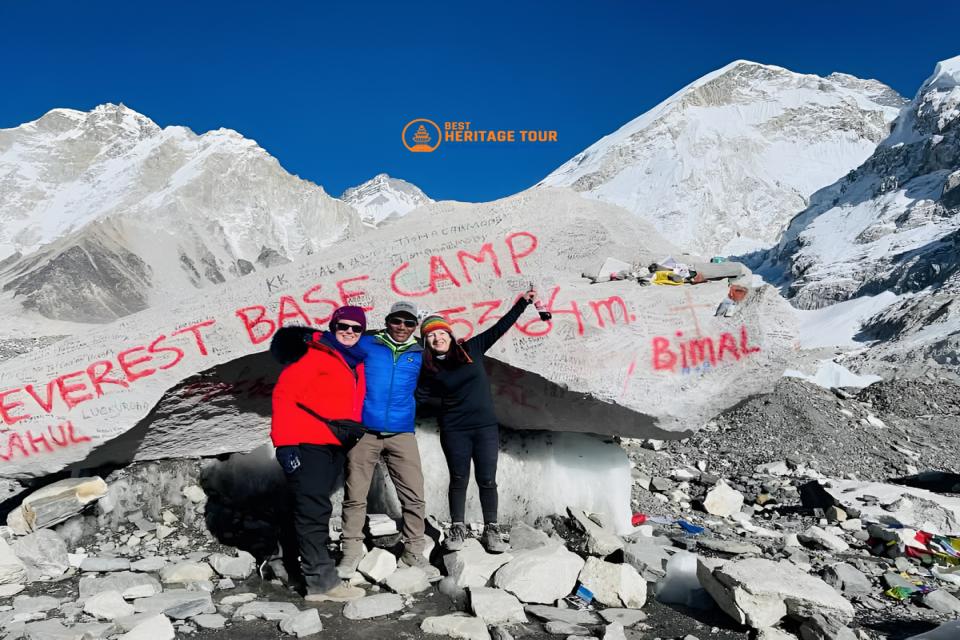
You’ve decided to take on the legendary Everest Base Camp (EBC) trek. You’ve sorted your gear, broken in your boots, and perhaps even started some high-intensity cardio. But as you visualize yourself standing at 5,364 meters (17,598 ft), one practical question often pops up: "How much should I tip my guide and porter?"
At Best Heritage Tour, we believe that transparency is the key to a stress-free adventure. Tipping in Nepal isn't just about money; it’s a cultural bridge, a "Dhanyabad" (thank you) that resonates across the Khumbu Valley. In this comprehensive word guide, we’ll walk you through the nuances of tipping etiquette, current 2026 rates, and the "why" behind the "how much."
Is Tipping Mandatory in Nepal?
The short answer is: No, but it is deeply expected.
In Nepal’s trekking industry, tipping is not a legal requirement, nor is it included in your base trek price. However, for the hardworking crews - the guides who navigate the glacial moraines and the porters who carry the weight of your journey - tips often represent a significant portion of their annual income.
Think of it this way: your trek price covers logistics, permits, and basic wages. Your tip, however, is a direct reward for the quality of service. It acknowledges the guide who stayed up late to check your oxygen levels or the porter who moved like a mountain goat to ensure your bags were at the teahouse before you arrived.
Why Tipping Matters
Most mountain workers in Nepal are seasonal. They work incredibly hard during the Spring (March-May) and Autumn (September-November) windows to support their families for the rest of the year. A fair tip helps them invest in better gear, education for their children, and community development.
Who Makes Up Your Everest Trekking Crew?
Before we talk numbers, it’s important to understand who you are tipping. A standard EBC trek organized by a reputable company like Best Heritage Tour typically involves:
-
Lead Guide: The captain of your ship. They manage the itinerary, safety, health checks (AMS monitoring), and cultural storytelling.
-
Assistant Guide (Sirdar): Usually present in groups of 12 or more. They assist the lead guide and help manage the pace of the group.
-
Porters: The unsung heroes of the Himalayas. They carry your heavy duffel bags (usually up to 20kg-25kg) between camps.
-
Climbing Sherpas: Only applicable if you are doing a "Trek + Peak" combo (like Island Peak or Lobuche East).
Recommended Tipping Rates for 2026/27
Tipping can be calculated in two ways: per day or as a percentage of the trek cost. At Best Heritage Tour, we recommend the "per day" model as it is easier to track and fairer to the staff.
Tipping by Daily Rates (USD Equivalent)
|
Role |
Suggested Daily Tip (Group Total) |
12-Day Trek Total (Estimate) |
|---|---|---|
|
Lead Guide |
$15 - $20 |
$180 - $240 |
|
Assistant Guide |
$10 - $12 |
$120 - $145 |
|
Porter |
$8 - $10 |
$95 - $120 |
Pro Tip: These amounts are the total for the whole group, not per person. If you are in a group of 4 people, you would split the $20/day guide tip four ways, meaning each traveler contributes $5/day toward the guide’s tip.
Tipping by Percentage
A common rule of thumb is to budget 10% to 15% of your total trek cost for tips. If your EBC trek cost $1,500 USD, you should expect to spend roughly $150 - $225 USD in total tips.
Factors That Might Influence Your Tip
Not every trek is created equal. While the table above provides a baseline, consider these variables:
A. The Solo vs. Group Dynamic
If you are a solo traveler, you bear the full weight of the tip. Since the staff provides 100% of their attention to you, it is customary to tip toward the higher end of the scale. Conversely, in large groups (10+ people), the individual contribution per traveler might be lower, but the total pool for the crew will be much larger.
B. Difficulty and Weather
Did you get hit by an unexpected blizzard on the way to Kala Patthar? Did your porter carry your extra gear when you were feeling ill? If the crew went above and beyond during a medical emergency or difficult weather, adding a "hardship bonus" is a wonderful gesture.
C. Length of the Journey
An EBC trek via Gokyo Lakes or the Three Passes is longer and significantly more strenuous than the standard 12-day route. Adjust your tips to reflect the extra days and the increased physical demand on the porters.
Currency: USD or Nepalese Rupees (NPR)?
The big question: Should I tip in Dollars or Rupees?
-
Nepalese Rupees (NPR): This is the preferred currency, especially for porters. They often live in remote villages where exchanging foreign currency can be difficult and involves high bank fees.
-
US Dollars (USD): While widely accepted in Kathmandu and Namche Bazaar, only use USD if the bills are pristine. Banks in Nepal often reject torn, faded, or old (pre-2013) US bills.
The Golden Rule: Exchange your tip money in Kathmandu before you fly to Lukla. While there are ATMs in Namche Bazaar, they are notorious for being out of cash or rejecting international cards.
The "When" and "How": Tipping Etiquette
How you give the tip is just as important as the amount. In Nepalese culture, "giving" is an act of respect.
The Farewell Ceremony
The best time to tip is on the last night of the trek in Lukla. Most groups have a farewell dinner to celebrate a successful journey. This is the last time you will see your porters before you fly back to Kathmandu.
How to Present the Tip
-
Use Envelopes: It is more discreet and respectful. Label them clearly (e.g., "To My Guide - Passang").
-
The Two-Handed Handover: When handing over the envelope, use both hands. This is a sign of deep respect in Nepal.
-
Individual vs. Pool: We recommend tipping each person individually. This ensures everyone gets exactly what you intended for them and avoids any potential confusion within the crew.
-
Say "Dhanyabad": A sincere thank you goes a long way.
What About "Gifting" Gear?
Many trekkers wonder if they should leave behind their down jackets, sleeping bags, or hiking boots as a tip.
Our Advice: Gifting gear is a great addition to a cash tip, but it should never replace it.
If you have high-quality trekking gear you no longer want to carry home, ask your guide or porter if they could use it. They often value good quality boots and waterproof layers. However, ensure the gear is clean and in good working condition - giving "trash" is considered an insult.
Tipping Outside the Trek (Kathmandu)
Your journey with Best Heritage Tour likely includes more than just the mountains. Here is a quick cheat sheet for city-based tipping:
-
Airport Transfers: NPR 200 - 500 for the driver.
-
City Tour Guides: $10 - $15 USD for a full-day cultural tour of Kathmandu's UNESCO sites.
-
Restaurants: Most upscale places in Thamel add a 10% service charge. If they don’t, a 5-10% tip is appreciated. Small local "bhattis" do not expect tips, but rounding up the change is polite.
-
Hotel Porters: NPR 100 - 200 per bag.
Common Tipping Mistakes to Avoid
-
Tipping too early: Never tip at the beginning of the trek. It can change the professional dynamic. The tip is a reward for a job completed.
-
Using foreign coins: Banks in Nepal cannot exchange foreign coins. If you give a porter a bag of Euros or USD coins, they are effectively useless to him. Use notes only.
-
Publicly flashing cash: Tipping should be a private, dignified moment. Avoid counting out large stacks of cash in front of other travelers or staff.
-
Skipping the porter: Some travelers focus all their gratitude on the guide because they talk to them more. Remember, the porter's physical labor is what makes your trek possible.
Why Choose Best Heritage Tour for Your Everest Adventure?
When you book with Best Heritage Tour, you aren't just booking a trek; you’re joining a family. We ensure that our guides and porters are paid above-market fair wages, provided with proper insurance, and equipped with mountain-grade gear.
We believe that a happy crew leads to a happy trekker. By following this tipping guide, you help us maintain a sustainable and respectful ecosystem in the Himalayas, ensuring that the local communities continue to thrive for generations to come.
Conclusion
Trekking to Everest Base Camp is a life-altering experience. It’s a test of endurance, a cultural immersion, and a lesson in humility. Your trekking crew will likely become your friends, your motivators, and your lifelines during your time in the Khumbu.
As you stand at the edge of the world, looking up at the summit of Everest, you’ll realize that the journey was made possible by the people around you. A fair and respectful tip is simply the final "thank you" for a dream turned into reality.
Ready to Start Your Himalayan Story?
If you have more questions about tipping, gear, or the best time to visit Nepal, our team at Best Heritage Tour is here to help 24/7. Let’s make your Everest dream a reality!
Contact Best Heritage Tour Today:
Phone / WhatsApp / Viber: +977-9851149197 / +977-9810043046
Email: info@bestheritagetour.com / bestheritagetour@gmail.com
Website: www.bestheritagetour.com
Office: Thamel Marg, Kathmandu, Nepal
Author: Best Heritage Tour
Date: 28th December, 2025