Best Heritage Tour who had led hundreds of travelers through Langtang’s ancient stone-paved paths, we often get asked one question "How difficult is the Langtang Valley Trek?"
It is a fair question. When you are looking up at the towering, jagged peaks of Langtang Lirung (7,227m), the scale of the landscape can be intimidating. But here at Best Heritage Tour, we believe that the right information is the first step toward a successful journey.
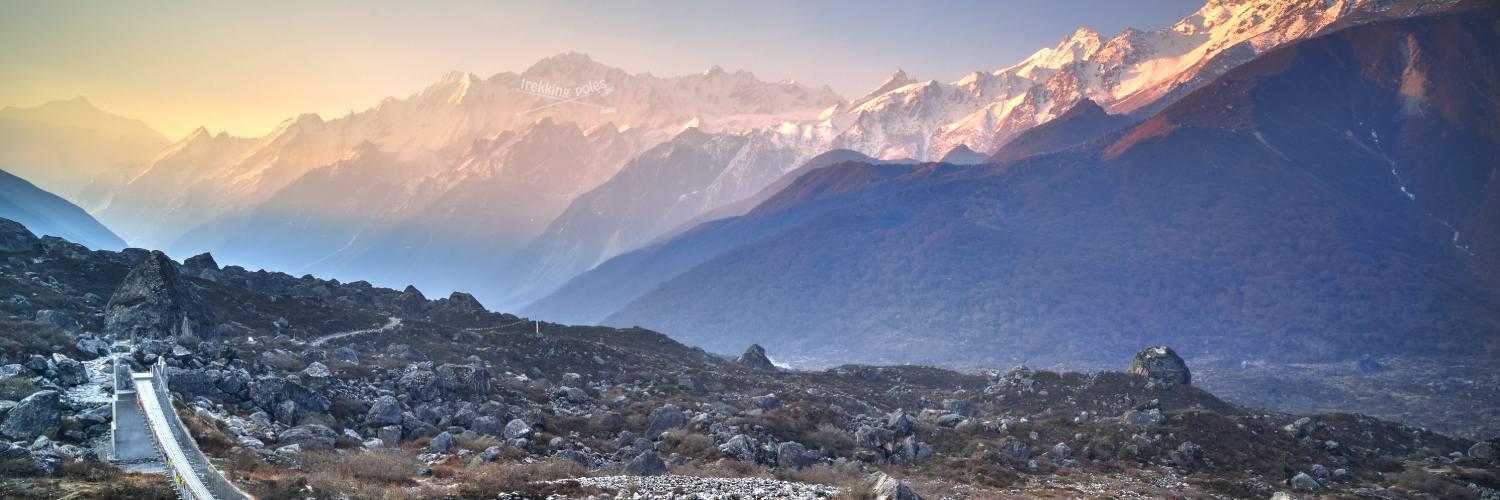
In this comprehensive guide, we are going to peel back the layers of this "Valley of Glaciers." Whether you are a marathon runner or someone who enjoys a casual weekend stroll, this blog will provide an honest, boots-on-the-ground assessment of what it takes to conquer one of Nepal’s most beloved heritage trails.
The Short Answer: Grading the Langtang Valley Trek
If we were to grade the Langtang Valley Trek on a scale of difficulty, we would categorize it as Moderate.
Unlike the grueling weeks required for the Everest Base Camp or the technical passes of the Annapurna Circuit, Langtang is accessible. It doesn't require technical climbing skills, ice axes, or ropes. However, "moderate" in the Himalayas still means walking 5 to 7 hours a day on uneven terrain.
The Quick Stats
-
Total Distance: Approximately 65 - 80 km (round trip).
-
Maximum Elevation: 3,870m (Kyanjin Gompa) or 4,984m (Tserko Ri viewpoint).
-
Average Daily Walking: 5 - 7 hours.
-
Best Seasons: Spring (March-May) and Autumn (September-November).
The Factors That Define "Difficulty"
Difficulty is subjective. What a local porter considers a "flat walk" might feel like a vertical climb to a first-timer. To help you understand the challenge, let's break it down into four key areas.
1. Physical Stamina and Terrain
The trek starts at Syabrubesi (1,550m). From the very first day, you are entering the Langtang National Park. The trail is a mix of:
-
Deep Forests: Dense rhododendron and bamboo forests where the trail can be damp and mossy.
-
Stone Stairs: Thousands of them. The climb from Bamboo to Lama Hotel is notorious for its steep, rhythmic stone steps.
-
Glacial Moraine: Near Kyanjin Gompa, the trail becomes rockier and more exposed.
The Reality Check: You don't need to be an elite athlete, but your legs need to be ready for "Himalayan Flats" - which locals define as "a little bit up and a little bit down."
2. The Altitude Factor
This is where the Langtang Valley Trek earns its "Moderate" badge. Altitude sickness (Acute Mountain Sickness or AMS) usually becomes a risk above 3,000m.
On this trek, you reach 3,000m by Day 3 (Langtang Village). The highest you will sleep is at Kyanjin Gompa (3,870m). While this is lower than Everest Base Camp (5,364m), the oxygen levels are still significantly lower than at sea level. If you choose to hike to Tserko Ri (4,984m), you are effectively pushing your body to the limit of "trekking altitude."
3. Weather and Seasonality
The difficulty of the trail changes with the calendar:
-
Spring (March-May): The most beautiful. Temperatures are mild (10 °C to 20°C), and the trails are dry.
-
Autumn (Sept-Nov): The clearest views. Post-monsoon air is crisp, making the physical exertion feel more rewarding.
-
Winter (Dec-Feb): Difficult. High-altitude sections like Kyanjin Ri can be covered in deep snow, requiring micro-spikes and extreme cold-weather gear.
-
Monsoon (June-Aug): Not recommended. The drive to Syabrubesi becomes hazardous due to landslides, and the trail is slippery and infested with leeches.
4. Remote Comforts (The "Mental" Difficulty)
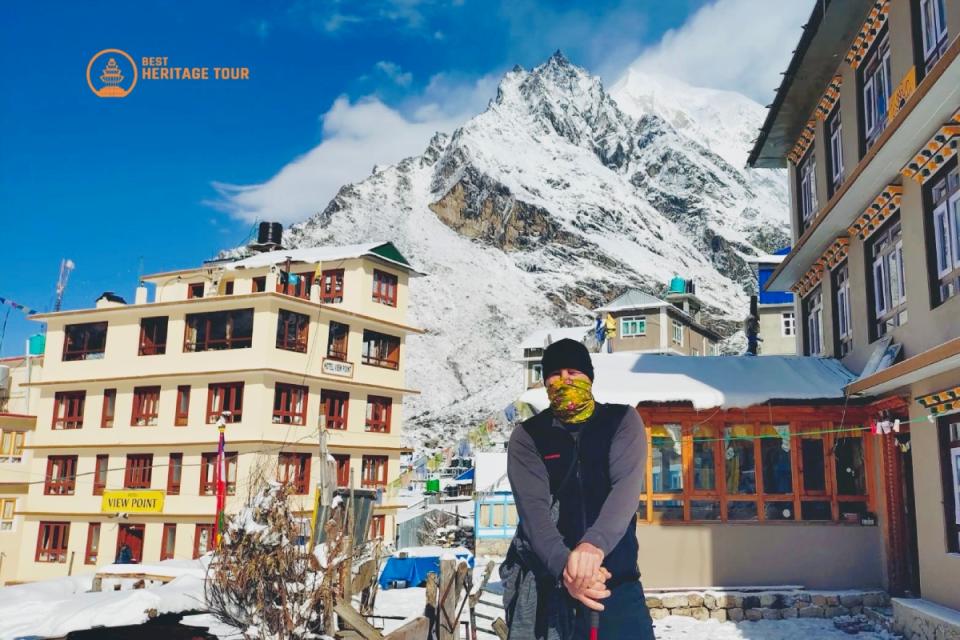
Langtang was heavily affected by the 2015 earthquake, but the resilience of the Tamang people is legendary. The tea houses have been rebuilt and are often more modern than those in other regions. However, you must be mentally prepared for:
-
Basic Amenities: You might have to pay extra for hot showers or battery charging.
-
No Luxury: While cozy, the walls are thin, and the nights are cold.
A Day-by-Day Breakdown of the Challenge
To give you a better perspective, here is what a typical 8-day itinerary looks like with Best Heritage Tour.
|
Day |
Route |
Max Altitude |
Difficulty |
Why? |
|---|---|---|---|---|
|
1 |
Kathmandu to Syabrubesi (Drive) |
1,550m |
Low (Tiring) |
7-8 hours on winding mountain roads. |
|
2 |
Syabrubesi to Lama Hotel |
2,480m |
Moderate |
Constant uphill through the forest. |
|
3 |
Lama Hotel to Langtang Village |
3,430m |
Moderate |
You break the 3,000m mark today. |
|
4 |
Langtang to Kyanjin Gompa |
3,870m |
Easy/Moderate |
Shorter walk, but thinner air. |
|
5 |
Exploration (Tserko Ri) |
4,984m |
High |
A steep, 8-hour round trip to the peak. |
|
6 |
Kyanjin to Lama Hotel |
2,480m |
Moderate |
Easy on lungs, but hard on the knees (downhill). |
|
7 |
Lama Hotel to Syabrubesi |
1,550m |
Easy |
Back to where it started! |
|
8 |
Syabrubesi to Kathmandu (Drive) |
1,550m |
Low (Tiring) |
7-8 hours on winding mountain roads. |
Acclimatization: The Secret to Success
At Best Heritage Tour, we don't rush. The biggest mistake trekkers make is trying to save a day by skipping the acclimatization hike in Kyanjin Gompa.
Pro-Tip from our Guides: Always follow the "Walk High, Sleep Low" rule. If you feel a slight headache, tell your guide. Drink 3-4 liters of water daily. Garlic soup is our local "magic potion" for altitude - it helps with blood circulation!
Essential Gear: Packing to Minimize Difficulty
A heavy bag is your worst enemy on a steep incline. If you aren't hiring a porter, your pack should not exceed 10-12 kg.
The "Must-Haves"
-
Broken-in Boots: Never wear brand-new shoes on the trail. Blisters can end a trek faster than altitude can.
-
Trekking Poles: These are non-negotiable for the descent from Kyanjin. They reduce the impact on your knees by up to 25\%.
-
Layering System: A moisture-wicking base layer, a warm fleece, and a down jacket rated for -10 °C.
-
Water Purification: Don't buy plastic bottles. Use purification tablets or a LifeStraw to protect our mountains and your stomach.
How to Prepare: Training for Langtang
You don't need a gym membership to prepare for Langtang. The best way to train for a hike is... to hike!
-
Cardio: 3 times a week (Running, Cycling, or Swimming).
-
Leg Strength: Squats and lunges are your best friends.
-
Stair Climbing: If you live in a city, skip the elevator. Carry a 5kg backpack and climb stairs for 30 minutes.
-
Mental Prep: Understand that there will be moments of fatigue. The reward is a view that no camera can fully capture.
Why Choose the Langtang Heritage Trail?
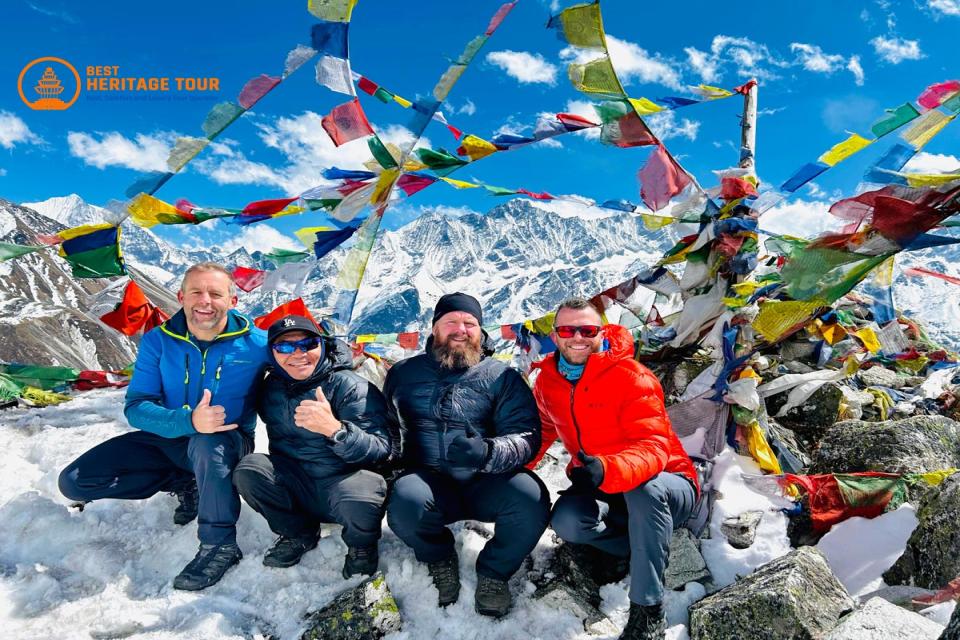
Beyond the physical challenge, this trek is a cultural immersion. You will walk past mani walls (prayer stones), ancient monasteries, and the famous Yak Cheese Factory at Kyanjin Gompa.
When you trek with a professional company like Best Heritage Tour, you aren't just a tourist; you are a guest of the valley. We ensure your permits (Langtang National Park Permit and TIMS) are handled, your accommodation is booked, and your safety is monitored every hour of the journey.
The Verdict: Can You Do It?
Yes. If you can walk for 5 hours on a hilly terrain back home, you can complete the Langtang Valley Trek. It is the perfect "entry-level" Himalayan adventure that offers "pro-level" views.
The difficulty is real, but it is manageable. With a steady pace, a positive mindset, and an experienced guide by your side, the Langtang Valley will become a memory that lasts a lifetime.
Ready to Explore the Valley of Glaciers?
Don't let the logistics or the mountains intimidate you. Let the experts at Best Heritage Tour handle the details while you focus on the journey. Whether you are looking for a solo adventure or a family cultural tour, we have the perfect itinerary for you.
Contact us today for a free consultation or to book your 2026/2027 Langtang Adventure!
Phone / WhatsApp / Viber: +977-9851149197 / +977-9810043046
Email: info@bestheritagetour.com / bestheritagetour@gmail.com
Website: www.bestheritagetour.com
Office: Thamel Marg, Kathmandu, Nepal
Author: Best Heritage Tour
Date: 26th December, 2025