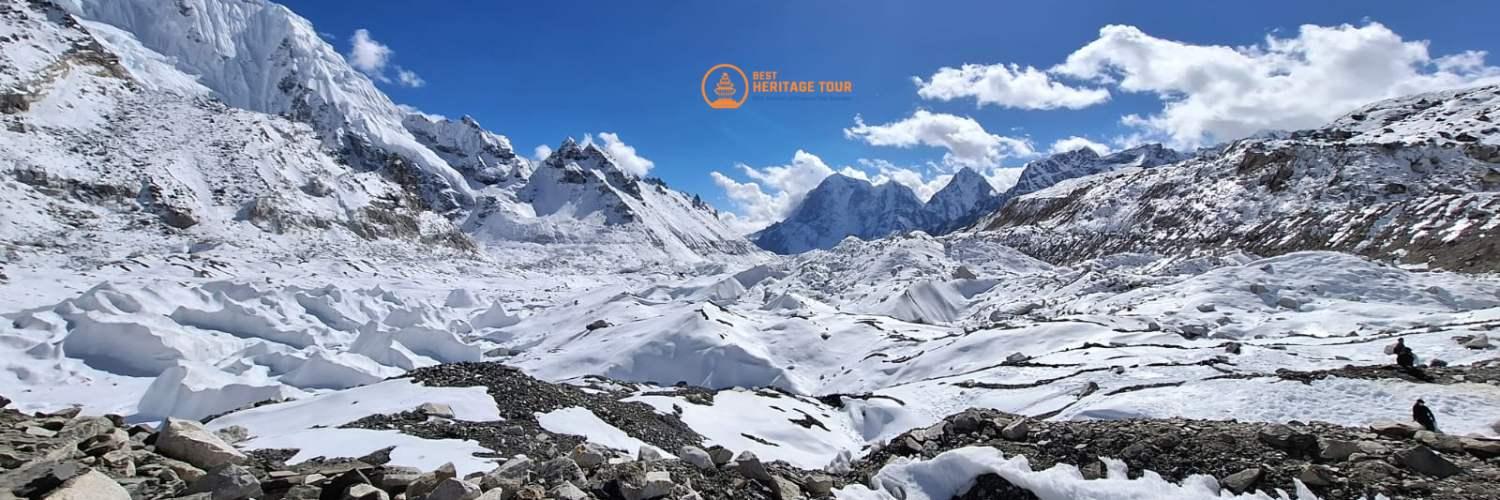
When we think of Mount Everest (Sagarmatha), the images that usually come to mind are of neon-colored down suits, yellow tents, and the desolate, wind-swept summit. However, beneath the layer of ice and beyond the oxygen-depleted "Death Zone," a resilient and fascinating array of wildlife calls this extreme environment home.
At Best Heritage Tour, we believe that a trek to Everest is not just about the peak, but about the vibrant, fragile ecosystem that surrounds it. As we move through 2026, understanding the animals on Mount Everest is more important than ever, as climate change shifts the boundaries of where these creatures can survive.
The Vertical Zoo: Understanding Altitudinal Zonation
The wildlife of the Everest region is distributed based on altitude. As you climb higher, the oxygen decreases, temperatures plummet, and the vegetation disappears. Scientists and guides categorize the life on Everest into three main zones:
-
The Montane Forest Zone (2,800m - 3,800m): Home to lush forests and the highest density of wildlife.
-
The Alpine Scrub Zone (3,800m - 5,000m): Where trees give way to hardy shrubs and high-altitude specialists.
-
The Nival Zone (Above 5,000m): The land of permanent snow, where only the most extreme survivors exist.
1. The Ghost of the Mountains: The Snow Leopard
Perhaps the most iconic animal on Mount Everest is the Snow Leopard (Panthera uncia). Known as the "Ghost of the Mountains," these elusive cats are the apex predators of the Khumbu.
Evolutionary Adaptation
In 2026, conservation efforts in the Sagarmatha National Park have led to a slight increase in sightings. These cats are perfectly evolved for the Everest terrain:
-
The Tail: Their thick, long tail acts as a blanket during the freezing nights and serves as a vital balance pole when leaping across icy cliffs.
-
The Paws: Their large, fur-covered paws act as natural snowshoes, distributing their weight so they don't sink into deep drifts.
-
The Coat: Their smoky-grey spotted fur provides near-perfect camouflage against the granite and limestone of the Himalayas.
Where to Spot Them?
While extremely rare to see, they are most active at dawn and dusk. Our guides at Best Heritage Tour often spot their tracks near the rocky outcrops above Gokyo and the high ridges of the Phortse village, which is known as the snow leopard capital of the Khumbu.
2. The High-Altitude Aviator: The Bar-Headed Goose
If you think climbing Everest is hard, consider the Bar-Headed Goose. These birds are the undisputed champions of high-altitude flight.
The Incredible Migration
Every year, these geese migrate from the lowlands of India to the Tibetan Plateau, flying directly over the summits of the Himalayas. They have been tracked flying at altitudes of over 8,800 meters (29,000 feet).
-
Physiology: They have a specialized type of hemoglobin that binds oxygen more efficiently than any other bird, allowing them to exert immense physical effort in air that would kill a human.
-
Flight Pattern: Unlike airplanes that fly around the peaks, these geese often fly through the high passes, using the updrafts created by the mountain walls.
3. The Himalayan Tahr: The Master Climber
As you trek between Namche Bazaar and Tengboche, you are almost guaranteed to see the Himalayan Tahr. These large, goat-like mammals are a staple of the Everest landscape.
Life on the Edge
Tahr are often seen standing on impossibly narrow ledges. Their hooves have a rubber-like core that allows them to grip smooth rock, while the hard outer rim prevents slipping. In the winter of 2026, you will see them with thick, shaggy manes of reddish-brown fur, which they shed as the spring sun begins to warm the valleys.
4. The Red Panda: The Shy Resident of the Lowlands
While most people focus on the high peaks, the lower forests of the Sagarmatha National Park house the enchanting Red Panda. These "Fire Foxes" live in the bamboo-thick temperate forests between 2,500m and 4,000m.
Conservation Status
The Red Panda is endangered, and habitat loss is a major concern. At Best Heritage Tour, we educate our guests on the importance of staying on marked trails to avoid disturbing the nesting sites of these shy creatures. They are primarily herbivores, feeding almost exclusively on bamboo shoots.
5. The Himalayan Monal: A Kaleidoscope of Color
Nepal’s national bird, the Himalayan Monal (Danphe), is a frequent highlight for trekkers. The males are incredibly colorful, with metallic green, copper, and purple feathers.
In the early mornings near the Everest View Hotel, you can hear their distinct, high-pitched whistling. Seeing a Danphe take flight against the backdrop of Ama Dablam is a photography dream for any traveler in 2026.
6. The World’s Highest Inhabitant: The Himalayan Jumping Spider
Believe it or not, the animal that lives highest on Mount Everest is not a mammal or a bird - it’s a spider. The Himalayan Jumping Spider (Euophrys omnisuperstes) has been found at elevations of 6,700 meters (22,000 feet).
How do they survive?
At this altitude, there is virtually no vegetation. These spiders survive by eating "aeolian" debris - small insects and organic matter that are blown up the mountain by high-altitude winds. They live in the nooks and crannies of the rocks, sheltered from the worst of the jet stream.
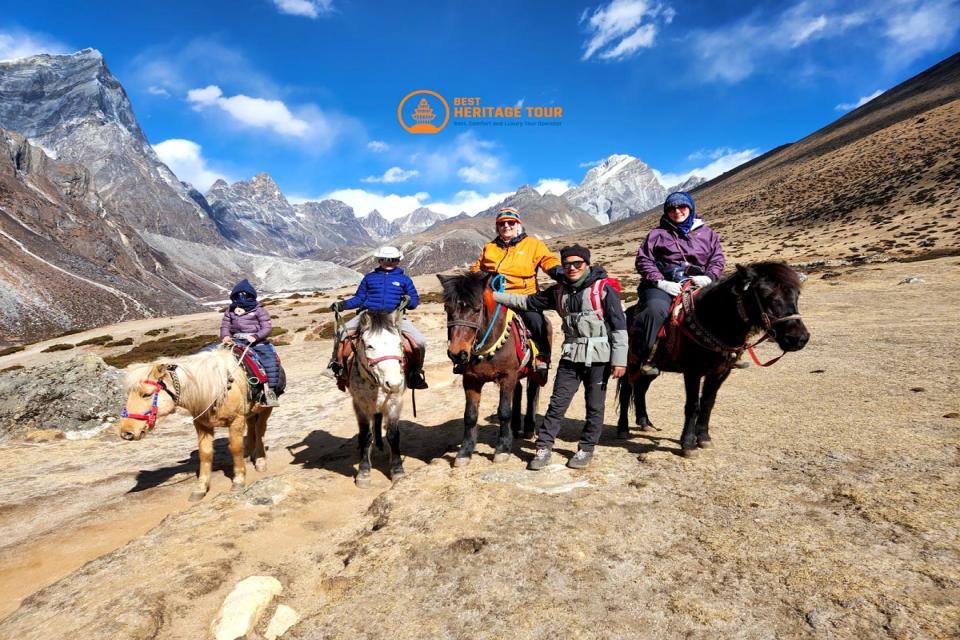
7. The Domestic Heroes: Yaks
No guide to animals on Mount Everest would be complete without the Yak. While they are domesticated, they are a semi-wild species perfectly adapted to the Khumbu.
-
Biological Advantage: Yaks cannot survive below 3,000 meters; they literally get heatstroke in "warm" weather. They have massive lungs and a high red blood cell count.
-
The Khumbu Lifeline: Without the Yak, expedition logistics would be impossible. They carry everything from oxygen cylinders to trekking duffel bags.
-
Safety Tip: When you encounter a Yak caravan on a suspension bridge, always stay on the "wall side," never the "cliff side."
8. The Musk Deer: The Fragrant Recluse
The Himalayan Musk Deer is another resident of the sub-alpine forests. They are unique because they lack antlers; instead, the males have long, vampire-like tusks used for fighting during the mating season.
They are unfortunately hunted for their musk pod, which is highly valued in the perfume industry. Increased patrolling by park rangers in 2026 has made the Everest region a safer sanctuary for them, and they are becoming bolder, often spotted near the trails of the Gokyo Valley.
9. The Tibetan Wolf and the Himalayan Black Bear
While rare, these two predators play a vital role in the ecosystem.
-
The Tibetan Wolf: These roam the higher plateaus and occasionally hunt Tahr or young Yaks. They are social animals and their howling can sometimes be heard during full moon nights in Dingboche.
-
The Himalayan Black Bear: Found in the lower, forested regions. They hibernate during the winter months and are most active in the autumn when berries are plentiful.
10. Insects and the Changing Climate of 2026
In 2026, scientists are observing a shift. As temperatures rise, insects like mosquitoes and flies are being found at higher altitudes than ever before. While this might seem minor, it affects the pollination of alpine flowers and the diet of high-altitude birds. It serves as a reminder that even the mighty Everest is susceptible to global environmental changes.
Tips for Wildlife Watching on the Everest Trek
To see these animals, you need more than just luck; you need a strategy.
-
Use Binoculars: Many of these animals, especially the Snow Leopard and Tahr, are masters of camouflage.
-
Walk Quietly: The "thump-thump" of trekking poles can scare off shy animals like the Red Panda.
-
Hire a Local Guide: Our guides at Best Heritage Tour are trained to spot signs of wildlife - scat, tracks, and alarm calls of birds - that most tourists miss.
-
Respect the Space: Never feed the wildlife. This disrupts their natural foraging habits and makes them dependent on humans.
Conclusion
The animals on Mount Everest are a testament to the resilience of life. In the harshest conditions imaginable, they have found a way to thrive, hunt, and raise their young. When you trek through the Sagarmatha National Park with Best Heritage Tour, you aren't just a tourist; you are a guest in their home.
As we look toward the future of trekking in 2026, our goal is to preserve this "Roof of the World" for generations to come. Every animal, from the tiny jumping spider to the majestic snow leopard, plays a part in the magic of Everest.
Experience the Wild Side of Everest with Best Heritage Tour
Ready to see the Danphe fly and the Yak caravans march? Join us for an unforgettable journey into the heart of the Himalayas. We specialize in eco-friendly trekking that respects the wildlife and supports local conservation.
Contact Us:
Phone / WhatsApp / Viber: +977-9851149197 / +977-9810043046
Email: info@bestheritagetour.com / bestheritagetour@gmail.com
Website: www.bestheritagetour.com
Office: Thamel Marg, Kathmandu, Nepal
Author: Best Heritage Tour
Date: 1st January, 2026