In the fertile Terai plains of Nepal lies Lumbini, a place so profound that its existence altered the course of human history. This UNESCO World Heritage Site is not just an ancient ruin; it is the sacred garden where Siddhartha Gautama, the man who would become the Lord Buddha and founder of one of the world’s great religions, was born in 623 B.C.
Lumbini is one of the four most sacred pilgrimage sites in Buddhism, the location Buddha himself is said to have advised his followers to visit. For over 2,600 years, devotees, emperors, and travelers have come to walk the tranquil grounds, drawn by a singular message: peace.
At Best Heritage Tour (BHT), we craft meticulously planned Lumbini Pilgrimage Tours that connect this serene birthplace with the other critical archaeological sites of the Greater Lumbini Circuit, offering a complete historical and spiritual journey through the roots of Buddhism.
This is your definitive guide to the essential sites, the historical evidence, and the tranquil spiritual experience awaiting you at the Birthplace of Buddha Nepal.
The Sacred Garden - The Epicenter of Peace
The heart of the entire Lumbini complex is the Sacred Garden, a protected archaeological zone that preserves the exact spot of the Buddha's birth.
1. The Maya Devi Temple: The Exact Birthplace
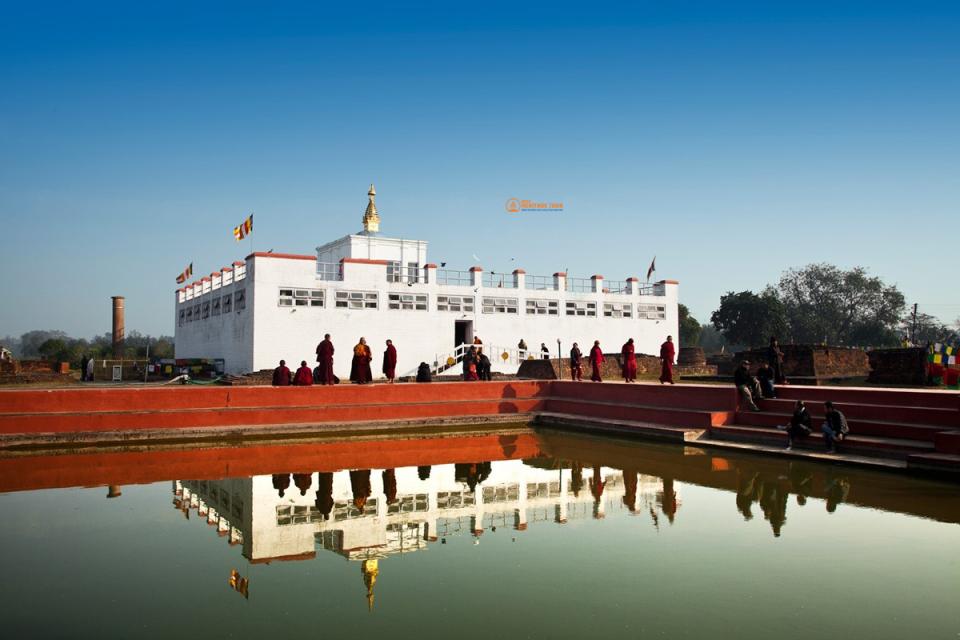
The modern Maya Devi Temple Lumbini is a white structure built over the precise location of the nativity. It is the most revered site in the entire compound.
-
The Marker Stone: Inside the temple, protected by a glass partition, lies the most profound piece of evidence: the Marker Stone. This ancient stone slab, found deep within the excavations of several successive temples, is believed by archaeologists and Buddhists to mark the exact spot where Prince Siddhartha Gautama emerged.
-
Ancient Ruins: Surrounding the Marker Stone are the foundations of ancient brick stupas and monasteries dating back to the 3rd century BC, illustrating continuous devotion at this site for over two millennia.
2. The Ashoka Pillar: Historical Confirmation
Just outside the Maya Devi Temple stands the colossal Ashoka Pillar Nepal. Erected by the great Mauryan Emperor Ashoka the Great in 249 BC, this pillar offers the single most definitive historical proof of Lumbini’s authenticity.
-
The Inscription: The Brahmi inscription on the pillar, translated by archaeologists, clearly states that Ashoka visited the site “because the Buddha Shakyamuni was born here.” This confirms Lumbini as the birthplace nearly two centuries after the Buddha’s death, solidifying its historical value.
-
The Emperor’s Pilgrimage: Ashoka's visit marked a pivotal moment, transforming the previously modest site into a major pilgrimage center and signaling the widespread acceptance and expansion of Buddhism across the subcontinent.
3. The Puskarini Sacred Pond and Bodhi Tree
-
Puskarini Pond: Legend holds that Queen Maya Devi took a purifying bath in this ancient, stepped pond just before giving birth to Siddhartha, and the infant prince was given his first purification bath in its waters. Its tranquil presence today invites reflection.
-
The Sacred Bodhi Tree: A newer Bodhi tree, covered in thousands of colorful prayer flags, stands beside the pond. It is a focus point for meditation, where pilgrims gather in solemn silence, completing the spiritual trinity of the Sacred Garden.
A Global Mosaic - The Monastic Zone
The sprawling complex of Lumbini, structured by the master plan of Japanese architect Kenzo Tange, features a vast, central canal separating two major areas: the East and West Monastic Zones. This zone serves as a magnificent testament to the global reach of Buddhism.
-
Architectural Diversity: Over 30 countries have built monasteries and stupas reflecting their own unique national architectural styles, creating a cultural walk across the world's Buddhist traditions.
-
East Monastic Zone (Theravada): Dedicated to the Theravada tradition (practiced mainly in Southeast Asia). Here you find the gleaming white marble of the Royal Thai Monastery and the ornate, gold-spire architecture of the Myanmar Golden Temple.
-
West Monastic Zone (Mahayana/Vajrayana): Dedicated to the Mahayana and Vajrayana traditions (practiced in East Asia and the Himalayas). Highlights include the majestic, imperial-style Chinese Monastery and the colorful, Tibetan-style Great Lotus Stupa (Germany).
-
-
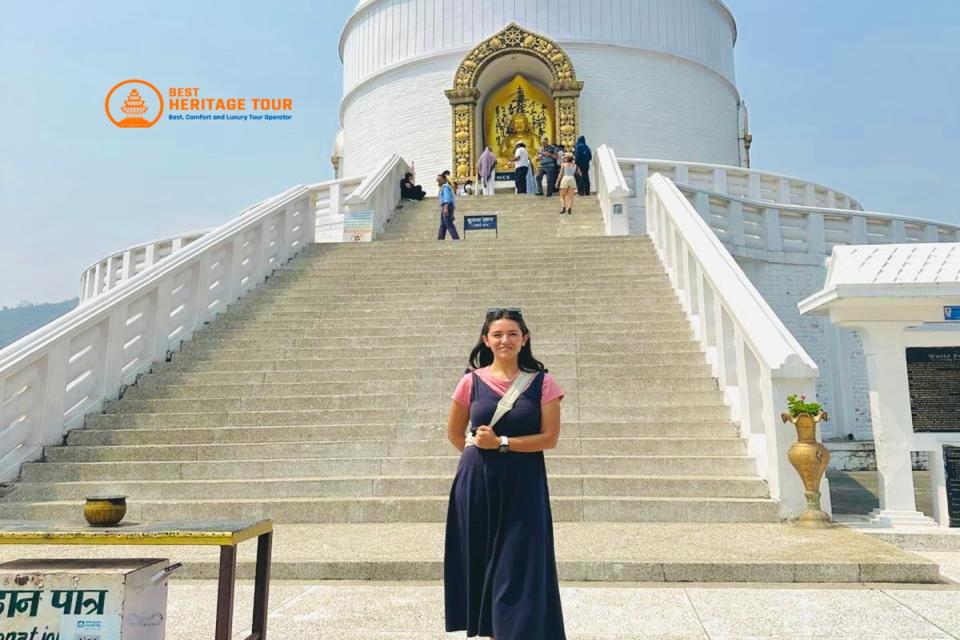
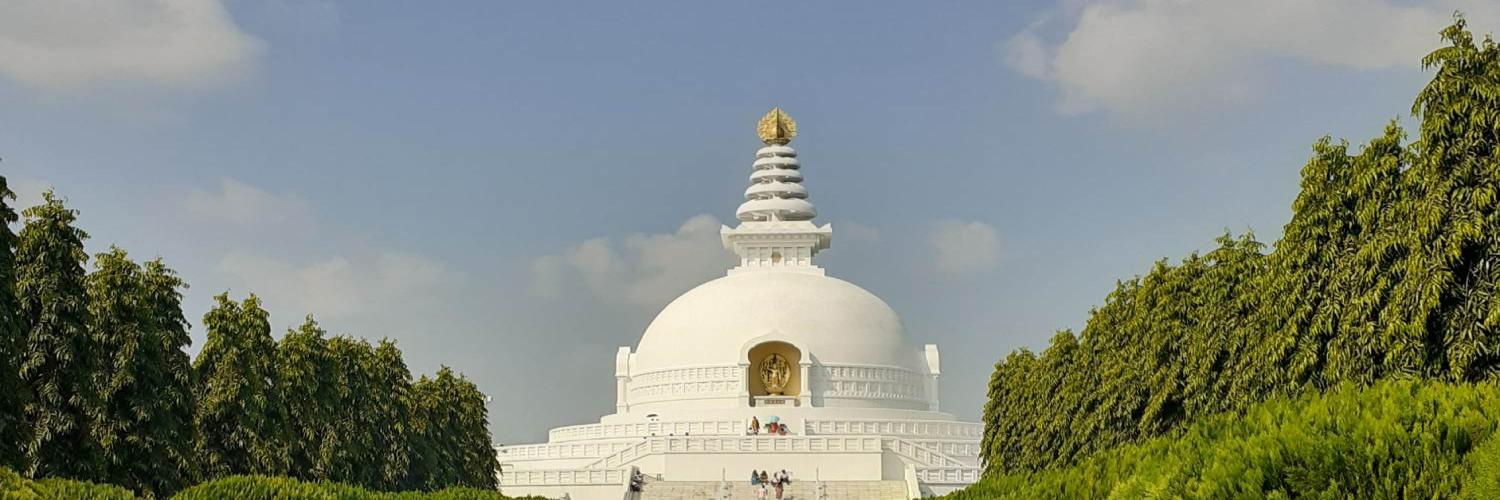
The Eternal Peace Flame & World Peace Pagoda: The central canal runs between the zones, leading toward the Eternal Peace Flame, which has burned continuously since 1986, symbolizing world peace. Further north stands the massive white World Peace Pagoda (Shanti Stupa), built by Japanese Buddhists, offering a space for meditation and panoramic views.
BHT Tip: The best way to traverse the vast Monastic Zone is by renting a bicycle or hiring a local rickshaw, allowing you to absorb the peaceful atmosphere and the incredible variety of international architecture at your own pace.
The Early Life of the Buddha - The Greater Lumbini Circuit
Lumbini is the centerpiece, but its historical context is completed by visiting the associated archaeological sites in the surrounding Rupandehi and Kapilvastu districts. This is the Greater Lumbini Buddhist Circuit.
1. Tilaurakot: The Ancient Capital of Kapilvastu
Located about 27 km west of Lumbini, Tilaurakot is the site of the ancient city of Kapilvastu, the capital of the Shakya kingdom.
-
Siddhartha’s Childhood: This is where Prince Siddhartha Gautama spent the first 29 years of his life before his Great Renunciation (leaving his home and family to seek enlightenment).
-
Archaeological Significance: Excavations have revealed the substantial ruins of the palace complex, the city walls, and the gates, giving visitors a tangible sense of the royal life the Buddha willingly left behind.
2. Kudan, Gotihawa, and Niglihawa
These sites further enrich the historical narrative, confirming the region as a hotbed of early Buddhist activity:
-
Kudan: Believed to be the site of the Nyigrodharama Monastery, where the Buddha is said to have met his father, King Suddhodhana, for the first time after attaining enlightenment.
-
Gotihawa: Thought to be the birthplace of Krakuchanda Buddha, one of the three past Buddhas of the present era. A broken Ashoka pillar fragment marks the site.
-
Niglihawa: Contains another Ashoka Pillar fragment, confirming it as the birthplace of Kanakamuni Buddha, another past Buddha.
3. Devdaha and Ramagrama
-
Devdaha: The maternal hometown of Queen Maya Devi and the home of Buddha’s stepmother and aunt, Prajapati Gautami, offering an insight into his mother's lineage.
-
Ramagrama: The site of the only original nirvana stupa in the world that remains unopened, believed to still contain the corporal relics of the Buddha (his ashes).
Conclusion: A Spiritual Retreat
Lumbini is more than a historical destination; it is a center of global spiritual convergence. Designated as a UNESCO World Heritage Site in 1997, it offers a profoundly peaceful atmosphere for meditation and contemplation.
Whether you are a devout Buddhist fulfilling a pilgrimage, a history enthusiast tracing the roots of civilization, or simply a traveler seeking a sanctuary of peace, a visit to the Birthplace of Buddha Nepal is a deeply transformative experience.
Begin your journey to the roots of enlightenment.
Contact Best Heritage Tour to plan your Lumbini Pilgrimage Tour.
Phone / WhatsApp / Viber: +977-9851149197 / +977-9810043046
Email: info@bestheritagetour.com / bestheritagetour@gmail.com
Website: www.bestheritagetour.com
Office: Thamel Marg, Kathmandu, Nepal
Author: Best Heritage Tour
Date: 24th December, 2025